Skip to content
Watt Warden

Power Stations

Portable Power Station Warranties Compared

Several brands advertise five years and mean three. One voids the cell warranty if you leave the battery uncharged for six months. The conditions matter more than the number.

By Sawyer V.Updated Published How we work this out
A person in business clothing signing documents at a wooden table.

Watt & Warden earns a commission on qualifying purchases made through links on this page, at no extra cost to you. It never changes a ranking, and our picks include products we tell you to skip. Full disclosure.

Quick picks

#ProductBest forPrice
1
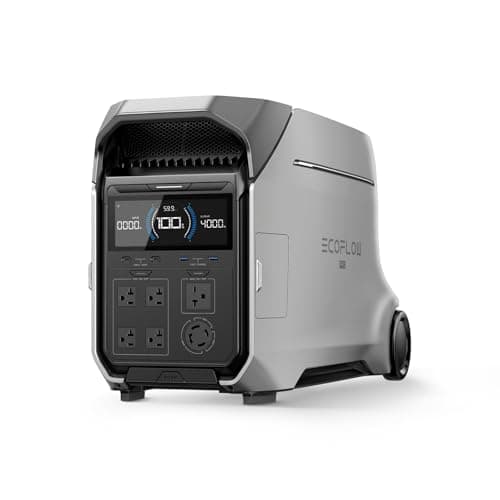
EcoFlow DELTA Pro 3

Best warranty, no conditions attached

EcoFlow DELTA Pro 3

EcoFlow's warranty page lists the DELTA Pro 3 at a flat 5 years, with no registration requirement and no extension to activate.

Anyone who does not want their cover to depend on remembering something
$2,799.00 · Check price on Amazon

#ad how this is funded · price as of October 21, 2026 · $3,699.00 24% off

2
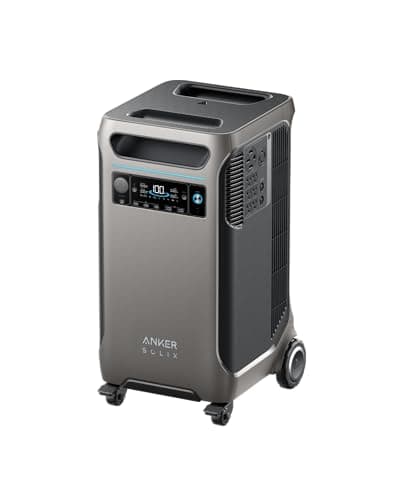
Anker SOLIX F3800

Five years, if you register

Anker SOLIX F3800

Anker publishes 5-year hassle-free protection on portable power stations, activated by registering the unit.

A buyer who will fill in the form on day one
$1,759.99 · Check price on Amazon

#ad how this is funded · price as of October 21, 2026

3
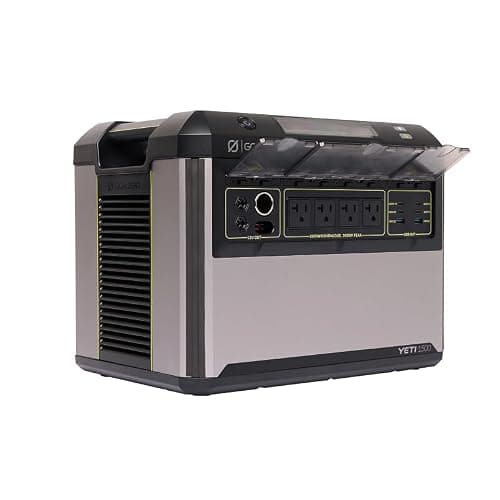
Goal Zero Yeti 1500

Clearest published policy

Goal Zero Yeti 1500

Goal Zero publishes 5 years on its 6th-generation LFP Yeti line by name, and 2 years on the older NMC models by name.

Someone who wants the term written down per model, not per series
$1,499.95 · Check price on Amazon

#ad how this is funded · price as of October 21, 2026

4
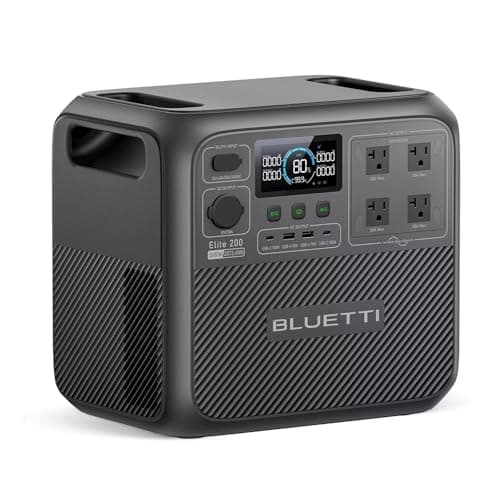
BLUETTI Elite 200 V2

Longest ceiling, published as a range

BLUETTI Elite 200 V2

BLUETTI publishes 24 to 72 months on portable power stations, 48 to 60 on home backup systems, and 12 on panels and accessories.

A buyer willing to confirm the term for their exact model
$1,399.00 · Check price on Amazon

#ad how this is funded · price as of October 21, 2026

5
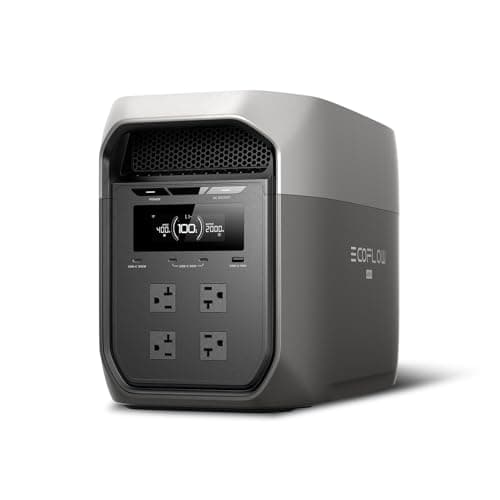
EcoFlow DELTA 3 Max

The three-plus-two pattern, in one model

EcoFlow DELTA 3 Max

3 years standard, plus 2 more on EcoFlow app registration — the term most of the current DELTA 3 range carries.

Showing exactly what registration is worth
$899.00 · Check price on Amazon

#ad how this is funded · price as of October 21, 2026 · $1,199.00 25% off

Prices come from the retailer at page-build time and change constantly. Where no live price is available the button reads “Check price” rather than showing a number we cannot stand behind.

The verdict, in one paragraph

On published terms, BLUETTI has the highest ceiling at up to 72 months on portable power stations, though it publishes a range rather than a per-model figure. Goal Zero has the clearest policy — five years on the 6th-generation LFP Yeti line, named model by model, and two years on the older NMC models. EcoFlow is split: a flat five years on the DELTA 2, DELTA 2 Max, DELTA Pro 3, DELTA 3 Plus and DELTA 3 1500, but three plus two on registration for most of the current DELTA 3 line. Anker SOLIX publishes five years activated by registration with no published deadline. Jackery is the shortest at 2+1 years for its 1500, 1000, 500, 300, 240 and 160 series, and it carries the one condition on this page that specifically penalizes a battery kept for emergencies.

Published terms, brand by brand

BrandPublished termRegistration needed?Panels and accessories
BLUETTI24-72 months, power stations; 48-60 months, home backupNot published as a condition12 months
Goal Zero5 years, 6th-gen LFP Yeti; 2 years, older NMC models; 6 months, lead acid and open boxNo2 years
Anker SOLIX5 years, portable power stationsYes - Anker frames the 5 years as activated by registrationNot published separately
EcoFlow5 years flat on DELTA 2 / 2 Max / Pro 3 / 3 Plus / 3 1500; 3+2 on DELTA 3 Classic, Max, Max Plus, Ultra, Ultra Plus; 24+36 on DELTA Pro; 24+12 on DELTA Max; 24 on DELTA and MiniYes, for every "+" portionNot published in the same table
Jackery5 years, Explorer 5000 Plus; 3+2, HomePower / Explorer Plus (excl. 100 Plus) / Explorer Pro; 2+1, 1500 / 1000 / 500 / 300 / 240 / 160 series; 6 months, renewed unitsYes - activate within 30 days of purchase2+1 years, SolarSaga 200W / 100W / 80W

Each row is quoted from the brand's own current warranty or service policy page, cited under Sources. Terms in this category change between product generations, so a figure published on an older listing or review may no longer apply to the model you are buying — check the policy page for your exact model before you rely on it.

The condition nobody reads, and it targets exactly this use case

Jackery's service policy carries a clause that deserves to be quoted in full, because it penalizes the single most common way a backup battery is owned:

Jackery's warranty does not apply to the battery cell unless the battery cell is fully charged by you within seven days after you purchase the product and at least once every 6 months.

Read that against how a storm battery actually lives: bought in September, charged once, put in a closet, forgotten until the following October. On Jackery's published terms the cell — the most expensive and most likely-to-fail part — is outside warranty by then.

It is not an unreasonable condition. Lithium cells do degrade if left at a low state of charge for long periods, which is why storing a power station is its own page on this site. But it converts "three years plus two" into "three years plus two, provided you set a calendar reminder twice a year," and almost nobody is told that at the point of sale.

The practical takeaway applies to every brand: top the battery up every six months whether or not your warranty demands it. It is good for the cells and it removes any argument.

Five other clauses worth knowing

  1. Unauthorized resellers. BLUETTI excludes products purchased from unauthorized resellers by name. Goal Zero provides US warranty service only for products bought from Goal Zero or an authorized retailer. On a marketplace listing, the seller is not always the brand — check before you buy.
  2. Country of purchase. Anker states the warranty is void on items taken outside the country of purchase unless returned there before the claim. BLUETTI says the same. Goal Zero routes international claims to the retailer you bought from.
  3. Repairs do not restart the clock. EcoFlow publishes that repaired or replaced products are covered for the remainder of the original period. Jackery publishes a 90-day repair warranty from receipt, with the longer of that or the original period applying.
  4. Not transferable. Jackery states the warranty is limited to the original consumer purchaser and is not transferable. Buying used means buying uncovered.
  5. Auction houses and open box. Jackery excludes any product bought through an online auction house, and gives renewed units six months. Goal Zero gives open-box products six months. A refurbished bargain is a six-month bargain.

Warranty length versus cycle rating — which should decide it

These two specifications answer different questions and people conflate them constantly:

  • Cycle rating is how many full charge-discharge cycles the cells are rated for before capacity falls to a stated percentage. For a storm battery cycled twenty times a year, a 4,000-cycle rating is two centuries — irrelevant.
  • Warranty length is how long somebody else pays if it fails. For a storm battery, this is the specification that matters, because the failure mode is a dead inverter or a failed BMS at year four, not worn-out cells.

So the honest ranking depends on use. If the battery will be cycled daily as storage, BLUETTI's 6,000-cycle models are the stronger buy. If it will sit ready for storms and be used a handful of times a year, buy the longest warranty and ignore the cycle count — how long power stations last separates runtime from service life properly.

What to do on the day it arrives

  1. Register it. Anker's five years and every EcoFlow "+2" depend on it. Jackery's extension has a thirty-day window.
  2. Photograph the receipt or order confirmation. Every policy here requires proof of purchase to establish the start date, and BLUETTI specifically asks for an order number or invoice showing the sales channel.
  3. Charge it fully within a week. Jackery requires it in writing; every other brand benefits from it.
  4. Set a six-monthly reminder to top it up. This is the single highest-value thing on the list and it costs nothing.
  5. Check who sold it. If the seller is not the brand or an authorized retailer, BLUETTI and Goal Zero both have language that may leave you uncovered.

Who should buy on warranty

  • A battery that will sit waiting for storms: warranty is the right criterion. EcoFlow's flat-five models and Goal Zero's 6th-generation Yeti line are the cleanest terms — no registration step to forget.
  • A battery cycled daily: buy cycle rating instead. BLUETTI's 6,000-cycle models, and its 72-month ceiling, line up.
  • Anything bought at a steep discount: check the generation. A discounted Goal Zero "x" model carries two years, not five, and a discounted EcoFlow DELTA Max carries 24+12.
  • A refurbished or open-box unit: assume six months and price accordingly.
  • A used unit from a private seller: assume none. Jackery states explicitly that the warranty does not transfer.

The short version

Warranty in this category is published per model, not per brand, and the advertised number is often the registered number. BLUETTI has the highest ceiling at 72 months, Goal Zero the clearest table, EcoFlow the best terms on specific models and the most confusing range overall, Anker a clean five years that you have to activate, and Jackery the shortest standard period plus a cell clause that requires you to charge the thing every six months. Register it the day it arrives, keep the receipt, and top it up twice a year — that covers almost every way these policies can be used against you.

The picks in full

01 — Best warranty, no conditions attached

EcoFlow DELTA Pro 3

EcoFlow's warranty page lists the DELTA Pro 3 at a flat 5 years, with no registration requirement and no extension to activate.

EcoFlow's published warranty table puts the DELTA Pro 3 in the short list of models at a flat five years — no app registration, no 30-day window, nothing to activate. The same applies to the DELTA 2, DELTA 2 Max, DELTA 3 Plus and DELTA 3 1500.

EcoFlow also publishes two terms worth knowing: the period starts from delivery to the original end-user purchaser, and anything repaired or replaced is covered for the remainder of the original period rather than restarting.

The honest catch: most of the newer DELTA 3 range is not on that flat-five list — Classic, Max, Max Plus, Ultra and Ultra Plus are all three years plus two on registration. Model matters more than brand here.

Skip it ifyou need 240V simultaneously with 120V. This unit treats split-phase as a mode.

EcoFlow DELTA Pro 3
$2,799.00 · Check price on Amazon

#ad how this is funded · price as of October 21, 2026 · $3,699.00 24% off

Published specifications for the EcoFlow DELTA Pro 3
SpecificationPublished figure
Capacity4,096 Wh
Cell chemistryLiFePO4 (LFP)
AC output4,000 W, 120V / 240V
Cycle life4,000+ cycles to 80% capacity
Wall recharge0-80% in about 1 hour
Max solar input2,600 W
Expansion4 kWh to 48 kWh

Source: EcoFlow — DELTA Pro 3 product listing. These are the manufacturer's published figures, not ours — we have not tested this unit.

02 — Five years, if you register

Anker SOLIX F3800

Anker publishes 5-year hassle-free protection on portable power stations, activated by registering the unit.

Anker publishes five-year hassle-free protection on its portable power stations, and is explicit that registration activates it. The registration page does not publish a deadline, which is more generous than Jackery's thirty-day window.

Registration also buys priority after-sales service, which in this category is not a trivial benefit — a 130lb battery is not something you want to argue about shipping.

The honest catch: Anker states the warranty is restricted to the country of purchase and is void on items taken outside it unless returned before the claim. That is standard across this category and routinely ignored by people buying abroad.

Skip it ifyou will not register it. Anker's own page frames the five years as something registration activates.

Anker SOLIX F3800
$1,759.99 · Check price on Amazon

#ad how this is funded · price as of October 21, 2026

Published specifications for the Anker SOLIX F3800
SpecificationPublished figure
Capacity3,840 Wh
Cell chemistryLiFePO4
AC output6,000 W continuous, 9,000 W surge
Voltage120V / 240V split-phase
Cycle life3,000+ cycles to 80% capacity
Recharge1,800 W AC, up to 2,400 W solar
ExpansionUp to six expansion batteries, 26.9 kWh total
Warranty5 years
Current Amazon listingRenewed. Anker's new first-party F3800 listing is currently unavailable and the model has been succeeded by the F3800 Plus; the unit itself is unchanged

Source: Anker SOLIX — F3800 product specifications. These are the manufacturer's published figures, not ours — we have not tested this unit.

03 — Clearest published policy

Goal Zero Yeti 1500

Goal Zero publishes 5 years on its 6th-generation LFP Yeti line by name, and 2 years on the older NMC models by name.

Goal Zero publishes the clearest table in the category: it names the models. Five years covers the 6th-generation Yeti line — Yeti 300, 500, 700, 1000, 1500, Pro 4000, Tank Pro 4000 and Haven 10.

Two years covers the older NMC generation by name — Yeti 1500x, 1000x, 3000x, 6000x, 500x, 200x and 1000 CORE — and also Goal Zero's own solar panels and every accessory, light and cooler.

The honest catch: that two-year tier is a trap for anyone buying on a discount. A heavily reduced Yeti 1500x is not a cheaper version of a Yeti 1500; it is a different chemistry with 60% less warranty. LiFePO4 versus lithium-ion explains why the chemistry matters as much as the term.

Skip it ifyou want the most watt-hours per dollar. Goal Zero has never been that purchase.

Goal Zero Yeti 1500
$1,499.95 · Check price on Amazon

#ad how this is funded · price as of October 21, 2026

Published specifications for the Goal Zero Yeti 1500
SpecificationPublished figure
Capacity1,505.28 Wh (51.2 V, 29.4 Ah)
Cell chemistryLiFePO4 (LFP)
AC output2,000 W continuous / 3,600 W surge, pure sine, 4 outlets
USB140 W and 60 W USB-C, plus 2x 30 W
12 V output405 W high-power port, 162 W auxiliary
Cycle life4,000 cycles to 80%
AC recharge0-80% in 0.8 h, full in 1.1 h
Max solar input900 W across dual inputs (about 2 h)
Weight52.75 lb
Dimensions15.7 x 11.4 x 12.02 in
Ingress ratingIPX4 water resistant
Warranty5 years

Source: Goal Zero — Yeti 1500 product specifications. These are the manufacturer's published figures, not ours — we have not tested this unit.

04 — Longest ceiling, published as a range

BLUETTI Elite 200 V2

BLUETTI publishes 24 to 72 months on portable power stations, 48 to 60 on home backup systems, and 12 on panels and accessories.

BLUETTI publishes a band rather than a figure: 24 to 72 months for portable power stations, 48 to 60 months for home backup systems, and 12 months for solar panels and accessories such as cables and chargers.

Seventy-two months is the longest ceiling any brand here publishes, and it sits alongside BLUETTI's 6,000-cycle cell ratings — the two together are a coherent longevity argument.

The honest catch: two clauses. BLUETTI excludes products purchased from unauthorized resellers, and restricts the warranty to the country of purchase, with it becoming invalid once the item is shipped elsewhere. On a marketplace listing, check who is actually selling it.

Skip it ifyou plan to buy from a third-party marketplace seller. BLUETTI excludes unauthorized resellers by name.

BLUETTI Elite 200 V2
$1,399.00 · Check price on Amazon

#ad how this is funded · price as of October 21, 2026

Published specifications for the BLUETTI Elite 200 V2
SpecificationPublished figure
Usable capacity2,073.6 Wh
Cell chemistryAutomotive-grade LiFePO4 (LFP)
AC output2,600 W continuous / 3,900 W power lifting
Cycle life6,000+ cycles
Fast charge0–80% in 50 min via dual AC/DC input

Source: BLUETTI — Elite 200 V2 product specifications. These are the manufacturer's published figures, not ours — we have not tested this unit.

05 — The three-plus-two pattern, in one model

EcoFlow DELTA 3 Max

3 years standard, plus 2 more on EcoFlow app registration — the term most of the current DELTA 3 range carries.

This is the pattern to recognize across the category. The listing says five years; EcoFlow's warranty page says three years plus two on registration, and the same applies to the DELTA 3 Classic, Max Plus, Ultra and Ultra Plus.

The extra two years are real and they are free. They are also conditional on an action nobody takes at the moment of unboxing, which is precisely why brands structure them this way.

The honest catch: an unregistered DELTA 3 Max has a three-year warranty, not a five-year one. Register it the day it arrives, and photograph the receipt while you are at it.

Skip it ifyou want the term without the app. The DELTA Pro 3 and DELTA 3 Plus are flat five years.

EcoFlow DELTA 3 Max
$899.00 · Check price on Amazon

#ad how this is funded · price as of October 21, 2026 · $1,199.00 25% off

Published specifications for the EcoFlow DELTA 3 Max
SpecificationPublished figure
Capacity2,048 Wh, scalable 2-10 kWh
AC output2,400 W rated / 4,800 W surge
X-BoostAppliances up to 3,400 W
AC charge0-80% in 68 minutes
Weight20.3 kg (44.8 lb)
Warranty3 years, plus 2 on EcoFlow app registration

Source: EcoFlow — DELTA 3 Max series product page. These are the manufacturer's published figures, not ours — we have not tested this unit.

How these were chosen

We did not test these. Nobody at Watt & Warden has plugged one in. What we did instead: read the manufacturer's published specifications, compile them into a table where the figures line up, and compute the numbers manufacturers leave out — runtime against a real appliance load, and what an hour of running actually costs.

Anything that could not be sourced was left out rather than estimated, and every pick names the buyer who should skip it. The full method is here, including where it is weaker than a publisher with a test bench.

Questions people actually ask

Which portable power station brand has the best warranty?

It depends on the model, not the brand. BLUETTI publishes the highest ceiling at 24 to 72 months on portable power stations. Goal Zero publishes five years on its 6th-generation LFP Yeti line with no registration required. EcoFlow lists a flat five years on the DELTA 2, DELTA 2 Max, DELTA Pro 3, DELTA 3 Plus and DELTA 3 1500. Anker SOLIX publishes five years activated by registration.

Does a power station warranty require registration?

Often, for part of it. Anker frames its five-year protection as something registration activates. EcoFlow requires app registration for every '+2' or '+3' portion, which covers most of the current DELTA 3 line. Jackery requires the extension to be activated on its website within 30 days of purchase. Goal Zero's published terms do not require registration.

Can a warranty be void if I do not charge the battery?

Yes, on Jackery. Its service policy states the warranty does not apply to the battery cell unless the cell is fully charged within seven days of purchase and at least once every six months. That specifically affects batteries bought for emergencies and left in storage. Charging any lithium battery every six months is good practice regardless of brand.

Does buying on a marketplace affect the warranty?

It can. BLUETTI excludes products purchased from unauthorized resellers by name and asks for proof showing the sales channel. Goal Zero provides US warranty service for products bought from Goal Zero or authorized retailers. Jackery excludes anything bought through an online auction house. Check who the actual seller is, not just the listing.

What is Jackery's warranty on a power station?

By series, per Jackery's current service policy: five years on the Explorer 5000 Plus series; three plus two years on the HomePower series, Explorer Plus (excluding the 100 Plus) and Explorer Pro series; two plus one years on the 1500, 1000, 500, 300, 240 and 160 series and SolarSaga 200W, 100W and 80W panels; and six months on renewed products.

What is Goal Zero's warranty?

Five years on the 6th-generation Yeti line - Yeti 300, 500, 700, 1000, 1500, Pro 4000, Tank Pro 4000 and Haven 10. Two years on the older NMC models including the Yeti 1500x, 1000x, 3000x, 6000x, 500x, 200x and 1000 CORE, and on Goal Zero solar panels, power banks, lights and coolers. Six months on lead acid batteries and open-box products.

Does a repair restart my warranty?

No. EcoFlow publishes that repaired or replaced products are warranted for the remainder of the original period from the date of repair. Jackery publishes a 90-day repair warranty from the date you receive the unit back, with whichever of that or the original period lasts longer applying.

Should I choose on warranty length or cycle rating?

On warranty if the battery will sit ready for storms and be used a few times a year, because the realistic failure is an inverter or BMS at year four rather than worn cells. On cycle rating if it will be cycled daily as storage, where BLUETTI's 6,000-cycle models are the stronger buy. A 4,000-cycle rating at twenty cycles a year is two centuries of nominal life and tells you nothing useful.

Sources