Skip to content
Watt Warden

Accessories

The Best Battery Maintainers and Chargers (2026)

A perfectly maintained machine that exercises weekly and has full fuel will do nothing at all if its starting battery is flat. There is no pull cord on a standby unit.

By Sawyer V.Updated Published How we work this out
A car battery with charger clamps attached.

Watt & Warden earns a commission on qualifying purchases made through links on this page, at no extra cost to you. It never changes a ranking, and our picks include products we tell you to skip. Full disclosure.

Quick picks

#ProductBest forPrice
1
No photo

Best overall

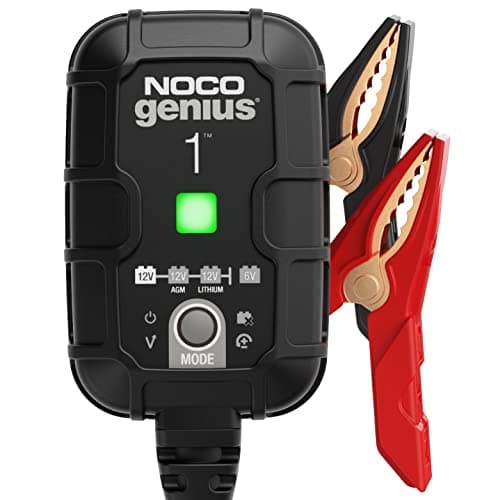
NOCO GENIUS1 battery charger and maintainer

1A at 6V or 12V, with desulfation, temperature compensation and Force Mode, rated to −4°F.

A generator starting battery, year round
2
No photo

The machine this protects

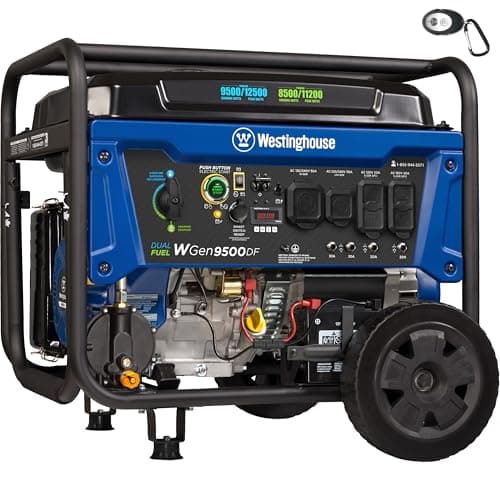
Westinghouse WGen9500DF

9,500 running watts with push-button electric start and a remote key fob.

Electric-start portables
3
No photo

The battery that needs none of this

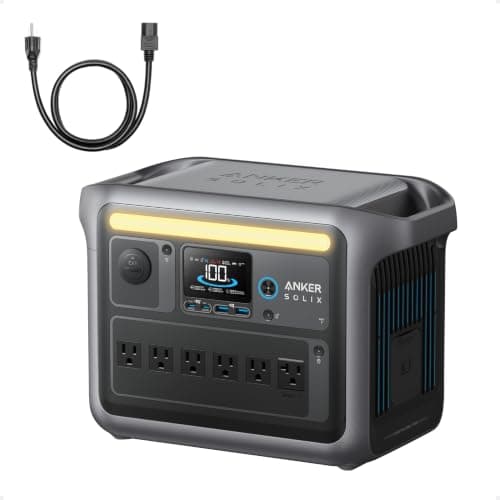
Anker SOLIX C1000

1,056Wh of LiFePO4 with 1,800W output and a fast recharge.

Backup power with no starting battery at all

Prices come from the retailer at page-build time and change constantly. Where no live price is available the button reads “Check price” rather than showing a number we cannot stand behind.

Why this is the component that fails

Work through what an electric-start generator needs in order to start: fuel, oil, a spark, and a battery with enough current to turn the engine over.

Three of those you can see, smell or check. The fourth degrades silently over months of standing and gives no warning until the button produces a click.

On a standby generator this is worse, because there is no pull cord. A permanently installed unit with a flat starting battery is a very expensive machine that does nothing at all when the grid drops — perfectly serviced, full of fuel, exercising every week, and inert.

That is why Generac places battery condition, electrolyte level and state of charge in the yearly inspection list rather than the two-year service. The published schedule makes the priority explicit.

What kills a standing battery

Two mechanisms, and a maintainer addresses both.

1. Self-discharge. A lead-acid battery loses charge sitting still, and faster in heat. Add a small parasitic draw from a controller and a battery left for a season arrives at spring substantially down.

2. Sulfation. Left at partial charge, lead sulfate crystals form on the plates and harden. That reduces the surface area available for the reaction, which reduces capacity, which means it sits at partial charge more easily — a loop that ends in a battery that reads a plausible voltage and cannot turn an engine.

Sulfation is why a battery can look fine on a voltmeter and fail under load, and it is what a desulfation mode is for.

Maintainer, trickle charger, or charger?

TypeWhat it doesLeave connected?
Smart maintainerCharges, then monitors and tops up only as needed; often desulfatesYes — designed for it
Simple trickle chargerSupplies a constant small current regardless of stateNo — it will overcharge and boil off electrolyte over months
Bulk chargerHigh current to recharge a dead battery quicklyNo — it is a recovery tool

The distinction that matters: a maintainer decides when to charge, a trickle charger does not. Leaving a dumb trickle charger on a battery for a winter is a common way to destroy one.

For a generator, a maintainer is the right tool. 1A is plenty — you are replacing self-discharge, not recovering a dead battery from a headlight left on.

Match the chemistry

Generator starting batteries are usually flooded lead-acid or AGM. Increasingly, some are lithium.

These want different charge profiles, and using the wrong one is the most common way people damage a battery with a charger:

  • Flooded lead-acid. Tolerates a conventional profile; electrolyte level should be checked periodically on serviceable types.
  • AGM. Sealed, and more sensitive to overvoltage than flooded.
  • Lithium — LiFePO4. Needs a lithium mode, which most chargers require you to select manually rather than detecting. Selecting it wrongly in either direction is the mistake.

Check what your generator uses before buying a charger, and check that the charger supports it. A multi-chemistry unit removes the question.

Where to put it

  • Somewhere with a permanent outlet, so it can simply stay connected. A maintainer you have to remember to plug in is a maintainer that does not get plugged in.
  • Follow the manufacturer's guidance on ventilation. Flooded lead-acid batteries vent hydrogen when charging.
  • Secure the leads so they cannot short across the terminals or be pulled off.
  • Check your generator's manual first. Some standby units include their own battery charger as part of the controller, in which case adding a second one is unnecessary and possibly unwelcome.

Replace on age, not on failure

The habit that actually prevents the failure this page is about.

Starting batteries last roughly three to five years, less in heat, and the failure is sudden rather than gradual. A maintainer extends that meaningfully — it does not make a battery permanent.

  • Write the installation date on it in permanent marker. Nobody remembers otherwise.
  • Replace at four to five years regardless of how it seems.
  • Test it by starting the machine twice a year, not by looking at a voltmeter. Sulfated batteries read plausible voltages and fail under load.
  • Act on a low-battery warning the same week. Most standby controllers report one, and it is the single most actionable alert the system produces.

Other batteries worth maintaining

The same device usually covers several things that fail for the same reason:

  • A vehicle you rarely drive. Same failure mode, same fix, and in an outage the car may matter.
  • A tractor, mower or ATV that sits over winter.
  • A boat battery out of season.
  • A sump pump backup battery, which is exactly the kind of battery that fails quietly and is discovered during a flood.

What it does not cover: your power station, which manages its own charging and needs nothing but a top-up twice a year, and the CR-type cells in alarms and detectors, which are simply replaced.

Where this sits in the kit

For a recoil-start portable, you do not need one at all.

For an electric-start portable or any standby generator, it is one of the cheapest items on the site against one of the most consequential failures — a machine that does nothing when it is needed, for a reason that had nothing to do with the engine.

The troubleshooting page puts a flat starting battery among the four checks worth making first, and the cold weather page explains why winter makes it worse.
The picks in full

01Best overall

NOCO GENIUS1 battery charger and maintainer

1A at 6V or 12V, with desulfation, temperature compensation and Force Mode, rated to −4°F.

The specification that matters for a generator is the integrated thermal sensor. It adjusts charging for ambient temperature, which prevents undercharging in a cold garage — exactly where a standby or portable generator battery lives, and exactly when it is most likely to fail.

Rated to operate from −4°F to 104°F, which is the point of buying this rather than a summer trickle charger.

Desulfation matters on a battery that spends months at partial charge. Sulfation is what quietly halves the life of a standing battery, and a maintainer that actively addresses it is doing something a plain trickle charger does not.

Force Mode charges from 0V, which recovers a battery a simpler charger will refuse to even acknowledge.

Skip it ifyou need to charge a large deep-cycle bank quickly. 1A is a maintainer, not a bulk charger.

Published specifications for the NOCO GENIUS1 battery charger and maintainer
SpecificationPublished figure
Output1 A DC at 6 V or 12 V
Capacity rangeUp to 30 Ah, maintains larger batteries
ChemistriesFlooded, gel, AGM, SLA, maintenance-free and LiFePO4
RepairDetects sulfation and acid stratification, desulfation mode
RecoveryCharges from 1 V, or from 0 V in Force Mode
CompensationThermal sensor adjusts charging for ambient temperature
Operating range-4°F to 104°F
Size3.5 x 2.3 x 1.3 in

Source: NOCO — GENIUS1 product page. These are the manufacturer's published figures, not ours — we have not tested this unit.

02The machine this protects

Westinghouse WGen9500DF

9,500 running watts with push-button electric start and a remote key fob.

Electric start is the feature that makes a large generator usable in bad weather, and it is also the feature that introduces a battery with a three-to-five-year life.

The trade is worth making — pull-starting a 457cc engine in sleet is where people give up — but it means the battery becomes a maintenance item rather than an afterthought.

Skip it ifyour generator is recoil-start only — then there is no battery.

Published specifications for the Westinghouse WGen9500DF
SpecificationPublished figure
Output (gasoline)9,500 running W / 12,500 peak W
FuelGasoline or propane (dual fuel)
Engine457cc 4-stroke OHV, cast iron sleeve
Tank6.6 gal (25 L)
Run timeup to 12 h on a full tank
Transfer-switch outlet120/240 V L14-30R, 30 A
RV outlet120/240 V 14-50R, 50 A
StartingPush-button electric with remote key fob
Warranty3-year limited

Source: Westinghouse — WGen9500DF product specifications. These are the manufacturer's published figures, not ours — we have not tested this unit.

03The battery that needs none of this

Anker SOLIX C1000

1,056Wh of LiFePO4 with 1,800W output and a fast recharge.

Worth naming because the whole failure mode this page describes does not exist for a battery. There is nothing to start, so there is no starting battery to go flat.

Its own maintenance is a top-up twice a year — the storage routine.

Skip it ifyou need multi-day runtime, which an engine does better.

Published specifications for the Anker SOLIX C1000
SpecificationPublished figure
Usable capacity1,056 Wh
Cell chemistryLiFePO4 (LFP)
AC output1,800 W continuous / 2,400 W SurgePad
Cycle life3,000 cycles
Wall recharge80% in 43 min, full in 58 min
Max solar input600 W (full solar recharge ~1.8 h)
Ports11 total, including 6 AC on panel-equipped bundles

Source: Anker — SOLIX C1000 product specifications. These are the manufacturer's published figures, not ours — we have not tested this unit.

How these were chosen

We did not test these. Nobody at Watt & Warden has plugged one in. What we did instead: read the manufacturer's published specifications, compile them into a table where the figures line up, and compute the numbers manufacturers leave out — runtime against a real appliance load, and what an hour of running actually costs.

Anything that could not be sourced was left out rather than estimated, and every pick names the buyer who should skip it. The full method is here, including where it is weaker than a publisher with a test bench.

Questions people actually ask

Why does a generator need a battery maintainer?

Because the starting battery is the shortest-lived component and it fails silently. On a standby unit there is no pull cord, so a dead battery means a perfectly serviced machine full of fuel does nothing at all. Generac places battery condition in the yearly inspection list rather than the two-year service for that reason.

What is the difference between a maintainer and a trickle charger?

A maintainer decides when to charge -- it tops up only as needed and can be left connected indefinitely. A simple trickle charger supplies constant current regardless, and leaving one on a battery for a winter will overcharge it and boil off electrolyte. That distinction is what matters.

What kills a generator starting battery?

Self-discharge over months of standing, faster in heat and worse with a parasitic controller draw. Then sulfation -- lead sulfate crystals hardening on the plates at partial charge, reducing capacity in a loop. Sulfation is why a battery can read a plausible voltage and still fail under load.

Can I use any charger on a generator battery?

Match the chemistry. Flooded lead-acid, AGM and LiFePO4 want different charge profiles, and most chargers need lithium mode selected manually rather than detecting it. Check what your generator uses before buying, and check your manual -- some standby units include their own charger in the controller.

How often should I replace a generator starting battery?

Every four to five years regardless of how it seems -- they last three to five, less in heat, and the failure is sudden. Write the installation date on it in marker, test by actually starting the machine twice a year rather than by voltmeter, and act on any low-battery warning the same week.

Sources

Every figure on this page comes from a published source. We have not tested this equipment, so the specifications are the manufacturer's and the statistics are the dataset's — the arithmetic on top of them is ours, and it is shown in full so you can check it. How we work this out.