Skip to content
Watt Warden

Power Stations

How to Store a Power Station

A backup battery is used four times a year and stored the rest. Everything that decides whether it still holds its rated capacity in year five happens during the storage, not the use.

By Sawyer V.Updated Published How we work this out
Tidy shelving storage in a clean garage.

Watt & Warden earns a commission on qualifying purchases made through links on this page, at no extra cost to you. It never changes a ranking, and our picks include products we tell you to skip. Full disclosure.

Storage is what actually ages a backup battery

Every comparison in this category leads with cycle life, and for backup use it is nearly the wrong number.

A cycle is a full discharge and recharge. Four outages and two test runs a year is roughly six cycles — so even a 500-cycle battery would outlast the house on cycles alone, and a LiFePO4 unit rated at 3,000+ is not going to reach its limit that way.

What does reach it is calendar aging: the slow, unavoidable capacity loss that happens simply from the cells existing. Two things accelerate it, and both are storage decisions rather than usage ones.

The two levers

FactorWorseBetter
TemperatureHot garage, attic, car in summerIndoors at room temperature
State of chargeLeft at 100% for monthsStored part-charged
Deep dischargeLeft flat for monthsNever below the manufacturer's storage floor
Humidity and dustDamp basement, workshopDry, covered, ventilated

This is the general behavior of lithium cells rather than one manufacturer's instruction. Your unit's manual will give a specific recommended storage charge level and temperature range, and that is the authority — several manufacturers now build a storage mode into the app that manages it for you.

The tension nobody resolves for you

Here is the honest problem with backup power specifically.

Battery health says store it part-charged. Preparedness says store it full, because an outage does not announce itself and a battery at 60% when the lights go out is 40% of a purchase wasted.

Both are right, and the resolution is seasonal rather than absolute:

  • In your risk season — hurricane months, winter storm months — keep it full and accept the small aging cost. This is when the equipment has to work.
  • Out of season, let it sit part-charged, or use the storage mode if your unit has one.
  • When a forecast appears, charge to full. Every unit worth owning refills in hours, and several in under an hour.

That gets most of the longevity benefit without ever being caught short, and it is what we would actually do.

Where to put it

  • Indoors, at room temperature. A hall closet, under a bed, a spare room. This is the single biggest decision.
  • Not the garage, if you can avoid it. Garages swing hot in summer and below freezing in winter, and cold is the reason a battery may refuse to charge at all on the morning you need it.
  • Not the attic. The worst place in most houses.
  • Somewhere you can reach in the dark. Behind three boxes of Christmas decorations does not count.
  • With its cables. A charged battery and no charging brick is half a product.
  • Off the floor if the space ever takes water — which is worth thinking about, since flooding and outages arrive together.

The twice-a-year routine

Ten minutes, at the same time you exercise the generator and test the alarms:

  1. Switch it on and read the state of charge. A unit that has lost more than a few percent over six months has a parasitic drain or a problem.
  2. Top it up. Bring it to your seasonal target.
  3. Put a real load on it for a few minutes. A lamp or a kettle. This confirms the inverter works, which sitting on a shelf does not.
  4. Check the app or firmware. Battery management updates are worth taking.
  5. Wipe the vents. Dust in the cooling path is a real failure cause on units that live in workshops.
  6. Confirm the cables are still with it.

Long storage — six months or more

If a unit is going away for a season, or you are storing a spare:

  • Bring it to the manufacturer's recommended storage level, not full and not flat. Most specify something in the middle of the range.
  • Turn everything off, including the DC and USB rails. Standby draw is small but it runs for months.
  • Set a calendar reminder for six months out. A battery left to self-discharge into deep discharge can be damaged permanently, and some will refuse to wake up at all.
  • Do not store it in a sealed bag. Condensation is worse than dust.

What you will actually see over time

Expect gradual capacity loss rather than sudden failure. A LiFePO4 unit stored sensibly should still hold the large majority of its rated capacity after several years, which is why manufacturers now publish ten-year design lives.

Signs worth acting on: a noticeably shorter runtime on the same load, a state of charge that falls fast under light use, refusal to charge past a point, or any swelling or heat at rest. The last of those means stop using it.

How long power stations last covers degradation in more detail, and the chemistry comparison explains why the answer differs so much between older and newer units.

Compared with storing a generator

Worth stating plainly, because it is one of the strongest arguments for a battery. A generator needs stabilized fuel or a dry carburetor, an oil check, a monthly exercise run and a spring service. A battery needs a top-up twice a year and a sensible cupboard.

That is the whole maintenance difference, and for a lot of households it is the deciding one.

Quick picks

#ProductBest forPrice
1
No photo

Best chemistry for long storage

BLUETTI Elite 200 V2

2,073Wh of LiFePO4 with a published ten-year design life and 2,600W output.

Equipment that must work in year five
2
No photo

Best storage-friendly mid-size

Anker SOLIX C1000

1,056Wh of LiFePO4 with 1,800W output and a fast recharge.

A closet, indoors, for years at a time
3
No photo

The one that lives in the car

Jackery Explorer 300 Plus

A compact LiFePO4 station small enough to keep in a vehicle year-round.

A second unit stored somewhere hostile

Prices come from the retailer at page-build time and change constantly. Where no live price is available the button reads “Check price” rather than showing a number we cannot stand behind.

The picks in full

01Best chemistry for long storage

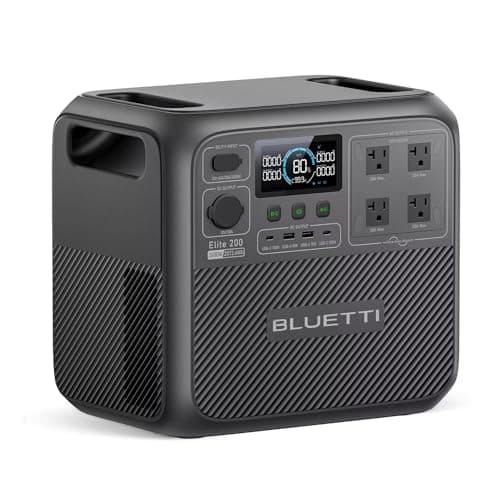
BLUETTI Elite 200 V2

2,073Wh of LiFePO4 with a published ten-year design life and 2,600W output.

The ten-year design life is the specification that matters for a stored battery, and it is a calendar figure rather than a cycle figure. Cycle counts are close to irrelevant for something used four times a year.

LiFePO4 also tolerates warm storage far better than the chemistry it replaced, which is why it is the sensible choice for a unit that will spend summers in a closet.

Skip it ifweight is your first constraint. LiFePO4 is heavier per watt-hour than the chemistry it replaced.

Published specifications for the BLUETTI Elite 200 V2
SpecificationPublished figure
Usable capacity2,073.6 Wh
Cell chemistryAutomotive-grade LiFePO4 (LFP)
AC output2,600 W continuous / 3,900 W power lifting
Cycle life6,000+ cycles
Fast charge0–80% in 50 min via dual AC/DC input

Source: BLUETTI — Elite 200 V2 product specifications. These are the manufacturer's published figures, not ours — we have not tested this unit.

02Best storage-friendly mid-size

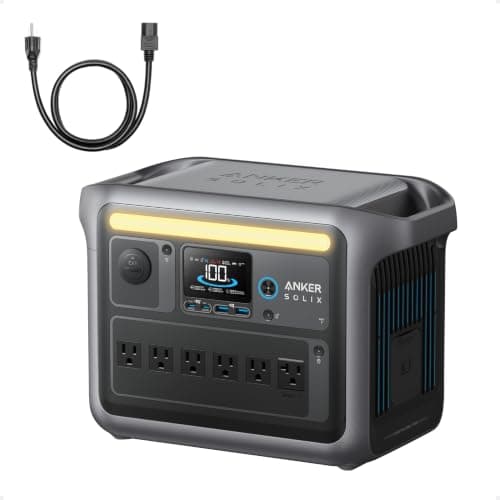
Anker SOLIX C1000

1,056Wh of LiFePO4 with 1,800W output and a fast recharge.

Size matters for storage in a practical rather than technical way: a unit that fits in a hall closet gets stored indoors at room temperature, and a unit that does not gets stored in the garage, where it ages faster.

The fast recharge matters here too — a twice-yearly top-up that takes an hour actually happens, and one that takes eight hours often does not.

Skip it ifyou need 2kWh. Buy the capacity you need rather than under-buying.

Published specifications for the Anker SOLIX C1000
SpecificationPublished figure
Usable capacity1,056 Wh
Cell chemistryLiFePO4 (LFP)
AC output1,800 W continuous / 2,400 W SurgePad
Cycle life3,000 cycles
Wall recharge80% in 43 min, full in 58 min
Max solar input600 W (full solar recharge ~1.8 h)
Ports11 total, including 6 AC on panel-equipped bundles

Source: Anker — SOLIX C1000 product specifications. These are the manufacturer's published figures, not ours — we have not tested this unit.

03The one that lives in the car

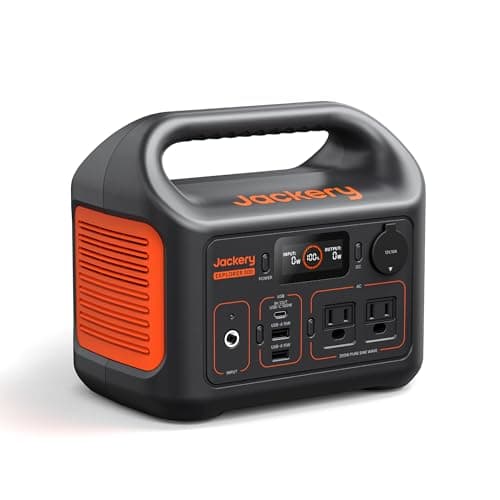
Jackery Explorer 300 Plus

A compact LiFePO4 station small enough to keep in a vehicle year-round.

Named to make the point rather than to recommend the location. A car swings from below freezing to well over 120°F in a closed cabin, and both extremes age cells and can block charging entirely.

If you do keep one in a vehicle, keep it small, keep it part-charged, bring it inside in extreme weather, and expect its useful life to be shorter than the same unit in a closet.

Skip it ifit is your only battery. A vehicle is the worst storage environment there is.

Published specifications for the Jackery Explorer 300 Plus
SpecificationPublished figure
Usable capacity288 Wh
Cell chemistryLiFePO4 (LFP)
AC output300 W continuous
Weight8.3 lb (3.75 kg)
Solar compatibilitySolarSaga 40/60/80/100 W panels
ControlWi-Fi and Bluetooth app monitoring

Source: Jackery — Explorer 300 Plus product specifications. These are the manufacturer's published figures, not ours — we have not tested this unit.

How these were chosen

We did not test these. Nobody at Watt & Warden has plugged one in. What we did instead: read the manufacturer's published specifications, compile them into a table where the figures line up, and compute the numbers manufacturers leave out — runtime against a real appliance load, and what an hour of running actually costs.

Anything that could not be sourced was left out rather than estimated, and every pick names the buyer who should skip it. The full method is here, including where it is weaker than a publisher with a test bench.

Questions people actually ask

Should I store a power station fully charged?

In your risk season, yes -- an outage does not announce itself and a battery at 60% is a wasted purchase. Out of season, store it part-charged or use your unit's storage mode, because sitting at 100% for months accelerates calendar aging. Charge to full when a forecast appears.

Where should I store a power station?

Indoors at room temperature -- a hall closet or spare room. Avoid the garage and especially the attic: both swing hot in summer and below freezing in winter, and cold is why a battery may refuse to charge at all on the morning you need it. Keep the cables with it.

How often should I charge a power station in storage?

Every six months at minimum, folded into the same routine as exercising a generator and testing alarms. Check the state of charge, top it up, and put a real load on it for a few minutes -- that last step confirms the inverter works, which sitting on a shelf does not.

Can I leave a power station plugged in all the time?

Many units are designed for it and manage the charge themselves, so check your manual. Where it is supported, the trade is convenience against the small aging cost of sitting near full. If your unit offers a storage or battery-care mode, that is the setting for out-of-season months.

Does storing a power station in a car damage it?

It shortens its life. A closed cabin swings from below freezing to well over 120F, and both extremes age cells -- cold can also block charging entirely. If you keep one in a vehicle, keep it small and part-charged, bring it inside in extremes, and expect a shorter useful life than the same unit in a closet.

Sources

Every figure on this page comes from a published source. We have not tested this equipment, so the specifications are the manufacturer's and the statistics are the dataset's — the arithmetic on top of them is ours, and it is shown in full so you can check it. How we work this out.