Skip to content
Watt Warden

Home Standby

Standby Generator Maintenance

A standby generator services itself weekly and then does nothing for a year. The break-in oil change at 25 hours and the battery nobody checks are what decide whether it starts when the grid goes down.

By Sawyer V.Updated Published How we work this out
A technician servicing outdoor equipment with tools.

Watt & Warden earns a commission on qualifying purchases made through links on this page, at no extra cost to you. It never changes a ranking, and our picks include products we tell you to skip. Full disclosure.

What a standby unit does on its own

The reason a permanently installed generator is a different maintenance problem from a portable is that it tests itself. Modern systems run a scheduled self-test — commonly weekly — where the engine starts, runs for a few minutes and shuts down without transferring the house.

That exercise cycle is doing most of what a portable owner has to do by hand: circulating oil, warming the engine, and burning off the fuel standing in the system. It is why a standby unit is far more likely to start when needed than a portable that has sat in a garage since spring.

It also means the machine accumulates hours whether or not you ever lose power. That matters for the interval below, and it is the fact owners most often get wrong.

The break-in service, which is not optional

Generac's published guidance is explicit: complete the break-in oil and filter change at the first 25 hours of total engine runtime, regardless of how those hours were accumulated — exercise or outage. Its stated reasoning is that the interval is based on engine hours, not calendar time or outage events.

The associated tasks Generac lists are:

  • Change oil and oil filter.
  • Inspect and adjust valve clearance — except on Next Generation series units and 14 and 18 kW Guardian series units, which use hydraulic lifters and do not need it.

PowerPact 7.5 kW units use a 20-hour interval instead of 25. Check your model rather than assuming.

Here is why this catches people. A weekly exercise cycle of a few minutes accumulates hours steadily in the background. A house that has never had an outage can still pass 25 engine hours, and the owner has no reason to think anything is due. Warranty compliance depends on it.

Generac's published schedule

IntervalTasks
First 25 hours of runtimeBreak-in oil and filter change; inspect/adjust valve clearance
Yearly, or every 100 hoursInspect lines and connections for fuel or oil leaks; check battery condition, electrolyte level and state of charge; perform fuel system leak test
Every 2 years or 200 hours (Schedule A)Replace engine oil and oil filter; replace engine air filter; clean and inspect spark plug gap, replace if necessary
Every 4 years or 400 hours (Schedule B)Replace engine oil and oil filter

Transcribed from Generac's published maintenance schedule guidance for air-cooled home standby units. Generac also specifies that generators operating below 40°F or above 85°F need oil and filter changes every year or every 100 hours of runtime since the last service. Kohler and other manufacturers publish their own schedules — use the one in your own manual. How the two brands compare.

The temperature clause deserves attention because it applies to a lot of houses. If your unit lives through northern winters or southern summers — which is to say, most of the country — the practical interval is annual, not biennial.

The battery is what actually fails

Notice that battery condition, electrolyte level and state of charge sit in the yearly list rather than the two-year one. That placement is deliberate.

A standby generator starts electrically. There is no pull cord. A dead starting battery means a machine that has been maintained perfectly, exercises every week, has full fuel — and does nothing at all when the grid drops. It is the most common way these systems disappoint their owners.

Batteries age in three to five years, faster in heat, and the failure is usually sudden. Most controllers will flag a low battery on the display or in the app, and that warning is the one worth acting on the same week.

What the exercise cycle costs

It is not free, and owners are sometimes surprised by the fuel line item.

  • On natural gas, the exercise cycle shows up as a small, continuous addition to the gas bill. Most systems allow you to set the day, time and in some cases the duration — moving it to a weekday daytime slot spares the neighborhood a Sunday morning start.
  • On propane, it draws down the tank steadily, which matters because the tank is finite. Factor exercise consumption into how often you refill, and never let the tank sit near empty in a storm season.
  • Engine hours accumulate, which is the point above: fifteen minutes a week is thirteen hours a year, so the 25-hour break-in service arrives inside two years even with no outages at all.

Owner tasks versus dealer tasks

The line is worth being clear about, because a service contract is a real annual cost and some of what it covers you can genuinely do.

Yours, and worth doing seasonally

  • Clear leaves, snow and vegetation from around the enclosure. Airflow is how an air-cooled engine survives.
  • Look at the display or the app for fault codes. Most systems report problems long before they matter.
  • Confirm the weekly exercise actually happened. If you have not heard it in a month, something is wrong.
  • Check for rodent nests and chewed wiring. Warm enclosures attract animals, and this is a real failure cause.
  • Test CO and smoke alarms at the same time.

Theirs

  • Oil and filter changes on schedule, and the break-in service.
  • Valve clearance where the model requires it.
  • Spark plugs and air filter.
  • Fuel system leak testing.
  • Transfer switch inspection and load testing.
  • Firmware updates on connected units.

Whether an annual contract is worth it depends on what your dealer charges against parts and a Saturday. What is not optional is that the work happens — warranty coverage is generally conditional on documented maintenance.

The two things a standby system cannot do

It cannot cover the transfer gap. Detection, start and transfer take seconds, and everything in the house is dark for them. If anything you own must not blink — a desktop mid-document, a NAS mid-write, the internet equipment — that needs a UPS regardless of what is bolted to the side of the house. UPS versus power station covers the distinction.

It cannot make its own fuel. A natural-gas unit depends on the gas main, and a propane unit depends on what is in the tank. Gas supply interruptions are rare but they are exactly the kind of event that accompanies an earthquake or a major storm. A modest battery or a small portable is the cheap answer to the scenario a standby system is architecturally unable to handle.

If you are still deciding between a permanently installed unit and the alternatives, generator versus home battery and the whole-house comparison are the places to start.

Quick picks

#ProductBest forPrice
1
No photo

Covers the transfer gap

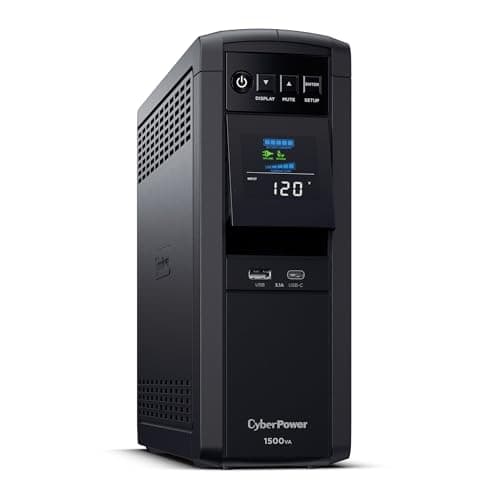
CyberPower CP1500PFCLCD

1,500VA / 1,000W of pure-sine backup with automatic voltage regulation.

Anything that must not blink
2
No photo

Still required with a standby unit

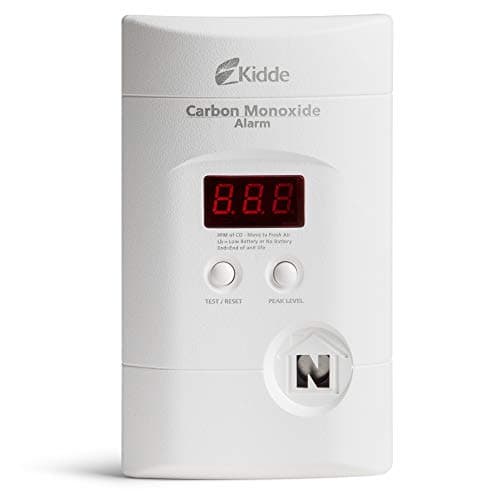
Kidde Nighthawk KN-COPP-3 CO alarm

Plug-in CO alarm with battery backup and a digital ppm display.

Every level of the house
3
No photo

The backup to the backup

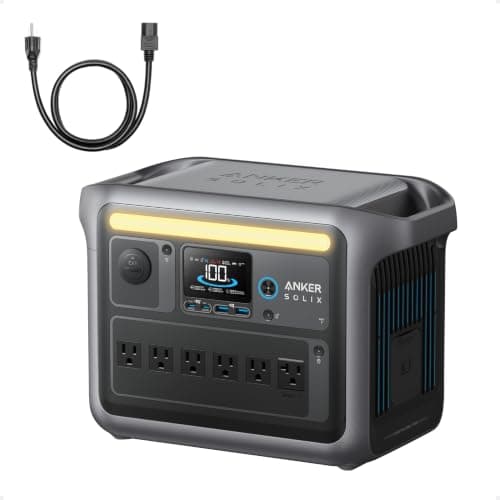
Anker SOLIX C1000

1,056Wh of LiFePO4 with 1,800W output — enough for a fridge and the essentials.

The week the unit is out of service

Prices come from the retailer at page-build time and change constantly. Where no live price is available the button reads “Check price” rather than showing a number we cannot stand behind.

The picks in full

01Covers the transfer gap

CyberPower CP1500PFCLCD

1,500VA / 1,000W of pure-sine backup with automatic voltage regulation.

A standby generator is not instantaneous. It has to detect the outage, start, warm briefly and transfer, and everything in the house is dark for those seconds. Desktops reboot, a NAS drops mid-write, and the internet equipment restarts and takes minutes to reconnect.

A UPS bridges exactly that gap, which is the one job a standby system cannot do for itself. Pure sine wave matters for power-factor-corrected computer supplies.

It also covers the reverse case — the week the generator is down for its annual service.

Skip it ifnothing in the house minds a brief interruption. Then this is solving a problem you do not have.

Published specifications for the CyberPower CP1500PFCLCD
SpecificationPublished figure
Capacity1,500 VA / 1,000 W
WaveformPure sine wave (PFC compatible)
Outlets12 NEMA 5-15R — 6 battery-backed, 6 surge-only
RegulationAutomatic voltage regulation (AVR)
Run timeabout 10 min at half load, 2.5 min at full load
Warranty3 years including the battery

Source: CyberPower — CP1500PFCLCD product specifications. These are the manufacturer's published figures, not ours — we have not tested this unit.

02Still required with a standby unit

Kidde Nighthawk KN-COPP-3 CO alarm

Plug-in CO alarm with battery backup and a digital ppm display.

A permanently installed generator sits outside at a code-specified distance, which makes it far safer than a portable. It does not make the house exempt: exhaust still exists, wind still shifts, and the unit runs unattended for hours while everyone sleeps.

Check where your unit's exhaust points relative to windows, vents and the outdoor air intake of any HVAC equipment. It is worth one look after installation and one look after any landscaping change.

Skip it ifyours are current and tested. Check the printed expiration date.

Published specifications for the Kidde Nighthawk KN-COPP-3 CO alarm
SpecificationPublished figure
SensorElectrochemical
Power120 V AC plug-in with 9 V battery backup
DisplayDigital, 30–999 ppm, refreshed every 15 s
Alarm85 dB
MemoryPeak-level memory of the last detection or test
Warranty10-year limited; UL certified

Source: Kidde — Nighthawk KN-COPP-3 product page. These are the manufacturer's published figures, not ours — we have not tested this unit.

03The backup to the backup

Anker SOLIX C1000

1,056Wh of LiFePO4 with 1,800W output — enough for a fridge and the essentials.

Standby generators fail in exactly two situations that a battery covers: the annual service window, and a gas supply interruption after an earthquake or a main break. Neither is common; both leave a house with a very expensive machine that will not run.

A modest battery is cheap insurance against the one scenario a standby system is architecturally unable to handle.

Skip it ifyou have a portable generator already. This is redundancy, not a requirement.

Published specifications for the Anker SOLIX C1000
SpecificationPublished figure
Usable capacity1,056 Wh
Cell chemistryLiFePO4 (LFP)
AC output1,800 W continuous / 2,400 W SurgePad
Cycle life3,000 cycles
Wall recharge80% in 43 min, full in 58 min
Max solar input600 W (full solar recharge ~1.8 h)
Ports11 total, including 6 AC on panel-equipped bundles

Source: Anker — SOLIX C1000 product specifications. These are the manufacturer's published figures, not ours — we have not tested this unit.

How these were chosen

We did not test these. Nobody at Watt & Warden has plugged one in. What we did instead: read the manufacturer's published specifications, compile them into a table where the figures line up, and compute the numbers manufacturers leave out — runtime against a real appliance load, and what an hour of running actually costs.

Anything that could not be sourced was left out rather than estimated, and every pick names the buyer who should skip it. The full method is here, including where it is weaker than a publisher with a test bench.

Questions people actually ask

How often does a standby generator need servicing?

Generac publishes a yearly-or-100-hour inspection covering leaks, battery condition and a fuel system leak test, then oil, filter, air filter and spark plug service every 2 years or 200 hours. Units operating below 40F or above 85F need oil and filter changes every year or 100 hours instead.

When is the first oil change on a new standby generator?

Generac specifies the break-in oil and filter change at the first 25 hours of total engine runtime, regardless of whether those hours came from exercise cycles or outages -- 20 hours on PowerPact 7.5kW units. Valve clearance is inspected at the same time except on models with hydraulic lifters.

Do I still need maintenance if my generator has never run in an outage?

Yes. The weekly exercise cycle accumulates engine hours in the background -- fifteen minutes a week is around thirteen hours a year -- so a house with no outages at all still reaches the 25-hour break-in service inside two years. Generac is explicit that the interval is based on engine hours, not outage events.

Why won't my standby generator start?

Most often the starting battery. There is no pull cord on a standby unit, so a flat battery means a perfectly maintained machine does nothing at all. Batteries last three to five years and fail suddenly, which is why battery condition sits in the yearly inspection list rather than the two-year one.

Does a standby generator keep computers from restarting?

No. Detection, start and transfer take seconds, during which the house is dark. Anything that must not blink -- a desktop, a NAS, network equipment -- needs a UPS in addition to the generator. That is the one job the standby system cannot do for itself.

Sources

Every figure on this page comes from a published source. We have not tested this equipment, so the specifications are the manufacturer's and the statistics are the dataset's — the arithmetic on top of them is ours, and it is shown in full so you can check it. How we work this out.