Skip to content
Watt Warden

Accessories

The Best Transfer Switches (2026)

Without one, a generator reaches whatever has a plug. With one, it reaches the furnace, the well pump and the sump pump - which is what people actually bought it for.

By Sawyer V.Updated Published How we work this out
An electrical switch panel on a wall.

Watt & Warden earns a commission on qualifying purchases made through links on this page, at no extra cost to you. It never changes a ranking, and our picks include products we tell you to skip. Full disclosure.

Quick picks

#ProductBest forPrice
1
No photo

Best overall

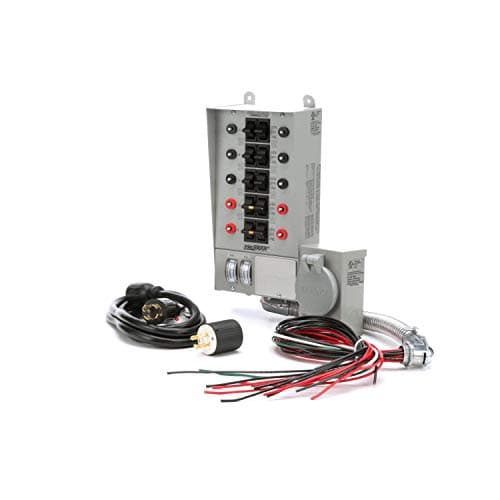
Reliance Controls 31410CRK Pro/Tran

10 circuits — six 15A and four 20A — rated 30A / 7,500W, with two watt meters.

A typical house and a 5,000-7,500W generator
2
No photo

The other half of the installation

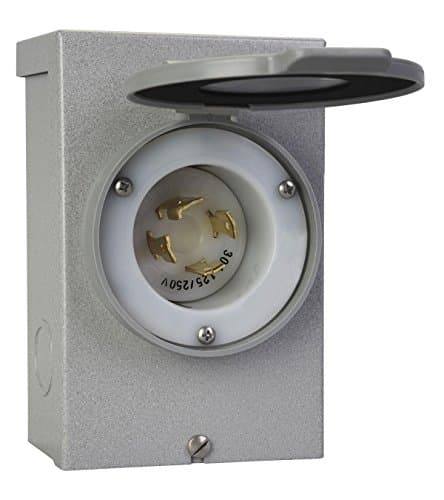
Reliance Controls PB30 power inlet box

NEMA 3R steel enclosure with an L14-30P inlet and a spring-loaded cap.

A weatherproof exterior connection
3
No photo

The link between them

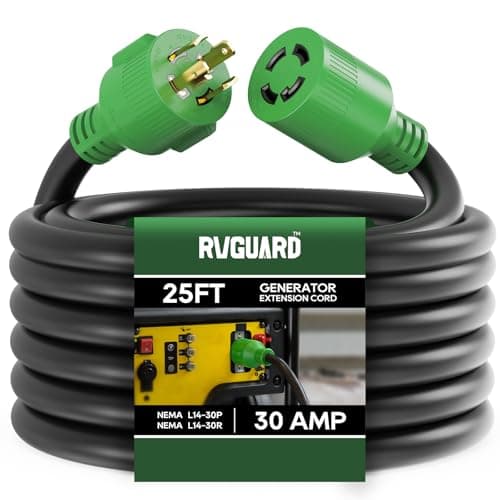
GearIT 30A L14-30 generator cord, 25 ft

10/4 SJTW twist-lock, L14-30P to L14-30R, rated 30A at 125/250V.

25 feet of separation at the full 30A
4
No photo

A generator with the right outlet

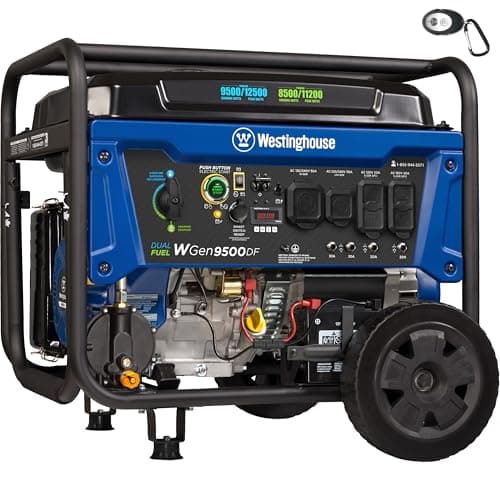
Westinghouse WGen9500DF

9,500 running watts with both an L14-30R and a 14-50R outlet.

Feeding a switch at full output

Prices come from the retailer at page-build time and change constantly. Where no live price is available the button reads “Check price” rather than showing a number we cannot stand behind.

What a transfer switch is for

Two jobs, and the second is the important one.

1. It reaches circuits a cord cannot. The furnace, the well pump, the sump pump and the water heater are all hardwired to dedicated circuits. No extension cord will ever reach them, whatever is on the other end.

2. It makes backfeeding impossible. Break-before-make switching means each circuit is opened from one source before it is closed to the other, enforced mechanically rather than by procedure.

Without that, a generator can push power back up the service drop and energize the utility line outside, where the transformer steps the voltage back up. A lineworker restoring what they believe is a dead conductor is then working on a live one.

Which is why backfeeding through a dryer outlet with a double-male cord is illegal everywhere in the United States, and why every legal connection method is built around making the mistake mechanically impossible.

How to size one

Three numbers, and getting the first two wrong is the common mistake.

SpecificationWhat it decides
Amperage — 30A or 50AThe ceiling on your generator's usable output. Reliance rates its 30A switch at 7,500W
Circuit countHow many things you can back up. Six and ten are the common residential sizes
Breaker sizes per circuitMust match the circuits you are transferring — the 31410CRK has six 15A and four 20A
Voltage240V for a whole-house feed. A 120V-only generator cannot supply one
Watt meteringOptional, and genuinely useful for balancing the load and learning what your house draws

The trap is buying a 30A switch for a 9,500W generator. The switch caps you at 7,500W and the extra capacity you paid for is unusable — size the switch to the machine, or buy the machine that matches the switch.

Which circuits to choose

This is the useful part of the exercise, and it is worth doing carefully because changing it later means an electrician.

In rough order of value for most houses:

  1. Furnace. The blower, which on a gas furnace is only 300-800W and heats the whole house. Why it is so small.
  2. Well pump, if you have one. Without it there is no water at all. It is also the circuit most often forgotten because it is not in the kitchen.
  3. Sump pump, if you have one. Outages and flooding arrive together.
  4. Refrigerator. Usually a dedicated kitchen circuit.
  5. Freezer, often in a garage or basement on its own circuit.
  6. A kitchen outlet circuit for a microwave and kettle.
  7. A lighting circuit or two.
  8. The circuit your router is on. Cheap, and it is what keeps information flowing.

What not to include: electric water heaters, electric ranges, dryers and air conditioning. They are thousands of watts each and they will consume the whole machine. The whole-house tiers set out what each bracket covers.

The alternative: a panel interlock

Worth knowing about because it is cheaper and it is not always the wrong answer.

An interlock kit is a mechanical plate fitted to your existing panel that makes it physically impossible to have both the main breaker and a generator breaker on at the same time. Same safety principle, different implementation.

Transfer switchInterlock kit
CostHigherLower
Circuits availableThe ones wired to it, fixedAny circuit in the panel, chosen at the time
Risk of overloadLower — the circuits are pre-chosenHigher — nothing stops you switching on more than the machine can supply
MeteringOften includedNone
Panel compatibilityWorks with any panelMust be listed for your specific panel make and model

Interlock kits are panel-specific and must be listed for your make and model — a generic plate is not acceptable and an inspector will say so. That constraint is why we do not recommend a specific interlock product here. The full comparison.

Installation

Licensed-electrician work in most jurisdictions, and the job usually includes:

  • The switch, mounted beside the main panel.
  • Rewiring the chosen circuits through it — which is most of the labor.
  • An inlet box on the exterior wall.
  • A permit and an inspection.

Do it out of season. During a storm warning no electrician is available, and this is the one component you cannot improvise safely.

What installation costs covers the variables.

Using it

A manual switch has a sequence, and it is worth practicing once in daylight rather than learning it in the dark.

  1. Start the generator outdoors, twenty feet from windows, doors and attached garages, and let it stabilize.
  2. Connect the cord to the inlet box.
  3. Switch circuits to GEN one at a time, largest first, watching the meters.
  4. Balance the two legs. This is what the watt meters are for, and an unbalanced load wastes capacity.
  5. Reverse the sequence when power returns — circuits back to LINE, then disconnect, then shut down.

The full connection guide walks the whole chain, and the automatic version covers what changes when nobody has to be there.
The picks in full

01Best overall

Reliance Controls 31410CRK Pro/Tran

10 circuits — six 15A and four 20A — rated 30A / 7,500W, with two watt meters.

Ten circuits is the residential standard and it is genuinely enough: furnace, well pump, sump pump, refrigerator, freezer and a few lighting and outlet circuits covers what most households mean by backup power.

The two watt meters are what raise this above a plain switch. They let you balance the load across both legs and see how close a well pump start takes you to the limit — which is information an automatic switch does not give you.

Break-before-make double-throw switching means each circuit is never connected to both sources at once, mechanically. That is the safety function, and it is not optional.

Skip it ifyour generator is 9,500W or more and you want its full output. Then a 50A switch is the right size.

Published specifications for the Reliance Controls 31410CRK Pro/Tran
SpecificationPublished figure
Circuits10 — six 15 A and four 20 A single-pole breakers
Rating30 A, up to 7,500 W
MeteringTwo watt meters for balancing the load
SwitchingBreak-before-make double-throw, Line / Off / Gen
BackfeedMechanically prevented — the grid cannot be energized
InstallationLicensed electrician; a permit is usually required

Source: Reliance Controls — Pro/Tran 31410CRK product page. These are the manufacturer's published figures, not ours — we have not tested this unit.

02The other half of the installation

Reliance Controls PB30 power inlet box

NEMA 3R steel enclosure with an L14-30P inlet and a spring-loaded cap.

An inlet box is what lets the generator stay twenty feet away with nothing running through a window. It is fitted at the same time as the switch and its marginal cost is small.

NEMA 3R means genuinely rain-rated. The spring-loaded cap decides how it ages — a box that fills with water over five idle years is a box you cannot use in the storm you bought it for.

Skip it ifyour switch kit includes a pigtail cable — though that means a cable through an opening in the house.

Published specifications for the Reliance Controls PB30 power inlet box
SpecificationPublished figure
Rating30 A, for generators up to 7,500 running watts
InletNEMA L14-30P
EnclosureNEMA 3R, outdoor watertight
ConstructionSteel with anti-corrosive powder coat
CapSpring-loaded, keeps moisture out when not in use
WiringFour combination 1/2 in and 3/4 in knockouts

Source: Reliance Controls — PB30 power inlet box product page. These are the manufacturer's published figures, not ours — we have not tested this unit.

03The link between them

GearIT 30A L14-30 generator cord, 25 ft

10/4 SJTW twist-lock, L14-30P to L14-30R, rated 30A at 125/250V.

The four conductors are two hot legs, a neutral and a ground. All four matter, and the grounding conductor is the reason a properly built cord is not the place to economise.

Twist-lock connectors cannot be pulled apart by a foot catching the cable, which straight-blade plugs can.

Skip it ifyou need more distance — buy one longer cord rather than joining two.

Published specifications for the GearIT 30A L14-30 generator cord, 25 ft
SpecificationPublished figure
ConnectorsNEMA L14-30P to L14-30R, 4-prong twist lock
Conductor10/4 SJTW copper
Rating30 A, 125/250 V, up to 7,500 W
Length25 ft
JacketOutdoor-rated SJTW, UV and oil resistant

Source: GearIT — 30A L14-30 generator cord listing. These are the manufacturer's published figures, not ours — we have not tested this unit.

04A generator with the right outlet

Westinghouse WGen9500DF

9,500 running watts with both an L14-30R and a 14-50R outlet.

Worth pairing deliberately. A machine with only 120V household sockets and a TT-30 RV outlet cannot feed a 240V transfer switch, which is the single most common mismatch in this area.

And note the arithmetic: a 30A switch caps this 9,500W machine at 7,500W. If you want its full output, the switch needs to be sized to the machine.

Skip it ifyou already own a machine — check its outlet panel before buying any switch.

Published specifications for the Westinghouse WGen9500DF
SpecificationPublished figure
Output (gasoline)9,500 running W / 12,500 peak W
FuelGasoline or propane (dual fuel)
Engine457cc 4-stroke OHV, cast iron sleeve
Tank6.6 gal (25 L)
Run timeup to 12 h on a full tank
Transfer-switch outlet120/240 V L14-30R, 30 A
RV outlet120/240 V 14-50R, 50 A
StartingPush-button electric with remote key fob
Warranty3-year limited

Source: Westinghouse — WGen9500DF product specifications. These are the manufacturer's published figures, not ours — we have not tested this unit.

How these were chosen

We did not test these. Nobody at Watt & Warden has plugged one in. What we did instead: read the manufacturer's published specifications, compile them into a table where the figures line up, and compute the numbers manufacturers leave out — runtime against a real appliance load, and what an hour of running actually costs.

Anything that could not be sourced was left out rather than estimated, and every pick names the buyer who should skip it. The full method is here, including where it is weaker than a publisher with a test bench.

Questions people actually ask

Do I need a transfer switch for a portable generator?

If you want to power anything hardwired -- the furnace, well pump, sump pump or water heater -- yes, because no extension cord reaches a dedicated circuit. It also makes backfeeding mechanically impossible, which is what stops a generator energizing the utility line outside.

What size transfer switch do I need?

Match the amperage to your generator. Reliance rates its 30A switch at 7,500W, so pairing one with a 9,500W machine caps you at 7,500 and wastes the capacity you paid for. Ten circuits is the residential standard and covers a furnace, pumps, refrigeration and lighting comfortably.

Which circuits should go on a transfer switch?

Furnace first -- a gas furnace blower is only 300-800W and heats the whole house. Then the well pump and sump pump if you have them, the refrigerator and freezer, a kitchen outlet circuit, lighting, and whatever the router is on. Leave off electric water heating, ranges, dryers and air conditioning.

Is an interlock kit as good as a transfer switch?

It achieves the same safety outcome more cheaply and gives you access to any circuit in the panel rather than a fixed set. The trade is that nothing stops you switching on more than the generator can supply, there is no metering, and the kit must be listed for your specific panel make and model.

Can I install a transfer switch myself?

It is licensed-electrician work in most jurisdictions and typically needs a permit and inspection. The bulk of the labor is rewiring the chosen circuits through the switch. Arrange it out of season -- during a storm warning no electrician is available, and this is not a component to improvise.

Sources

Every figure on this page comes from a published source. We have not tested this equipment, so the specifications are the manufacturer's and the statistics are the dataset's — the arithmetic on top of them is ours, and it is shown in full so you can check it. How we work this out.