Why there is no number at the top of this page
Search for this and you will find a lot of confident national averages. We are not going to add one, because we cannot source it and a made-up figure would be exactly the kind of thing the rest of this site exists not to do.
The cost is genuinely local. It depends on your electrician's hourly rate, your panel, where the inlet has to go, and what your jurisdiction charges for a permit and an inspection. Those four inputs vary by a large multiple across the country, and averaging them produces a number that describes nobody.
What we can do — and what is actually useful — is tell you every line item that should be in the quote, and which ones move the total. Arrive with that and you can compare two quotes properly instead of comparing two bottom lines.
The line items
| Line item | What it is | How much it varies |
|---|
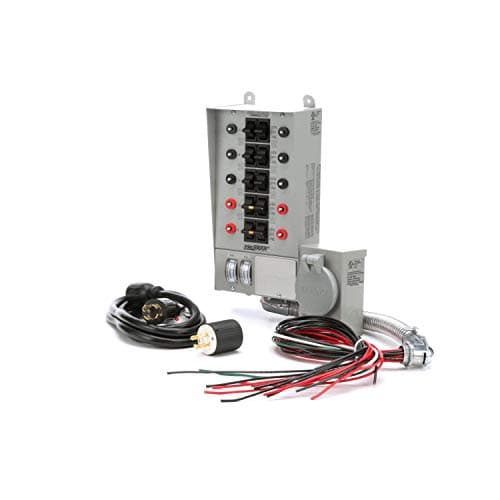
| The transfer switch | The switch or interlock kit itself | Low — you can price this yourself |
|---|
| The inlet box | Weatherproof exterior socket the generator cord plugs into | Low |
|---|
| Electrician's labor | Typically half a day to a day, tying into your service panel | High — local hourly rates differ enormously |
|---|
| The conduit run | From the inlet box to the switch, through whatever is between | High — a short run on an unfinished basement wall is trivial; a long run through finished space is not |
|---|
| Permit and inspection | Required in most jurisdictions | Moderate — set by your local authority |
|---|
| Panel work | Adding breakers, relabeling circuits, occasionally a panel upgrade | High if a panel upgrade is triggered — this is the surprise |
|---|
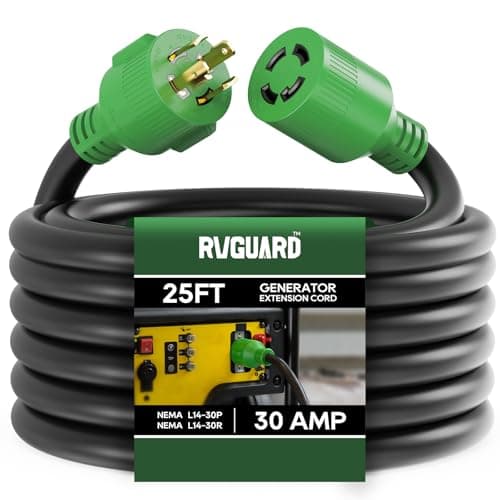
| The generator cord | 25 ft, 10-gauge, twist-lock | Low, and frequently omitted from the quote |
|---|
The two marked rows are where quotes actually diverge. If two bids differ substantially, the difference is nearly always labor, the conduit run, or an assumption about panel work that one of them made and the other did not.
The three things that make it expensive
1. Distance between the inlet and the panel. The electrician has to get a cable from an exterior wall to your service panel. If the panel is in an unfinished basement directly inside that wall, this is a short job. If it is on the opposite side of a finished house, it involves fishing cable through walls or running surface conduit, and the hours multiply.
2. A panel that is full or out of date. A transfer switch or interlock needs space and a compatible panel. If yours is full, obsolete, or a make with no listed interlock available, the job can turn into a panel replacement — which is a different order of cost entirely and is the single most common unpleasant surprise in this category.
3. Choosing whole-panel over critical circuits. A ten-circuit manual switch is a contained job. Feeding the whole panel through an interlock, or fitting an automatic transfer switch for a standby generator, is heavier work with heavier hardware. The switch-versus-interlock decision is worth settling before you get quotes, because it changes what you are asking for.
How to get comparable quotes
- Decide the circuit list first. Fridge, furnace, sump pump, a lighting circuit or two, some outlets. Give every electrician the same list, or you are comparing different jobs.
- Photograph your panel, open and closed. Send it with the inquiry. It lets them spot a panel problem before the site visit rather than on the day.
- Ask for the quote itemized — hardware, labor, conduit, permit, panel work, separately. A single number is not a quote you can compare.
- Ask what would change the price. A good electrician will tell you which assumptions they made and what happens if one is wrong. That answer is worth more than the number.
- Confirm the permit is included, and who pulls it. Unpermitted work on your service can affect an insurance claim.
- Ask where the inlet will go and check that the generator can then stand twenty feet from the house with its exhaust pointed away — the clearance is not negotiable, and an inlet in the wrong place quietly makes it impossible.
Do it out of season
This is the practical advice that saves the most money and gets ignored the most. Electricians are booked solid the week a hurricane is forecast and for weeks afterwards, and scarcity does what scarcity does.
Get it done in the spring. The work is identical, the quotes are more competitive, and you are not making a rushed decision about a permanent alteration to your electrical service.
What you can legitimately do yourself
Some jurisdictions permit a homeowner to do their own electrical work with a permit and an inspection. Many do not, and even where it is allowed this is live-panel work where a mistake is fatal.
What you can safely do without touching the panel: choose and buy the switch and the cord, decide the circuit list, clear access to the panel, and identify where the inlet should go. Doing those before the electrician arrives genuinely reduces the hours you pay for. The connection methods, and the one that kills people.