What an ATS does, in sequence
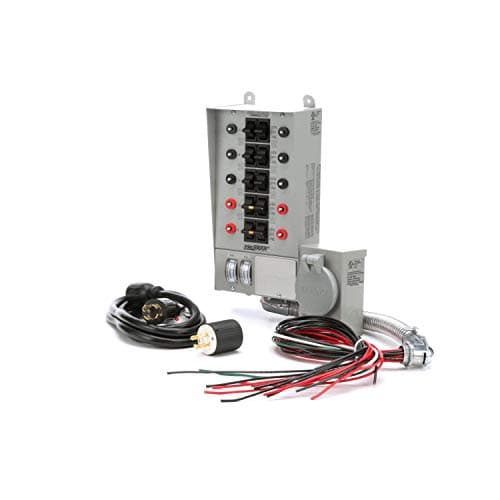
An automatic transfer switch is a contactor with a controller watching both sides. The sequence is always roughly the same:
- It monitors the utility supply continuously — voltage and frequency on both legs.
- It detects a failure and waits a short confirmation delay, so a momentary blip does not start the generator.
- It signals the generator to start and waits for it to reach stable voltage and frequency.
- It disconnects the load from the utility, then connects it to the generator. In that order, always.
- It keeps watching the utility. When mains power returns and holds for a confirmation period, it transfers back.
- It runs the generator on for a cooldown before shutting it down.
Every step is unattended. That is the product — not more power, but power that arrives while nobody is home.
Step three is the one that constrains your choice of machine. The signal is a contact closing across a pair of terminals — a 2-wire start input — and a generator without one cannot be started this way at any price. Which generators offer smart or remote monitoring covers the few portables that publish a 2-wire input, and why it is a different feature from a phone app.
Break-before-make is the safety principle
The most important thing a transfer switch does has nothing to do with convenience.
Break-before-make means the switch physically cannot connect the house to both sources at once. It opens one connection before it closes the other, and the mechanism enforces it — not a procedure, not a sequence someone has to remember.
Without that, a generator feeding a house can push power back up the service drop and energize the utility line outside. A lineworker restoring what they believe is a dead conductor is then working on a live one, and the transformer steps the voltage back up on the way.
This is why backfeeding through a dryer outlet with a double-male cord is illegal everywhere in the United States, and why every legal connection method — automatic switch, manual switch, panel interlock — is built around making the mistake mechanically impossible.
The connection guide covers the legal routes, and the interlock comparison covers the cheaper alternative.
The seconds that remain
An ATS is automatic, not instantaneous, and the difference matters for some equipment.
Detection delay, cranking, warm-up and transfer all take time — the house is dark for those seconds. What that means in practice:
| Equipment | Effect of the gap |
|---|
| Lights and heating | Nothing — they simply come back on |
|---|
| Refrigeration | Nothing — the compressor restarts |
|---|
| Desktop computer | Hard shutdown, unsaved work, filesystem risk |
|---|
| NAS or server | Dropped write, potential array damage |
|---|
| Router and modem | Reboot, renegotiate, minutes offline |
|---|
| Clocks and timers | Reset, quietly, on everything without a battery |
|---|
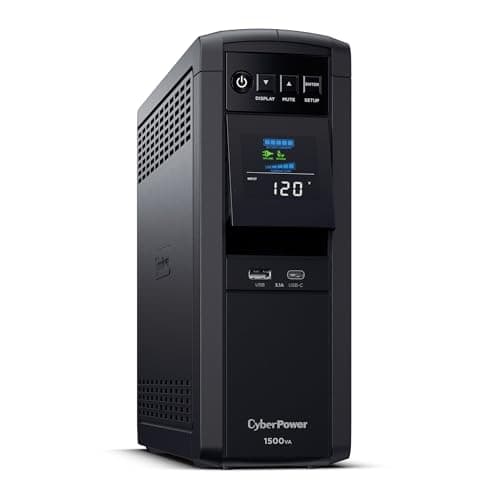
Transfer times vary by installation and manufacturers state them for their own equipment. The point is not the exact figure but that the gap exists at all — no standby system closes it, and a UPS is the component that does.
Whole-panel or sub-panel
The choice that most affects both cost and behavior, and it is worth understanding before the survey.
A service-rated whole-panel ATS sits between the meter and the main panel and transfers the entire service. Everything works, nothing is chosen in advance, and it costs more — often requiring a larger generator or load management to stop everything starting at once.
A sub-panel arrangement transfers a selected set of circuits. Cheaper, allows a smaller generator, and forces a useful conversation about what actually matters. Anything not on the list stays dark.
The circuit most often left off by accident is the well pump, because it is not in the kitchen and does not feel like an appliance. On a well, it is the one that matters most.
Load management, which is where the money is
A module that sheds or delays large loads so they do not run simultaneously — holding the air conditioner off while the dryer runs, then letting it start.
The value is that it lets a smaller generator do the job of a larger one. Everything still works; it just does not all work in the same minute, and the coincidence it prevents almost never happens anyway.
This commonly drops a household a tier or two on generator size, which is the single largest saving available in a standby purchase — and most people never find out it was an option because they price whole-house and stop. Sizing a standby unit covers it.
Manual versus automatic, honestly
| Manual transfer switch | Automatic transfer switch |
|---|
| Works while you are away | No | Yes — the entire point |
|---|
| Backfeed protection | Yes, mechanically | Yes, mechanically |
|---|
| Cost | A fraction | Part of a standby installation |
|---|
| Generator type | Portable, started by hand | Permanently installed, started by the switch |
|---|
| Load visibility | Watt meters on the panel | Usually none |
|---|
| Installation | Electrician, permit, half a day | Electrician plus gas work, permit, inspection |
|---|
Both are licensed-electrician work with a permit in most jurisdictions. The safety function is identical — what you are paying the difference for is that nobody has to be home.
What an ATS needs from you
- Nothing, most of the time. Which is the appeal, and also the risk — a system nobody touches is a system nobody notices has failed.
- Confirm the exercise cycle actually runs. If you have not heard it in a month, something is wrong.
- Know how to operate it manually. Every ATS has a manual override. Find out how yours works on a calm day.
- Know where the disconnect is so you can isolate the system if you ever need to.
- Have it inspected with the annual service. Contacts wear, and a switch that has operated four times a year for a decade is a mechanical device with a service life.
The maintenance schedule covers the rest of the system, and the installation guide covers what to ask before signing.