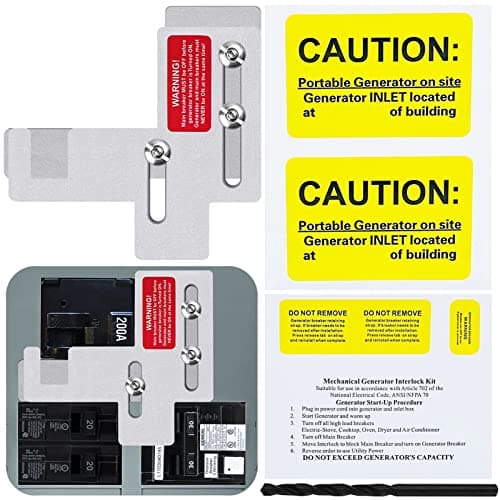
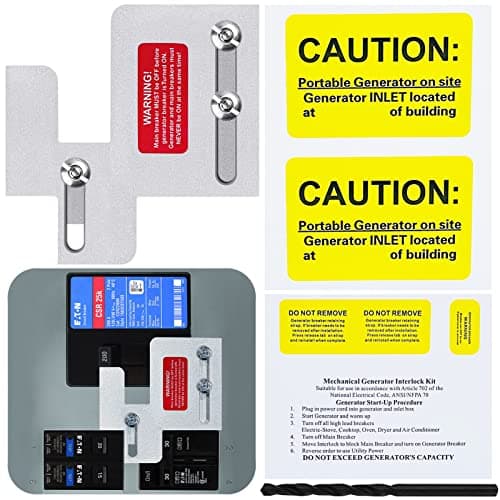
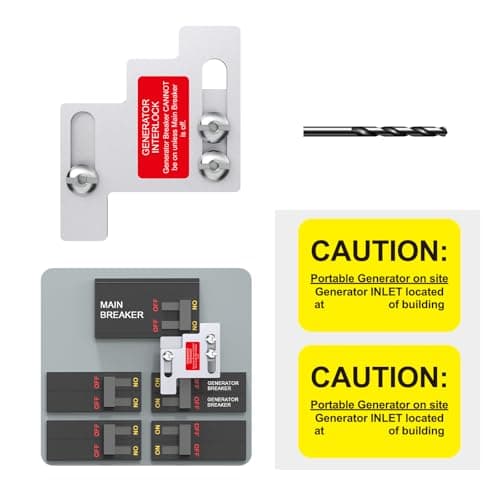
What an interlock kit actually is
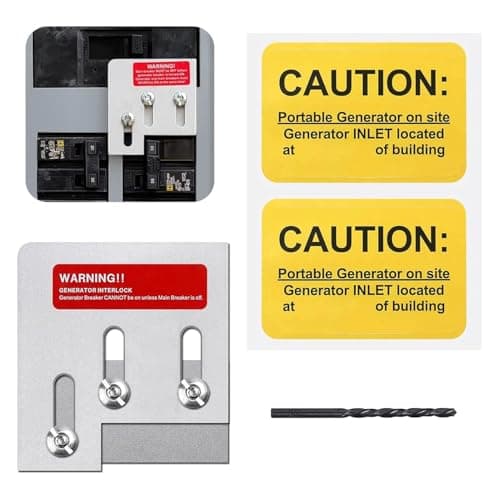
A sliding metal plate, bolted to the front of your breaker panel, shaped so that the main breaker and a dedicated generator breaker cannot both be switched on at the same time. Turn the main off, and the plate slides to let you turn the generator breaker on. Turn the generator breaker off, and only then can the main go back on.
That is the entire mechanism, and it solves the one problem that makes connecting a generator to a house dangerous: backfeeding. Power flowing from your generator into the grid energizes the utility transformer backwards, can re-energize lines the utility believes are dead, and kills line workers. An interlock makes that physically impossible rather than procedurally unlikely.
Buying the right one is the whole task
These kits are inexpensive and completely unforgiving about fit. Three things have to match.
| What to check | Where to find it | Why it matters |
|---|
| Panel brand and series | Label inside the panel door | Square D QO, Homeline, Siemens, Murray, Eaton BR and GE all take different plates |
|---|
| Main breaker amperage | Printed on the main breaker handle | Kits are sold for specific ranges, commonly 150A and 200A |
|---|
| Breaker position and spacing | Physical layout of your panel | The plate only works if the generator breaker is in the position the kit expects |
|---|
Compatibility above is from each kit's published listing. Photograph the inside of your panel door and the breaker layout before ordering — it is the single best five minutes you can spend here.
What is not in the box
Every kit here is a plate and its mounting hardware. The rest of the project is separate, and it is where the real money goes.
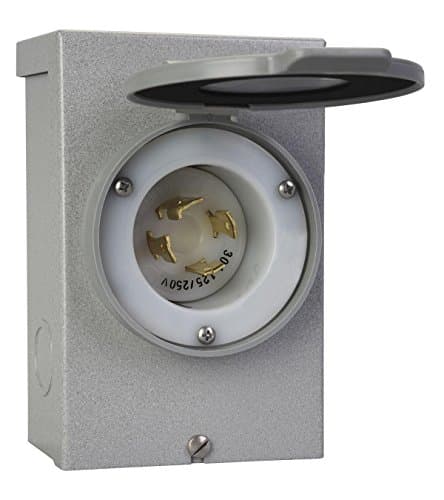
- A backfeed breaker. A double-pole breaker matched to your panel and sized to the generator — 30A for an L14-30 connection is typical. It is not supplied.
- An inlet box. The weatherproof exterior socket the generator cord plugs into, plus the cable run back to the panel.
- A generator cord. Rated for the connection and long enough that the machine sits well away from the house.
- An electrician and a permit. Almost everywhere, this is work on a service panel, which means a licensed installer and an inspection.
Budget accordingly: the plate is the cheapest item in a project whose real cost is labor.
The code question, answered honestly
This is the part most listings skate over, so here it is plainly.
The National Electrical Code requires that a generator connection prevent simultaneous grid and generator supply, and an interlock is an accepted way to do that. What varies is which specific plate your inspector will accept.
Panel manufacturers sell their own interlock hardware, which is covered by the panel's listing. Third-party plates — which is what most of the affordable kits are, including the ones on this page — are not part of that listing. Some jurisdictions accept them without comment. Some require the manufacturer's own part. Some want a listed transfer switch instead.
So: ask before you buy. One phone call to your local building department, or one question to the electrician who will do the work, settles it. Buying the plate first and asking afterwards is how people end up with a part they cannot use and an inspection they cannot pass.
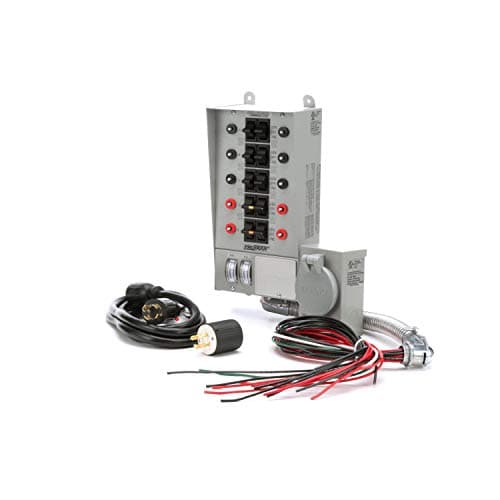
Interlock or transfer switch?
| Interlock kit | Manual transfer switch |
|---|
| Circuits available | Every circuit in the panel | The ones it was wired for, usually six to ten |
|---|
| Hardware cost | Lowest — a plate and a breaker | Higher — a listed assembly |
|---|
| Load management | Yours. You must not exceed the generator | Built in: only selected circuits can draw |
|---|
| Approval | Depends on the plate and the inspector | Usually straightforward — it is a listed product |
|---|
| Best for | Flexibility, and larger generators | Simplicity, and anyone who wants it foolproof |
|---|
Both are legitimate. The trade is flexibility against simplicity — the full comparison goes deeper, and the transfer switch roundup covers the alternative hardware.
Living with an interlock: load discipline
An interlock hands you the entire panel, which is its advantage and its risk. Nothing stops you switching on a 5,000W electric water heater while a 7,500W generator is also running the furnace and the well pump.
Three habits make it work:
- Turn off the big circuits before you start. Water heater, range, dryer, air conditioning — off at the breaker, and back on deliberately if at all.
- Write the sequence down and tape it inside the panel door. Main off, generator started and warm, generator breaker on, loads on one at a time.
- Know your generator's number. The sizing page turns your list into watts, and the starting-watts page explains why motors need headroom.
The short version
- Match the plate to your panel brand, series and amperage. Nothing else about this purchase is difficult.
- The kit is a plate only. Breaker, inlet box, cord, labor and permit are extra.
- Ask your inspector about third-party plates first. Acceptance varies by jurisdiction.
- You manage the load yourself. That is the price of having the whole panel available.
- Never backfeed through a dryer or range outlet. The interlock exists precisely so nobody has to.