How these were chosen
We have installed none of this equipment and we do not test hardware — our methodology page says so plainly. Every figure below is the manufacturer's published specification or a detail stated on the live product listing, and availability was checked before anything was featured.
Three criteria decided the picks:
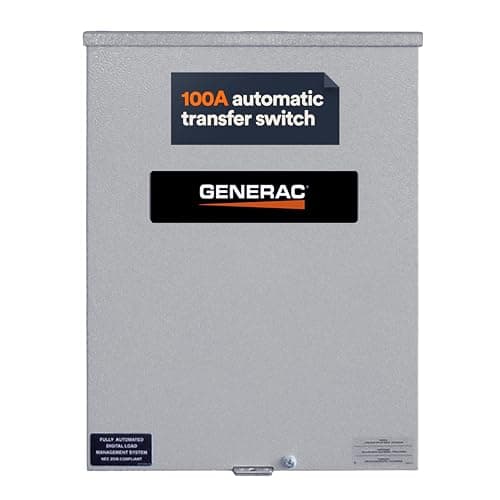
- Does it match a real service size? An automatic transfer switch is sized to your service — 100A or 200A — and the wrong amperage is not a compromise, it is a fault.
- What kind of generator does it assume? Almost every ATS expects a standby unit that starts on a signal. One product here does not, and that difference matters more than any spec.
- Is the installation path realistic? All of these are licensed work, and one of them additionally needs the utility's approval.
The thing to understand before you buy one
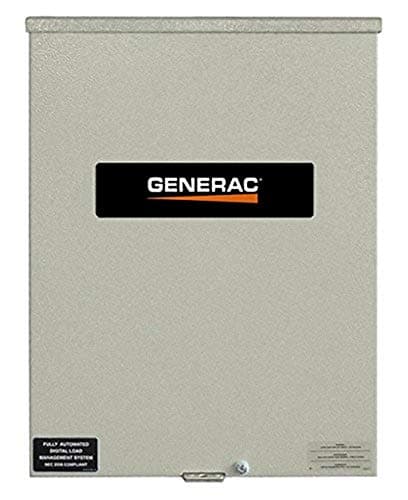
An automatic transfer switch watches the utility supply and, when it fails, moves the house over to generator power without anyone involved. For that to mean anything, something has to start the generator.
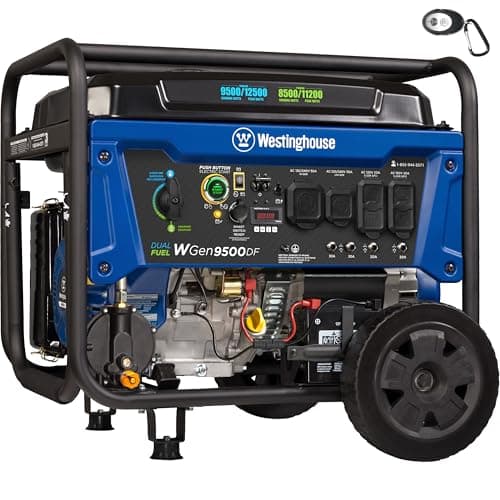
A standby generator does that itself — it is wired to the switch, sits on a permanent fuel supply, and starts on a signal. A portable does not: it needs a person to fuel it, start it and plug it in.
So the honest split in this category is:
| Type | What it transfers | Generator required | What is automatic |
|---|
| Conventional ATS (100A / 200A) | The whole panel, or a chosen sub-panel | A standby unit that self-starts | Everything — detection, starting, transfer, shutdown |
|---|
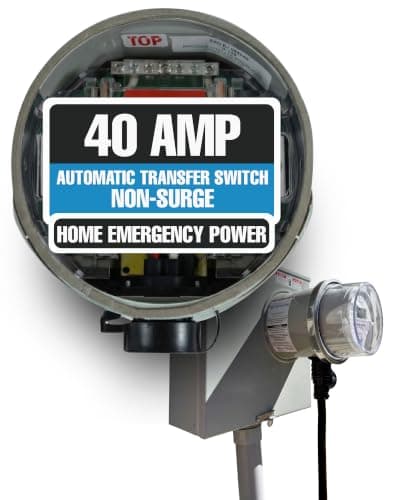
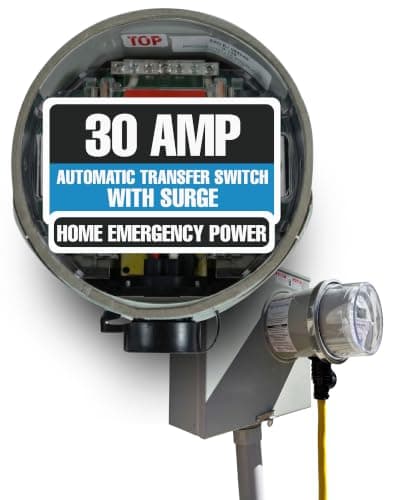
| Meter-socket switch (GenerLink) | The whole panel, capped by its amperage | A portable | The transfer only — you start and connect the machine |
|---|
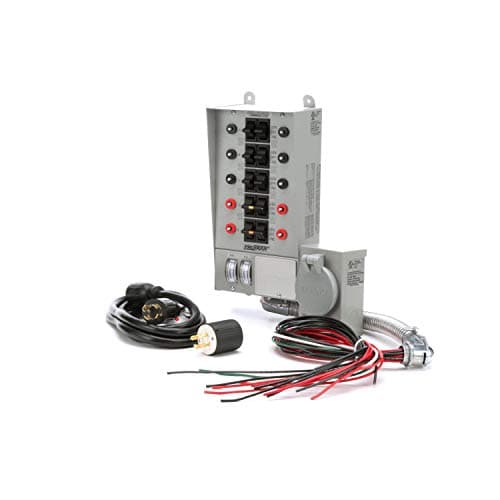
| Manual transfer switch | The circuits it was wired for | A portable | Nothing — you flip each circuit |
|---|
GenerLink's behavior is from the manufacturer's own description: it detects when a generator is operating and automatically disconnects the utility, which is what prevents backfeed. Our ATS explainer covers the switching sequence in more detail.
Sizing: match the service, not the generator
The number on a transfer switch refers to the electrical service it is rated to carry, not to the generator feeding it. Read the main breaker in your panel: if it says 200, you need a 200A switch even if your generator is a modest one.
The generator's size shows up elsewhere — in what you can actually run once transferred. A 200A switch fed by a 7,500W machine is still a 7,500W supply, which is why working out your load list comes before either purchase.
Service-entrance rated (SE rated) is the other term worth knowing. An SE-rated switch incorporates the main service disconnect, so it replaces existing hardware rather than sitting alongside it. Whether that suits your installation is a decision for the electrician doing the work.
The GenerLink exception, in detail
Because it is the only automatic option here that works with a portable generator, it deserves specifics — all from the manufacturer:
- It mounts in the meter socket, behind the electric meter, and is UL listed.
- It detects a running generator and disconnects the grid, which is what eliminates the backfeed hazard.
- Generator power does not pass through the meter, so it is not billed.
- Two cord options: the 30A version uses an L14-30R plug with 10 AWG wiring; the 40A version uses a 14-50 straight blade plug with 8 AWG.
- It reaches hardwired loads — sump pumps, well pumps, lighting and security systems — which extension cords cannot.
- Installation takes 30 to 90 minutes by a licensed electrician or the utility. A behind-meter fitting requires utility approval; a standalone downstream application in a meter panel can be done by an electrician without it.
That last point is the one to check first. Utility policies on meter-socket devices vary, and a phone call before ordering saves an expensive return.
What this actually costs
Automatic switching is the expensive end of generator connection, and the switch is rarely the biggest line.
| Route | Hardware | Also needed |
|---|
| Manual switch | Lowest | Inlet box, cord, electrician |
|---|
| Meter-socket automatic | Middle | Electrician or utility, utility approval, a portable generator |
|---|
| Conventional ATS | Middle to high | A standby generator, pad, fuel supply, permit, electrician |
|---|
Deliberately expressed as brackets rather than figures; installed prices vary by region and by how far the switch sits from the panel. The installation cost page covers what drives the number, and live prices are on each product link.
Read that table honestly and the ordering is clear: a conventional ATS is a line item inside a much larger standby project, while a meter-socket switch is the only way to buy automatic transfer without one.
Who should buy which
- Installing a standby generator: the 200A or 100A switch that matches your service, specified by whoever installs the generator.
- Own a portable, nobody always home: a meter-socket switch — the 40A model if your machine has a 14-50 outlet, the 30A if it has an L14-30R.
- Own a portable, someone usually home: a manual switch, and spend the difference on fuel storage or a battery for the loads that cannot blink.
- Renting, or in a condo: none of these. A battery needs no permission — the apartment page covers that path.
The short version
- Size the switch to your service — 100A or 200A, from the main breaker.
- A conventional ATS needs a self-starting standby generator. It is not a standalone upgrade.
- GenerLink is the automatic option for a portable, and it transfers by itself once the machine is running.
- Ask your utility before buying a meter-socket device.
- Most households are better served by a manual switch and the money saved.