Skip to content
Watt Warden

Home Standby

Manual vs Automatic Transfer Switch

The question is not which switch is better. It is whether anyone will be home to throw it, and how much that answer is worth to you.

By Sawyer V.Updated Published How we work this out
Vintage light switches mounted on a wooden panel.

Watt & Warden earns a commission on qualifying purchases made through links on this page, at no extra cost to you. It never changes a ranking, and our picks include products we tell you to skip. Full disclosure.

Quick picks

#ProductBest forPrice
1
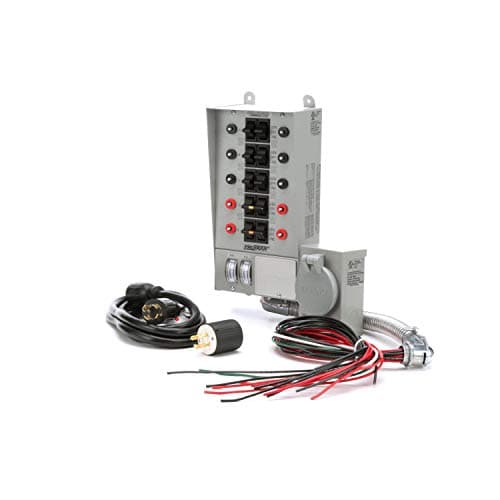
Reliance Controls 31410CRK Pro/Tran

The manual answer

Reliance Controls 31410CRK Pro/Tran

A 10-circuit manual transfer switch kit — the standard way to connect a portable safely.

A portable generator and somebody home
$470.22 · Check price on Amazon

#ad how this is funded · price as of October 20, 2026

2
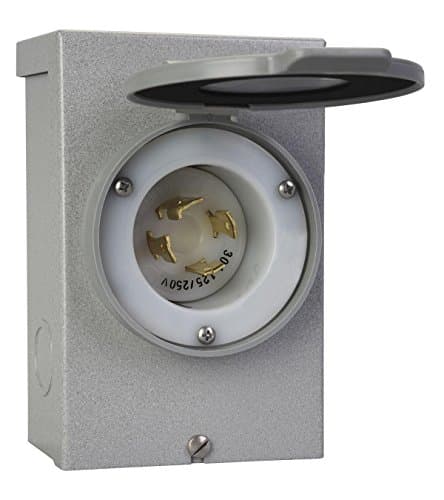
Reliance Controls PB30 power inlet box

The other half of a manual setup

Reliance Controls PB30 power inlet box

A weatherproof 30A exterior inlet box, rated to 125/250V.

Getting the cord into the house properly
$59.98 · Check price on Amazon

#ad how this is funded · price as of October 20, 2026

3
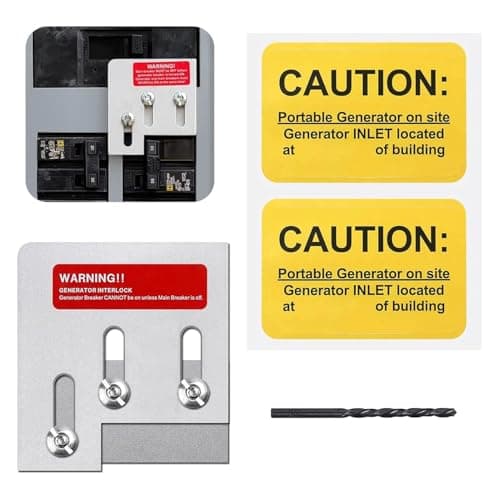
Natupal interlock kit for Square D QO / Homeline

The cheapest legal manual option

Natupal interlock kit for Square D QO / Homeline

A mechanical plate that makes the main and generator breakers mutually exclusive.

Whole-panel access on a budget
$17.13 · Check price on Amazon

#ad how this is funded · price as of October 20, 2026 · $18.04 5% off

4
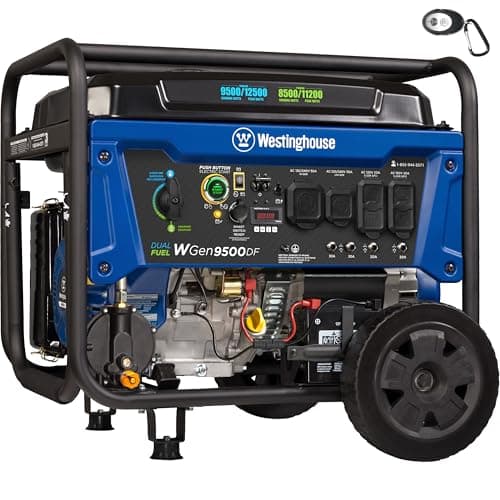
Westinghouse WGen9500DF

What a manual setup is usually fed by

Westinghouse WGen9500DF

9,500 running watts, dual fuel, with an L14-30R and a 50A 14-50R.

A portable machine on a 30A or 50A connection
$999.00 · Check price on Amazon

#ad how this is funded · price as of October 20, 2026

Prices come from the retailer at page-build time and change constantly. Where no live price is available the button reads “Check price” rather than showing a number we cannot stand behind.

What each one does

A manual transfer switch is a set of switches wired to chosen circuits. When the power fails you start the generator, plug it into the inlet, and flip each circuit from utility to generator.

An automatic transfer switch (ATS) watches the utility supply. When it disappears the ATS signals a standby generator to start, waits for it to stabilize, then transfers the load — typically within seconds, with nobody involved. When utility power returns it transfers back and shuts the generator down.

The comparison that matters

ManualAutomatic
Needs someone homeYes — alwaysNo
Hardware costLowest in house backupSeveral times more, before the generator
Generator typePortable, started by hand or remoteInstalled standby unit that starts itself
Time without powerHowever long it takes you to get outsideSeconds
Circuits coveredThe ones it was wired for, usually 6-10Selected circuits or the whole panel
Load managementYou, by choosing what to switch onAutomatic, often with load shedding
MaintenanceEffectively noneExercised weekly or monthly with the generator

Installed costs vary widely by region and by how far the switch sits from the panel — the installation cost page covers what drives the number.

The decision is about who is home

An automatic switch solves exactly one problem: power failing when nobody can act. That problem is worth a great deal to some households and nothing to others.

Worth it when a freezer full of food, a sump pump in a wet basement, a home office with client calls, or medical equipment cannot wait for someone to come home. Also worth it when the people in the house cannot safely start a generator in a storm.

Not worth it when someone is usually home, outages are short, and the loads can tolerate twenty minutes of darkness while you get the machine going.

The hidden requirement

An ATS is not a standalone upgrade. It needs a generator that can start on a signal, which in practice means an installed standby unit with its own fuel supply — natural gas or a propane tank — and a concrete pad. The switch is a fraction of that project's cost.

This is why the honest comparison is rarely "which switch". It is portable generator plus manual switch against standby generator plus automatic switch, and the price difference is measured in thousands — the standby versus portable page works through it.

A middle path worth knowing

Two features narrow the gap without the cost of a standby installation:

  • Remote electric start. A key fob means you start the machine from the door rather than standing over it in the rain. The cord still has to be connected first.
  • A battery with a fast switchover for the loads that genuinely cannot blink — a router, a sump pump control board, a desktop — with the generator handling the long haul. The UPS-function roundup covers those units.

That pairing gives you seconds-level coverage for the critical few and manual coverage for everything else, at a fraction of an ATS installation.

The short version

  • Manual switches are cheap, simple and need a person.
  • Automatic switches need a standby generator — they are part of a much larger purchase.
  • Buy automatic if nobody can be home or the loads cannot wait.
  • Otherwise buy manual, and consider a small battery for the things that must not blink.

The picks in full

01 — The manual answer

Reliance Controls 31410CRK Pro/Tran

A 10-circuit manual transfer switch kit — the standard way to connect a portable safely.

Ten circuits chosen in advance, a cord from the generator to an inlet box, and a row of switches you flip when the power goes. It is the most common house-backup arrangement in the country for good reason.

Nothing here can fail silently: there is no controller, no relay and no battery to go flat.

The honest catch: somebody has to be home, awake, and willing to go outside and start a generator in bad weather.

Skip it ifnobody will be home during outages. A manual switch does nothing unattended.

Reliance Controls 31410CRK Pro/Tran
$470.22 · Check price on Amazon

#ad how this is funded · price as of October 20, 2026

Published specifications for the Reliance Controls 31410CRK Pro/Tran
SpecificationPublished figure
Circuits10 — six 15 A and four 20 A single-pole breakers
Rating30 A, up to 7,500 W
MeteringTwo watt meters for balancing the load
SwitchingBreak-before-make double-throw, Line / Off / Gen
BackfeedMechanically prevented — the grid cannot be energized
InstallationLicensed electrician; a permit is usually required

Source: Reliance Controls — Pro/Tran 31410CRK product page. These are the manufacturer's published figures, not ours — we have not tested this unit.

02 — The other half of a manual setup

Reliance Controls PB30 power inlet box

A weatherproof 30A exterior inlet box, rated to 125/250V.

The inlet is what lets the generator sit well away from the house while feeding it through one cord.

It is also the part people forget to budget, along with the wiring run back to the switch.

The honest catch: exterior penetration and conduit — professional work in most cases.

Skip it ifyour generator needs 50A. Buy the larger inlet instead.

Reliance Controls PB30 power inlet box
$59.98 · Check price on Amazon

#ad how this is funded · price as of October 20, 2026

Published specifications for the Reliance Controls PB30 power inlet box
SpecificationPublished figure
Rating30 A, for generators up to 7,500 running watts
InletNEMA L14-30P
EnclosureNEMA 3R, outdoor watertight
ConstructionSteel with anti-corrosive powder coat
CapSpring-loaded, keeps moisture out when not in use
WiringFour combination 1/2 in and 3/4 in knockouts

Source: Reliance Controls — PB30 power inlet box product page. These are the manufacturer's published figures, not ours — we have not tested this unit.

03 — The cheapest legal manual option

Natupal interlock kit for Square D QO / Homeline

A mechanical plate that makes the main and generator breakers mutually exclusive.

An interlock gives you every circuit in the panel rather than ten chosen ones, at a fraction of a switch's hardware cost.

In exchange, you manage the load yourself — the interlock comparison covers that trade.

The honest catch: third-party plates are not covered by the panel's listing. Ask your inspector before buying.

Skip it ifyou want the load management a transfer switch enforces for you.

Natupal interlock kit for Square D QO / Homeline
$17.13 · Check price on Amazon

#ad how this is funded · price as of October 20, 2026 · $18.04 5% off

Published specifications for the Natupal interlock kit for Square D QO / Homeline
SpecificationPublished figure
PanelsSquare D QO and Homeline, 150 A and 200 A
Breaker spacing1 3/8 in between main and backfeed breaker
TypeMechanical slide plate, mounts to the panel cover
SuppliedPlate and mounting hardware only — no breaker

Source: Amazon listing — Natupal interlock kit for Square D QO / Homeline. These are the manufacturer's published figures, not ours — we have not tested this unit.

04 — What a manual setup is usually fed by

Westinghouse WGen9500DF

9,500 running watts, dual fuel, with an L14-30R and a 50A 14-50R.

Automatic transfer only makes sense with a generator that can start itself, which in practice means an installed standby unit. A portable pairs with a manual switch.

Both outlets are here, so the same machine works with a 30A or a 50A installation.

The honest catch: remote start moves the machine closer to convenient, but somebody still has to connect the cord.

Skip it ifyou want the generator to start itself. Portables do not.

Westinghouse WGen9500DF
$999.00 · Check price on Amazon

#ad how this is funded · price as of October 20, 2026

Published specifications for the Westinghouse WGen9500DF
SpecificationPublished figure
Output (gasoline)9,500 running W / 12,500 peak W
FuelGasoline or propane (dual fuel)
Engine457cc 4-stroke OHV, cast iron sleeve
Tank6.6 gal (25 L)
Run timeup to 12 h on a full tank
Transfer-switch outlet120/240 V L14-30R, 30 A
RV outlet120/240 V 14-50R, 50 A
StartingPush-button electric with remote key fob
Warranty3-year limited

Source: Westinghouse — WGen9500DF product specifications. These are the manufacturer's published figures, not ours — we have not tested this unit.

How these were chosen

We did not test these. Nobody at Watt & Warden has plugged one in. What we did instead: read the manufacturer's published specifications, compile them into a table where the figures line up, and compute the numbers manufacturers leave out — runtime against a real appliance load, and what an hour of running actually costs.

Anything that could not be sourced was left out rather than estimated, and every pick names the buyer who should skip it. The full method is here, including where it is weaker than a publisher with a test bench.

Questions people actually ask

What is the difference between a manual and an automatic transfer switch?

A manual switch requires you to start the generator, connect it and flip each circuit by hand. An automatic transfer switch detects the outage, signals a standby generator to start, and transfers the load within seconds with nobody involved -- then transfers back and shuts the generator down when utility power returns.

Can I use an automatic transfer switch with a portable generator?

Generally no. An ATS expects a generator that starts on a signal and runs on a permanent fuel supply, which describes an installed standby unit. Portables need somebody to connect and start them, so they pair with manual switches or interlock kits.

Is an automatic transfer switch worth the money?

It is if power failing while nobody is home would cost you -- a flooded basement from a dead sump pump, a freezer of spoiled food, medical equipment, or work that cannot stop. If someone is usually home and outages are short, a manual switch does the same job for a fraction of the total cost.

How long is the house without power with an automatic switch?

Typically seconds: the switch detects the loss, starts the generator and transfers once output is stable. That is fast enough for refrigeration and heating but not fast enough for a computer, which is why sensitive equipment still wants a UPS or a battery with a fast switchover.

Is an interlock kit a manual transfer switch?

It does the same job with different hardware. An interlock is a plate that makes it physically impossible to have the main and generator breakers on together, giving you access to every circuit in the panel. A manual transfer switch is a separate listed assembly wired to a fixed set of circuits, which is simpler to get approved and harder to misuse.

Sources

Every figure on this page comes from a published source. We have not tested this equipment, so the specifications are the manufacturer's and the statistics are the dataset's — the arithmetic on top of them is ours, and it is shown in full so you can check it. How we work this out.