Skip to content
Watt Warden

Home Standby

Which Home Battery Backups Can Run a 5-Ton Central AC?

A 5-ton condenser asks for roughly 34 kilowatts in the instant its compressor starts. The largest battery here makes 12. That gap is the whole article, and the part that closes it costs a small fraction of any battery on this page.

By Sawyer V.Updated Published How we work this out
SoftStart Home soft starter

Watt & Warden earns a commission on qualifying purchases made through links on this page, at no extra cost to you. It never changes a ranking, and our picks include products we tell you to skip. Full disclosure.

Quick picks

#ProductBest forPrice
1
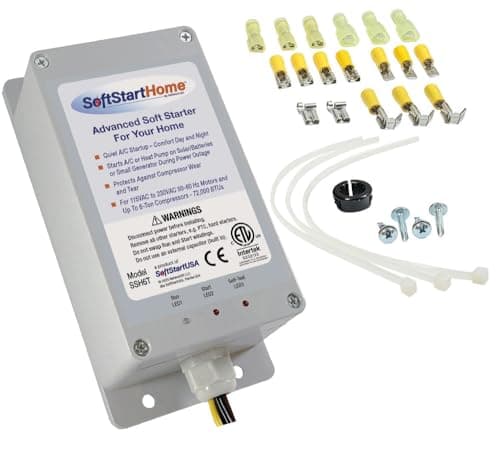
SoftStart Home soft starter

Buy this first

SoftStart Home soft starter

Reduces startup power by a published 70% on air conditioners and heat pumps up to 6 tons (72,000 BTU), with a stated 15-minute install.

Making a 5-ton compressor startable from any battery at all
$355.00 · Check price on Amazon

#ad how this is funded · price as of October 21, 2026

2
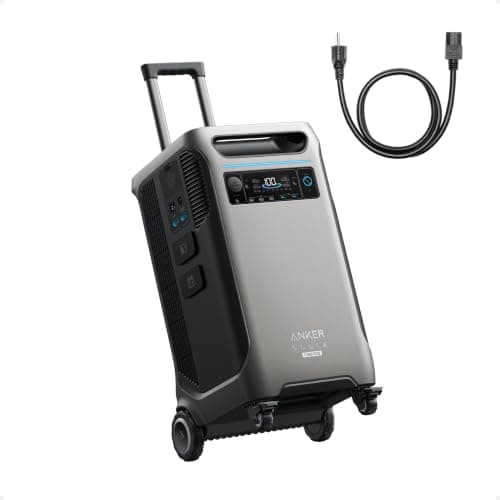
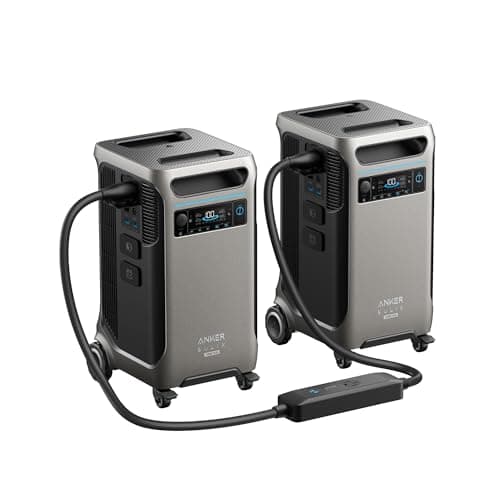
Anker SOLIX F3800 Plus with Double Power Hub

Highest output, and the only comfortable answer

Anker SOLIX F3800 Plus with Double Power Hub

7,680Wh with a published 12,000W AC output across a paired configuration at 120V and 240V.

Running central air without thinking about what else is on
$5,398.99 · Check price on Amazon

#ad how this is funded · price as of October 21, 2026 · $9,897.00 45% off

3
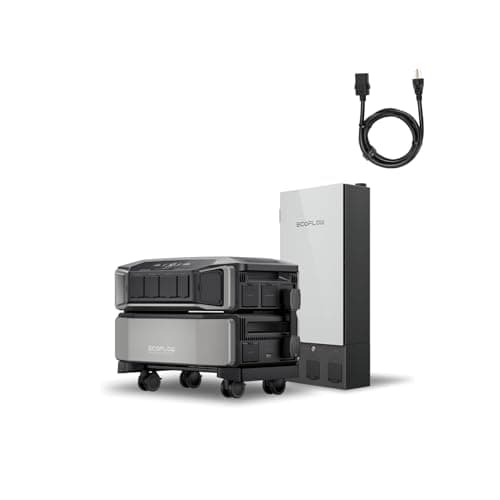
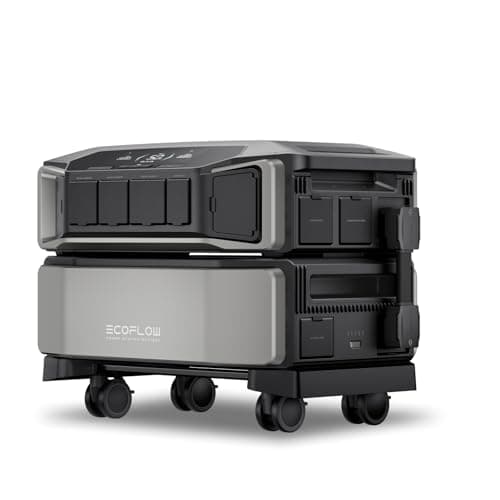
EcoFlow DELTA Pro Ultra

Best single unit for the job

EcoFlow DELTA Pro Ultra

6,144Wh with 7,200W continuous at 120/240V and a published 10.8kW surge - the highest single-unit surge here.

One box that can both start and run a softened 5-ton system
$4,199.00 · Check price on Amazon

#ad how this is funded · price as of October 21, 2026

4
EcoFlow DELTA Pro Ultra with Smart Home Panel 2

Best wired installation

EcoFlow DELTA Pro Ultra with Smart Home Panel 2

The same 6,144Wh and 7,200W with a 12-circuit Smart Home Panel 2 and a published 20ms switchover, as one listed kit.

A hardwired system, which is what the question usually means
$5,499.00 · Check price on Amazon

#ad how this is funded · price as of October 21, 2026

5
Anker SOLIX F3800 Plus

The marginal option, labeled honestly

Anker SOLIX F3800 Plus

3,840Wh with 6,000W max output and a 6,000W L14-30R split-phase port.

A smaller system, or a 5-ton unit with nothing else running
$2,599.99 · Check price on Amazon

#ad how this is funded · price as of October 21, 2026

6
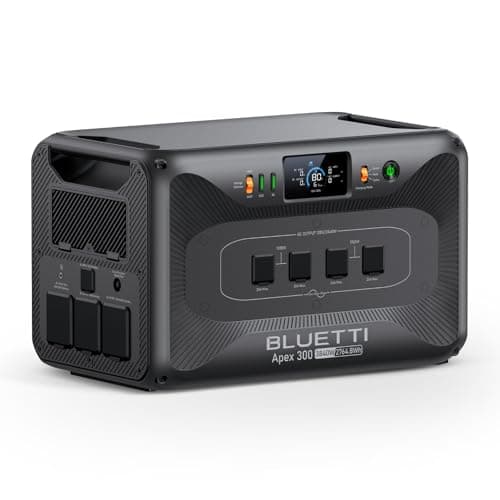
BLUETTI Apex 300

Where the budget tier stops

BLUETTI Apex 300

2,764.8Wh and 3,840W continuous with simultaneous 120V and 240V, on cells rated 6,000 cycles.

Everything in the house except the air conditioning
$1,498.98 · Check price on Amazon

#ad how this is funded · price as of October 21, 2026 · $1,699.00 12% off

Prices come from the retailer at page-build time and change constantly. Where no live price is available the button reads “Check price” rather than showing a number we cannot stand behind.

The verdict, in one paragraph

Goodman publishes 148.0 locked-rotor amps for the 5-ton model of its GLXS4B condenser — about 34 kilowatts at 230 volts in the instant the compressor starts. The largest system on this site publishes 12,000 watts. So the honest answer to “which home battery can run a 5-ton central AC” is: none of them, as shipped. Fit a soft starter — a soft starter that publishes a 70% startup reduction on systems up to 6 tons — and the inrush drops to roughly 44 amps, about 10 kilowatts, which an EcoFlow DELTA Pro Ultra (10.8kW published surge) or a paired Anker SOLIX F3800 Plus (12,000W) can meet. After that the constraint stops being watts and becomes watt-hours: Goodman's published 23.9 rated-load amps is about 5,500 running watts, so a 6,144Wh battery is roughly an hour of continuous cooling. Buy the soft starter first. It is the cheapest part of this entire problem and nothing else works without it.

The published figures for a 5-ton condenser

FigurePublished valueWhat it means for a battery
LRA — locked rotor amps148.0 AAbout 34 kW of inrush at 230 V. The number that stops everything
RLA — rated load amps23.9 AAbout 5,500 W sustained. The number that sets your runtime
MCA — minimum circuit ampacity32.4 AA circuit-sizing figure, not a consumption figure
Max fuse or breaker50 AWhy this is a 240V hardwired circuit, never a plug
Supply208/230 V, single phase (197-253 V)Native split-phase output is required
Condenser fan motor1.3 ASmall, but it runs whenever the compressor does

Goodman's published specifications for the 5-ton A6010A model of the GLXS4B line, cited under Sources. The watt conversions in the third column are ours — amps multiplied by 230 volts — not manufacturer claims. Your own condenser's data plate carries its own LRA and RLA, and those are the figures to use.

Why the consumer wattage charts do not answer this

Champion's generator wattage chart — the reference most of this site is built on for appliance figures — lists central air conditioning at 2 ton, 3 ton and 4 ton, and stops there. There is no 5-ton row. Its 4-ton entry is 4,000 to 5,000 running watts and 6,500 to 8,000 starting watts.

That omission is informative rather than careless. Those starting-watt figures are what a generator needs to deliver, and generator sizing tables assume the machine can briefly exceed its rating. A battery inverter cannot: it has a hard electronic limit and it shuts down at it. A 5-ton condenser's true locked-rotor inrush — 148 amps, published on the data sheet — is four times the 8,000-watt figure a consumer chart would suggest for the size below it.

This is the single most common way the question goes wrong. People size a battery against a wattage chart, buy a 6,000W unit, and discover that the compressor will not start at all. Starting watts versus running watts explains the general case; central air is its most extreme example.

What each system can actually do

SystemPublished continuousPublished surgeStarts a 5-ton unsoftened?With a soft starter?
Anker F3800 Plus + Double Power Hub12,000 WNot published separatelyNoYes, with headroom
EcoFlow DELTA Pro Ultra7,200 W10.8 kWNoYes
Anker SOLIX F3800 Plus6,000 WNot published separatelyNoMarginal — no room for other loads
BLUETTI Apex 3003,840 W7,680 W liftingNoNo — below the running draw
A 5-ton condenser needsAbout 6,000 W with the blowerAbout 34 kW unsoftened—About 10 kW softened

Continuous and surge figures are each manufacturer's published specifications, cited under Sources. The bottom row is our arithmetic from Goodman's published amps and the listings' published reduction percentages, and it is an estimate of a range rather than a guaranteed figure. Live prices sit inside the buy buttons above, each with the date it was last refreshed.

The soft starter is the whole article

Two manufacturers publish the same claim in nearly the same words. The SoftStart Home listing states it “Reduces Startup Power by 70%” and covers “Up to 6 Tons (72,000 BTUs)”, explicitly “Works with Generators, RVs & Solar”. Micro-Air publishes “up to 75%” for its residential EasyStart and says the part is “suitable for use with generators, inverters, and limited utility power sources”, covering “air conditioners and heat pumps up to 6 tons (72,000 BTUs)”.

Apply either figure to Goodman's published 148 A and the inrush lands somewhere between 37 and 44 amps — call it 8.5 to 10 kilowatts. That is the difference between a problem no battery on the market solves and a problem two systems on this page solve comfortably.

What it does not do is reduce the running current. The compressor still draws its rated load every minute it operates, so the soft starter buys you the start and changes nothing about the runtime. People routinely expect otherwise and are disappointed. Soft starter versus a bigger generator is the same trade on the fuel side.

Variable-speed condensers are a different question

If your outdoor unit is inverter-driven, most of this page does not apply to you. Rheem describes its 5-ton RA15AZ as “Inverter driven, variable speed, twin rotary compressor technology” with “cooling operation between 40% and 70% of capacity (ramping up to 100% when required)”. Goodman's GXV9S line is published as variable-speed across 2 to 5 tons.

A compressor that ramps has no locked-rotor event to soften, and one that spends most of its life between 40% and 70% of capacity is drawing far less than its nameplate maximum while it does so. Both things make a variable-speed system dramatically friendlier to a battery than a single-stage one — which is worth knowing before anybody fits a soft starter to a unit that does not need one.

The catch is that neither manufacturer publishes a locked-rotor figure for these units on the pages we read, so we cannot give you a number. Check your own data plate.

Then the problem becomes watt-hours

Solve the start and you immediately meet the second wall. At Goodman's published 23.9 rated-load amps plus an air handler blower, a 5-ton system in operation is roughly 6,000 watts. Against the capacities on this page:

  • 6,144 Wh — about one hour of continuous compressor operation.
  • 7,680 Wh — a little over an hour.
  • 3,840 Wh — under forty minutes, if it could run it at all, which it cannot.

Our arithmetic from the published capacities and the published rated load, before conversion losses.

Those numbers look bleak and they are worse than reality, because an air conditioner cycles. A unit satisfying a thermostat in a reasonably insulated house may run thirty to fifty percent of the hour rather than all of it, which multiplies the figures above by two or three. How much power an air conditioner uses works duty cycle through properly, and how much home battery you can stack covers what expansion actually buys.

Five things to do before you buy anything

  1. Read your own data plate. It is on the outdoor condenser and it states LRA, RLA, MCA and max fuse for your unit. The figures on this page are Goodman's for one model and yours will differ — how to read an appliance nameplate walks through it.
  2. Find out whether it is single-stage or variable-speed. This changes the answer more than any product choice does.
  3. Price the soft starter first. It is the smallest line item and the one that determines whether any of the others work.
  4. Confirm native 120/240V output. A condenser is a 240V hardwired load; a system that reaches 240V through an autotransformer is a weaker arrangement for it.
  5. Decide honestly whether you want this at all. Cooling is the most expensive thing you can ask a battery to do. Running a whole-house fan, keeping the refrigerator cold and moving air costs a fraction of it — how to stay cool without power is the cheaper plan, and for most households it is the right one.

What about a generator instead?

For central air specifically, a generator is the easier answer, and it is worth saying plainly on a page full of batteries. An engine-driven machine can be momentarily overloaded by a starting motor in a way an inverter cannot, it does not run out after an hour, and a standby unit sized for the whole house handles a 5-ton condenser without any of this arithmetic.

What it costs you is noise, fuel, maintenance, and a machine that cannot run indoors. Generator versus home battery is the full comparison, and what size standby generator you need covers sizing one for cooling.

The short version

A 5-ton condenser publishes 148 locked-rotor amps — about 34 kilowatts of inrush — and no home battery in this catalog comes near it. A soft starter with a published 70% reduction brings that to roughly 10 kilowatts, which an EcoFlow DELTA Pro Ultra at 10.8kW surge or a paired Anker SOLIX F3800 Plus at 12,000W can meet. Running it then costs about 6,000 watts, so expect an hour of continuous cooling per 6kWh of battery, stretched by duty cycle. Buy the soft starter first, read your own data plate second, and be honest with yourself about whether cooling a house from a battery is the purchase you actually want.
The picks in full

01 — Buy this first

SoftStart Home soft starter

Reduces startup power by a published 70% on air conditioners and heat pumps up to 6 tons (72,000 BTU), with a stated 15-minute install.

This is the only pick on the page that changes the arithmetic rather than paying for it. Goodman publishes 148.0 locked-rotor amps for the 5-ton model of its GLXS4B line — roughly 34 kilowatts at 230 volts in the instant the compressor starts. Nothing in this catalog produces 34 kilowatts.

A soft starter ramps the compressor up instead of connecting it across the line. At the listing's published 70% reduction, a 148 A inrush becomes somewhere near 44 A — about 10 kilowatts — which is a number several systems below can actually meet. The same listing states coverage up to 6 tons, which is the band a 5-ton condenser sits inside rather than at the edge of.

Micro-Air makes the same argument about its residential EasyStart, publishing “up to 75%” reduction and describing the part as “ideal for ACs using a standby or portable generator in an emergency power outage”. Two manufacturers, the same claim, and it is the claim this whole page depends on.

The honest catch: a soft starter reduces the start, not the run. The condenser still draws its full rated load every second it is on, and that is the number that decides your runtime. It is also wired into the air conditioner by someone competent, not plugged in — the 15-minute figure is the manufacturer's, for an installer who has done it before.

Skip it ifyour condenser is already inverter-driven and variable-speed. Those ramp up by design and have no hard start to soften.

SoftStart Home soft starter
$355.00 · Check price on Amazon

#ad how this is funded · price as of October 21, 2026

Published specifications for the SoftStart Home soft starter
SpecificationPublished figure
Startup reductionReduces startup power by 70%, per the listing
CoverageAir conditioners and heat pumps up to 6 tons (72,000 BTU)
Works withGenerators, RVs and solar, per the listing
Install15-minute install, per the listing — fitted to the air conditioner, not the battery
Also claimedExtends compressor life
Running currentNot reduced — a soft starter changes the start, not the sustained load

Source: SoftStart Home — soft starter for air conditioners and heat pumps listing. These are the manufacturer's published figures, not ours — we have not tested this unit.

02 — Highest output, and the only comfortable answer

Anker SOLIX F3800 Plus with Double Power Hub

7,680Wh with a published 12,000W AC output across a paired configuration at 120V and 240V.

12,000 watts is the highest sustained figure in this catalog, and it is the only one with room for a softened 5-ton start and a refrigerator, a freezer and lighting already running. That matters more than the headline suggests: surge is measured from whatever is already drawing, not from zero.

Against Goodman's published 23.9 rated-load amps — about 5,500 watts at 230 volts — plus an air handler blower that Champion publishes at 300 to 800 running watts, a 5-ton system in steady operation is roughly 6,000 watts. Twelve kilowatts leaves genuine headroom rather than a marginal pass.

The honest catch: 7,680Wh against a ~6,000W load is a little over an hour of continuous cooling, before any conversion losses. Air conditioners cycle rather than run flat out, which stretches that considerably — air conditioner power draw works the duty-cycle arithmetic through — but nobody should expect a night of cooling from this.

Skip it ifthe AC is the only reason you are buying. Twelve kilowatts is a lot of money for one appliance.

Anker SOLIX F3800 Plus with Double Power Hub
$5,398.99 · Check price on Amazon

#ad how this is funded · price as of October 21, 2026 · $9,897.00 45% off

Published specifications for the Anker SOLIX F3800 Plus with Double Power Hub
SpecificationPublished figure
Capacity7,680 Wh as listed
Paired-unit output12,000 W AC, per the listing
Paired-unit ceiling53.8 kWh with expansion batteries, per Anker's F3800 specifications
Voltage120V and 240V dual voltage
Solar input3,200 W
GeneratorGenerator-ready, per the listing
Cell chemistryLiFePO4, 3,000+ cycles
Warranty5 years

Source: Anker SOLIX — F3800 Plus with Double Power Hub retail listing. These are the manufacturer's published figures, not ours — we have not tested this unit.

03 — Best single unit for the job

EcoFlow DELTA Pro Ultra

6,144Wh with 7,200W continuous at 120/240V and a published 10.8kW surge - the highest single-unit surge here.

7,200 watts continuous clears a 5-ton system's roughly 6,000 watts of sustained draw with margin, and the published 10.8kW surge is the figure that matters for the start. Against a soft-started inrush near 10 kilowatts, this is the smallest single unit that is not a coin toss.

Native 120/240V from one inverter is the other requirement people discover late. A 5-ton condenser is a 240V appliance on its own circuit, and a system that makes 240V only through an autotransformer or a voltage hub is a different and more fragile arrangement — native split-phase backup covers which units do it properly.

The honest catch: 6,144Wh at ~6,000W is about an hour at full tilt. Expansion to a published 30kWh on one inverter is what turns this into a cooling plan rather than a cooling gesture, and that is a much larger purchase.

Skip it ifyou have no soft starter. 10.8kW does not meet a 34kW inrush and no amount of capacity changes that.

EcoFlow DELTA Pro Ultra
$4,199.00 · Check price on Amazon

#ad how this is funded · price as of October 21, 2026

Published specifications for the EcoFlow DELTA Pro Ultra
SpecificationPublished figure
Capacity6,144 Wh (102.4 V, 60 A)
Cell chemistryLFP
AC output7,200 W continuous, 120V/240V, 60 Hz pure sine
AC surge10.8 kW
Expansion (one inverter)30 kWh with 5 extra batteries
Expansion (system)90 kWh with 15 batteries; 21.6 kW across 3 inverters
UPSBackup UPS under 20 ms; online UPS 0 ms
Cycle life3,500 cycles to 80% capacity
Ingress ratingIP54
Warranty5 years

Source: EcoFlow — DELTA Pro Ultra product specifications. These are the manufacturer's published figures, not ours — we have not tested this unit.

04 — Best wired installation

EcoFlow DELTA Pro Ultra with Smart Home Panel 2

The same 6,144Wh and 7,200W with a 12-circuit Smart Home Panel 2 and a published 20ms switchover, as one listed kit.

A central air conditioner cannot be plugged into anything. It is hardwired to a dedicated 240V circuit protected, in Goodman's published figures for the 5-ton GLXS4B, by a 50-amp maximum fuse or breaker against a 32.4 amp minimum circuit ampacity. Reaching it means a panel, not an extension lead.

Twelve controllable circuits is also the practical answer to the runtime problem. If the battery is carrying the AC, it should not also be carrying the dryer, and a panel is what enforces that without anyone being awake to do it.

The honest catch: this is a sub-panel, so it is permitted electrician work on top of the hardware price. It also does not add a single watt of output over the bare unit above — which systems shed heavy circuits automatically compares what the panels actually do.

Skip it ifyou are happy to run a cord. The panel is most of the extra cost and it buys automation, not output.

EcoFlow DELTA Pro Ultra with Smart Home Panel 2
$5,499.00 · Check price on Amazon

#ad how this is funded · price as of October 21, 2026

Published specifications for the EcoFlow DELTA Pro Ultra with Smart Home Panel 2
SpecificationPublished figure
Battery6,144 Wh per inverter unit
AC output7,200 W continuous, 120V/240V; 10.8 kW surge
PanelSmart Home Panel 2, 12 circuits, 20 ms switchover
Expansion30 kWh on one inverter; 90 kWh and 21.6 kW across three
Cycle life3,500 cycles to 80% capacity
Warranty5 years

Source: EcoFlow — DELTA Pro Ultra product specifications. These are the manufacturer's published figures, not ours — we have not tested this unit.

05 — The marginal option, labeled honestly

Anker SOLIX F3800 Plus

3,840Wh with 6,000W max output and a 6,000W L14-30R split-phase port.

6,000 watts against a 5-ton system's roughly 6,000 watts is not headroom, it is a tie. This unit will carry central air and almost nothing else, and the first refrigerator compressor that kicks in alongside it is the thing that trips the inverter.

For a 3-ton or smaller system it is a different and much better answer, and the published L14-30R port at 6,000W is a real split-phase connection rather than a 120V outlet with ambitions.

The honest catch: Anker publishes 6,000W as a maximum with 120V outlets capped at 2,400W. The full figure is available through the split-phase port, which means the AC has to be fed through a transfer switch or inlet rather than from the front panel.

Skip it ifyou want the AC and the rest of the house at once. 6,000W is roughly the whole 5-ton load with nothing left over.

Anker SOLIX F3800 Plus
$2,599.99 · Check price on Amazon

#ad how this is funded · price as of October 21, 2026

Published specifications for the Anker SOLIX F3800 Plus
SpecificationPublished figure
Capacity3,840 Wh
Cell chemistryLiFePO4, 3,000+ cycles
AC output6,000 W max; 120V outlets 2,400 W max
Split-phase portL14-30R, 120/240V, 6,000 W
Solar inputUp to 3,200 W across two 165V MPPT inputs
AC charging1,800 W standard; 6,000 W via generator or Home Power Panel
Switchover20 ms from the wall; 30-50 ms on generator
ExpansionUp to six 3.84 kWh batteries, 26.88 kWh total
Weight136.7 lb
Warranty5 years

Source: Anker SOLIX — F3800 Plus product specifications. These are the manufacturer's published figures, not ours — we have not tested this unit.

06 — Where the budget tier stops

BLUETTI Apex 300

2,764.8Wh and 3,840W continuous with simultaneous 120V and 240V, on cells rated 6,000 cycles.

This is here to be ruled out, because it is the unit people reasonably hope will work. 3,840 watts continuous is less than the roughly 6,000 watts a 5-ton system draws while simply running, so no soft starter and no load management makes it viable. The honest answer is no.

It remains an excellent split-phase battery for the rest of the house — a well pump, a furnace, a refrigerator and a freezer — at a fraction of the price of anything above it, with a 6,000-cycle rating that none of them match.

The honest catch for this page specifically: the 7,680W lifting-power figure BLUETTI publishes is a momentary surge rating, not sustained output. It can help a start; it cannot carry a run — the surge output page separates the three figures the industry calls surge.

Skip it ifcentral air is the point of the purchase. 3,840W is below a 5-ton system's running draw, let alone its start.

BLUETTI Apex 300
$1,498.98 · Check price on Amazon

#ad how this is funded · price as of October 21, 2026 · $1,699.00 12% off

Published specifications for the BLUETTI Apex 300
SpecificationPublished figure
Capacity2,764.8 Wh
Cell chemistryLiFePO4 (LFP)
AC output3,840 W continuous pure sine / 7,680 W lifting
Voltage120V and 240V simultaneous output
Max solar input2,400 W (2 x 1,200 W, 12-60 V, 20 A each)
ExpansionB300K at 2,764.8 Wh each, or B500K at 5,120 Wh each
Cycle life6,000 cycles to 80% capacity
Weight83.78 lb (38 kg)
Warranty5 years

Source: BLUETTI — Apex 300 RV power system guide (published specifications). These are the manufacturer's published figures, not ours — we have not tested this unit.

How these were chosen

We did not test these. Nobody at Watt & Warden has plugged one in. What we did instead: read the manufacturer's published specifications, compile them into a table where the figures line up, and compute the numbers manufacturers leave out — runtime against a real appliance load, and what an hour of running actually costs.

Anything that could not be sourced was left out rather than estimated, and every pick names the buyer who should skip it. The full method is here, including where it is weaker than a publisher with a test bench.

Questions people actually ask

Can a home battery run a 5-ton central air conditioner?

Not as shipped. Goodman publishes 148.0 locked-rotor amps for the 5-ton model of its GLXS4B line, which is about 34 kilowatts of inrush at 230 volts, and the largest system on this site publishes 12,000 watts. With a soft starter rated for up to 6 tons and a published 70% startup reduction, the inrush falls to roughly 10 kilowatts, which an EcoFlow DELTA Pro Ultra (10.8kW surge) or a paired Anker SOLIX F3800 Plus (12,000W) can meet.

How many watts does a 5-ton air conditioner use?

Goodman publishes 23.9 rated load amps for the 5-ton GLXS4B condenser, which is about 5,500 watts at 230 volts, plus a 1.3 amp condenser fan. Add an air handler blower, which Champion publishes at 300 to 800 running watts, and a 5-ton system in operation is roughly 6,000 watts. The starting figure is far higher and is a separate specification.

Do I need a soft starter to run central air from a battery?

For a single-stage compressor, yes - it is not optional. The locked-rotor inrush of a 5-ton condenser is several times any battery inverter's surge rating, and unlike a generator an inverter cannot be momentarily overloaded. Soft starter manufacturers publish 70% to 75% reductions and explicitly market the part for running air conditioning on generators, inverters and limited power sources.

How long will a home battery run central air conditioning?

About one hour of continuous compressor operation per 6kWh of battery, using Goodman's published rated load. Real runtime is longer because an air conditioner cycles rather than running flat out - a unit running thirty to fifty percent of each hour stretches that by two or three times. Cooling remains the most expensive thing you can ask a battery to do.

Does a soft starter reduce running current too?

No. A soft starter changes how the compressor starts, not how much it draws once running. The condenser still pulls its full rated load every minute it operates, so a soft starter solves the start and changes nothing about runtime. Expecting otherwise is the most common disappointment with these parts.

Is a variable-speed air conditioner easier to run on a battery?

Considerably. An inverter-driven compressor ramps up rather than starting across the line, so there is no locked-rotor event to overcome. Rheem describes its 5-ton RA15AZ as operating between 40% and 70% of capacity and ramping to 100% only when required, which also means it draws well under its nameplate maximum most of the time. Check your own data plate, because manufacturers do not always publish locked-rotor figures for these units.

Why do generator wattage charts stop at 4 tons?

Champion's chart lists central air at 2, 3 and 4 tons and has no 5-ton row. Those charts are built for generators, which can be momentarily overloaded by a starting motor in a way a battery inverter cannot. Its 4-ton starting figure of 6,500 to 8,000 watts is a long way below the 148 amps a 5-ton condenser's data plate actually publishes.

Can I plug a central air conditioner into a power station?

No. A 5-ton condenser is hardwired to a dedicated 240V circuit - Goodman publishes a 32.4 amp minimum circuit ampacity and a 50 amp maximum breaker for the one here. Reaching it requires a transfer switch, an inlet or a sub-panel, which is permitted electrician work and belongs in the budget alongside the battery.

Sources

Every figure on this page comes from a published source. We have not tested this equipment, so the specifications are the manufacturer's and the statistics are the dataset's — the arithmetic on top of them is ours, and it is shown in full so you can check it. How we work this out.