Skip to content
Watt Warden

Power Stations

Jackery HomePower 3000 Review: The One That Does Not Grow

Jackery sells this as essential home backup and prices it keenly. Three things in Jackery's own documentation decide whether it is the right buy, and none of them is the capacity.

By Sawyer V.Updated Published How we work this out
Jackery HomePower 3000

Watt & Warden earns a commission on qualifying purchases made through links on this page, at no extra cost to you. It never changes a ranking, and our picks include products we tell you to skip. Full disclosure.

Quick picks

#ProductBest forPrice
1
Jackery HomePower 3000

The unit under review

Jackery HomePower 3000

3,072Wh and 3,600W with a 7,200W surge, at the light end of its class - and a hard capacity ceiling Jackery is upfront about.

One or two days of essentials, bought once and left alone
$1,499.00 · Check price on Amazon

#ad how this is funded · price as of November 9, 2026

2
Anker SOLIX F3000

The same numbers, but it grows

Anker SOLIX F3000

Identical on paper - 3,072Wh, 3,600W, 7,200W surge, 4,000 cycles, 20ms - and it takes expansion batteries the Jackery cannot.

The same job, with the option to add capacity later
$1,598.99 · Check price on Amazon

#ad how this is funded · price as of November 9, 2026

3
BLUETTI Elite 200 V2

Two thirds the battery for a lot less

BLUETTI Elite 200 V2

2,073.6Wh and 2,600W at a substantially lower price, with the longest published cycle life in this comparison.

A shorter keep-list, or a first battery
$898.99 · Check price on Amazon

#ad how this is funded · price as of November 9, 2026 · $1,399.00 36% off

4
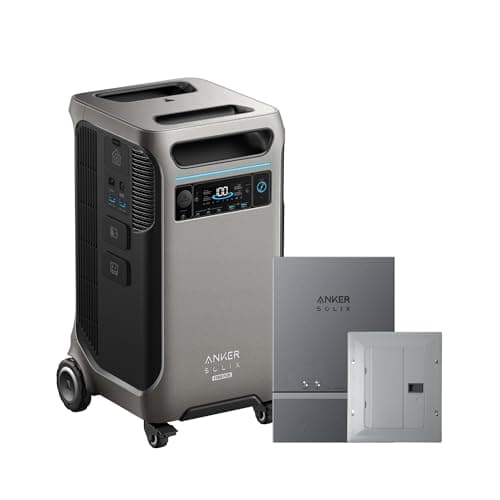
Anker SOLIX F3800 Plus with Home Power Panel

When 120V is not enough

Anker SOLIX F3800 Plus with Home Power Panel

3,840Wh with true 120/240V split-phase output and the Home Power Panel in the same listing - a different class of job entirely.

A well pump, a range, or anything on a 240V circuit
$3,599.99 · Check price on Amazon

#ad how this is funded · price as of November 9, 2026

Prices come from the retailer at page-build time and change constantly. Where no live price is available the button reads “Check price” rather than showing a number we cannot stand behind.

How this review was done

Every figure below is published by Jackery on the HomePower 3000 product page, read on 9 November 2026. We have not had a unit on a bench and we do not pretend otherwise — what this review does is read the manufacturer's own documentation carefully, including the parts that sit in the FAQ rather than the specification table, and compare it against what rivals publish for the same job.

Three things in that documentation decide whether this is the right buy, and the capacity is not one of them.

One: it does not expand, and Jackery says so plainly

Most batteries in this class are sold as the first unit of a system. This one is not. Jackery's own FAQ asks “Is the HomePower 3000 expandable?” and answers by directing buyers who want expandable capacity to the 2000 Plus or 5000 Plus series instead.

Credit where it is due — that is a straight answer, and a lot of brands would have left it vague. But it changes what you are buying. Three kilowatt-hours is Jackery's stated “1-2 days of essentials”, and if your outages turn out to run longer than that, the upgrade path is a different product rather than another battery.

That is the single clearest difference from the Anker SOLIX F3000, which matches this unit on almost every published number and does take expansion batteries. Expandable power stations covers which platforms grow and what the second battery actually costs.

Two: the cycle rating is measured to 70%, not 80%

Jackery publishes “4000+ Life Cycles” and, immediately underneath, the qualifier: “Cycles with ≥70% capacity retention.”

That threshold is the thing to notice. The convention across this category — and the figure the rest of this site's catalog is quoted against — is cycles to 80% of original capacity. A cell rated to 70% is allowed to lose half again as much capacity before the count stops, so 4,000 cycles to 70% is not the same claim as 4,000 cycles to 80%, even though the numbers look identical in a comparison table.

This is not an accusation of anything. Jackery publishes the threshold clearly, which is more than some do. But it means that when you see this unit and a rival both listed at 4,000 cycles, you are not looking at a tie. How long power stations actually last covers why the retention figure matters more than the cycle count.

Three: the five-year warranty is tied to buying direct

Jackery's page states it twice, and the wording is specific: “You'll receive a full 5 Years warranty, available exclusively when you buy directly from Jackery.com.” Elsewhere on the same page the shop banner reads “Up to 5-Year Warranty.”

Read those together and the implication is hard to miss: the headline five years is a direct-purchase term. Jackery does not publish what the cover is through other channels, so we are not going to put a number on it — but if the warranty is part of why you are choosing this unit, the buy button is a decision and not just a price comparison. Check the term offered wherever you actually buy, before you buy.

This is the most actionable thing on the page, and it is the sort of detail that never appears in a specification table.

What it is genuinely good at

Having led with three caveats, the positives are real and some of them are unusual.

  • 3,600W continuous with a 7,200W surge is a lot of output for three kilowatt-hours. Plenty of units in this capacity class stop at 2,400W, and output is what decides whether a refrigerator compressor starts at all.
  • ZeroDrain, at about 95% retained after twelve months. Standing loss is the quiet failure mode of backup batteries — the ones that sit in a cupboard for a year and are at 40% when the storm arrives. Publishing a figure for it at all is rare.
  • About 2.2 hours from a wall outlet, or 1.7 hours on AC plus 2,500W of solar. Between two storms in the same week, that is the difference between ready and not.
  • 59.5 lb. Light, for this class — the Anker rival is 91.5 lb. Neither has wheels, which Jackery's own page acknowledges when it summarizes buyer feedback.
  • Bypass mode, so it can charge from AC and power devices simultaneously, and a TT-30 port at 120V 30A.

The UPS question, answered unusually honestly

Jackery publishes a roughly 20ms UPS switchover and then does something most brands avoid: it says what that does not cover. “It does not support 0ms switching, and it's not recommended for sensitive devices like data servers.”

Twenty milliseconds is about one and a quarter cycles of 60Hz power. It is fine for a fridge, a router, a television or a desktop. It is not a substitute for a double-conversion UPS in front of a rack, which is exactly what Jackery is saying. The rack-mount UPS comparison covers what to use there instead.

Jackery also publishes an explicit exclusion for medical devices and life-support equipment, which is worth taking at face value. If that is your use case, home battery backup for medical equipment sets out what the published switchover figures actually mean.

What it runs, and for how long

3,072Wh is the rated figure; delivered energy after inverter and conversion losses is lower, and this site uses 85% as the working convention, which puts roughly 2,600Wh on the table. Against that:

LoadTypical drawRoughly
Refrigerator, cycling150 W averageAbout 17 hours
Furnace blower400 WAbout 6 hours
Router, modem and a laptop60 WAbout 43 hours
Fridge plus network plus lights250 WAbout 10 hours

Arithmetic on delivered watt-hours, not manufacturer runtime claims. Your own figures will differ — a plug-in meter on the actual appliance is the only way to know, and sizing a power station walks through it.

Who should buy it

A household that wants one box, bought once, to carry a fridge and the essentials through a day or two — and that is happy for that to be the permanent ceiling. The output is generous for the capacity, the standing charge retention is genuinely better documented than the competition, and it is light enough that one person can reposition it.

Who should skip it

Anyone who expects the system to grow. The Anker SOLIX F3000 matches it on nearly every published number and takes expansion batteries, and that single difference outweighs the weight advantage for most buyers planning more than one outage season ahead. Anyone with a 240V load should be shopping a different class entirely. And anyone buying primarily for the five-year warranty should read where Jackery says that term applies before choosing a retailer.

The short version

Good hardware, honestly documented, with a ceiling. The 3,600W output and the ZeroDrain figure are real advantages; the fixed capacity, the 70% cycle threshold and the direct-purchase warranty term are real limits. Jackery publishes all six of those facts on its own page, which is more candor than this category usually offers — the work is simply reading past the headline numbers to find them.
The picks in full

01 — The unit under review

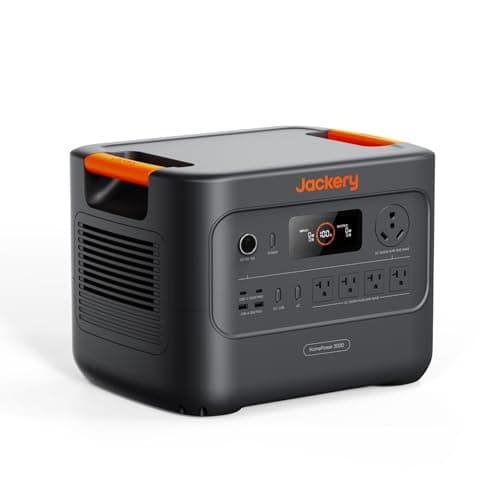
Jackery HomePower 3000

3,072Wh and 3,600W with a 7,200W surge, at the light end of its class - and a hard capacity ceiling Jackery is upfront about.

On the headline numbers this is a strong package. 3,072Wh of LFP, 3,600W continuous with a 7,200W surge, a TT-30 port rated 120V 30A, and a recharge Jackery puts at about 2.2 hours from a wall outlet or 1.7 hours on AC plus 2,500W of solar. At 59.5 lb it is also meaningfully lighter than the obvious rival.

The feature worth more than it sounds is ZeroDrain: Jackery publishes about 95% charge retention after twelve months on the shelf. A backup battery that self-discharges is a backup battery that is flat when you need it, and most of this category says nothing at all about standing loss.

The honest catch: no expansion, and Jackery does not bury it — its own FAQ answers “is the HomePower 3000 expandable?” by pointing you at the 2000 Plus or 5000 Plus series instead. Whatever you buy today is what you own in five years.

Skip it ifyou expect to add capacity later. Jackery states this model does not expand and names a different series for buyers who want that.

Jackery HomePower 3000
$1,499.00 · Check price on Amazon

#ad how this is funded · price as of November 9, 2026

Published specifications for the Jackery HomePower 3000
SpecificationPublished figure
Capacity3,072 Wh
AC output3,600 W continuous, 7,200 W surge
Cell chemistryLiFePO4 (LFP)
Cycle life4,000+ cycles, which Jackery rates to 70% capacity retention rather than the 80% most of this class publishes
UPS switchoverAbout 20 ms; Jackery states it does not support 0 ms
ExpansionNone. Jackery directs buyers who want expandable capacity to its 2000 Plus or 5000 Plus series
RechargeAbout 2.2 hours from a wall outlet, or 1.7 hours on AC plus 2,500 W of solar
Shelf retentionAbout 95% of charge after 12 months, per Jackery's ZeroDrain claim
RV portTT-30, 120 V 30 A
Weight59.5 lb, with no wheels
Warranty5 years, which Jackery states is available exclusively when you buy direct from Jackery.com
In the boxHomePower 3000, an AC charging cable and a USB-C cable

Source: Jackery — HomePower 3000 product page (3,072Wh, 3,600W continuous and 7,200W surge, LFP, 4,000+ cycles to 70% retention, ~20ms UPS and explicitly not 0ms, no expansion, 2.2h wall recharge, ZeroDrain ~95% after 12 months, TT-30 port, 59.52 lbs, 5-year warranty exclusive to direct purchase). These are the manufacturer's published figures, not ours — we have not tested this unit.

02 — The same numbers, but it grows

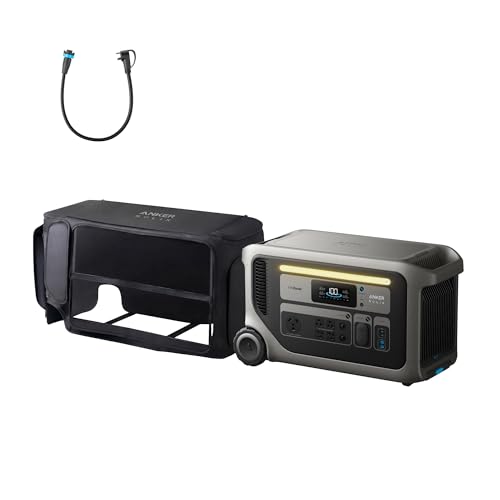
Anker SOLIX F3000

Identical on paper - 3,072Wh, 3,600W, 7,200W surge, 4,000 cycles, 20ms - and it takes expansion batteries the Jackery cannot.

This is the comparison that matters, because the two units are almost indistinguishable on the spec sheet. Same capacity, same continuous and surge output, same published cycle count, same 20ms switchover. Two things separate them and both are decisions rather than numbers.

The first is expansion. Anker publishes BP3000 expansion batteries at 3,072Wh each; Jackery publishes none. If there is any chance this becomes a bigger system, that is the whole argument.

The honest catch: the second difference runs the other way. 91.5 lb against 59.5 lb is thirty-two pounds, and neither unit has wheels. If it has to move between a basement and a kitchen, the Jackery is the one you will actually move.

Skip it ifyou have to carry it. Anker publishes 91.5 lb against Jackery's 59.5, and neither has wheels.

Anker SOLIX F3000
$1,598.99 · Check price on Amazon

#ad how this is funded · price as of November 9, 2026

Published specifications for the Anker SOLIX F3000
SpecificationPublished figure
Capacity3,072 Wh
Cell chemistryLiFePO4, 4,000 cycles
AC output3,600 W continuous total, 7,200 W surge
Voltage120V only; 240V needs two units and a Double Voltage Hub
Solar inputUp to 2,400 W (1,600 W high-PV plus 800 W low-PV)
AC charging1,800 W standard; 3,600 W via a TT-30 adapter
Switchover20 ms
Weight91.5 lb
ExpansionBP3000 expansion batteries, 3,072 Wh each

Source: Anker SOLIX — F3000 product specifications. These are the manufacturer's published figures, not ours — we have not tested this unit.

03 — Two thirds the battery for a lot less

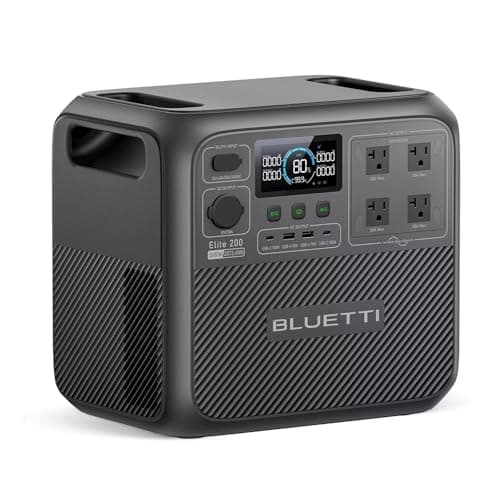
BLUETTI Elite 200 V2

2,073.6Wh and 2,600W at a substantially lower price, with the longest published cycle life in this comparison.

Before spending three-kilowatt-hour money it is worth asking whether you need three kilowatt-hours. Our review of this unit works through what two kilowatt-hours actually covers, and for a fridge, a furnace blower, lights and a network it is most of a night.

It also publishes a notably stronger cycle rating than anything else here, which matters more than capacity if the battery will sit on standby for a decade.

The honest catch: output, not capacity, is the binding constraint for most households. Starting watts versus running watts explains why a 1,000W difference in continuous rating decides what you can switch on at all.

Skip it ifyour keep-list includes anything that starts hard. 2,600W is a real step down from 3,600W when a compressor kicks in.

BLUETTI Elite 200 V2
$898.99 · Check price on Amazon

#ad how this is funded · price as of November 9, 2026 · $1,399.00 36% off

Published specifications for the BLUETTI Elite 200 V2
SpecificationPublished figure
Usable capacity2,073.6 Wh
Cell chemistryAutomotive-grade LiFePO4 (LFP)
AC output2,600 W continuous / 3,900 W power lifting
Cycle life6,000+ cycles
Fast charge0–80% in 50 min via dual AC/DC input

Source: BLUETTI — Elite 200 V2 product specifications. These are the manufacturer's published figures, not ours — we have not tested this unit.

04 — When 120V is not enough

Anker SOLIX F3800 Plus with Home Power Panel

3,840Wh with true 120/240V split-phase output and the Home Power Panel in the same listing - a different class of job entirely.

The HomePower 3000 is a 120V machine. That covers the great majority of a household keep-list, but it does not cover a well pump, an electric range or a central air conditioner, all of which live on 240V circuits.

If any of those are on your list, no amount of capacity in a 120V unit solves it, and this is where the money has to go instead. Split-phase 240V home battery backup covers which systems produce it natively.

The honest catch: it is more than double the price and it is a permitted installation rather than a plug-in purchase. Most households genuinely do not need it.

Skip it ifeverything you want to back up plugs into a normal socket. Split-phase is a large premium for capability you will not use.

Anker SOLIX F3800 Plus with Home Power Panel
$3,599.99 · Check price on Amazon

#ad how this is funded · price as of November 9, 2026

Published specifications for the Anker SOLIX F3800 Plus with Home Power Panel
SpecificationPublished figure
Capacity3,840 Wh
Cell chemistryLiFePO4, 3,000+ cycles
AC output6,000 W max; 120V outlets 2,400 W max
Split-phase portL14-30R, 120/240V, 6,000 W
Solar inputUp to 3,200 W across two 165V MPPT inputs
AC charging1,800 W standard; 6,000 W via generator or Home Power Panel
Switchover20 ms from the wall; 30-50 ms on generator
ExpansionUp to six 3.84 kWh batteries, 26.88 kWh total
Weight136.7 lb
In the boxF3800 Plus plus the Home Power Panel. Anker no longer lists the bare Plus, nor the 240V-generator-adapter bundle, on their own
Warranty5 years
The non-Plus F3800No longer sold new on Amazon. Its published solar ceiling was 2,400 W; every other figure above is unchanged on the Plus

Source: Anker SOLIX — F3800 Plus product specifications. These are the manufacturer's published figures, not ours — we have not tested this unit.

How these were chosen

We did not test these. Nobody at Watt & Warden has plugged one in. What we did instead: read the manufacturer's published specifications, compile them into a table where the figures line up, and compute the numbers manufacturers leave out — runtime against a real appliance load, and what an hour of running actually costs.

Anything that could not be sourced was left out rather than estimated, and every pick names the buyer who should skip it. The full method is here, including where it is weaker than a publisher with a test bench.

Questions people actually ask

Is the Jackery HomePower 3000 expandable?

No. Jackery's own FAQ answers this directly and points buyers who want expandable capacity to the 2000 Plus or 5000 Plus series instead. Whatever capacity you buy is permanent, which is the clearest difference between this unit and the Anker SOLIX F3000 it otherwise matches on paper.

What does the HomePower 3000's 4,000-cycle rating actually mean?

Jackery publishes 4,000+ cycles with the qualifier 'Cycles with at least 70% capacity retention'. Most of this category quotes cycles to 80% of original capacity, so a 70% threshold allows half again as much degradation before the count stops. The numbers look identical in a comparison table and are not measuring the same thing.

Does the HomePower 3000 come with a five-year warranty on Amazon?

Jackery states that the full five-year warranty is 'available exclusively when you buy directly from Jackery.com', and its shop banner says 'Up to 5-Year Warranty'. Jackery does not publish what the term is through other retailers, so check the cover offered wherever you actually buy before you commit. If the warranty is part of why you are choosing this unit, the choice of retailer is part of the decision.

Can the HomePower 3000 run a well pump or an electric range?

No. It is a 120V machine, and well pumps, electric ranges and central air conditioners sit on 240V circuits. No amount of capacity in a 120V unit solves that - it needs a split-phase system such as the Anker SOLIX F3800 class.

Is 20ms fast enough to use it as a UPS?

For ordinary electronics, yes - 20ms is about one and a quarter cycles of 60Hz power, and a fridge, router, television or desktop will not notice. Jackery is explicit that it does not support 0ms switching and does not recommend it for sensitive devices such as data servers, and it publishes a separate exclusion for medical and life-support equipment.

How long will it run a refrigerator?

On delivered energy of roughly 2,600Wh after conversion losses, a refrigerator averaging 150W works out at about 17 hours. A fridge plus a network and some lights at 250W is nearer 10 hours. Those are arithmetic, not manufacturer runtime claims - measure your own appliance with a plug-in meter for a figure you can rely on.

Sources