Skip to content
Watt Warden

Power Stations

Anker SOLIX vs Jackery: Which Brand Suits You?

Two brands that sell the same watt-hours for about the same money, and have made opposite decisions about what to optimize. The choice is easier once you name the decision.

By Sawyer V.Updated Published How we work this out
Tents at a campsite in a mountain valley at sunset.

Watt & Warden earns a commission on qualifying purchases made through links on this page, at no extra cost to you. It never changes a ranking, and our picks include products we tell you to skip. Full disclosure.

Quick picks

#ProductBest forPrice
1
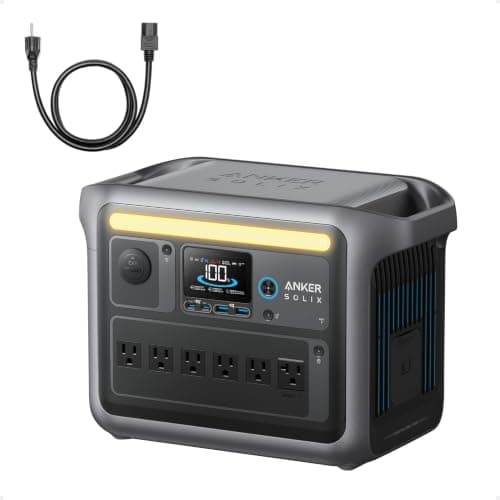
Anker SOLIX C1000

Anker's answer at 1kWh

Anker SOLIX C1000

1,056Wh, 1,800W continuous with 2,400W SurgePad, full in 58 minutes.

Refilling fast
$499.99 · Check price on Amazon

#ad how this is funded · price as of October 20, 2026 · $599.99 17% off

2
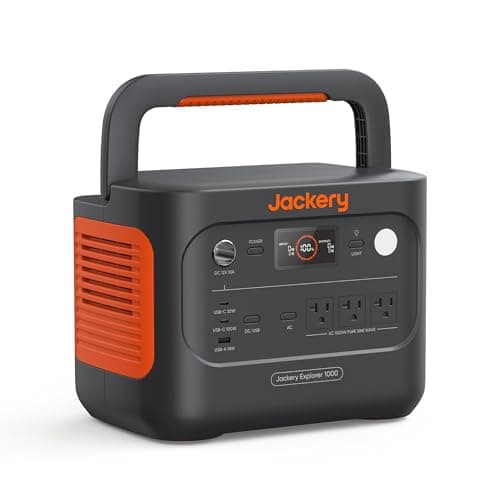
Jackery Explorer 1000 v2

Jackery's answer at 1kWh

Jackery Explorer 1000 v2

1,070Wh at 24 lb, 1,500W continuous, 3,000W surge, 4,000 cycles to 70%.

Carrying it
$499.00 · Check price on Amazon

#ad how this is funded · price as of October 20, 2026 · $559.00 11% off

3
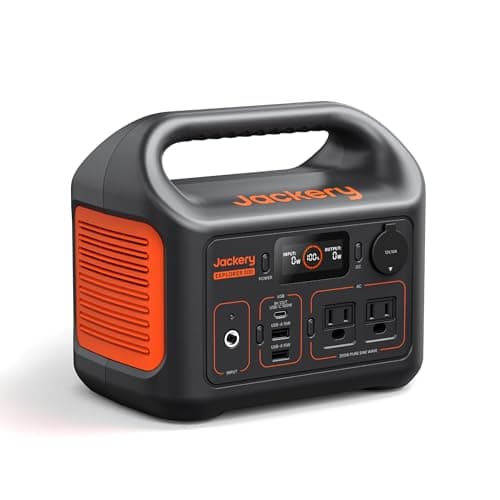
Jackery Explorer 300

The small tier, where Jackery is at home

Jackery Explorer 300

292Wh and a 300W inverter.

Phones, a CPAP, lights and a laptop
$259.00 · Check price on Amazon

#ad how this is funded · price as of October 20, 2026 · $289.00 10% off

4
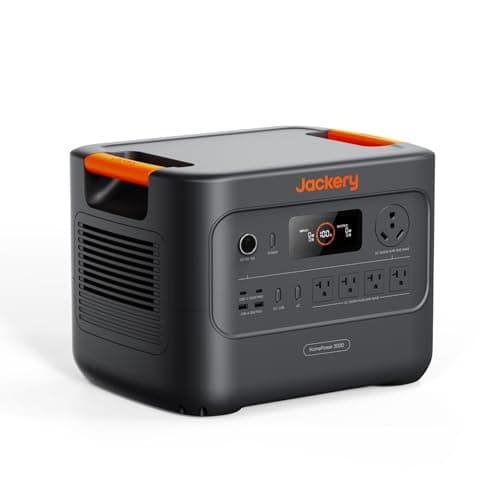
Jackery HomePower 3000

Jackery at the top

Jackery HomePower 3000

3,072Wh with 3,600W of output.

A big 120V load list
$1,349.00 · Check price on Amazon

#ad how this is funded · price as of October 20, 2026 · $1,499.00 10% off

5
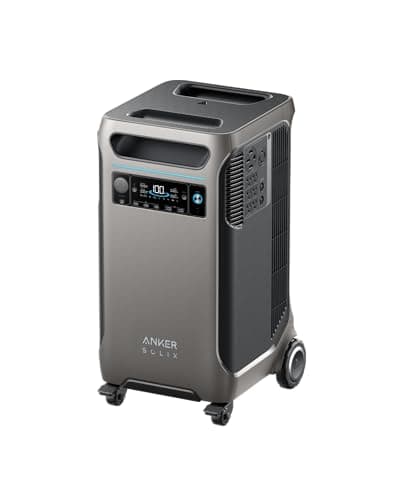
Anker SOLIX F3800

Anker at the top, and past where Jackery stops

Anker SOLIX F3800

3,840Wh, 6,000W continuous, 120/240V split-phase, expandable to 26.9kWh.

240V loads and panel-level backup
$1,759.99 · Check price on Amazon

#ad how this is funded · price as of October 20, 2026

Prices come from the retailer at page-build time and change constantly. Where no live price is available the button reads “Check price” rather than showing a number we cannot stand behind.

The short answer

Buy Anker SOLIX if the battery stays in the house, you want the fastest refill, you need more inverter, or you need 240V.

Buy Jackery if the battery travels, if it will be charged where people are sleeping, or if you value a long cycle rating and a light case over raw output.

Neither brand is better. They have made different trades with the same cells, and both publish the numbers, which is more than can be said for much of this market.

Tier by tier, on published numbers

TierAnker SOLIXJackeryWho wins, and why
Small (under 500Wh)Power banks rather than stationsExplorer 300 — 292Wh, 300W, 8.3 lbJackery, on having a real product here
1kWhC1000 — 1,056Wh, 1,800W, full in 58 minExplorer 1000 v2 — 1,070Wh, 1,500W, 24 lbAnker on output and speed; Jackery on weight
2kWhNot covered on this siteExplorer 2000 v2 — 2,042Wh, 2,200W, 20ms UPSJackery, on the UPS switchover and quiet charging
3kWh+ at 120VF3000 — 3,072Wh, 120V only as one unitHomePower 3000 — 3,072Wh, 3,000W, 6,000W surgeA tie; choose on recharge and outlets
240V split-phaseF3800 — 3,840Wh, 6,000W, 120/240VNo portable equivalentAnker, decisively

Figures are each manufacturer's published specifications. Tiers with no entry mean this site does not carry a unit from that brand at that size, not that the brand has nothing.

What each brand optimizes

Anker optimizes for time. Across the range the recharge figures are the aggressive ones — 58 minutes to full at 1kWh, 20ms switchover on the big units, high solar ceilings. Anker also puts the larger inverter in the same size case, and it is the brand that took split-phase 240V into a portable box first among these two.

Jackery optimizes for living with it. Lightest unit in the class at 1kWh and at 2kWh, a published sub-30dB charging mode, and a panel ecosystem designed to plug in without adapters. Jackery also publishes the longer cycle rating at 1kWh: 4,000 cycles to 70% against Anker's 3,000.

Those are different customers, and the honest recommendation follows the customer rather than the brand.

Where the difference actually bites

1. The microwave line

At 1kWh, Anker gives 1,800W continuous and Jackery gives 1,500W. A standard 1,000W microwave draws about 1,500W at the wall, so that 300W is the difference between a working kitchen and a disappointed one. The microwave page explains why the door rating misleads.

2. The flicker test

If your grid drops and returns repeatedly, recharge speed is worth more than anything else on the sheet. Anker's 58-minute full charge refills in a single short window; 1.7 hours does not.

3. The stairs test

Twenty-four pounds goes up stairs, into a truck bed and out to a campsite without a second thought. Thirty-five does not. If the battery moves weekly, Jackery wins on the only specification you will feel every time.

4. The 240V wall

If a well pump, an electric range or a hardwired 240V circuit is on your list, the comparison ends. Jackery's portables are 120V machines. Anker's F3800 produces 120/240V split-phase from one box, and that is a capability no quantity of 120V units adds up to — the well pump page shows why.

What both brands do the same

  • LiFePO4 across the current range. Both have moved off NMC in their mainstream stations, which is the change that made this class last — the chemistry page explains the difference.
  • App monitoring. Wi-Fi or Bluetooth state-of-charge and output on both, which matters more than it sounds when the unit lives in a basement.
  • Published specifications you can check. Both put real numbers on their product pages. Plenty of brands in this category do not.

The short version

  • Same energy, same money, different priorities. Choose the priority, not the badge.
  • Anker: faster refill, bigger inverter, and the only 240V portable between the two.
  • Jackery: lighter, quieter, longer published cycle life at 1kWh, better small-tier product.
  • If it never moves, buy Anker. If it moves weekly, buy Jackery. That single question settles most of these purchases.

The picks in full

01 — Anker's answer at 1kWh

Anker SOLIX C1000

1,056Wh, 1,800W continuous with 2,400W SurgePad, full in 58 minutes.

The specification Anker leads with everywhere is speed, and this is where it shows most clearly: a full recharge in under an hour and 600W of solar input.

1,800W of continuous output also clears a microwave, which the equivalent Jackery does not.

The honest catch: 3,000 cycles is the shortest published rating between these two brands at this size.

Skip it ifthe battery has to be carried any distance.

Anker SOLIX C1000
$499.99 · Check price on Amazon

#ad how this is funded · price as of October 20, 2026 · $599.99 17% off

Published specifications for the Anker SOLIX C1000
SpecificationPublished figure
Usable capacity1,056 Wh
Cell chemistryLiFePO4 (LFP)
AC output1,800 W continuous / 2,400 W SurgePad
Cycle life3,000 cycles
Wall recharge80% in 43 min, full in 58 min
Max solar input600 W (full solar recharge ~1.8 h)
Ports11 total, including 6 AC on panel-equipped bundles

Source: Anker — SOLIX C1000 product specifications. These are the manufacturer's published figures, not ours — we have not tested this unit.

02 — Jackery's answer at 1kWh

Jackery Explorer 1000 v2

1,070Wh at 24 lb, 1,500W continuous, 3,000W surge, 4,000 cycles to 70%.

The same energy, 300W less inverter, and the lightest package in the class. Jackery is consistently the brand that chooses pounds over watts.

The longer cycle rating is a quiet second advantage that rarely gets mentioned.

The honest catch: about 1.7 hours to refill against Anker's 58 minutes.

Skip it ifa microwave is on your list.

Jackery Explorer 1000 v2
$499.00 · Check price on Amazon

#ad how this is funded · price as of October 20, 2026 · $559.00 11% off

Published specifications for the Jackery Explorer 1000 v2
SpecificationPublished figure
Usable capacity1,070 Wh
Cell chemistryLiFePO4 (LFP)
AC output1,500 W continuous / 3,000 W surge
Weight24 lb
Cycle life4,000 cycles to 70% capacity
Max solar input400 W
Wall recharge~1.7 h, or ~1 h in emergency mode
Warranty3 years, extendable to 5 on registration

Source: Jackery — Explorer 1000 v2 product specifications. These are the manufacturer's published figures, not ours — we have not tested this unit.

03 — The small tier, where Jackery is at home

Jackery Explorer 300

292Wh and a 300W inverter.

It is a bag item rather than a floor item, and for the honest small outage list it is the right purchase.

Jackery's SolarSaga panels plug straight in, which keeps the whole kit coherent.

The honest catch: 300W continuous means no kettle, no toaster and certainly no refrigerator.

Skip it ifanything with a compressor is on the list.

Jackery Explorer 300
$259.00 · Check price on Amazon

#ad how this is funded · price as of October 20, 2026 · $289.00 10% off

Published specifications for the Jackery Explorer 300
SpecificationPublished figure
Usable capacity292 Wh
AC output300 W
ClassSmall station for electronics, lights and a CPAP

Source: Jackery — Explorer 300 product page. These are the manufacturer's published figures, not ours — we have not tested this unit.

04 — Jackery at the top

Jackery HomePower 3000

3,072Wh with 3,600W of output.

This is as far as Jackery's mainstream portable range goes, and it is a genuinely capable machine for a house running on 120V circuits.

The wheels and pull rod are an honest acknowledgment of 63.9 lb.

The honest catch: a well pump, a range or a dryer needs split-phase output this unit does not have.

Skip it ifyou need 240V. Jackery's portable line does not make it.

Jackery HomePower 3000
$1,349.00 · Check price on Amazon

#ad how this is funded · price as of October 20, 2026 · $1,499.00 10% off

Published specifications for the Jackery HomePower 3000
SpecificationPublished figure
Usable capacity3,072 Wh
AC output3,600 W
ClassWheeled station for whole-critical-load backup

Source: Jackery — HomePower 3000 listing. These are the manufacturer's published figures, not ours — we have not tested this unit.

05 — Anker at the top, and past where Jackery stops

Anker SOLIX F3800

3,840Wh, 6,000W continuous, 120/240V split-phase, expandable to 26.9kWh.

This is the clearest structural difference between the brands: Anker sells a portable that makes real 120/240V split-phase power, and Jackery's portable line does not.

For a house with a well pump or a hardwired 240V load, that is not a preference, it is a requirement — the full review covers who it is for.

The honest catch: 132.3 lb and a price several times the 1kWh class. Most households should not buy it.

Skip it ifeverything you own is 120V. You would be buying an unused capability.

Anker SOLIX F3800
$1,759.99 · Check price on Amazon

#ad how this is funded · price as of October 20, 2026

Published specifications for the Anker SOLIX F3800
SpecificationPublished figure
Capacity3,840 Wh
Cell chemistryLiFePO4
AC output6,000 W continuous, 9,000 W surge
Voltage120V / 240V split-phase
Cycle life3,000+ cycles to 80% capacity
Recharge1,800 W AC, up to 2,400 W solar
ExpansionUp to six expansion batteries, 26.9 kWh total
Warranty5 years
Current Amazon listingRenewed. Anker's new first-party F3800 listing is currently unavailable and the model has been succeeded by the F3800 Plus; the unit itself is unchanged

Source: Anker SOLIX — F3800 product specifications. These are the manufacturer's published figures, not ours — we have not tested this unit.

How these were chosen

We did not test these. Nobody at Watt & Warden has plugged one in. What we did instead: read the manufacturer's published specifications, compile them into a table where the figures line up, and compute the numbers manufacturers leave out — runtime against a real appliance load, and what an hour of running actually costs.

Anything that could not be sourced was left out rather than estimated, and every pick names the buyer who should skip it. The full method is here, including where it is weaker than a publisher with a test bench.

Questions people actually ask

Is Anker SOLIX better than Jackery?

Neither is better across the board. On published specifications Anker gives you faster recharging, a larger inverter at the same capacity, and the only split-phase 120/240V portable between the two brands. Jackery gives you lighter units, a published sub-30dB charging mode, and a longer cycle rating at 1kWh. Choose by whether the battery stays put or travels.

Which brand is better for camping?

Jackery, in most cases. Its units are the lightest at both 1kWh and 2kWh, its small Explorer 300 is 8.3 lb, and its SolarSaga panels connect without adapters. Recharge speed, which is Anker's advantage, matters far less when you are charging from the sun anyway.

Which brand is better for home backup?

Anker, for most households. The faster refill is worth real money in a flickering outage, the larger inverter clears a microwave at 1kWh, and if you ever need 240V for a well pump or a hardwired circuit, only Anker offers a portable that produces it.

Do Anker and Jackery both use LiFePO4?

Both use LiFePO4 across their current mainstream stations, which is the chemistry that took these units from roughly 500 cycles to several thousand. Published ratings differ -- Jackery states 4,000 cycles to 70% on the Explorer 1000 v2, Anker states 3,000 cycles on the SOLIX C1000.

Can either brand run a whole house?

Only with the right unit and a transfer switch. Anker's F3800 produces 120/240V split-phase at 6,000W and expands to 26.9kWh, which is genuine whole-panel capability. Jackery's portable line is 120V, so it backs up circuits and appliances rather than a panel.

Sources

Every figure on this page comes from a published source. We have not tested this equipment, so the specifications are the manufacturer's and the statistics are the dataset's — the arithmetic on top of them is ours, and it is shown in full so you can check it. How we work this out.