Skip to content
Watt Warden

Power Stations

The Best 3000Wh Power Stations (2026)

This is the band where the handle becomes a pull rod and the weight becomes a two-person lift - and where a battery first covers a full day rather than a long evening.

By Sawyer V.Updated Published How we work this out
Rows of industrial batteries inside a facility.

Watt & Warden earns a commission on qualifying purchases made through links on this page, at no extra cost to you. It never changes a ranking, and our picks include products we tell you to skip. Full disclosure.

Quick picks

#ProductBest forPrice
1
No photo

Best overall in the band

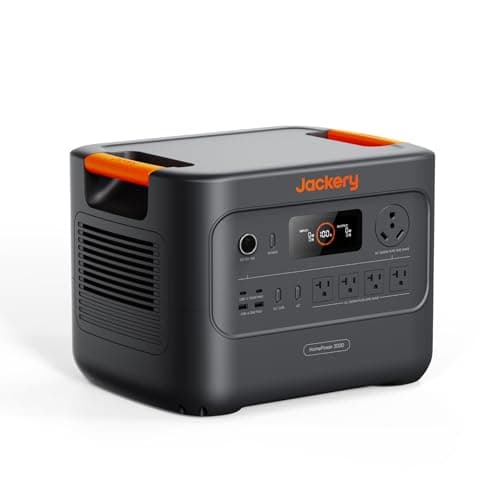
Jackery Explorer 3000 Pro

3,024Wh and 3,000W continuous, full from the wall in about 2.4 hours.

3,000Wh with a wall recharge you can plan around
2
No photo

Best if you want 240V

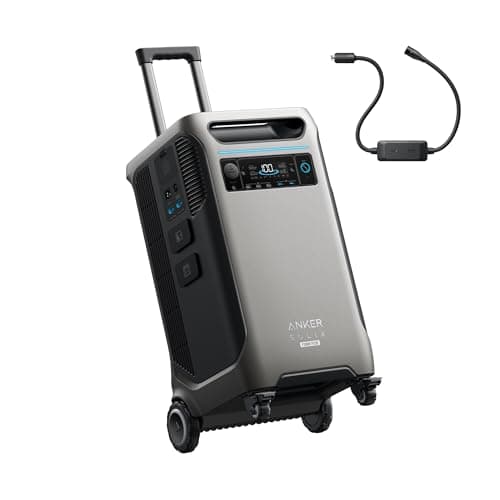
Anker SOLIX F3800

3,840Wh of LiFePO4 with 120/240V split-phase and 6,000W continuous.

Reaching hardwired circuits from a battery
3
No photo

Best recharge and solar input

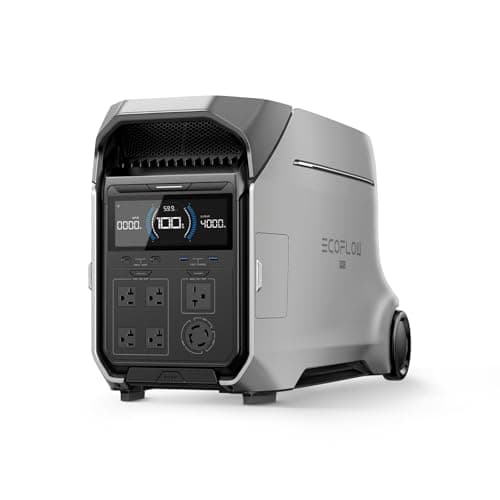
EcoFlow DELTA Pro 3

4,096Wh at 120/240V, 0-80% in about an hour, and 2,600W of solar input.

Somewhere with real sun or short restoration windows
4
No photo

The honest smaller alternative

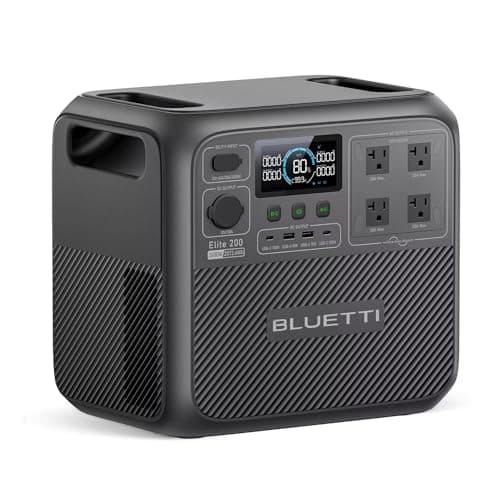
BLUETTI Elite 200 V2

About 2,000Wh of LiFePO4 with a 2,600W inverter, at a fraction of the weight.

Finding out whether you need 3,000Wh at all

Prices come from the retailer at page-build time and change constantly. Where no live price is available the button reads “Check price” rather than showing a number we cannot stand behind.

What three kilowatt-hours actually buys

The jump from 2,000Wh to 3,000Wh is the first one where the answer changes qualitatively rather than just numerically. Below it you are managing an outage. At it, for a normal critical-load list, you are mostly ignoring one.

LoadAverage drawFrom 3,024 Wh
Fridge, freezer, network, lighting300 WAbout 8.6 hours
Refrigerator alone150 W cycling averageAbout 17 hours
A home office plus the critical list450 WAbout 5.7 hours
A 750 W space heater750 WAbout 3.4 hours
A window air conditioner1,200 WAbout 2.1 hours

Rows are 3,024 Wh x 0.85 / load. Refrigerator draw is the 150W cycling average used across this site.

The bottom two rows are the important ones. Even at three kilowatt-hours, anything that makes heat or cold with electricity empties the battery in hours. That boundary does not move with capacity in this product class — it moves with fuel.

Weight is a specification at this size

Below 1,000Wh a power station is luggage. At 3,000Wh it is an appliance with wheels: 60 lb at the light end and considerably more at the top of the band.

That has practical consequences people discover late. It will not go up a loft ladder. It will not be carried to a second floor by one person. It wants a permanent home near where it will be used and near an outlet capable of its recharge rate.

Decide where it lives before buying, because a battery in an inconvenient place is a battery that does not get used. The storage page covers the conditions that keep it healthy between outages.

240V is a different product, not a bigger one

Two units in this roundup publish 120/240V split-phase output and two do not, and that difference matters more than the several hundred watt-hours between them.

A 120V unit reaches anything with a plug. A split-phase unit can feed a transfer switch and therefore reach the well pump, the furnace and the water heater. If any of those are the reason you are shopping, the 240V models are the only ones that answer the question, and the home battery backup systems page covers what the installation involves.

Recharging a battery this size

Three paths, and their speeds are very different.

Wall. One to two and a half hours on the units here. This is the one that matters during an outage, because restoration is usually intermittent before it is permanent.

Solar. Slower and more variable than the input rating implies. A 100W panel realistically returns 400-500Wh across a good summer day, so refilling three kilowatt-hours needs a serious array rather than a folding panel.

Generator. The unglamorous answer, and often the correct one. A small inverter generator run for two hours refills a battery that then runs the house silently overnight — the comparison page covers why that pairing works better than either alone.

The short version

  • 3,000Wh is a full day of critical loads. Not a weekend, and not air conditioning.
  • 240V or 120V is the real fork. Decide before comparing capacities.
  • Weight is a specification here. Choose where it lives first.
  • Plan the refill. Wall speed during restoration, a real array for solar, or a small generator.
The picks in full

01Best overall in the band

Jackery Explorer 3000 Pro

3,024Wh and 3,000W continuous, full from the wall in about 2.4 hours.

3,024Wh is the definition of the band, and the 3,000W inverter means you are not managing what runs simultaneously the way you are at 1,000Wh. A refrigerator, a freezer, the network and lighting run together without thought.

6,000W of surge headroom covers a sump pump or a well pump start on 120V, which is where smaller units fail even when their capacity looks adequate.

A 2.4-hour full wall recharge is the practical figure. It means one restoration window refills the whole battery rather than a third of it.

The honest catch: at 63.9 lb this has a pull rod for a reason. And Jackery does not publish a LiFePO4 cycle rating for this model the way the LFP units below do — if decade-scale cycle life is the priority, that is a real difference.

Skip it ifyou need 240V. Nothing about this reaches a hardwired circuit.

Published specifications for the Jackery Explorer 3000 Pro
SpecificationPublished figure
Capacity3,024 Wh
AC output3,000 W continuous, 6,000 W surge
Wall rechargeFull in about 2.4 h
USB-C2x 100 W Power Delivery
Weight63.9 lb, with a pull rod and wheels
ControlJackery app over Wi-Fi or Bluetooth

Source: Jackery — Explorer 3000 Pro product page. These are the manufacturer's published figures, not ours — we have not tested this unit.

02Best if you want 240V

Anker SOLIX F3800

3,840Wh of LiFePO4 with 120/240V split-phase and 6,000W continuous.

Split-phase output is the capability that changes what a battery can do. With a transfer switch it feeds the well pump, the furnace and the water heater — circuits that no cord reaches at any capacity.

3,000+ cycles to 80% on LiFePO4 puts the useful life measured in decades at household usage, and the five-year warranty is the longest here.

Expansion to 26.9kWh across six batteries makes the capacity decision reversible, which is worth something given that capacity is the specification people most often misjudge.

The honest catch: using the 240V capability means an electrician, a transfer switch and a permit. Bought as a plug-in battery it is expensive for what you get.

Skip it ifeverything you back up has a plug. The 240V capability is most of the price.

Published specifications for the Anker SOLIX F3800
SpecificationPublished figure
Capacity3,840 Wh
Cell chemistryLiFePO4
AC output6,000 W continuous, 9,000 W surge
Voltage120V / 240V split-phase
Cycle life3,000+ cycles to 80% capacity
Recharge1,800 W AC, up to 2,400 W solar
ExpansionUp to six expansion batteries, 26.9 kWh total
Warranty5 years

Source: Anker SOLIX — F3800 product specifications. These are the manufacturer's published figures, not ours — we have not tested this unit.

03Best recharge and solar input

EcoFlow DELTA Pro 3

4,096Wh at 120/240V, 0-80% in about an hour, and 2,600W of solar input.

2,600W of solar input is the number that matters most here. At that level the battery genuinely refills across a day, which converts a fixed store of energy into a renewable daily budget.

The panel arithmetic page is the honest counterweight: rated panel watts and delivered watt-hours are very different numbers, and you need considerably more panel than instinct suggests.

4,000+ cycles to 80% on LFP cells is the strongest cycle figure in this group.

The honest catch: it is the largest and heaviest unit here, and the solar input it supports costs more in panels than the difference between these units.

Skip it ifyou have no panels and reliable restoration. Recharge speed is worth less then.

Published specifications for the EcoFlow DELTA Pro 3
SpecificationPublished figure
Capacity4,096 Wh
Cell chemistryLiFePO4 (LFP)
AC output4,000 W, 120V / 240V
Cycle life4,000+ cycles to 80% capacity
Wall recharge0-80% in about 1 hour
Max solar input2,600 W
Expansion4 kWh to 48 kWh

Source: EcoFlow — DELTA Pro 3 product listing. These are the manufacturer's published figures, not ours — we have not tested this unit.

04The honest smaller alternative

BLUETTI Elite 200 V2

About 2,000Wh of LiFePO4 with a 2,600W inverter, at a fraction of the weight.

Most people who arrive looking for 3,000Wh have not added up their load, and a 2,000Wh unit covers the standard critical list — fridge, freezer, network, lighting — for most of a day.

The gap between the bands is roughly five hours on a 300W load. That is meaningful if your outages run overnight and irrelevant if they run four hours.

The outage duration page is the right place to settle this before spending the difference.

The honest catch: if your outages genuinely run a day or more, this is the band you will wish you had skipped.

Skip it ifyou have already sized your load and it needs 3,000Wh.

Published specifications for the BLUETTI Elite 200 V2
SpecificationPublished figure
Usable capacity2,073.6 Wh
Cell chemistryAutomotive-grade LiFePO4 (LFP)
AC output2,600 W continuous / 3,900 W power lifting
Cycle life6,000+ cycles
Fast charge0–80% in 50 min via dual AC/DC input

Source: BLUETTI — Elite 200 V2 product specifications. These are the manufacturer's published figures, not ours — we have not tested this unit.

How these were chosen

We did not test these. Nobody at Watt & Warden has plugged one in. What we did instead: read the manufacturer's published specifications, compile them into a table where the figures line up, and compute the numbers manufacturers leave out — runtime against a real appliance load, and what an hour of running actually costs.

Anything that could not be sourced was left out rather than estimated, and every pick names the buyer who should skip it. The full method is here, including where it is weaker than a publisher with a test bench.

Questions people actually ask

What can a 3000Wh power station run?

A refrigerator, freezer, network and lighting together for roughly eight to nine hours, or a refrigerator alone for about seventeen. What it cannot do is anything that makes heat or cold electrically for long -- a 750W space heater empties it in about three and a half hours and a window air conditioner in around two.

Is a 3000Wh power station enough for a house?

For chosen circuits, yes, for about a day. For the whole panel, no. Whole-house means backing up everything including heating and cooling, and no portable battery of any size does that for a useful period. Back up the fridge, freezer, network and a few outlets and the same battery lasts ten times longer.

How long does it take to recharge a 3000Wh battery?

From the wall, one to two and a half hours on current units -- fast enough that one restoration window mid-outage refills it. From solar it is much slower, because a 100W panel realistically returns 400-500Wh across a good summer day, so three kilowatt-hours needs a substantial array rather than a folding panel.

Do I need 240V output?

Only if something you want to back up is hardwired -- a well pump, a furnace, a water heater, a sump pump on a dedicated circuit. A 120V unit reaches anything with a plug and nothing else. Using 240V output also requires a transfer switch and an electrician, so budget the installation alongside the battery.

Can I carry a 3000Wh power station?

Not comfortably. These start around 60 lb and go up from there, which is why they ship with pull rods and wheels. Plan where it will live before buying, close to both the loads it will serve and an outlet that supports its recharge rate.

Sources

Every figure on this page comes from a published source. We have not tested this equipment, so the specifications are the manufacturer's and the statistics are the dataset's — the arithmetic on top of them is ours, and it is shown in full so you can check it. How we work this out.