Skip to content
Watt Warden

Power Stations

How Long Do Portable Power Stations Last?

The question has two meanings and the answers are unrelated. One is arithmetic you can do in ten seconds; the other depends on a cycle rating and how you read its endpoint.

By Sawyer V.Updated Published How we work this out
Lithium battery cells photographed close up.

Watt & Warden earns a commission on qualifying purchases made through links on this page, at no extra cost to you. It never changes a ranking, and our picks include products we tell you to skip. Full disclosure.

Two questions, one phrasing

“How long does it last” means either how many hours will it run my things or how many years before it wears out. The answers have nothing to do with each other, so this page does both.

Runtime: hours

Usable hours = capacity in watt-hours × inverter efficiency ÷ average load in watts. Use 85% efficiency unless you have a measured figure — it is conservative for a good inverter at moderate load and generous for a cheap one running near its limit.

Worked examples at a few common loads:

LoadAverage drawOn 1,000WhOn 2,000Wh
Router and modem20 W42 h85 h
LED lighting, 6 bulbs60 W14 h28 h
Refrigerator, cycling150 W5.7 h11.3 h
Laptop and monitor100 W8.5 h17 h
Furnace fan, running600 W1.4 h2.8 h
Space heater, low750 W1.1 h2.3 h

Computed as capacity × 0.85 ÷ load. Appliance draws from Champion Power Equipment's published wattage chart, using the low-to-mid end of each published range where the appliance cycles rather than running continuously.

The space-heater row is the one worth staring at. A 750W heater on a 2,000Wh station gives you a little over two hours. Resistive heating is the fastest way to empty a battery there is, and it is the single most common disappointment in this category. If heat is the requirement, the answer is a generator or a fuel-burning heater, not a battery.

Lifespan: years

Lithium iron phosphate cells are rated in charge cycles, where one cycle is a full discharge and recharge. Published ratings for the units on this site run from 3,000 to 6,000 cycles.

Translate that into calendar time and the numbers stop being meaningful in the usual way. At one full cycle a week, 3,000 cycles is about 58 years. At one a month — which is closer to how an emergency unit actually gets used — it is centuries. In practice the cycle rating is not what retires the unit; calendar aging, the electronics, or you replacing it with something better will get there first.

The endpoint trap

This is the part that matters when comparing brands, and it is easy to get wrong.

A cycle rating is only meaningful with its endpoint attached — the capacity level at which the cell is considered worn out. BLUETTI publishes 3,500+ cycles to 80% for the AC180. Jackery publishes 4,000 cycles to 70% for the Explorer 1000 v2. The Jackery number is larger, but 70% is a lower bar and a cell reaches it later, so the two claims are not measuring the same thing.

We cannot tell you what the BLUETTI would rate to a 70% endpoint, because it is not published and we have not tested it. What we can tell you is that ranking these batteries by headline cycle count is comparing two different tests, and any site that does it without noting the endpoints has not read the spec sheets carefully.

What actually shortens a battery's life

  • Heat. The dominant factor by a distance. A unit stored in a hot garage or left in a car in summer ages considerably faster than one kept at room temperature.
  • Sitting at 100% charge. Lithium cells age fastest held full. Manufacturers commonly advise storing at around half charge for long periods — which conflicts with wanting it ready, and the honest compromise is 60–80% with a top-up every few months.
  • Deep discharge and long storage at empty. Leaving a station flat for months can take a cell below the voltage the management system will recover from.
  • Fast charging, mildly. Repeated maximum-rate charging generates heat and contributes. Occasional use is fine; making it the default is not.

The maintenance that matters

Set a calendar reminder every three months: top the unit up, run something off it for ten minutes, and put it back. That is the entire maintenance schedule, and it does two things — it keeps the cells in a healthy range, and it tells you the unit still works before you need it to.

Store it indoors at room temperature rather than in a garage or a shed, and at somewhere between 60% and 80% rather than full. A station that cannot be found or is flat is worth exactly nothing, which is the failure mode more common than any battery degradation. The charging guide covers the practicalities.

Quick picks

#ProductBest forPrice
1
No photo

Longest published life

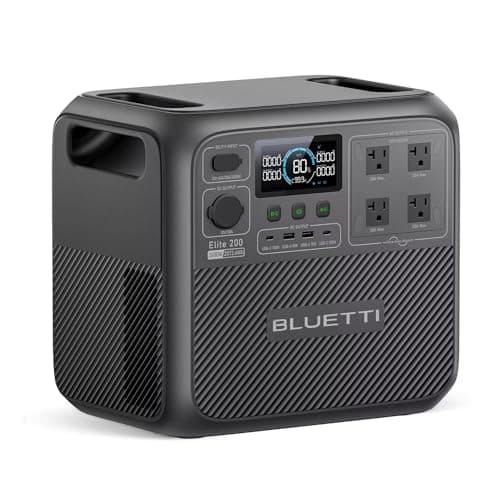
BLUETTI Elite 200 V2

6,000+ cycles — the highest published rating anywhere on this site.

A unit that will be cycled often
2
No photo

Best life per dollar at 1kWh

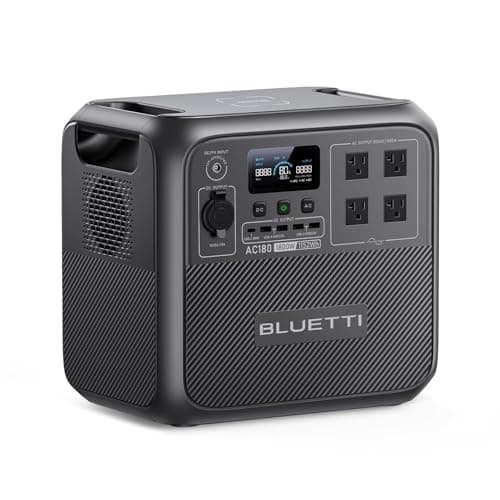
BLUETTI AC180

3,500+ cycles to 80% capacity — the longest rating in its class on a comparable endpoint.

Emergency use with occasional cycling

Prices come from the retailer at page-build time and change constantly. Where no live price is available the button reads “Check price” rather than showing a number we cannot stand behind.

The picks in full

01Longest published life

BLUETTI Elite 200 V2

6,000+ cycles — the highest published rating anywhere on this site.

6,000 cycles is the standout figure and it matters most for a unit that earns its keep. Cycled weekly, that is more than a century of nominal life — which really means the cycle rating stops being the constraint and calendar aging takes over.

For a household that camps, runs a workshop, or uses the station regularly rather than only in emergencies, this is the specification that separates a long-term purchase from a consumable.

Skip it ifthe unit will sit charged in a closet and be used twice a year. Calendar aging will retire it long before the cycle count does.

Published specifications for the BLUETTI Elite 200 V2
SpecificationPublished figure
Usable capacity2,073.6 Wh
Cell chemistryAutomotive-grade LiFePO4 (LFP)
AC output2,600 W continuous / 3,900 W power lifting
Cycle life6,000+ cycles
Fast charge0–80% in 50 min via dual AC/DC input

Source: BLUETTI — Elite 200 V2 product specifications. These are the manufacturer's published figures, not ours — we have not tested this unit.

02Best life per dollar at 1kWh

BLUETTI AC180

3,500+ cycles to 80% capacity — the longest rating in its class on a comparable endpoint.

3,500 cycles to 80% is a genuinely comparable claim, and the highest of the 1kWh units measured that way. It is the figure the cost per usable kilowatt-hour calculation rests on.

Read alongside Jackery's 4,000 cycles to 70%, which sounds larger and is measured to a more permissive endpoint — the two are not directly comparable, which is the point of the section below.

Skip it ifyou want the lightest unit. Life per dollar is bought here with weight.

Published specifications for the BLUETTI AC180
SpecificationPublished figure
Usable capacity1,152 Wh (32 V, 36 Ah)
Cell chemistryLiFePO4 (LFP)
AC output1,800 W continuous / 2,700 W surge, 4 outlets
Cycle life3,500+ cycles to 80% capacity
Weight35.3 lb
Fast charge0–80% in 45 min
Max solar input500 W
Warranty5 years on registration

Source: BLUETTI — AC180 product specifications. These are the manufacturer's published figures, not ours — we have not tested this unit.

How these were chosen

We did not test these. Nobody at Watt & Warden has plugged one in. What we did instead: read the manufacturer's published specifications, compile them into a table where the figures line up, and compute the numbers manufacturers leave out — runtime against a real appliance load, and what an hour of running actually costs.

Anything that could not be sourced was left out rather than estimated, and every pick names the buyer who should skip it. The full method is here, including where it is weaker than a publisher with a test bench.

Questions people actually ask

How many years does a portable power station last?

Longer than most people expect. Published LiFePO4 ratings of 3,000 to 6,000 cycles translate to decades at any realistic usage rate, so calendar aging and electronics generally retire the unit before the cells do.

What does '3,000 cycles to 80%' mean?

After 3,000 full discharge-and-recharge cycles, the battery still holds 80% of its original capacity. It is not the point at which the unit stops working. Note that a rating quoted to 70% is a more permissive test than one quoted to 80%, so headline cycle numbers are not comparable across brands without checking the endpoint.

Should I keep my power station plugged in all the time?

Better not to. Lithium cells age fastest held at 100% charge. Store at roughly 60-80% and top up every three months or so -- the compromise between cell health and being ready when you need it.

How long will a power station run a space heater?

Barely. A 750W heater on a 2,000Wh station gives a little over two hours after losses. Resistive heating empties a battery faster than anything else -- if heat is the requirement, that is a generator or a fuel-burning heater, not a battery.

Sources

Every figure on this page comes from a published source. We have not tested this equipment, so the specifications are the manufacturer's and the statistics are the dataset's — the arithmetic on top of them is ours, and it is shown in full so you can check it. How we work this out.