Skip to content
Watt Warden

Power Stations

BLUETTI Elite 200 V2 Review: The Long-Lived One

Two kilowatt-hours is a crowded class where every unit holds the same energy. This one publishes twice the cycle life of most of them, which is a different kind of argument.

By Sawyer V.Updated Published How we work this out
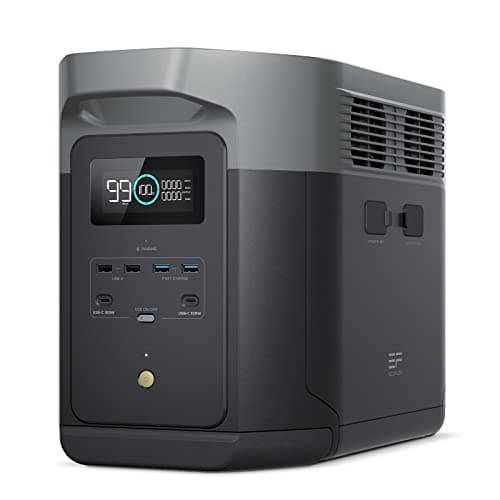
BLUETTI Elite 200 V2

Watt & Warden earns a commission on qualifying purchases made through links on this page, at no extra cost to you. It never changes a ranking, and our picks include products we tell you to skip. Full disclosure.

Quick picks

#ProductBest forPrice
1
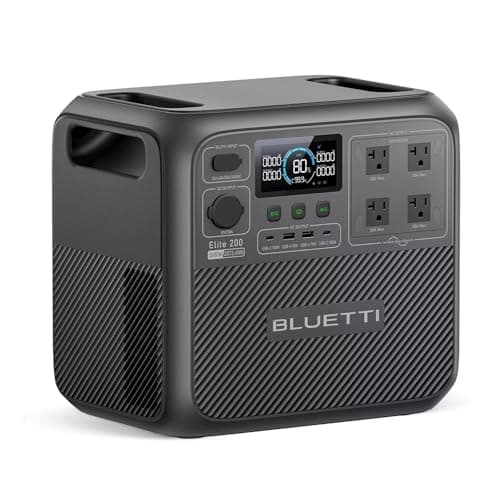
BLUETTI Elite 200 V2

The unit under review

BLUETTI Elite 200 V2

2,073.6Wh of automotive-grade LiFePO4, 2,600W continuous, 3,900W power lifting, 6,000+ cycles.

Buying once and not thinking about it again
$1,399.00 · Check price on Amazon

#ad how this is funded · price as of October 20, 2026

2
EcoFlow DELTA 2 Max

The faster refill

EcoFlow DELTA 2 Max

2,048Wh, 2,400W continuous, 0-80% in 43 minutes, up to 1,000W of solar.

Short, repeated outages
$1,049.00 · Check price on Amazon

#ad how this is funded · price as of October 20, 2026 · $1,399.00 25% off

3
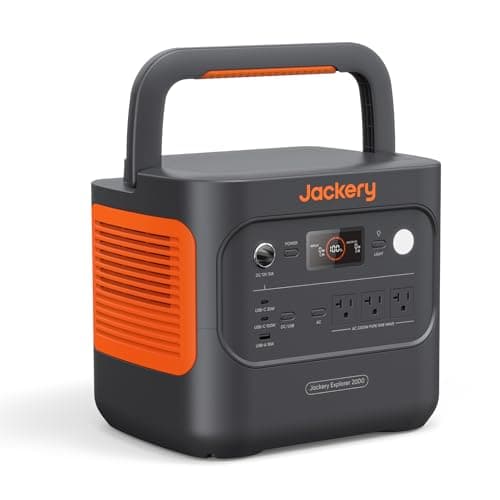
Jackery Explorer 2000 v2

The quiet alternative

Jackery Explorer 2000 v2

2,042Wh, 2,200W, a 20ms UPS switchover and charging under 30dB.

A battery that lives indoors
$899.00 · Check price on Amazon

#ad how this is funded · price as of October 20, 2026 · $999.00 10% off

4
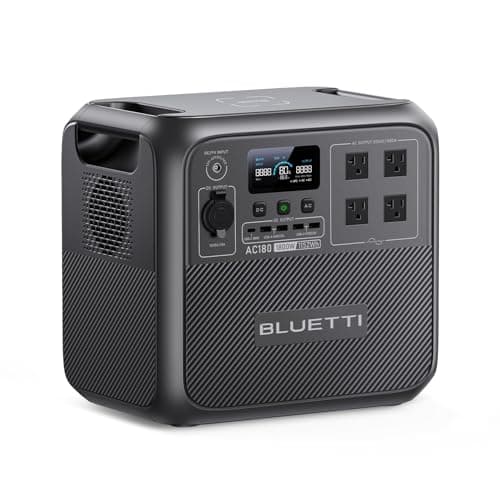
BLUETTI AC180

Half the battery, most of the ability

BLUETTI AC180

1,152Wh, 1,800W continuous, 2,700W surge, 3,500+ cycles, five-year registered warranty.

Households whose list is short
$449.00 · Check price on Amazon

#ad how this is funded · price as of October 20, 2026 · $499.00 10% off

5
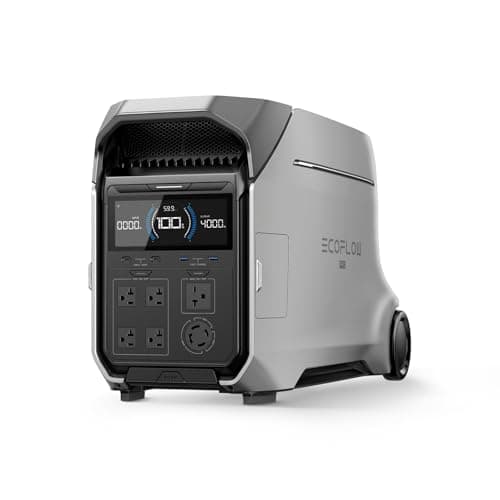
EcoFlow DELTA Pro 3

When the panel is the target

EcoFlow DELTA Pro 3

4,096Wh, 4,000W at 120V and 240V, expandable from 4kWh to 48kWh.

240V loads and whole-house ambitions
$2,799.00 · Check price on Amazon

#ad how this is funded · price as of October 20, 2026 · $3,699.00 24% off

Prices come from the retailer at page-build time and change constantly. Where no live price is available the button reads “Check price” rather than showing a number we cannot stand behind.

How this review was done

This site owns no test bench and does not pretend to. Nothing here was measured by us — it is BLUETTI's published specifications, the published specifications of the units it competes with, and arithmetic we show. The methodology page sets out what that does and does not entitle us to say.

What 6,000 cycles actually means

A cycle is one full charge and discharge. A cycle rating is the manufacturer's claim about how many of those the cells take before capacity falls to a stated fraction of new — usually 80%.

Most LiFePO4 stations in this class publish 3,000 to 4,000. BLUETTI publishes 6,000+ for the Elite 200 V2. On the makers' own numbers that is at least half again as much life, and against a 3,000-cycle unit it is double.

How you use itFull cycles a yearYears to 6,000 cycles
Three outages a yearAbout 3Longer than the electronics will last
Monthly camping tripAbout 24250 years on paper — the rating is irrelevant
Weekly, in an RV or a cabinAbout 52Over a century on paper
Daily, on a time-of-use tariff365About 16 years

Cycles a year are ours, from stated usage patterns; the 6,000-cycle rating is BLUETTI's. Calendar aging is a separate limit that no cycle count captures.

Read that table honestly and the conclusion is uncomfortable for the marketing: the cycle rating only earns its keep if you cycle the battery daily or close to it. Storm-season households cycle a power station a handful of times a year, and at that rate a 3,000-cycle unit is already immortal.

Where 6,000 cycles does pay is the daily-use case — an RV lived in, a cabin off the grid, or a house shifting cheap overnight power into the evening peak. Those uses eat cycles at a rate that makes the rating the most valuable line on the sheet.

2,600W: the other reason to buy it

Continuous output decides what can run at the same time, and 2,600W is the biggest figure in the 2kWh class. BLUETTI also publishes 3,900W of power lifting, which raises the ceiling for resistive loads by reducing voltage.

Be precise about what that means, because the marketing rarely is. Power lifting works on things that simply turn electricity into heat: a kettle, a heater, a toaster. It does nothing for a motor, a compressor or a pump, which need their voltage. For those, 2,600W is the number that counts — and it is a good one.

UnitCapacityContinuousCharge to 80%Cycles
BLUETTI Elite 200 V22,073.6 Wh2,600 W50 min6,000+
EcoFlow DELTA 2 Max2,048 Wh2,400 W43 min3,000+ to 80%
Jackery Explorer 2000 v22,042 Wh2,200 W66 minNot published here

Manufacturer figures from the pages cited below. Capacity differs by 1.5% across the class — nobody should choose on that.

What it runs, and for how long

At 85% inverter efficiency, 2,073.6Wh gives about 1,763Wh usable.

LoadAverage drawRuntime
Refrigerator150 WAbout 11.5 hours
Refrigerator and freezer250 WAbout 7 hours
Sump pump, intermittent120 W average over an hourAbout 14 hours of wet weather
Home office: two monitors, laptop, router180 WAbout 9.5 hours

Runtime is 2,073.6Wh x 0.85 divided by average draw. Sump pump duty cycles vary enormously with how much water is arriving — the sump pump page explains how to estimate yours.

Who should buy it

  • Daily cyclers. RV dwellers, cabin owners and tariff-shifters are the people the 6,000-cycle rating is genuinely for.
  • Anyone running two large things at once. 2,600W is the most continuous output in the class.
  • Anyone who hates replacing things. Automotive-grade LFP with the longest published life here is a reasonable thing to pay for even if you never spend it.

Who should skip it

  • Three-outages-a-year households. You will not reach 3,000 cycles, let alone 6,000. Buy on output, weight or recharge speed instead.
  • Flicker-prone grids. The DELTA 2 Max refills faster and that matters more than cell life in short windows.
  • Anyone needing 240V. Not in this class at all.

The short version

  • 2,073.6Wh and 2,600W — the largest inverter in the 2kWh class.
  • 6,000+ cycles, which is worth real money only to daily users.
  • About 11.5 hours of refrigeration at 85% efficiency.
  • Power lifting to 3,900W is for heaters, not for motors. Size motors against 2,600W.
The picks in full

01 — The unit under review

BLUETTI Elite 200 V2

2,073.6Wh of automotive-grade LiFePO4, 2,600W continuous, 3,900W power lifting, 6,000+ cycles.

6,000 cycles is the headline and it deserves to be. The rest of this class publishes 3,000 to 4,000, so on the manufacturers' own numbers this cell outlasts its rivals by half again or more.

2,600W of continuous output is also the largest in the class, which settles the two-loads-at-once question that 2,200W units hedge on.

The honest catch: cycle life only pays back if you cycle it. For a battery that sits charged waiting for three outages a year, the rating is a specification you will never spend.

Skip it ifyou cycle it twice a year. You will never reach the life you paid for.

BLUETTI Elite 200 V2
$1,399.00 · Check price on Amazon

#ad how this is funded · price as of October 20, 2026

Published specifications for the BLUETTI Elite 200 V2
SpecificationPublished figure
Usable capacity2,073.6 Wh
Cell chemistryAutomotive-grade LiFePO4 (LFP)
AC output2,600 W continuous / 3,900 W power lifting
Cycle life6,000+ cycles
Fast charge0–80% in 50 min via dual AC/DC input

Source: BLUETTI — Elite 200 V2 product specifications. These are the manufacturer's published figures, not ours — we have not tested this unit.

02 — The faster refill

EcoFlow DELTA 2 Max

2,048Wh, 2,400W continuous, 0-80% in 43 minutes, up to 1,000W of solar.

Forty-three minutes to 80% is seven minutes quicker than the BLUETTI, and its 1,000W solar ceiling is the more serious off-grid figure.

Fifteen outlets is also a genuinely practical advantage when a household is running from one box.

The honest catch: 3,000+ cycles to 80% is half the published life of the Elite 200 V2 for effectively the same energy.

Skip it iflongevity is the thing you are buying. 3,000 cycles against 6,000 is the trade.

EcoFlow DELTA 2 Max
$1,049.00 · Check price on Amazon

#ad how this is funded · price as of October 20, 2026 · $1,399.00 25% off

Published specifications for the EcoFlow DELTA 2 Max
SpecificationPublished figure
Capacity2,048 Wh, expandable to 6,144 Wh
Output2,400 W continuous
ChemistryLiFePO4, 3,000+ cycles to 80%
AC recharge0–80% in 43 minutes
Solar inputup to 1,000 W
Outlets15 total
Noiseas low as 30 dB

Source: EcoFlow — DELTA 2 Max published specifications. These are the manufacturer's published figures, not ours — we have not tested this unit.

03 — The quiet alternative

Jackery Explorer 2000 v2

2,042Wh, 2,200W, a 20ms UPS switchover and charging under 30dB.

The only unit here that publishes a charging noise figure, and at 39.5 lb the lightest of the 2kWh group.

Its 20ms switchover makes it a UPS for whatever stays plugged through it — reviewed here.

The honest catch: 66 minutes to 80% is the slowest refill of the three.

Skip it ifyou need every watt. 2,200W is the smallest inverter of these three.

Jackery Explorer 2000 v2
$899.00 · Check price on Amazon

#ad how this is funded · price as of October 20, 2026 · $999.00 10% off

Published specifications for the Jackery Explorer 2000 v2
SpecificationPublished figure
Usable capacity2,042 Wh
Cell chemistryLiFePO4 (LFP)
AC output2,200 W continuous
UPS switchover20 ms
Weight39.5 lb
Charge time0–80% in 66 min; full in 102 min (emergency mode)
Charging noiseunder 30 dB in silent charging mode

Source: Jackery — Explorer 2000 v2 product specifications. These are the manufacturer's published figures, not ours — we have not tested this unit.

04 — Half the battery, most of the ability

BLUETTI AC180

1,152Wh, 1,800W continuous, 2,700W surge, 3,500+ cycles, five-year registered warranty.

If the real list is a refrigerator for an afternoon, a router and some lights, this is the honest size and the difference stays in your pocket.

The surge rating is within 200W of its bigger sibling, so startup behavior barely changes.

The honest catch: about six hours of refrigeration against about eleven. That gap is the overnight outage.

Skip it ifthe refrigerator has to last through the night.

BLUETTI AC180
$449.00 · Check price on Amazon

#ad how this is funded · price as of October 20, 2026 · $499.00 10% off

Published specifications for the BLUETTI AC180
SpecificationPublished figure
Usable capacity1,152 Wh (32 V, 36 Ah)
Cell chemistryLiFePO4 (LFP)
AC output1,800 W continuous / 2,700 W surge, 4 outlets
Cycle life3,500+ cycles to 80% capacity
Weight35.3 lb
Fast charge0–80% in 45 min
Max solar input500 W
Warranty5 years on registration

Source: BLUETTI — AC180 product specifications. These are the manufacturer's published figures, not ours — we have not tested this unit.

05 — When the panel is the target

EcoFlow DELTA Pro 3

4,096Wh, 4,000W at 120V and 240V, expandable from 4kWh to 48kWh.

Once a well pump, a range or a 240V circuit is involved, no 2kWh unit is the answer at any quantity, because none of them make 240V.

2,600W of solar input also makes it credible as an actual energy system rather than a battery you refill.

The honest catch: it costs multiples of the Elite 200 V2 and most households never need what it does.

Skip it ifyour list is appliances on a worktop. This is a different category.

EcoFlow DELTA Pro 3
$2,799.00 · Check price on Amazon

#ad how this is funded · price as of October 20, 2026 · $3,699.00 24% off

Published specifications for the EcoFlow DELTA Pro 3
SpecificationPublished figure
Capacity4,096 Wh
Cell chemistryLiFePO4 (LFP)
AC output4,000 W, 120V / 240V
Cycle life4,000+ cycles to 80% capacity
Wall recharge0-80% in about 1 hour
Max solar input2,600 W
Expansion4 kWh to 48 kWh

Source: EcoFlow — DELTA Pro 3 product listing. These are the manufacturer's published figures, not ours — we have not tested this unit.

How these were chosen

We did not test these. Nobody at Watt & Warden has plugged one in. What we did instead: read the manufacturer's published specifications, compile them into a table where the figures line up, and compute the numbers manufacturers leave out — runtime against a real appliance load, and what an hour of running actually costs.

Anything that could not be sourced was left out rather than estimated, and every pick names the buyer who should skip it. The full method is here, including where it is weaker than a publisher with a test bench.

Questions people actually ask

Did you test the BLUETTI Elite 200 V2?

No. We run no test bench and say so on every page of this site. This review uses BLUETTI's published specifications, the published specifications of competing units, and arithmetic shown in full.

Is a 6,000-cycle rating worth paying for?

Only if you cycle the battery often. At one full cycle a day, 6,000 cycles is roughly 16 years. At three outages a year it is centuries on paper, and a 3,000-cycle unit is already beyond the life of the electronics. Daily users in RVs, cabins or on time-of-use tariffs are the buyers this rating is for.

What is power lifting and when does it work?

It is BLUETTI's mode for running resistive loads above the continuous rating -- up to 3,900W here -- by lowering voltage. It works for kettles, heaters and toasters. It does not help motors, compressors or pumps, which need full voltage, so size those against the 2,600W continuous figure.

Can the Elite 200 V2 run a refrigerator overnight?

Yes. At a 150W average, twelve hours of refrigeration costs about 1,800Wh, and 2,073.6Wh at 85% inverter efficiency gives about 1,763Wh usable -- roughly 11.5 hours with the door kept shut, which covers a typical overnight outage.

Elite 200 V2 or EcoFlow DELTA 2 Max?

Same energy within 1.5%. BLUETTI gives you 200W more output and double the published cycle life; EcoFlow gives you a 43-minute refill to 80% and up to 1,000W of solar input. Daily use favors the BLUETTI, flickering outages and off-grid charging favor the EcoFlow.

Sources

Every figure on this page comes from a published source. We have not tested this equipment, so the specifications are the manufacturer's and the statistics are the dataset's — the arithmetic on top of them is ours, and it is shown in full so you can check it. How we work this out.