How this review was done
We have not tested this unit, and we will not pretend otherwise. There is no bench here, no load bank and no instrumented runtime chart, and a site that claims those things without owning them is lying to you.
What follows is built from Jackery's published specifications, from the equivalent published figures for the units it competes against, and from arithmetic we show our working for. Our methodology page explains the whole approach, including what we refuse to claim.
What you are actually buying: 24 pounds
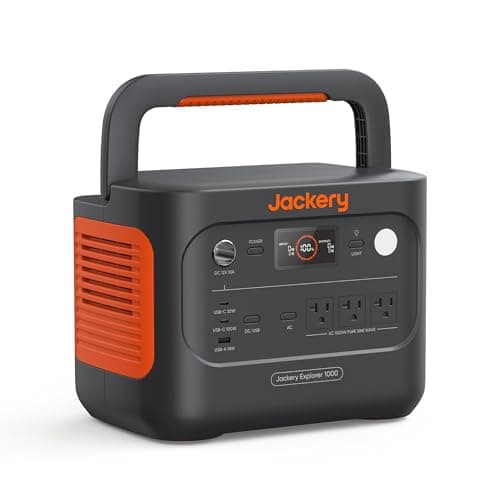
The Explorer 1000 v2 holds 1,070Wh in LiFePO4 cells, puts out 1,500W continuous with a 3,000W surge, and weighs 24 lb. Jackery rates the cells at 4,000 cycles to 70% of original capacity and covers the unit for three years, extended to five on registration.
Line those numbers up against the class and one of them is an outlier.
| Unit | Capacity | Continuous output | Weight | Wall recharge |
|---|
| Jackery Explorer 1000 v2 | 1,070 Wh | 1,500 W (3,000 W surge) | 24 lb | ~1.7 h, ~1 h emergency |
|---|
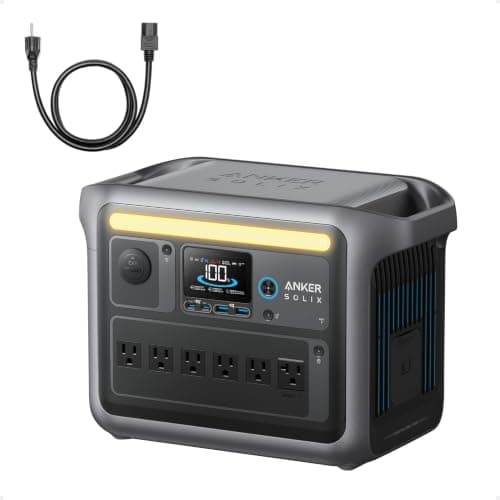
| Anker SOLIX C1000 | 1,056 Wh | 1,800 W (2,400 W SurgePad) | Not published here | 58 min full |
|---|
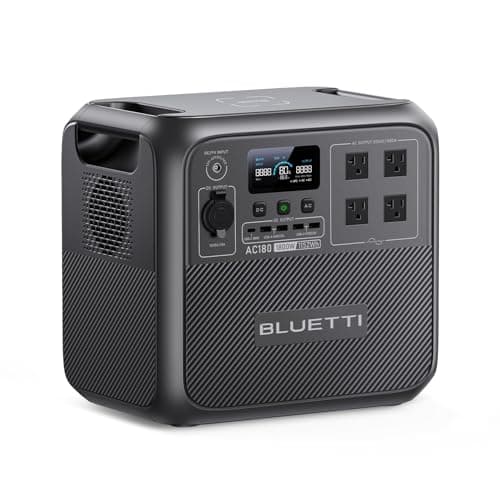
| BLUETTI AC180 | 1,152 Wh | 1,800 W (2,700 W surge) | 35.3 lb | 0-80% in 45 min |
|---|
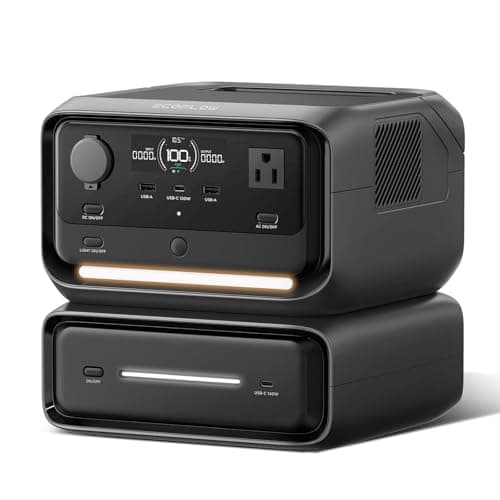
| EcoFlow RIVER 3 Max | 512 Wh | 500 W (1,000 W X-Boost) | 13.2 lb | ~1 h full |
|---|
Every figure is the manufacturer's own published specification, from the product pages linked at the foot of this page. Anker does not publish a weight on the page we cite, so we leave the cell empty rather than guess at it.
The pattern is plain. Jackery gave up 300W of continuous output and got 11 lb back for it. Whether that is a good trade is the entire review, and it depends on one thing: whether the battery moves.
The 1,500W ceiling, in plain terms
Continuous output is the number that decides what you can plug in at all. Capacity only decides how long it lasts once it runs.
| Load | Typical draw | On a 1,500W inverter |
|---|
| Refrigerator, running | 100-200 W | Fine, with room to spare |
|---|
| Refrigerator, starting | Brief 600-1,200 W | Fine — 3,000 W of surge covers it |
|---|
| CPAP, no humidifier | 30-60 W | Fine all night |
|---|
| Coffee maker | 900-1,200 W | Fine, on its own |
|---|
| 1,000 W microwave | 1,400-1,600 W at the wall | No — this is the failure case |
|---|
| Space heater, high | 1,500 W | At the limit, and pointless anyway |
|---|
Draw figures are the ranges used across this site — see the wattage chart. A microwave's door rating is not its input rating; that page explains the 50% gap.
So the honest summary of the inverter: it runs the outage loads that matter and fails at the one kitchen appliance most people want to test it with.
How long 1,070Wh actually lasts
Usable energy is not the number on the box. Inverting DC to AC costs something, and we plan at 85% across this site, which is deliberately conservative.
| Load | Average draw | Runtime from 1,070Wh |
|---|
| Refrigerator (cycling) | 150 W average | About 6 hours |
|---|
| CPAP, humidifier off | 40 W | About 22 hours |
|---|
| Router, modem and a laptop | 75 W | About 12 hours |
|---|
| Two LED lamps and phone charging | 25 W | About 36 hours |
|---|
Runtime is 1,070Wh x 0.85 divided by the average draw. A refrigerator does not draw continuously — the average already accounts for the duty cycle, and the refrigerator runtime page works through the arithmetic in full.
Six hours of refrigeration is the number to hold on to. It covers the afternoon outage comfortably and it does not cover an overnight one, and no amount of marketing changes that.
The recharge is the quiet weakness
Jackery publishes a full wall recharge of about 1.7 hours, or roughly an hour in emergency charging mode. That is fast in absolute terms and slow against this specific field: Anker publishes 58 minutes to full and BLUETTI publishes 45 minutes to 80%.
It matters in exactly one scenario, and it is a common one. In a flickering storm outage the grid comes back for twenty minutes at a time, and the unit that grabs the most energy in those twenty minutes is the unit that gets you through the night. That is not this one.
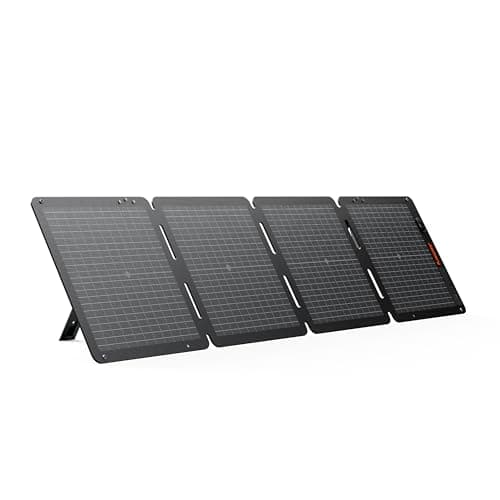
On solar the ceiling is 400W of input, which is four 100W panels. That is a real constraint if the plan is to live off it — the DELTA 3 accepts 500W and larger units go far beyond.
Who should buy it
- Anyone who moves the battery. Camping, a truck, a boat, a second property, or carrying it to whichever room needs it. Twenty-four pounds is the whole argument and it is a good one.
- Households whose outage list is electronics and a refrigerator. 1,500W covers that list with room left.
- People who want a long-lived cell. 4,000 cycles to 70% is a serious rating, and LiFePO4 is the reason this class stopped being disposable.
Who should skip it
- Anyone planning to cook. The microwave is the standard disappointment. Buy 1,800W of inverter or buy a generator.
- Anyone facing multi-day outages. Six hours of refrigeration is not a storm plan — that is a 2kWh conversation at least.
- Anyone who needs the fastest possible refill. Two of its direct rivals publish faster figures.
The short version
- 24 lb is the product. It is the lightest genuine 1kWh station, and that is worth paying for if it moves.
- 1,500W is the ceiling. Microwaves and space heaters are out; refrigerators, CPAPs, routers and lights are comfortably in.
- About six hours of refrigeration from a full charge, planning at 85% efficiency.
- If it never leaves the house, the C1000 or the AC180 gives you more inverter for the same money and the same energy.