Skip to content
Watt Warden

Power Stations

The Best Power Stations for Camping (2026)

A camping battery is the one you actually bring. Capacity is easy to buy and weight is what decides whether it comes out of the garage - which is why the right answer is usually smaller than the shopping list.

By Sawyer V.Updated Published How we work this out
A lit tent at night.

Watt & Warden earns a commission on qualifying purchases made through links on this page, at no extra cost to you. It never changes a ranking, and our picks include products we tell you to skip. Full disclosure.

Quick picks

#ProductBest forPrice
1
No photo

Best overall

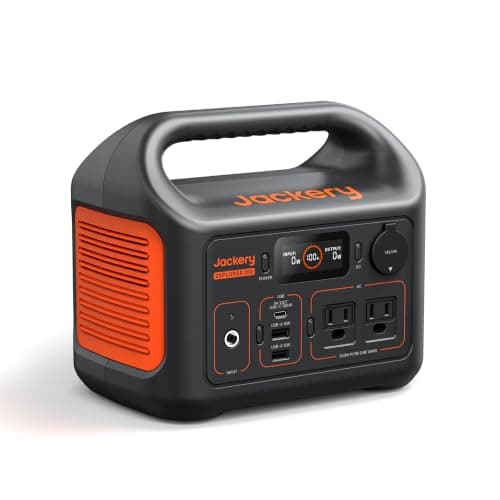
Jackery Explorer 300 Plus

288Wh of LiFePO4 in something you can carry with one finger.

A weekend of devices, lights and a fridge lid
2
No photo

Best inverter headroom for the size

EcoFlow RIVER 3 Plus

286Wh with 600W continuous — enough for a 12V fridge or a small pump.

Running something with a motor occasionally
3
No photo

Best for a group or a van

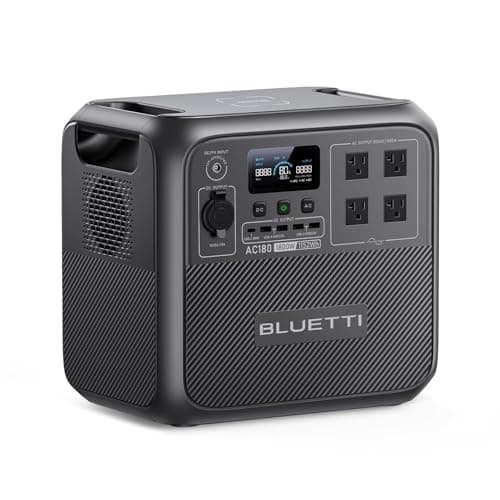
BLUETTI AC180

1,152Wh and 1,800W continuous, with real headroom for appliances.

Camping where the battery stays in the vehicle
4
No photo

Best value

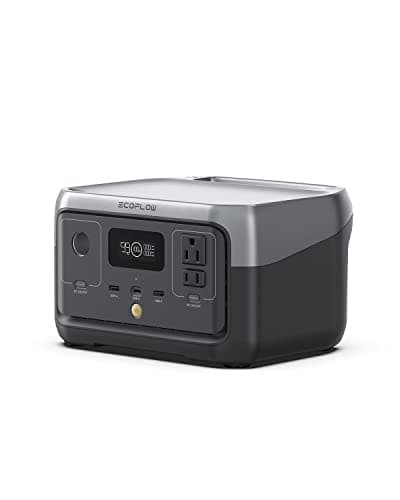
EcoFlow RIVER 2

256Wh of LiFePO4 at the light end of the class.

A first battery, or one you will not worry about
5
No photo

The other half of a long trip

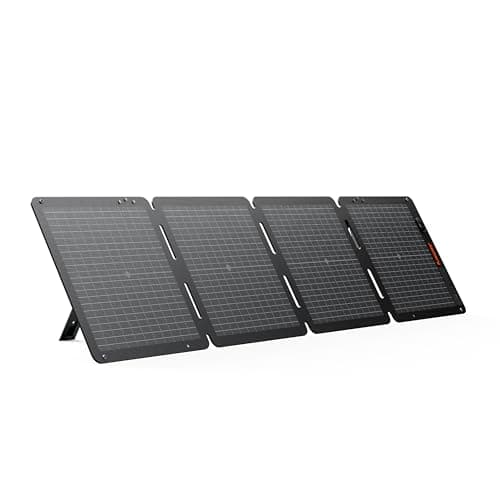
Jackery SolarSaga 100W

100W of folding panel that packs flat against a seat back.

Turning a fixed battery into a daily budget

Prices come from the retailer at page-build time and change constantly. Where no live price is available the button reads “Check price” rather than showing a number we cannot stand behind.

Camping loads are smaller than people plan for

The instinct is to size for the worst case. The reality is that camping electrical demand is dominated by very small things.

ItemEnergy per day
Two phonesAbout 30 Wh
Headlamps and a lanternUnder 20 Wh
A tablet or a camera30-50 Wh
CPAP, no humidifier250-350 Wh per night
12V compressor fridge250-600 Wh, depending on ambient temperature
Electric kettle, one boilAbout 100 Wh, at 1,500 W

Device figures are typical battery capacities and charge counts; CPAP and fridge ranges are the bands used elsewhere on this site. Your fridge figure depends heavily on how hot it is.

Two rows dominate. A CPAP or a fridge turns a 300Wh battery into a one-night proposition; without them, the same battery covers a long weekend easily.

Weight is the specification nobody reads

A 300Wh unit is something you pick up without thinking. A 1,000Wh unit is a deliberate two-handed lift. A 2,000Wh unit does not leave the vehicle.

Which of those is right depends entirely on how far the battery has to travel from the car, and that is a question people answer optimistically at purchase and honestly at the campsite.

The practical rule: buy for the trip you take most often, not the one you imagine. A battery that covers eighty percent of your trips and comes every time beats one that covers everything and stays home.

Cold weather changes the numbers

Lithium cells lose usable capacity in the cold, and more importantly most will refuse to charge below freezing to protect themselves.

For shoulder-season and winter camping that has real consequences: your panel produces power at 20 degF and the battery declines to accept it. The workaround is keeping the unit in the tent or the vehicle overnight and charging during the warmest part of the day.

LiFePO4 tolerates the temperature range better in general, which is one more reason it dominates this category now.

Battery or generator for camping?

For camping specifically, the battery wins more decisively than anywhere else on this site.

A generator at a campsite is loud in a place people chose for quiet, produces exhaust near tents, needs fuel carried in cans, and is banned outright or restricted to daytime windows at many parks. A battery has none of those problems and recharges from the sun.

The exception is an RV air conditioner, which no camping-sized battery will run — the RV generator page covers that case, and the camping and RV scenario page works through owning both.

Four things worth doing before you leave

  • Charge it the night before, not the morning of. Most units take several hours from empty.
  • Pack the right cables. A charged battery and no USB-C cable is a brick with a screen.
  • Test the panel at home if you are bringing one. The connector standard is not universal — the connector guide covers what fits what.
  • Know your fridge's real draw. It is the one item that decides whether the battery lasts the trip.

The short version

  • 300Wh covers a weekend of devices and lighting for most people.
  • A fridge or a CPAP doubles the requirement. Those two items set the size.
  • Weight decides whether it comes. Buy for your usual trip.
  • Past three days, buy a panel, not a bigger battery.
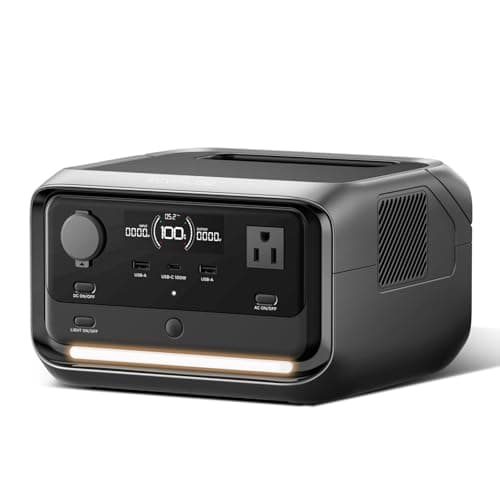
The picks in full

01Best overall

Jackery Explorer 300 Plus

288Wh of LiFePO4 in something you can carry with one finger.

288Wh sounds small and covers a startling amount of a camping trip: phones, headlamps, a camera, a tablet, a string of lights, a fan and a CPAP without the humidifier.

The reason to prefer this over something larger is that it comes. Batteries that require a deliberate decision to bring get left behind on exactly the trips they would have helped.

LiFePO4 chemistry also tolerates the temperature swings a car and a tent subject it to far better than older lithium-ion. The chemistry page covers why.

The honest catch: nothing with a heating element runs on this. No kettle, no coffee maker, no heater.

Skip it ifyou plan to run a 12V cooler continuously. That needs more capacity.

Published specifications for the Jackery Explorer 300 Plus
SpecificationPublished figure
Usable capacity288 Wh
Cell chemistryLiFePO4 (LFP)
AC output300 W continuous
Weight8.3 lb (3.75 kg)
Solar compatibilitySolarSaga 40/60/80/100 W panels
ControlWi-Fi and Bluetooth app monitoring

Source: Jackery — Explorer 300 Plus product specifications. These are the manufacturer's published figures, not ours — we have not tested this unit.

02Best inverter headroom for the size

EcoFlow RIVER 3 Plus

286Wh with 600W continuous — enough for a 12V fridge or a small pump.

600W continuous at this capacity is generous and it is what makes a 12V compressor fridge practical: the fridge draws little on average and asks for a real surge each time the compressor starts.

Sub-10ms switchover is a house feature rather than a camping one, but it makes this a genuinely dual-purpose battery — camping in summer, network backup the rest of the year.

The honest catch: 286Wh against a 12V fridge is about a day. Two days needs a panel, not a bigger battery.

Skip it ifyour list is genuinely all USB. Then you are paying for inverter you will not use.

Published specifications for the EcoFlow RIVER 3 Plus
SpecificationPublished figure
Usable capacity286 Wh (expandable to 858 Wh)
Cell chemistryLiFePO4 (LFP)
AC output600 W continuous / 1,200 W with X-Boost
UPS switchoverunder 10 ms
Operating noiseunder 30 dB
AC recharge1 hour

Source: EcoFlow — RIVER 3 Plus product specifications. These are the manufacturer's published figures, not ours — we have not tested this unit.

03Best for a group or a van

BLUETTI AC180

1,152Wh and 1,800W continuous, with real headroom for appliances.

Once the battery lives in a vehicle rather than on your back, the calculation inverts and capacity becomes worth its weight.

1,152Wh runs a 12V fridge for several days, charges a group's devices, and has enough inverter behind it for a coffee maker in the morning — which is the load that separates car camping from backpacking.

The honest catch: at this size you need a real solar plan to keep it fed on a long trip, and a folding 100W panel is not it.

Skip it ifyou carry gear any distance. This is a two-handed lift.

Published specifications for the BLUETTI AC180
SpecificationPublished figure
Usable capacity1,152 Wh (32 V, 36 Ah)
Cell chemistryLiFePO4 (LFP)
AC output1,800 W continuous / 2,700 W surge, 4 outlets
Cycle life3,500+ cycles to 80% capacity
Weight35.3 lb
Fast charge0–80% in 45 min
Max solar input500 W
Warranty5 years on registration

Source: BLUETTI — AC180 product specifications. These are the manufacturer's published figures, not ours — we have not tested this unit.

04Best value

EcoFlow RIVER 2

256Wh of LiFePO4 at the light end of the class.

The honest recommendation for a lot of people, because most camping electrical needs are small and a cheaper battery you treat carelessly is more useful than an expensive one you protect.

LiFePO4 at this price point is the meaningful part. The cheap alternatives at similar capacity often are not, and their cycle life reflects it.

The honest catch: the inverter is modest. Check any AC appliance you intend to run against it before assuming.

Skip it ifyou have an appliance on the list. This is a device battery.

Published specifications for the EcoFlow RIVER 2
SpecificationPublished figure
Capacity256 Wh
Output300 W continuous, 600 W X-Boost
ChemistryLiFePO4, 3,000+ cycles to 80%
AC recharge0–100% in about 1 hour
Weight7.7 lb
Solar inputup to 110 W

Source: EcoFlow — RIVER 2 published specifications. These are the manufacturer's published figures, not ours — we have not tested this unit.

05The other half of a long trip

Jackery SolarSaga 100W

100W of folding panel that packs flat against a seat back.

Past about three days, no camping-sized battery is enough on its own and the question becomes refill rather than capacity.

Be realistic about the numbers: a 100W panel returns something like 400-500Wh across a good summer day, not 100W times the daylight hours. The panel arithmetic page sets out why and what that means for sizing.

The honest catch: shade, angle and cloud all take large bites out of that figure, and a campsite under trees is the worst case.

Skip it ifyour trips are two nights. Then the battery alone covers it.

Published specifications for the Jackery SolarSaga 100W
SpecificationPublished figure
Rated output100 W
Cell typeMonocrystalline, bifacial
Conversion efficiencyup to 25%
Ingress ratingIP68
Weight4.52 lb
CompatibilityJackery Explorer stations

Source: Jackery — SolarSaga 100W product specifications. These are the manufacturer's published figures, not ours — we have not tested this unit.

How these were chosen

We did not test these. Nobody at Watt & Warden has plugged one in. What we did instead: read the manufacturer's published specifications, compile them into a table where the figures line up, and compute the numbers manufacturers leave out — runtime against a real appliance load, and what an hour of running actually costs.

Anything that could not be sourced was left out rather than estimated, and every pick names the buyer who should skip it. The full method is here, including where it is weaker than a publisher with a test bench.

Questions people actually ask

What size power station do I need for camping?

For phones, lights, a camera and a tablet, around 300Wh covers a long weekend comfortably. Add a 12V fridge or a CPAP and the daily requirement roughly doubles, which pushes you toward 500-1,000Wh or toward bringing a solar panel. Those two items are what actually set the size.

Can a power station run a 12V camping fridge?

Yes, and it is one of the better matches in the category. A 12V compressor fridge uses somewhere between 250 and 600Wh a day depending on ambient temperature, so a 300Wh battery is about a day and a 1,000Wh unit is several. What matters as much as capacity is inverter surge headroom for the compressor start.

How long will a 300Wh power station last camping?

For devices and lighting alone, a long weekend -- two phones, headlamps and a tablet together are well under 100Wh a day. For a CPAP without a humidifier it is about one night. For a 12V fridge in warm weather it is roughly a day.

Do I need a solar panel for camping?

Past about three nights, yes. Below that the battery alone covers it and the panel is dead weight. Be realistic about output: a 100W panel returns something like 400-500Wh across a good summer day rather than its rated figure, and a shaded campsite returns far less.

Is a power station better than a generator for camping?

For camping specifically, decisively yes. A generator is loud in a place chosen for quiet, produces exhaust near tents, needs fuel carried in, and is restricted or banned at many parks. The only case that goes the other way is an RV air conditioner, which no camping-sized battery will run.

Sources

Every figure on this page comes from a published source. We have not tested this equipment, so the specifications are the manufacturer's and the statistics are the dataset's — the arithmetic on top of them is ours, and it is shown in full so you can check it. How we work this out.