Read the published figure carefully
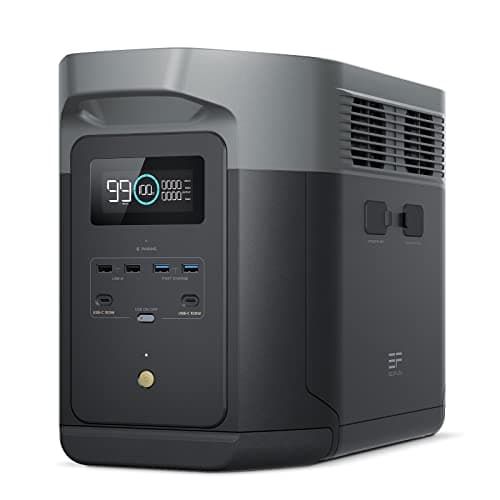
Fast-charge marketing almost always quotes 0 to 80%, not 0 to 100. EcoFlow's 43-minute figure for the DELTA 2 Max is a 0-to-80 figure, and it is stated as such.
That is not a trick — it reflects how lithium charging actually works, and understanding why makes the rest of this page obvious.
Why the last 20% takes so long
Lithium batteries charge in two phases.
Constant current. From empty to roughly 80%, the charger pushes in as much current as it is rated for, and voltage rises. This is the fast part, and it is where the headline figure comes from.
Constant voltage. Above roughly 80%, the charger holds voltage steady and current tapers off, slowing further as the cells fill. This protects the cells and it cannot be rushed.
The practical consequence: the last fifth of the charge can take as long as the first four fifths. Which is why manufacturers quote the 80% figure, and why in a real outage you should not wait for 100% before disconnecting if power is only briefly back.
What actually governs each method
| Method | Governed by | Rough time for 1,000Wh |
|---|
| AC fast charge | The unit's own maximum AC input | Around 1 to 2 hours on a capable unit |
|---|
| AC standard or quiet mode | A deliberately reduced input rate | Several hours — slower, cooler, quieter |
|---|
| Solar | Panel wattage and peak sun hours | ~5 hours at 300W in good sun; far longer in winter or cloud |
|---|
| 12V car socket | The socket's fuse — commonly around 120W | 8 to 12 hours, engine running |
|---|
| Generator | Same as AC, subject to the machine's output | Same as AC fast charge |
|---|
Times are calculated from the input rates above with an allowance for charging losses, not measured. Your unit's published input figures are the ones to use. The car figure is limited by the vehicle socket rather than by the station, which is why it is so much slower than its capacity suggests.
Fast charging has costs, and they are real
Manufacturers offer a slower mode for a reason, and it is worth using when time is not pressing.
- Heat. High charge rates generate heat, and heat is the main accelerant of calendar aging.
- Noise. Fast charging spins the cooling fans. On a unit in a bedroom that is the difference between usable and not.
- Cycle life. Repeated hard fast-charging is harder on cells than gentle charging, though LiFePO4 tolerates it far better than the chemistry it replaced.
Sensible practice: fast charge when an outage is forecast or when power has briefly returned, and use the slow mode for routine top-ups.
Charging in the cold, which may not work at all
The failure mode people meet on the second morning of a winter outage.
Charging a cold lithium cell plates lithium metal on the anode and causes permanent damage, so battery management systems block charging below a threshold. Discharging in the cold is usually fine with reduced capacity; charging simply refuses.
Practically: a station stored in an unheated garage may not accept charge on a February morning at all. Keep it indoors — the storage routine covers where and why.
Solar charging is a different kind of question
AC charging has a fixed answer. Solar charging has a seasonal one.
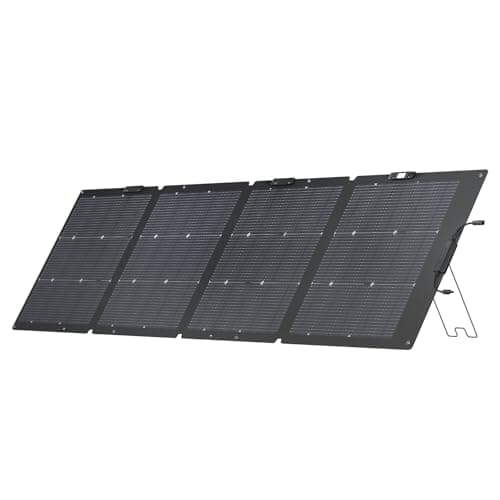
The formula that matters is the same one used for sizing an array: energy in a day equals panel watts times peak sun hours, with roughly a 30% deduction for real-world losses.
So 300W of panel in a location with 5 peak sun hours returns roughly 1,050Wh across a good day — which fills a kilowatt-hour station in one day and takes two for a 2kWh one. In December at 3.5 peak sun hours it is closer to 700Wh, and under thick cloud a fraction of that.
Two consequences worth planning around:
- Check the station's maximum solar input. A unit that accepts 200W accepts 200W however much panel you connect.
- Larger batteries take proportionally longer. Tripling capacity with an expansion pack triples the refill time at the same input rate.
What to do in a real outage
- Charge to full before it starts, whenever you get warning. This is the single most valuable habit and it costs nothing.
- Use every window. If power flickers back for twenty minutes, plug in immediately — on a fast-charging unit that is a meaningful fraction of the battery.
- Do not wait for 100%. Above 80% the rate collapses. If the window is short, take the 80% and be ready.
- Put the panels out early. Morning sun counts, and a panel set out at noon has already lost half the day.
- Charge from the generator during its block, so the engine does two jobs at once and runs for less total time.
The charging methods page covers the mechanics of each route in more detail.