Skip to content
Watt Warden

Solar

Do Solar Generators Work on Cloudy Days?

Yes, and much less than you would like. Panels respond to diffuse light as well as direct sun, so cloud reduces output rather than eliminating it — but the reduction is severe.

By Sawyer V.Updated Published How we work this out
A solar panel under an overcast gray sky.

Watt & Warden earns a commission on qualifying purchases made through links on this page, at no extra cost to you. It never changes a ranking, and our picks include products we tell you to skip. Full disclosure.

The short answer

Yes. Photovoltaic panels respond to diffuse light as well as direct sunlight, so a heavily overcast day still produces something — typically a small fraction of the rated figure rather than zero.

Plan on a cloudy day extending your battery's life rather than refilling it. That distinction is the whole practical content of this page.

Why panels still work under cloud

Sunlight reaching a panel arrives two ways. Direct radiation travels straight from the sun. Diffuse radiation has been scattered by the atmosphere and by clouds and arrives from across the whole sky.

On a clear day, most of what a panel receives is direct. Under cloud, the direct component collapses and the diffuse component becomes nearly all of it. Since a photovoltaic cell converts both, the panel keeps producing — at much lower intensity.

This is also why a panel produces something in shade, and why a bright overcast day considerably outperforms a dark stormy one. The variable is how much light reaches the panel, not whether the sun is visible.

How much less, realistically

We are going to give this as bands rather than figures, because the honest answer varies enormously with the thickness of cloud, the season, the latitude and the panel's placement — and we have not measured any of it.

ConditionsRough share of clear-sky outputWhat that means for a 100W panel
Clear summer day, well placedReferenceRoughly 400–500 Wh across the day
Light haze or thin high cloudMost of itNoticeably reduced, still useful
Bright overcastA substantial fractionMeaningful contribution, not a refill
Heavy overcast, storm cloudA small fractionSlows the decline; will not reverse it
Winter, heavy cloud, northern latitudeA very small fractionEffectively negligible for planning

Deliberately expressed as bands. Published cloudy-day percentages vary widely between sources and depend on cloud optical depth, solar elevation and panel orientation — none of which we can measure. Treat this as a planning shape, not a specification. The one row worth planning around is the last: in a winter storm, assume the panel contributes very little.

The compounding problem in winter

Cloud is only one of four things working against you in winter, and they compound rather than add.

  1. Shorter days. Fewer daylight hours to harvest in, before any weather.
  2. Lower sun angle. A panel lying flat receives light at a poor angle, which reduces effective intensity substantially. Tilting it toward the low winter sun helps a great deal and costs nothing.
  3. Cloud. Winter storms bring the heaviest cloud.
  4. Snow. A dusting of snow on a panel takes output effectively to zero until it is cleared or slides off.

Which produces the uncomfortable conclusion: solar is weakest exactly when winter storms cause the longest outages. That is not an argument against panels — it is an argument for not relying on them alone in winter, and for understanding what a generator does that solar cannot.

Getting more out of poor conditions

  • Tilt toward the sun. The single highest-value free action. A panel angled at the low winter sun collects far more than a flat one, and most folding panels have adjustable legs for this.
  • Reposition through the day. Moving a panel two or three times to follow the sun makes a real difference on a short winter day. It costs five minutes.
  • Overbuild the array. The most reliable answer. If 200W refills your battery on a good day, 400W refills it on a mediocre one. Panels are the cheap half of a solar setup.
  • Keep them clear. Snow, leaves, dust and bird mess all reduce output, and a partially shaded panel can lose more than the shaded fraction because of how cells are wired in series.
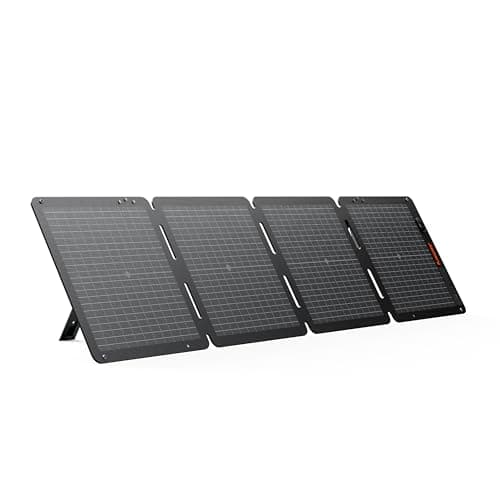
  • Bifacial helps a little. Panels that also collect from the rear surface — like the SolarSaga 100W — gain from reflected light off snow or a light-colored surface.

What to plan for

Size the battery for the bad days and the panel for the good ones.

A useful discipline: assume the panel contributes nothing for the first 24 hours of a winter outage, and confirm the battery alone covers your critical load for that period. Then treat whatever solar arrives as extending the runway rather than as the plan.

That framing gets the sizing right. A system that only works when the weather is good is not a backup system, because the weather is what caused the outage.

What we cannot tell you

Your specific numbers. Real cloudy-day output depends on cloud optical depth, your latitude, the season, the panel's orientation and its temperature — and we have not tested any panel in any of those conditions.

What you can do is measure it yourself, cheaply. Most power stations display solar input in watts in real time. Set the panel up on an overcast day, look at the number, and you have a figure for your conditions that beats anything we could publish. Where our method stops.

Quick picks

#ProductBest forPrice
1
No photo

The panel to add more of

Jackery SolarSaga 100W

100W bifacial at 4.52 lb — light enough that carrying two or three is realistic.

Overbuilding the array for bad weather
2
No photo

The capacity that survives a bad day

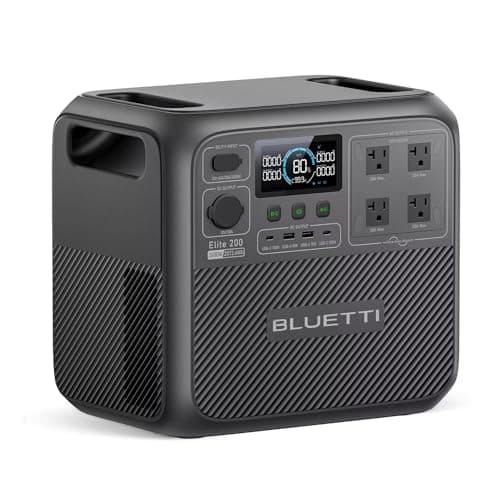
BLUETTI Elite 200 V2

2,073Wh — enough that a poor solar day is a slower decline rather than a crisis.

Riding out cloudy stretches on stored energy

Prices come from the retailer at page-build time and change constantly. Where no live price is available the button reads “Check price” rather than showing a number we cannot stand behind.

The picks in full

01The panel to add more of

Jackery SolarSaga 100W

100W bifacial at 4.52 lb — light enough that carrying two or three is realistic.

The answer to cloud is more panel, and the practical constraint on more panel is weight and storage. 4.52 lb per 100W makes a three-panel array something one person can actually deploy and bring in.

IP68 means it can stay out in the weather that is causing the poor output in the first place.

Skip it ifyou expect one panel to carry you through a cloudy multi-day outage. It will not, and the honest fix is more panel.

Published specifications for the Jackery SolarSaga 100W
SpecificationPublished figure
Rated output100 W
Cell typeMonocrystalline, bifacial
Conversion efficiencyup to 25%
Ingress ratingIP68
Weight4.52 lb
CompatibilityJackery Explorer stations

Source: Jackery — SolarSaga 100W product specifications. These are the manufacturer's published figures, not ours — we have not tested this unit.

02The capacity that survives a bad day

BLUETTI Elite 200 V2

2,073Wh — enough that a poor solar day is a slower decline rather than a crisis.

The real defense against cloud is not a better panel, it is a bigger battery. Capacity is what carries you across the poor days until a good one arrives.

2,073Wh running a 150W fridge is about 11.7 hours of stored autonomy before the panel has to contribute anything at all.

Skip it ifyour outages are short. Capacity as insurance against bad weather only matters when the outage is long.

Published specifications for the BLUETTI Elite 200 V2
SpecificationPublished figure
Usable capacity2,073.6 Wh
Cell chemistryAutomotive-grade LiFePO4 (LFP)
AC output2,600 W continuous / 3,900 W power lifting
Cycle life6,000+ cycles
Fast charge0–80% in 50 min via dual AC/DC input

Source: BLUETTI — Elite 200 V2 product specifications. These are the manufacturer's published figures, not ours — we have not tested this unit.

How these were chosen

We did not test these. Nobody at Watt & Warden has plugged one in. What we did instead: read the manufacturer's published specifications, compile them into a table where the figures line up, and compute the numbers manufacturers leave out — runtime against a real appliance load, and what an hour of running actually costs.

Anything that could not be sourced was left out rather than estimated, and every pick names the buyer who should skip it. The full method is here, including where it is weaker than a publisher with a test bench.

Questions people actually ask

Do solar panels work on cloudy days?

Yes, at heavily reduced output. Panels convert diffuse light as well as direct sunlight, so an overcast day produces a fraction of clear-sky output rather than nothing. Plan on it extending your battery's life rather than refilling it.

How much power do solar panels produce in winter?

Substantially less, for four compounding reasons: shorter days, a lower sun angle, heavier cloud, and snow on the panel. For planning a winter outage, assume the panel contributes very little and confirm the battery alone covers your first 24 hours.

Do solar panels work in the shade?

A little, from diffuse light, but much less than in the open -- and partial shading is worse than it looks, because cells wired in series mean one shaded section can drag down the whole panel. Move it into the open rather than accepting partial shade.

Should I buy more panels for cloudy climates?

Yes, and it is the most reliable fix. Panels are the cheap half of a solar setup, so overbuilding the array is the straightforward way to make poor conditions still produce something useful. Tilting the panel toward the sun is the free version of the same idea.

Sources

Every figure on this page comes from a published source. We have not tested this equipment, so the specifications are the manufacturer's and the statistics are the dataset's — the arithmetic on top of them is ours, and it is shown in full so you can check it. How we work this out.