Skip to content
Watt Warden

Power Stations

Goal Zero vs Jackery: Which Should You Buy?

One brand builds for weather and abuse, the other for weight and price. The right answer depends almost entirely on where the battery will live.

By Sawyer V.Updated Published How we work this out
A man setting up a tent at a lakeside campsite in the morning.

Watt & Warden earns a commission on qualifying purchases made through links on this page, at no extra cost to you. It never changes a ranking, and our picks include products we tell you to skip. Full disclosure.

Quick picks

#ProductBest forPrice
1
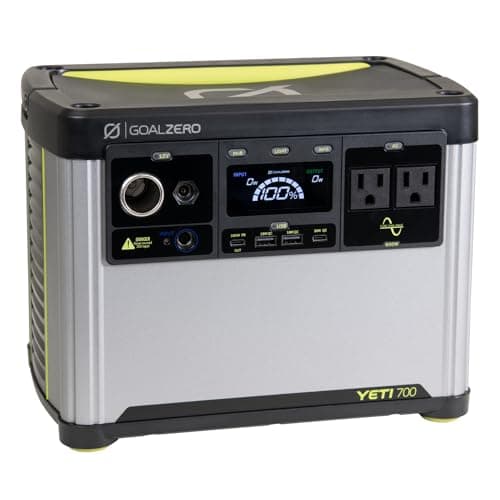
Goal Zero Yeti 700

Goal Zero at the portable size

Goal Zero Yeti 700

677Wh at 20.3 lb, IPX4 rated, with a 100W USB-C port and 4,000+ cycles.

Weather, a boat or a truck bed
$699.95 · Check price on Amazon

#ad how this is funded · price as of October 20, 2026

2
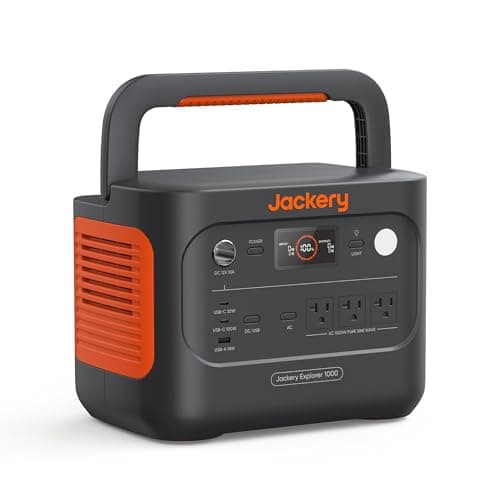
Jackery Explorer 1000 v2

Jackery at the portable size

Jackery Explorer 1000 v2

1,070Wh at 24 lb with a 1,500W inverter and 4,000 cycles to 70%.

Carrying it, and capacity per dollar
$499.00 · Check price on Amazon

#ad how this is funded · price as of October 20, 2026 · $559.00 11% off

3
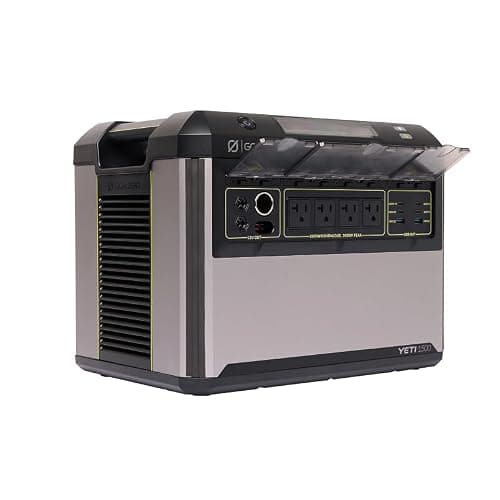
Goal Zero Yeti 1500

Goal Zero for the house

Goal Zero Yeti 1500

1,505Wh and 2,000W in an IPX4 aluminum case, full in 1.1 hours, 900W of solar.

Home backup that also goes outside
$1,499.95 · Check price on Amazon

#ad how this is funded · price as of October 20, 2026

4
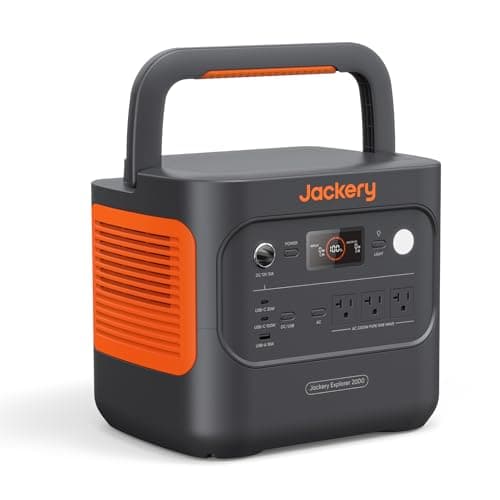
Jackery Explorer 2000 v2

Jackery for the house

Jackery Explorer 2000 v2

2,042Wh, 2,200W, a 20ms UPS switchover and charging under 30dB.

Quiet indoor charging and UPS duty
$899.00 · Check price on Amazon

#ad how this is funded · price as of October 20, 2026 · $999.00 10% off

Prices come from the retailer at page-build time and change constantly. Where no live price is available the button reads “Check price” rather than showing a number we cannot stand behind.

The short answer

Goal Zero if the battery goes outdoors — a boat, a truck bed, a job site, an exposed campsite — or if a five-year warranty and a published cycle rating matter more to you than capacity.

Jackery if the battery lives indoors or travels in a car, because you get materially more energy and more inverter for the same money, in a lighter case.

Where the money goes

UnitCapacityContinuous outputWeightWeather rating
Goal Zero Yeti 300 (discontinued)297 Wh350 W13.7 lbIPX4
Goal Zero Yeti 700677 Wh600 W20.3 lbIPX4
Jackery Explorer 1000 v21,070 Wh1,500 W24 lbNone published
Goal Zero Yeti 15001,505 Wh2,000 W52.75 lbIPX4
Jackery Explorer 2000 v22,042 Wh2,200 W39.5 lbNone published

Manufacturer figures from the pages cited below. "None published" means the maker states no ingress rating on the page we cite — not that a unit is fragile, only that nothing has been promised.

Read the table by pairing units on price rather than on name and the pattern is clear: for similar money, Jackery gives you more watt-hours and more inverter; Goal Zero gives you a sealed case, a longer warranty and a higher solar ceiling.

The three questions that decide it

1. Will it get wet?

This is the whole comparison for a lot of buyers. IPX4 means splash resistance from any direction — rain at a campsite, spray on a boat. It does not mean immersion. If the answer is a firm no, you are paying for protection you will never use.

2. How often will you cycle it?

Goal Zero publishes 4,000+ cycles to 80% across the current Yeti line, and Jackery publishes 4,000 cycles to 70% on the Explorer 1000 v2 — both are serious ratings. A storm household that cycles a battery three times a year will never approach either, which makes cycle life a specification that only matters to daily users in vans and cabins.

3. Where will it charge?

The Yeti 1500's 900W solar ceiling is the highest figure in this comparison by a distance, which suits off-grid charging. Jackery's answer is the sub-30dB charging mode on the Explorer 2000 v2, which suits charging in a bedroom. Those are different problems with different winners — the panel-count page covers the solar side.

What both get right

  • LiFePO4 across the current ranges, which is what took this class from hundreds of cycles to thousands.
  • Published specifications on capacity, output, cycles and charge times.
  • Panel ecosystems designed to plug straight in without adapters.
  • Five-year warranties on the Goal Zero range and up to five years on registered Jackery units.

The short version

  • Outdoors, weather, abuse: Goal Zero, for the IPX4 rating nobody else publishes at this price.
  • Indoors, in a car, on a budget: Jackery, for more watt-hours and more inverter per dollar.
  • Cycle ratings are close and irrelevant to most households.
  • Solar-first buyers should look at the Yeti 1500's 900W ceiling, which no Jackery here matches.

The picks in full

01 — Goal Zero at the portable size

Goal Zero Yeti 700

677Wh at 20.3 lb, IPX4 rated, with a 100W USB-C port and 4,000+ cycles.

An IPX4 rating and an aluminum case are the argument. Most rivals publish no ingress rating at all, which matters if the unit lives anywhere it can get rained on.

4,000+ cycles and a five-year warranty back it up.

The honest catch: 600W continuous and one AC outlet for the money. You are buying the case, not the electronics.

Skip it ifyou need to run a refrigerator. 600W continuous is not enough headroom.

Goal Zero Yeti 700
$699.95 · Check price on Amazon

#ad how this is funded · price as of October 20, 2026

Published specifications for the Goal Zero Yeti 700
SpecificationPublished figure
Capacity677.37 Wh
Cell chemistryLiFePO4 (LFP)
AC output600 W continuous / 1,000 W surge, pure sine, 1 outlet
USB1x 100 W USB-C PD, 2x 30 W USB-C QC, 2x USB-A (18 W combined)
Cycle life4,000+ cycles to 80% at 75F
AC recharge1.7 h at 500 W input; 3 h at 340 W
Max solar input200 W (about 3.8 h to full)
Weight20.3 lb (9.2 kg)
Ingress ratingIPX4 water resistant
Warranty5 years

Source: Goal Zero — Yeti 700 product specifications. These are the manufacturer's published figures, not ours — we have not tested this unit.

02 — Jackery at the portable size

Jackery Explorer 1000 v2

1,070Wh at 24 lb with a 1,500W inverter and 4,000 cycles to 70%.

Roughly 60% more energy than the Yeti 700 and two and a half times the inverter, for less money, in a case under four pounds heavier.

For a battery that lives indoors and travels in a car, that arithmetic is very hard to argue with — the full review covers it.

The honest catch: 1,500W is the smallest inverter in its class, and there is no published weather rating.

Skip it ifthe unit will be rained on. Jackery publishes no ingress rating here.

Jackery Explorer 1000 v2
$499.00 · Check price on Amazon

#ad how this is funded · price as of October 20, 2026 · $559.00 11% off

Published specifications for the Jackery Explorer 1000 v2
SpecificationPublished figure
Usable capacity1,070 Wh
Cell chemistryLiFePO4 (LFP)
AC output1,500 W continuous / 3,000 W surge
Weight24 lb
Cycle life4,000 cycles to 70% capacity
Max solar input400 W
Wall recharge~1.7 h, or ~1 h in emergency mode
Warranty3 years, extendable to 5 on registration

Source: Jackery — Explorer 1000 v2 product specifications. These are the manufacturer's published figures, not ours — we have not tested this unit.

03 — Goal Zero for the house

Goal Zero Yeti 1500

1,505Wh and 2,000W in an IPX4 aluminum case, full in 1.1 hours, 900W of solar.

900W of solar input across dual inputs is roughly double what most units this size accept, and it is the specification that makes solar a refill rather than a trickle.

2,000W continuous covers a refrigerator, a microwave or a sump pump.

The honest catch: 52.75 lb, and rivals hold more energy for the same money — the Goal Zero roundup sets out the premium in detail.

Skip it ifyou want maximum watt-hours per dollar.

Goal Zero Yeti 1500
$1,499.95 · Check price on Amazon

#ad how this is funded · price as of October 20, 2026

Published specifications for the Goal Zero Yeti 1500
SpecificationPublished figure
Capacity1,505.28 Wh (51.2 V, 29.4 Ah)
Cell chemistryLiFePO4 (LFP)
AC output2,000 W continuous / 3,600 W surge, pure sine, 4 outlets
USB140 W and 60 W USB-C, plus 2x 30 W
12 V output405 W high-power port, 162 W auxiliary
Cycle life4,000 cycles to 80%
AC recharge0-80% in 0.8 h, full in 1.1 h
Max solar input900 W across dual inputs (about 2 h)
Weight52.75 lb
Dimensions15.7 x 11.4 x 12.02 in
Ingress ratingIPX4 water resistant
Warranty5 years

Source: Goal Zero — Yeti 1500 product specifications. These are the manufacturer's published figures, not ours — we have not tested this unit.

04 — Jackery for the house

Jackery Explorer 2000 v2

2,042Wh, 2,200W, a 20ms UPS switchover and charging under 30dB.

More energy than the Yeti 1500, a published sub-30dB charging mode and a 20ms switchover that turns it into a UPS for whatever stays plugged through it.

At 39.5 lb it is also over 13 lb lighter than the Goal Zero.

The honest catch: 66 minutes to 80% is slower, and there is no published water resistance.

Skip it ifthe unit lives outdoors. This is an indoor machine.

Jackery Explorer 2000 v2
$899.00 · Check price on Amazon

#ad how this is funded · price as of October 20, 2026 · $999.00 10% off

Published specifications for the Jackery Explorer 2000 v2
SpecificationPublished figure
Usable capacity2,042 Wh
Cell chemistryLiFePO4 (LFP)
AC output2,200 W continuous
UPS switchover20 ms
Weight39.5 lb
Charge time0–80% in 66 min; full in 102 min (emergency mode)
Charging noiseunder 30 dB in silent charging mode

Source: Jackery — Explorer 2000 v2 product specifications. These are the manufacturer's published figures, not ours — we have not tested this unit.

How these were chosen

We did not test these. Nobody at Watt & Warden has plugged one in. What we did instead: read the manufacturer's published specifications, compile them into a table where the figures line up, and compute the numbers manufacturers leave out — runtime against a real appliance load, and what an hour of running actually costs.

Anything that could not be sourced was left out rather than estimated, and every pick names the buyer who should skip it. The full method is here, including where it is weaker than a publisher with a test bench.

Questions people actually ask

What happened to the Goal Zero Yeti 300?

It is no longer available through Amazon, so it is listed above for comparison only and has no buy link. Goal Zero's smallest unit currently on sale there is the Yeti 700 at 677Wh and 600W, which carries the same IPX4 rating, the same 4,000+ cycle rating and the same five-year warranty. Jackery's Explorer 300 at 292Wh is the closest small alternative if you want that capacity class.

Is Goal Zero better than Jackery?

Only for specific jobs. Goal Zero publishes IPX4 water resistance, 4,000+ cycles and five-year warranties across its current Yeti line, which suits batteries used outdoors. Jackery gives you more watt-hours and more inverter for the same money in a lighter case, which suits batteries used indoors or carried in a car.

Which brand is better for camping?

Goal Zero if your camping involves weather the unit will be exposed to -- the IPX4 rating is real and rivals rarely publish one. Jackery if you camp out of a car and value carrying weight and capacity per dollar, since a Yeti 700 holds well under a Jackery Explorer 1000 v2's energy for similar money.

Why is Goal Zero more expensive?

You are paying for weather sealing, an aluminum case, a five-year warranty and, on the Yeti 1500, a 900W solar input ceiling that is roughly double what rivals accept. None of that buys extra watt-hours, which is why the brand loses on capacity per dollar and wins on durability.

Which is better for home backup?

Jackery, for most households: the Explorer 2000 v2 holds more energy than the Yeti 1500, weighs 13 lb less, and adds a 20ms UPS switchover and a sub-30dB charging mode that matter indoors. Choose the Goal Zero if the same unit also has to work outside.

Do both use LiFePO4 batteries?

Both use LiFePO4 across their current mainstream ranges. Goal Zero rates the Yeti line at 4,000+ cycles to 80% capacity; Jackery rates the Explorer 1000 v2 at 4,000 cycles to 70%. Either will outlast the electronics in a household that uses it for storm backup.

Sources

Every figure on this page comes from a published source. We have not tested this equipment, so the specifications are the manufacturer's and the statistics are the dataset's — the arithmetic on top of them is ours, and it is shown in full so you can check it. How we work this out.