Skip to content
Watt Warden

Power Stations

BLUETTI vs Anker SOLIX: Which Brand Should You Buy?

Both brands now run from a camping battery to a whole-house system, so the old shorthand is useless. Three published differences decide it, and they do not all point the same way.

By Sawyer V.Updated Published How we work this out
A campsite at night lit by string lights and a lamp under a canopy.

Watt & Warden earns a commission on qualifying purchases made through links on this page, at no extra cost to you. It never changes a ranking, and our picks include products we tell you to skip. Full disclosure.

Quick picks

#ProductBest forPrice
1
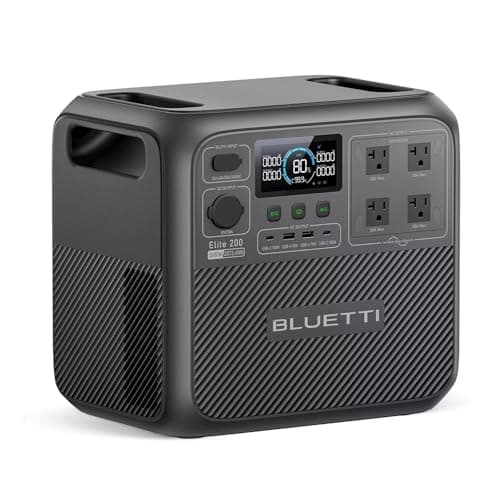
BLUETTI Elite 200 V2

The BLUETTI most people should buy

BLUETTI Elite 200 V2

2,073.6Wh and 2,600W with a published 6,000+ cycle rating - half again the cycle life Anker publishes anywhere in its range.

A long-lived battery for a fridge and the essentials
$898.99 · Check price on Amazon

#ad how this is funded · price as of November 12, 2026 · $1,399.00 36% off

2
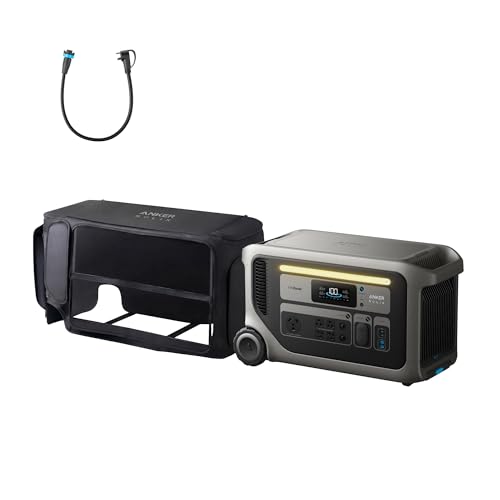
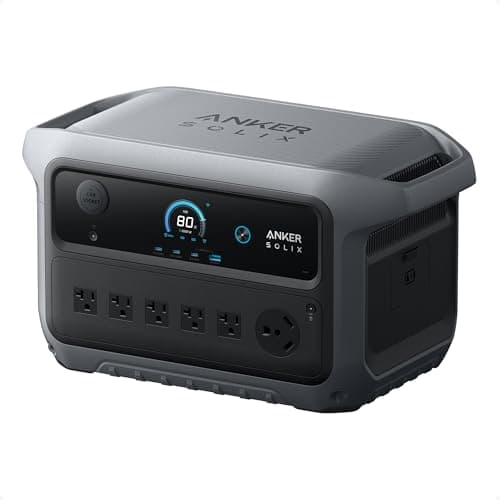
Anker SOLIX C2000 Gen 2

The Anker most people should buy

Anker SOLIX C2000 Gen 2

2,048Wh and 2,400W with a 10ms UPS switchover that Anker publishes as UL 1178 certified - and 41.7 lb against BLUETTI's heavier unit.

The same job, with a faster transfer and a certification behind it
$949.99 · Check price on Amazon

#ad how this is funded · price as of November 12, 2026 · $1,499.00 37% off

3
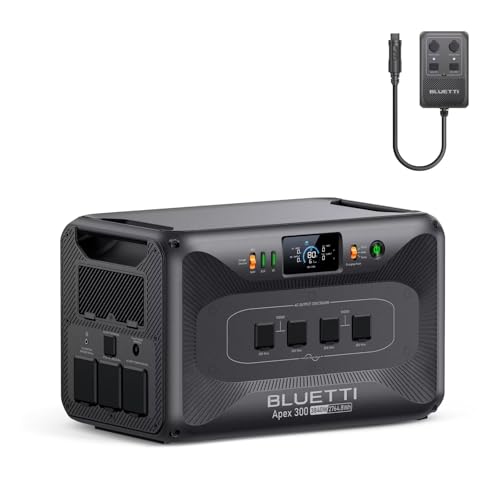
BLUETTI Apex 300

BLUETTI's answer to 240V

BLUETTI Apex 300

2,764.8Wh with 3,840W continuous and simultaneous 120V and 240V output - plus 6,000 cycles to a stated 80% and a published five-year warranty.

A well pump or a range, from a portable unit
$1,899.00 · Check price on Amazon

#ad how this is funded · price as of November 12, 2026 · $1,999.00 5% off

4
Anker SOLIX F3000

Anker's three kilowatt-hours

Anker SOLIX F3000

3,072Wh and 3,600W with 7,200W surge - more of both than BLUETTI's Apex, at a lower price, and 120V only.

More capacity and output, if 120V covers your list
$1,598.99 · Check price on Amazon

#ad how this is funded · price as of November 12, 2026

5
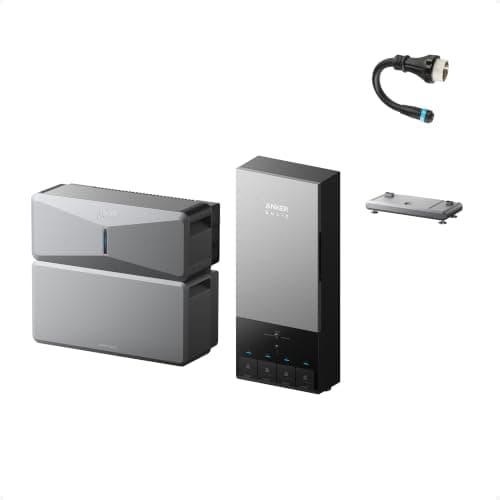
Anker SOLIX E10 with Power Dock

The whole-home end you can actually buy

Anker SOLIX E10 with Power Dock

6kWh expandable to 90kWh, 7.6kW output, 200A whole-home coverage through the Power Dock - listed, priced and in stock on the same site as the portables.

Going from a portable to a wired system inside one brand
$5,799.00 · Check price on Amazon

#ad how this is funded · price as of November 12, 2026

Prices come from the retailer at page-build time and change constantly. Where no live price is available the button reads “Check price” rather than showing a number we cannot stand behind.

The shorthand people still use for these two brands — BLUETTI is the cheap capacity, Anker is the polish — is out of date. Both now run from a camping battery to a whole-house system, both build on LiFePO4, and both publish specifications in enough detail to be compared properly.

Three published differences actually decide it, and they do not all point the same way. One favors BLUETTI, one favors Anker, and the third is not a specification at all.

One: cycle life, where BLUETTI leads

BLUETTI publishes 6,000+ cycles on the Elite 200 V2 and 6,000 cycles to 80% capacity on the Apex 300. Anker publishes 4,000 cycles across its range — on the C2000 Gen 2, on the F3000, and on the E10, where it states the threshold explicitly as 80% capacity retained.

Compared at the same threshold, that is a genuine fifty percent advantage to BLUETTI, and it is the single strongest argument the brand has. For a battery that will sit on standby and cycle a few dozen times a year, the practical difference is modest; for one cycling daily on a tariff, it is the difference between a decade and fifteen years.

One caveat worth stating, because it is on BLUETTI's own site. The product pages publish 6,000, but the FAQ on BLUETTI's home battery backup collection page says its batteries are “designed for 10-15 years of use, with over 3,000 charging cycles.” Those two numbers do not agree. The product-level figure is the one with a stated threshold and the one we have used, but if the cycle rating is the reason you are choosing BLUETTI, it is worth getting the number for your specific model in writing.

Two: switchover time, where Anker leads

Anker publishes a 10ms UPS switchover on the C2000 Gen 2 and describes it as UL 1178 certified. BLUETTI publishes 20ms across its backup systems.

Twenty milliseconds is about one and a quarter cycles of 60Hz power. A fridge, a router or a television will not notice either figure. A desktop without its own UPS, a NAS mid-write, or anything that logs a power event might notice the difference between them — and the certification matters more than the number, because it means the figure was tested against a standard rather than asserted.

If that is your use case, note that neither brand is really the right answer. Power station versus UPS sets out why a dedicated UPS still wins for equipment that genuinely cannot blink.

Three: whether you can buy the whole-home end

This is not a specification and it is the one most likely to decide a real purchase.

Both brands make whole-home systems. BLUETTI's EP900 appears throughout its home-backup material alongside AC300 and AC500 systems, with talk of 30 to 40kWh configurations and SGIP rebates. Anker's is the E10, with a 200A Power Dock, 6kWh expandable to 90kWh and a published 20ms automatic switchover.

The difference is the counter. Anker's E10 is listed at retail with a price and a stock status, in six configurations, next to its portables. BLUETTI's EP900 is not — searching the same channel returns the Elite and FridgePower portables, not the installed system. BLUETTI's own guidance for whole-home integration points at professional installation and a dealer conversation.

Neither route is wrong. A dealer channel often means a surveyed install and a local installer standing behind it, which is worth real money. But if your plan is to buy a portable now and grow into a wired system later without leaving the brand or the sourcing route, only one of these two supports it today.

Tier by tier, on published numbers

TierBLUETTIAnker SOLIXThe difference that matters
~1kWhElite 100 V2 — 1,024Wh, 1,800WC1000 — 1,056Wh, 1,800WNear-identical; buy on price
~2kWhElite 200 V2 — 2,073.6Wh, 2,600W, 6,000+ cyclesC2000 Gen 2 — 2,048Wh, 2,400W, 4,000 cycles, 10ms UL 1178Cycles against switchover
~3kWhApex 300 — 2,764.8Wh, 3,840W, native 120/240VF3000 — 3,072Wh, 3,600W, 120V only240V from one box, or more capacity
~4kWhElite 400 — 3,840Wh, 2,600WF3800 Plus — 3,840Wh, 6,000W, split-phaseAnker, decisively, on output
Whole-homeEP900 — dealer channelE10 — 6-90kWh, 200A, retail listedWhether you can just buy it

Figures as published by each manufacturer. Live prices sit on the buy rows above with their refresh date; availability in this category moves week to week, so check before you commit.

What both brands do the same

  • LiFePO4 throughout. Neither sells NMC in this range any more, so the chemistry argument is settled — LiFePO4 versus lithium-ion covers why that matters.
  • Expansion as the growth path. BLUETTI uses B300K and B500K batteries, Anker uses BP2000 and BP3000. Both lock you into the brand once you buy the first unit, which is the real cost of choosing.
  • App monitoring and fast AC recharge. Both publish sub-hour 0-80% figures on their mid-range units.
  • Neither fits wheels where you want them. The heavy units in both ranges are two-person lifts.

Which brand, for which buyer

  • Buy BLUETTI if the battery will cycle often and you are buying for ten-plus years, or if you need 240V from a single portable box. The cycle rating and the Apex's dual-voltage inverter are both genuine advantages with numbers behind them.
  • Buy Anker if you want the faster, certified switchover, more capacity per dollar in the 3kWh class, or a path from a portable to a wired whole-home system you can buy the same way.
  • Either is fine if you are buying one mid-range unit for a fridge and the essentials and will never expand it. At that use case the two are close enough that price on the day should decide.

And before either: get your own number. What size power station do I need turns a keep-list into the watts and watt-hours that make this a two-product shortlist rather than a brand argument.

The picks in full

01 — The BLUETTI most people should buy

BLUETTI Elite 200 V2

2,073.6Wh and 2,600W with a published 6,000+ cycle rating - half again the cycle life Anker publishes anywhere in its range.

This is where BLUETTI's central argument lives. The cells are rated at 6,000+ cycles, and at 2,600W continuous with 3,900W of power lifting it starts the hard-start loads that matter in an outage. Our full review of this unit works through what that cycle rating is worth in years.

A 0-80% recharge in 50 minutes on dual AC/DC input is the other quietly useful number — between two storms in the same week it is the difference between ready and not.

The honest catch: 2,073.6Wh is the smallest capacity in this comparison, and the 20ms switchover is the slower of the two brands. Neither matters for a fridge; both matter if you are protecting a desktop.

Skip it ifyou want the fastest switchover. BLUETTI publishes 20ms where Anker's direct rival publishes 10ms with a UL 1178 certification behind it.

BLUETTI Elite 200 V2
$898.99 · Check price on Amazon

#ad how this is funded · price as of November 12, 2026 · $1,399.00 36% off

Published specifications for the BLUETTI Elite 200 V2
SpecificationPublished figure
Usable capacity2,073.6 Wh
Cell chemistryAutomotive-grade LiFePO4 (LFP)
AC output2,600 W continuous / 3,900 W power lifting
Cycle life6,000+ cycles
Fast charge0–80% in 50 min via dual AC/DC input

Source: BLUETTI — Elite 200 V2 product specifications. These are the manufacturer's published figures, not ours — we have not tested this unit.

02 — The Anker most people should buy

Anker SOLIX C2000 Gen 2

2,048Wh and 2,400W with a 10ms UPS switchover that Anker publishes as UL 1178 certified - and 41.7 lb against BLUETTI's heavier unit.

Almost the same battery on paper, and the differences are the interesting part. The 10ms UPS switchover is half BLUETTI's published figure, and Anker backs it with a UL 1178 certification rather than a bare number — which is unusual in this category and worth something if a desktop or a NAS is on the other end.

It is also the better-documented unit: five AC outlets plus a TT-30R, 140W USB-C, a published 30 dB noise figure below 1,000W, and a charging temperature range. Expansion runs to 4,096Wh with one BP2000.

The honest catch: Anker does not publish a warranty term on its C2000 Gen 2 specification page, where BLUETTI publishes five years on the Apex. If warranty is part of your decision, that absence is the thing to resolve before buying.

Skip it ifcycle life is your deciding number. Anker publishes 4,000 cycles here against BLUETTI's 6,000+.

Anker SOLIX C2000 Gen 2
$949.99 · Check price on Amazon

#ad how this is funded · price as of November 12, 2026 · $1,499.00 37% off

Published specifications for the Anker SOLIX C2000 Gen 2
SpecificationPublished figure
Usable capacity2,048 Wh (51.2 V / 40,000 mAh)
Cell chemistryLiFePO4 (LFP)
AC output2,400 W max / 4,000 W peak
AC outlets5 standard outlets plus one TT-30R
Cycle life4,000 cycles
Recharge80% in 45 min, full in 58 min (AC + solar)
AC input1,800 W max
Max solar input800 W (XT-60i, 11-60 V / 17 A max)
UPS switchover10 ms, UL 1178 certified
ExpansionOne BP2000 (Gen 2) battery, to 4,096 Wh
USB2x USB-C 140 W, 1x USB-C 15 W, 1x USB-A 12 W
Car socket12 V / 10 A
Noise30 dB below 1,000 W
Charging temperature32°F to 104°F (0°C to 40°C)
Weight41.7 lb (18.9 kg)
WarrantyNot published on Anker's C2000 Gen 2 specification page

Source: Anker SOLIX — C2000 Gen 2 product specifications. These are the manufacturer's published figures, not ours — we have not tested this unit.

03 — BLUETTI's answer to 240V

BLUETTI Apex 300

2,764.8Wh with 3,840W continuous and simultaneous 120V and 240V output - plus 6,000 cycles to a stated 80% and a published five-year warranty.

This is the unit that breaks the usual pattern. Native 120V and 240V simultaneous output from a portable, 3,840W continuous with 7,680W of lifting, and expansion to B300K or B500K batteries. Anker's equivalent capacity, the F3000, is 120V only and needs two units plus a Double Voltage Hub to reach 240V at all.

The cycle claim here is the strongest in the comparison because it states its threshold: 6,000 cycles to 80% capacity. A cycle figure without a retention threshold is not really a figure, and this one has it.

The honest catch: availability. We have watched this listing go unavailable and return twice in two weeks, and at the time of writing it shows only a handful in stock. Split-phase 240V home battery backup covers the alternatives if it is gone when you look.

Skip it ifyou need it In Stock reliably. This listing has been in and out of availability repeatedly over the past fortnight.

BLUETTI Apex 300
$1,899.00 · Check price on Amazon

#ad how this is funded · price as of November 12, 2026 · $1,999.00 5% off

Published specifications for the BLUETTI Apex 300
SpecificationPublished figure
In the boxApex 300 plus the Hub D1 — the bare unit is no longer listed on its own
Capacity2,764.8 Wh
Cell chemistryLiFePO4 (LFP)
AC output3,840 W continuous pure sine / 7,680 W lifting
Voltage120V and 240V simultaneous output
Max solar input2,400 W (2 x 1,200 W, 12-60 V, 20 A each)
ExpansionB300K at 2,764.8 Wh each, or B500K at 5,120 Wh each
Cycle life6,000 cycles to 80% capacity
Weight83.78 lb (38 kg)
Warranty5 years

Source: BLUETTI — Apex 300 RV power system guide (published specifications). These are the manufacturer's published figures, not ours — we have not tested this unit.

04 — Anker's three kilowatt-hours

Anker SOLIX F3000

3,072Wh and 3,600W with 7,200W surge - more of both than BLUETTI's Apex, at a lower price, and 120V only.

Compared straight across, this is more battery and more output than the Apex 300 for less money — 3,072Wh against 2,764.8Wh, and a 20ms switchover. It expands with BP3000 batteries at 3,072Wh each.

It is also the fairest illustration of the brands' different priorities. Anker spends the budget on capacity and watts; BLUETTI spends it on cycle life and the 240V inverter. Neither is wrong, and which is right depends entirely on your keep-list.

The honest catch: 91.5 lb, and the 120V ceiling. This is the heaviest unit here by a wide margin and it has no wheels.

Skip it ifanything on your keep-list is 240V. Reaching it means a second unit and a Double Voltage Hub, which is a different budget entirely.

Anker SOLIX F3000
$1,598.99 · Check price on Amazon

#ad how this is funded · price as of November 12, 2026

Published specifications for the Anker SOLIX F3000
SpecificationPublished figure
Capacity3,072 Wh
Cell chemistryLiFePO4, 4,000 cycles
AC output3,600 W continuous total, 7,200 W surge
Voltage120V only; 240V needs two units and a Double Voltage Hub
Solar inputUp to 2,400 W (1,600 W high-PV plus 800 W low-PV)
AC charging1,800 W standard; 3,600 W via a TT-30 adapter
Switchover20 ms
Weight91.5 lb
ExpansionBP3000 expansion batteries, 3,072 Wh each

Source: Anker SOLIX — F3000 product specifications. These are the manufacturer's published figures, not ours — we have not tested this unit.

05 — The whole-home end you can actually buy

Anker SOLIX E10 with Power Dock

6kWh expandable to 90kWh, 7.6kW output, 200A whole-home coverage through the Power Dock - listed, priced and in stock on the same site as the portables.

This is the structural difference between the two brands, and it is not about specifications. BLUETTI does make a whole-home system — the EP900 appears across its home-backup pages — but it is not sold through the retail channel; we could not find it listed alongside the portables. Anker's E10 is, with a published price and stock status.

For a buyer who wants to start with a portable and grow into a wired system without changing brand or sourcing route, that is the whole argument. Which E10 configuration to buy works through the six bundles, because the differences between them are not what the prices suggest.

The honest catch: it is a different order of money and a different kind of purchase. The Power Dock and the Smart Inlet Box both require a licensed electrician, and Anker says so.

Skip it ifyou want a portable. This is a permitted installation with an electrician, not a box you carry.

Anker SOLIX E10 with Power Dock
$5,799.00 · Check price on Amazon

#ad how this is funded · price as of November 12, 2026

Published specifications for the Anker SOLIX E10 with Power Dock
SpecificationPublished figure
Capacity6 kWh, expandable to 90 kWh
Output7.6 kW
Solar inputUp to 9 kW
Whole-home coverageUp to 200 A through the Power Dock
Switchover20 ms or less, automatic
Weather automationAnker publishes that the E10 "proactively monitors severe weather and automatically charges via solar and grid power", and that Storm Mode "automatically charges the battery to 100%"
EnclosureNEMA 4 and 3R rated
GeneratorGenerator-ready; 6,000 W bypass from a 240V pure sine generator
Cycle life80% of capacity retained after 4,000 cycles
Warranty5 years on the power and battery modules, 10 years on the Power Dock

Source: Anker SOLIX — whole-home backup power solution (E10: proactive severe-weather monitoring, Storm Mode charging to 100%, 20 ms automatic switching, up to 200 A whole-home coverage). These are the manufacturer's published figures, not ours — we have not tested this unit.

How these were chosen

We did not test these. Nobody at Watt & Warden has plugged one in. What we did instead: read the manufacturer's published specifications, compile them into a table where the figures line up, and compute the numbers manufacturers leave out — runtime against a real appliance load, and what an hour of running actually costs.

Anything that could not be sourced was left out rather than estimated, and every pick names the buyer who should skip it. The full method is here, including where it is weaker than a publisher with a test bench.

Questions people actually ask

Is BLUETTI or Anker SOLIX better?

Neither wins outright, and the published figures point in different directions. BLUETTI publishes 6,000 cycles against Anker's 4,000 at the same 80% retention threshold, and its Apex 300 produces native 120/240V from one box. Anker publishes a 10ms UPS switchover with UL 1178 certification against BLUETTI's 20ms, more capacity per dollar at the 3kWh tier, and a whole-home system you can buy at retail. Pick on which of those three you actually need.

Does BLUETTI really last longer than Anker?

On published cycle ratings, yes - 6,000 cycles against 4,000, and BLUETTI's Apex 300 states the 80% retention threshold explicitly, which makes it a comparable figure rather than a marketing number. One caveat: the FAQ on BLUETTI's own home battery backup collection page says its batteries are designed for 'over 3,000 charging cycles', which does not agree with the 6,000 on its product pages. Get the figure for your specific model confirmed if it is your deciding factor.

Which brand has a whole-home battery system?

Both. BLUETTI's EP900 appears throughout its home-backup material, and Anker's is the E10. The practical difference is the channel: Anker lists the E10 at retail in six configurations with published prices and stock status, while BLUETTI's EP900 is a dealer and professional-installation conversation. If you want to grow from a portable into a wired system without changing how you buy, that favors Anker today.

Can either brand run a 240V well pump from a portable unit?

BLUETTI's Apex 300 publishes simultaneous 120V and 240V output from a single portable, which is unusual at that size. Anker's F3000 is 120V only and needs two units plus a Double Voltage Hub to reach 240V; its F3800 Plus does produce split-phase natively but sits in a higher class and price.

Do BLUETTI and Anker expansion batteries work across brands?

No. BLUETTI uses B300K and B500K packs, Anker uses BP2000 and BP3000, and neither works with the other. That is the real cost of the decision - the first unit you buy chooses the brand for every expansion afterwards.

Sources