What each one is actually for
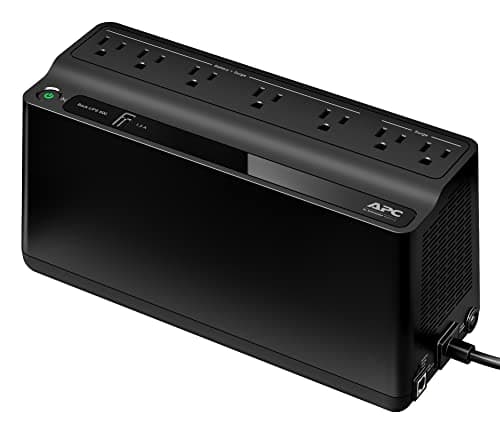
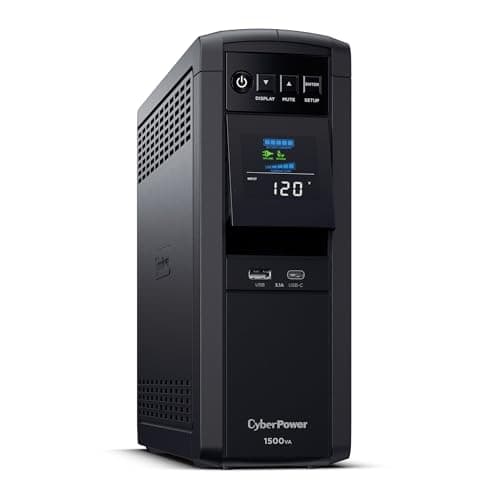
A UPS — uninterruptible power supply — exists to make an outage invisible to equipment that cannot tolerate one. It sits between the wall and the device, passes utility power through, and switches to battery in single-digit milliseconds when the grid fails. Its runtime is deliberately short, typically five to twenty minutes, because its job is to keep things alive until either the power returns or you shut down cleanly.
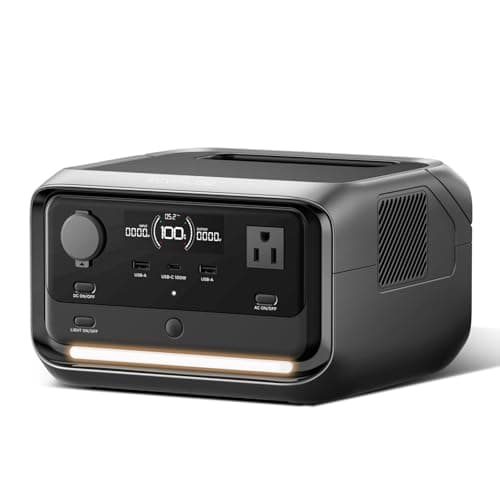
A portable power station exists to supply power where there is none, for hours. It holds ten to a hundred times the energy of a comparable UPS, it is portable, it charges from solar, and — in its basic form — it does not switch over at all: you plug things into it when you want power from it.
The mistake that costs people money runs in both directions. Buying a UPS to get through a four-hour outage produces twenty minutes and disappointment. Buying a 2kWh station to protect a desktop from a two-second flicker is spending ten times what the job requires, unless the station has UPS-grade switchover.
The specification that separates them
Switchover time, measured in milliseconds. It is how long the output is dead while the device transfers from grid to battery.
- Under 10ms — nothing notices. Desktops, network equipment, and anything with a switching power supply ride straight through.
- 10–20ms — most equipment is fine. A power supply typically holds up for one AC cycle, roughly 16ms at 60Hz.
- 20–50ms — sensitive equipment may reboot.
- No switchover — the device is not in the circuit at all until you plug into it. Most basic power stations.
APC publishes 6–10ms for the BE600M1. EcoFlow publishes under 10ms for the RIVER 3 Plus, and Jackery publishes 20ms for the Explorer 2000 v2. The interesting fact is that the second two are power stations — the categories have converged from the station side, and a modern station with UPS mode genuinely does both jobs.
Side by side
| Property | UPS | Power station |
|---|
| Typical energy | Minutes at a partial load | Hours at a full load |
|---|
| Switchover | Always, 4–10 ms | Only on UPS-capable models |
|---|
| Portable | No, in practice | Yes |
|---|
| Solar charging | No | Yes |
|---|
| Voltage regulation | Usually, via AVR | Rarely |
|---|
| Runs a fridge | No | Yes, above 1,800 W inverter |
|---|
| Battery life | 3–5 years, then replace | 3,000–6,000 cycles, LiFePO4 |
|---|
Figures from APC, CyberPower, EcoFlow and Jackery published specifications, linked below.
The one thing a UPS does that a station usually does not
Automatic voltage regulation. A UPS with AVR corrects sags and swells in the incoming supply without switching to battery at all — it boosts a brownout back to normal and trims an overvoltage down. In an area with a weak or noisy supply, that is a genuine benefit that happens constantly rather than only during an outage, and it extends the life of the equipment behind it.
Most power stations do not do this. They either pass power through untouched or they switch to battery. If your problem is dirty power rather than absent power, that difference is the deciding one.
The honest recommendation
Buy a UPS if the requirement is protecting specific equipment from a short interruption — a desktop, a NAS, a network rack, a sump pump controller that must not lose its state — and you accept that an extended outage means shutting down.
Buy a power station if the requirement is having power for hours: keeping a fridge cold, running lights, charging things, or having power somewhere there is no outlet. Choose one with UPS mode and you cover both requirements with one device.
Buy both if you have equipment that genuinely cannot blink and outages that genuinely last. A small UPS on the sensitive equipment and a station for everything else is cheaper than one device that does both well, and it fails more gracefully.
For the specific and very common case of keeping the internet alive, the router and modem page works through the options at every budget.