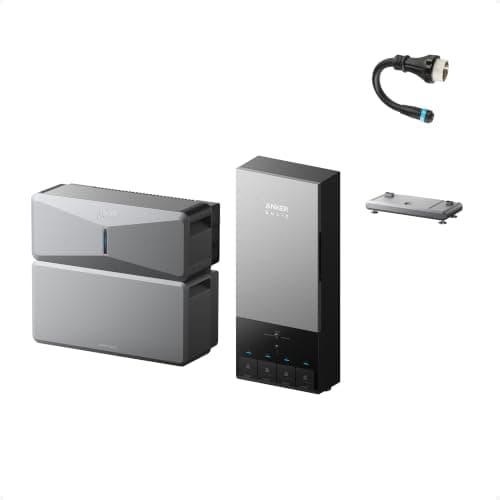
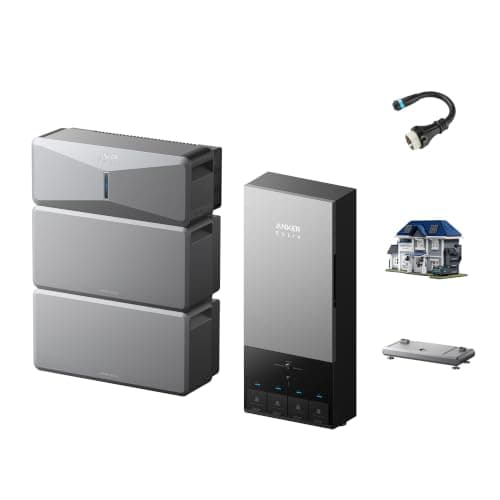
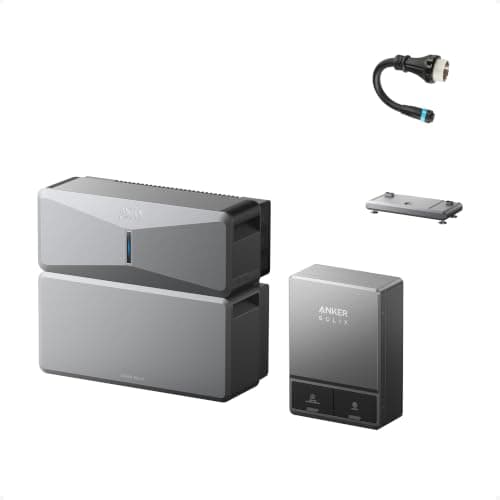
Anker sells the SOLIX E10 in six bundles. Laid out by price they look like capacity tiers, and they are not. Two of them cost the same as each other. The jump that changes what the system can run is not the most expensive one. And the single most consequential choice — the connection hub — is the part the listings describe in the fewest words.
This page is about picking between them. For how the E10 compares with other brands on automation, the Powerwall software comparison covers that separately.
Three decisions, not six products
Every bundle is a combination of three choices, and it is much easier to shop once you separate them:
- How many battery modules. One or two. This decides capacity and output, which is the part people miss.
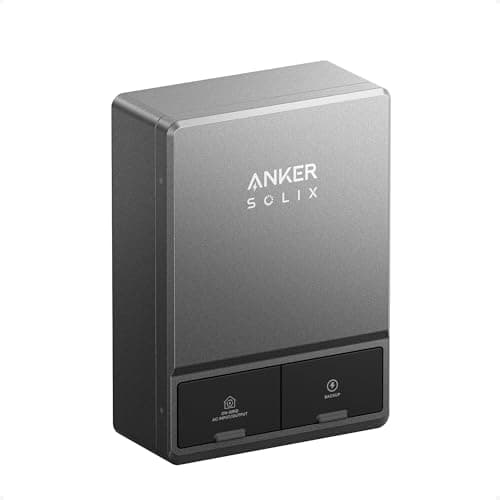
- Which connection hub. Smart Inlet Box for manual backup, Power Dock for automatic whole-home transfer, or none. Both hubs need an electrician; Anker says so directly.
- Whether the generator comes with it. The “Prime / off-grid kit” bundles add generation; the rest do not.
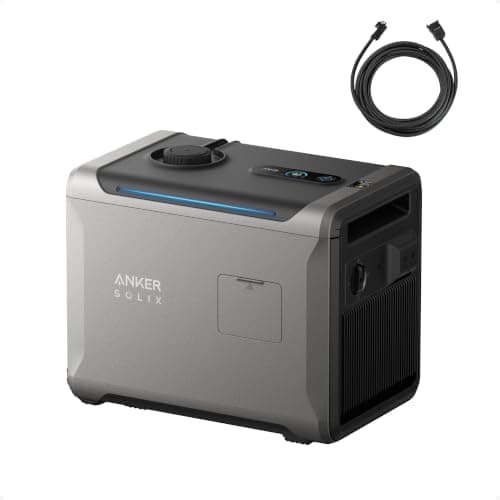
Anker's own description of a complete system is the clearest summary of the architecture: “the E10 power module, the B6000 battery module, a connection hub (either Smart Inlet Box or Power Dock), and Smart Generator.” Four parts, sold in bundles that each omit one or two of them.
The finding: output depends on how many batteries you buy
This is the single most useful thing on Anker's E10 page and it sits in the FAQ rather than the specification table:
“The output power depends on the number of battery modules: 1 battery module: Maximum continuous power of 7.6kW. 2 or more battery modules: Maximum power of 10kW, sustained for up to 90 minutes.”
Two consequences. First, a one-battery E10 is a 7.6kW system no matter which hub you put in front of it — if your constraint is starting a large compressor, the hub will not help and the second battery will. Second, the 10kW figure comes with a time limit. Anker describes it as turbo output “sustained for up to 90 minutes” alongside 7.6kW continuous, so the honest way to size a house is against 7.6kW, treating the rest as starting headroom.
That makes the E10's second battery behave differently from expansion batteries elsewhere — including Anker's own BP3800 for the F3800 line, which adds hours and leaves the inverter ceiling exactly where it was. Which home backup has the highest surge output puts those ceilings side by side.
The hub is the decision that changes your life, not your bill
Both hubs require a licensed electrician and a connection to the main panel. What separates them is whether anyone has to be home.
| Smart Inlet Box | Power Dock |
|---|
| Transfer | Manual — somebody operates it | Automatic, 20 ms or less |
|---|
| Whole-home coverage | Not published as a 200 A whole-home rating | Up to 200 A |
|---|
| Enclosure | NEMA 3R | NEMA 3R |
|---|
| Expansion | Not published | Up to three E10 units per dock |
|---|
| Warranty | 10 years | 10 years |
|---|
| Cost when bundled | Currently nothing over the bare E10 | Less than adding it later |
|---|
The pricing line is the one to check before you buy. At the time of writing, the E10 bundled with the Smart Inlet Box is listed at the same figure as the E10 alone, while the inlet box on its own is a few hundred dollars. Prices move, and the buy buttons on this page carry live ones with their refresh date — but if that relationship still holds when you look, the bare bundle is simply the worse buy.
Three warranties, not one
Most systems publish a single warranty figure. The E10 publishes three, and they do not line up with what each part costs:
- Power module and battery module — 5 years. The expensive part has the shortest cover.
- Smart Inlet Box and Power Dock — 10 years. The hub outlasts the battery it serves.
- Smart Generator — 3 years. The only part with moving parts has the shortest term of all.
Separately, Anker publishes that the E10 “retains 80% of its capacity after 4,000 charge cycles” and describes the cells as EV grade with 10-plus years of lifespan. A 4,000-cycle rating and a five-year warranty are not the same claim, and it is worth being clear with yourself about which one you are relying on.
Two published expansion ceilings
Worth flagging because the two figures appear on Anker's own pages. The whole-home overview says the system is “expandable to 53.8kWh (12kW)”. The E10 product page headlines “6-90kWh Battery Expandability”, which matches the three-units-per-dock architecture rather than a single stack. Both are probably true of different configurations, but they are not interchangeable, and if a long-term expansion plan is part of why you are buying, get the ceiling for your configuration in writing.
What to buy, briefly
- Most households: the Smart Inlet Box bundle, unless and until that price parity disappears. It is a complete working system for what Anker charges for an incomplete one.
- If nobody will be home to switch it: the Power Dock bundle. That is the entire reason it exists, and bundling beats retrofitting on price.
- If a 5-ton AC or a well pump has to start: two battery modules, because that is the only thing that lifts the published ceiling. Then size against 7.6kW continuous anyway.
- If outages where you live run past a day: add generation — Anker's own, or the third-party generator you already have through the published 6,000W bypass.
And before any of it, get your real number. What size home battery backup do I need turns a keep-list into the two figures — kilowatts and kilowatt-hours — that decide which of these six bundles you are actually shopping for.