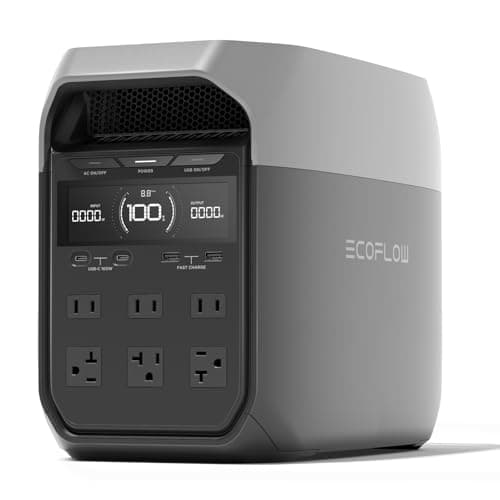
The short answer
EcoFlow if you want to start at one size and grow, if solar input matters, or if X-Boost's headroom for heaters and kettles is useful to you.
Anker SOLIX if you want the fastest wall recharge at 1kWh, the largest continuous output at the top of the range, or the simplest path to 240V split-phase power.
Tier by tier, on published numbers
| Tier | EcoFlow | Anker SOLIX | The difference that matters |
|---|
| Small | RIVER 3 Max — 572Wh, 990W | Power banks rather than stations | EcoFlow, on having a product here |
|---|
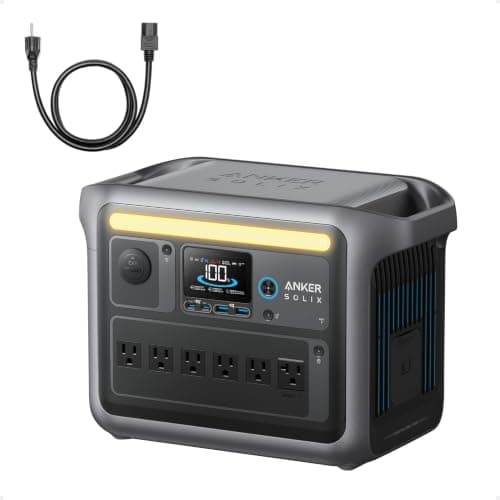
| 1kWh | DELTA 3 — 1,024Wh, 1,800W, to 5kWh | C1000 — 1,056Wh, 1,800W, full in 58 min | Expandability against recharge speed |
|---|
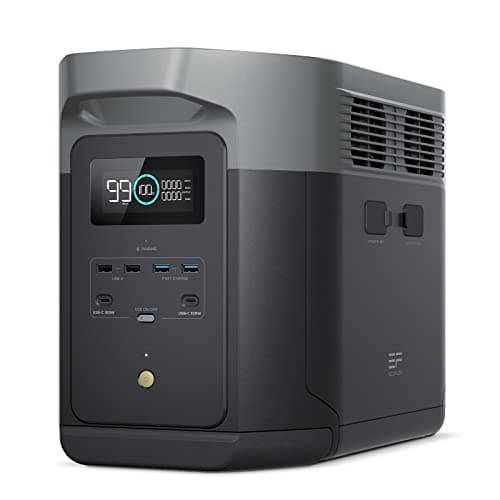
| 2kWh | DELTA 2 Max — 2,048Wh, 2,400W, 1,000W solar | Not covered on this site | EcoFlow, on solar input |
|---|
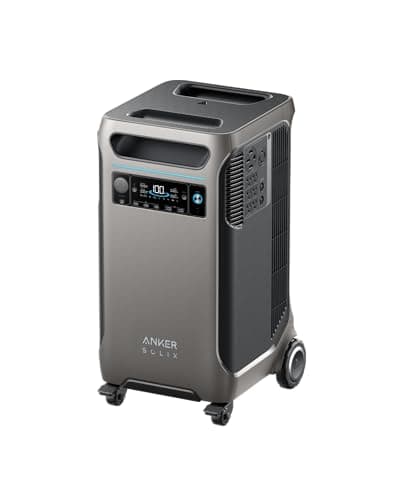
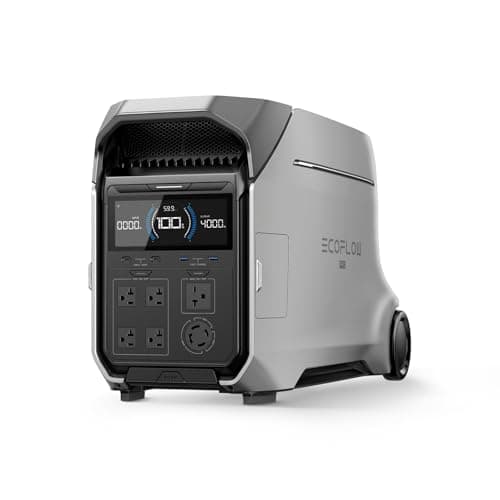
| 240V split-phase | DELTA Pro 3 — 4,096Wh, 4,000W, to 48kWh | F3800 — 3,840Wh, 6,000W, to 26.9kWh | Anker on output, EcoFlow on expansion ceiling |
|---|
Manufacturer figures from the pages cited below. Tiers marked "not covered on this site" mean we carry no unit from that brand at that size, not that the brand has nothing.
What each brand optimizes
EcoFlow builds systems. Nearly every unit in the range accepts extra batteries, the solar ceilings are the highest in each class, and the app ecosystem ties it together. The design assumption is that your requirement will grow.
Anker builds units. The individual machine is the product: fastest recharge at 1kWh, most continuous output at the top, and a split-phase portable that needs no companion hardware to make 240V. Expansion exists on the big units but it is not the organizing idea.
Three places the difference bites
1. Kettles, heaters and X-Boost
EcoFlow's X-Boost runs resistive loads above the inverter's rating by reducing voltage. For a 1,500W kettle on an 1,800W unit that is real headroom. It does nothing for a compressor, a pump or anything with a motor, so do not size those against it.
2. Surge, and starting motors
Anker publishes SurgePad headroom above its continuous rating, which is what a refrigerator or sump pump needs at the instant it starts. The starting-watts page explains why that number, not capacity, decides what will run.
3. The 240V wall
Both brands cross it at the top of their ranges, which is unusual — most makers do not. If a well pump, a range or a hardwired 240V circuit is on your list, this is the tier to compare, and the choice is between Anker's higher output and EcoFlow's larger expansion ceiling.
What both do well
- LiFePO4 throughout. Both have moved their mainstream ranges to LFP cells — the chemistry page explains why that matters.
- Fast wall charging. Both treat recharge speed as a headline feature, which is the specification that wins flickering outages.
- Published specifications. Capacity, output, surge, cycles and charge times are all stated on both brands' product pages.
The short version
- At 1kWh they are nearly identical on paper. Choose expandability (EcoFlow) or recharge speed (Anker).
- EcoFlow wins on solar input and expansion ceilings.
- Anker wins on continuous output at the top — 6,000W against 4,000W.
- Both make 240V at the top of the range, which most brands never do.