Skip to content
Watt Warden

Power Stations

BLUETTI vs EcoFlow vs Jackery: Which Should You Buy?

Three brands that look interchangeable in a listing and are not. The differences are narrow, consistent, and easy to state once you line the published figures up side by side.

By Sawyer V.Updated Published How we work this out
Three battery packs arranged side by side for comparison.

Watt & Warden earns a commission on qualifying purchases made through links on this page, at no extra cost to you. It never changes a ranking, and our picks include products we tell you to skip. Full disclosure.

Quick picks

#ProductBest forPrice
1
No photo

BLUETTI's case: capacity and cycle life

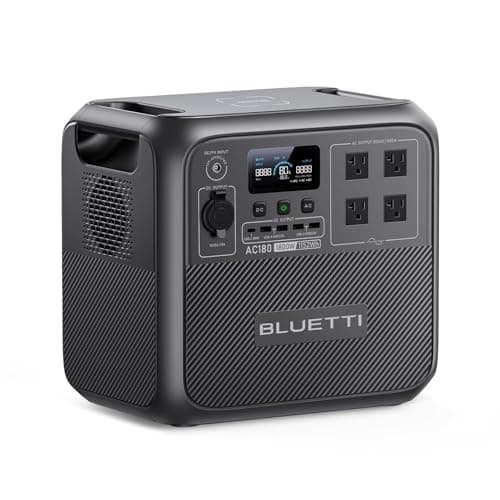
BLUETTI AC180

1,152Wh and 3,500 cycles to 80% — the most capacity and the longest honest life in the 1kWh class.

Buyers who want the most watt-hours
2
No photo

EcoFlow's case: expandability and speed

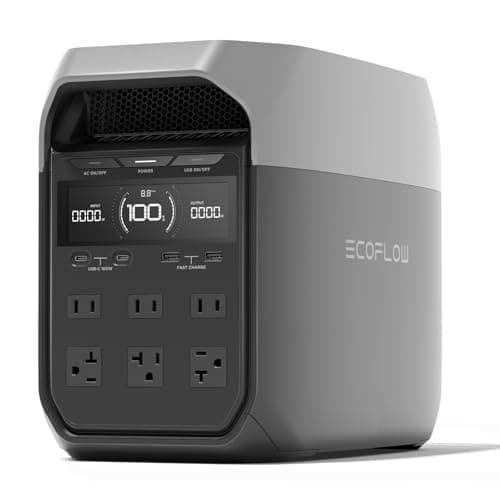
EcoFlow DELTA 2

1,024Wh that grows to 3kWh, with the most developed app and charging ecosystem.

Buyers unsure how much capacity they need
3
No photo

Jackery's case: weight and charge speed

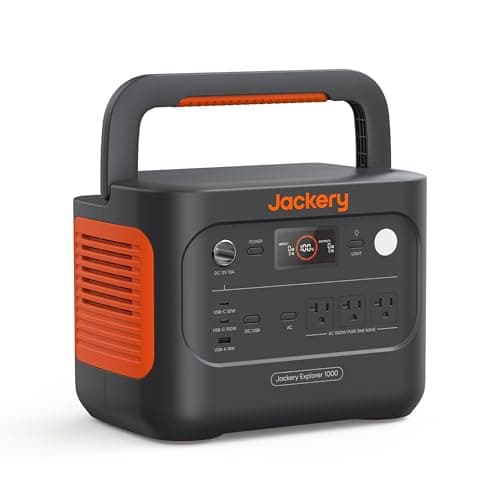
Jackery Explorer 1000 v2

1,070Wh at 24 lb, full from the wall in about 1.7 hours, or roughly one in emergency mode.

Anyone who has to carry it

Prices come from the retailer at page-build time and change constantly. Where no live price is available the button reads “Check price” rather than showing a number we cannot stand behind.

The short answer

BLUETTI for the most stored energy and the longest life per dollar, if you can live with the weight. Jackery if it has to be carried, or if fast recharging between frequent short outages matters more than absolute capacity. EcoFlow if you want a system you can extend, or if the app and the charging flexibility are worth a slightly shorter cycle life to you.

Those are narrow differences. All three build competent LiFePO4 units with pure sine wave inverters and multi-year warranties, and a buyer who picked at random from the three would not end up with a bad product. The comparison below is about matching a specification to a situation, not about separating good from bad.

The specifications side by side

Comparing at the 1kWh tier, where all three compete directly. Every figure is the manufacturer's published one.

SpecificationBLUETTI AC180EcoFlow DELTA 2Jackery 1000 v2
Capacity1,152 Wh1,024 Wh1,070 Wh
AC continuous1,800 W1,800 W1,500 W
Surge2,700 W2,700 W3,000 W
Cycle rating3,500+ to 80%3,000+4,000 to 70%
Weight35.3 lb27 lb24 lb
Fast charge0–80% in 45 minNot published in this formFull in ~1.7 h, ~1 h emergency
Max solar500 W500 W400 W
ExpandableNoYes, to 3 kWhNo
Warranty5 years on registration5 years3 years, 5 on registration

Sources: BLUETTI, EcoFlow and Jackery published product specifications, linked below. Where a manufacturer does not publish a comparable figure, the cell says so rather than carrying an estimate.

The cycle-rating trap

This is the one place the specifications are genuinely misleading if you read them casually, and it is worth spelling out.

Jackery publishes 4,000 cycles to 70% capacity. BLUETTI publishes 3,500+ cycles to 80%. The first number is bigger, so the Jackery looks like the longer-lived battery. It is not necessarily so, because the two claims use different endpoints — 70% of original capacity is a lower bar than 80%, and a cell reaches it later. Testing the BLUETTI to a 70% endpoint would produce a number higher than 3,500.

We cannot tell you how much higher, because BLUETTI does not publish it and we have not tested either. What we can tell you is that the two headline figures are not comparable, and that anyone ranking these batteries by cycle count alone is comparing two different measurements.

The one specification that eliminates a brand

Inverter capacity, and it is the Jackery. 1,500W against 1,800W sounds marginal until you place it beside Champion's published refrigerator starting range of 800–1,200W. A modern fridge starts fine on 1,500W. An older or larger one at the top of that range leaves 300W of margin, and a second motor starting at the same instant exceeds it.

So for a household whose reason for buying is a specific appliance — which describes most of them — the sequence is: identify the largest starting surge on your list, add margin, and let that eliminate the units that cannot supply it. The sizing method is here, and the wattage chart has the published surge figures for everything in a normal house.

What all three have in common

  • LiFePO4 cells. All three moved to lithium iron phosphate for these ranges, which is why cycle ratings are in the thousands rather than the hundreds.
  • Pure sine wave output. Safe for laptops, medical equipment and anything with a sensitive power supply.
  • App control over Wi-Fi or Bluetooth. All three have it; EcoFlow's is the most developed.
  • Multi-year warranties, with the longest terms usually contingent on registering the product.

What we cannot tell you

We have not tested these units. That means the questions a test bench answers are open here: real measured inverter efficiency under load, genuine noise levels, build quality, how the fan behaves at 90% output, and how any of them holds up after three years in a garage.

Those are real gaps and they matter. If build quality and long-term reliability are your deciding factors, a publisher with a genuine testing program will serve you better than we can, and we would rather say so than pretend a spec table answers it. What our method does and does not cover sets that out in full.

The picks in full

01BLUETTI's case: capacity and cycle life

BLUETTI AC180

1,152Wh and 3,500 cycles to 80% — the most capacity and the longest honest life in the 1kWh class.

BLUETTI's consistent position across its range is more watt-hours and more cycles for the money, accepting more weight to get there. The AC180 is the clearest expression of it: the largest battery in the 1kWh class, the longest cycle rating at a comparable 80% endpoint, and the heaviest of the three.

The Elite 200 V2 extends the same logic upward with a 6,000-cycle rating that is the highest published figure on this site.

Skip it ifweight matters. 35.3 lb is 11 lb more than Jackery's comparable unit for 82Wh more capacity.

Published specifications for the BLUETTI AC180
SpecificationPublished figure
Usable capacity1,152 Wh (32 V, 36 Ah)
Cell chemistryLiFePO4 (LFP)
AC output1,800 W continuous / 2,700 W surge, 4 outlets
Cycle life3,500+ cycles to 80% capacity
Weight35.3 lb
Fast charge0–80% in 45 min
Max solar input500 W
Warranty5 years on registration

Source: BLUETTI — AC180 product specifications. These are the manufacturer's published figures, not ours — we have not tested this unit.

02EcoFlow's case: expandability and speed

EcoFlow DELTA 2

1,024Wh that grows to 3kWh, with the most developed app and charging ecosystem.

EcoFlow builds systems rather than units. The DELTA 2 accepts expansion batteries to 3kWh, the app is the most capable of the three, and X-Boost extends resistive-load capability to a claimed 2,200W — with the caveat that it works by lowering voltage and does nothing for motors.

The trade is a 3,000-cycle rating, the lowest of the three, and a base capacity slightly below BLUETTI's at the same tier.

Skip it ifyou know your requirement. The expansion port costs money and does nothing if you never use it.

Published specifications for the EcoFlow DELTA 2
SpecificationPublished figure
Usable capacity1,024 Wh (expandable to 3 kWh)
Cell chemistryLiFePO4 (LFP)
AC output1,800 W continuous / 2,700 W surge
X-Boost output2,200 W for resistive loads
Weight27 lb
Cycle life3,000+ cycles
Max solar input500 W
Warranty5 years

Source: EcoFlow — DELTA 2 product specifications. These are the manufacturer's published figures, not ours — we have not tested this unit.

03Jackery's case: weight and charge speed

Jackery Explorer 1000 v2

1,070Wh at 24 lb, full from the wall in about 1.7 hours, or roughly one in emergency mode.

Jackery optimizes for portability and charge speed, and it wins both convincingly. 24 lb for 1,070Wh is the best capacity-to-weight ratio here, and the roughly one-hour emergency charge is the fastest fill of the three.

The cost is inverter capacity — 1,500W against 1,800W from both rivals — and a cycle rating quoted to a 70% endpoint rather than 80%, which makes its headline 4,000 figure not directly comparable to BLUETTI's 3,500.

Skip it ifyou need inverter headroom. At 1,500W it has the least of the three, and that is the specification that decides whether a fridge starts.

Published specifications for the Jackery Explorer 1000 v2
SpecificationPublished figure
Usable capacity1,070 Wh
Cell chemistryLiFePO4 (LFP)
AC output1,500 W continuous / 3,000 W surge
Weight24 lb
Cycle life4,000 cycles to 70% capacity
Max solar input400 W
Wall recharge~1.7 h, or ~1 h in emergency mode
Warranty3 years, extendable to 5 on registration

Source: Jackery — Explorer 1000 v2 product specifications. These are the manufacturer's published figures, not ours — we have not tested this unit.

How these were chosen

We did not test these. Nobody at Watt & Warden has plugged one in. What we did instead: read the manufacturer's published specifications, compile them into a table where the figures line up, and compute the numbers manufacturers leave out — runtime against a real appliance load, and what an hour of running actually costs.

Anything that could not be sourced was left out rather than estimated, and every pick names the buyer who should skip it. The full method is here, including where it is weaker than a publisher with a test bench.

Questions people actually ask

Which is better, BLUETTI, EcoFlow or Jackery?

None of them is better overall -- they optimize differently. BLUETTI gives the most capacity and cycle life per dollar and weighs the most. Jackery is the lightest and the fastest to recharge, with the smallest inverter. EcoFlow is the most expandable with the best app and the shortest cycle rating.

Are BLUETTI power stations reliable?

We cannot answer that honestly. Reliability is a question about units in the field over years, and it needs testing or long-term ownership data that we do not have. What we can tell you is what BLUETTI publishes: LiFePO4 cells, 3,500+ cycles to 80% on the AC180, and a five-year warranty on registration.

Is Jackery's 4,000 cycle rating better than BLUETTI's 3,500?

Not directly comparable. Jackery measures 4,000 cycles to 70% of original capacity; BLUETTI measures 3,500+ to 80%. The 70% endpoint is the easier test, so the two headline numbers describe different things and ranking by cycle count alone is a mistake.

Do all three use the same batteries?

All three use lithium iron phosphate (LiFePO4) chemistry in these ranges, which is why their cycle ratings are similar orders of magnitude. Cell supplier, pack construction and battery management differ between brands and are not something we can compare from published specifications.

Sources

Every figure on this page comes from a published source. We have not tested this equipment, so the specifications are the manufacturer's and the statistics are the dataset's — the arithmetic on top of them is ours, and it is shown in full so you can check it. How we work this out.