Skip to content
Watt Warden

Power Stations

LiFePO4 vs Lithium-Ion

For a battery that spends most of its life sitting charged and unused, calendar life matters more than energy density. That single fact settled this argument.

By Sawyer V.Updated Published How we work this out
Close detail of battery cells and a circuit board.

Watt & Warden earns a commission on qualifying purchases made through links on this page, at no extra cost to you. It never changes a ranking, and our picks include products we tell you to skip. Full disclosure.

Quick picks

#ProductBest forPrice
1
No photo

Best long-life LiFePO4

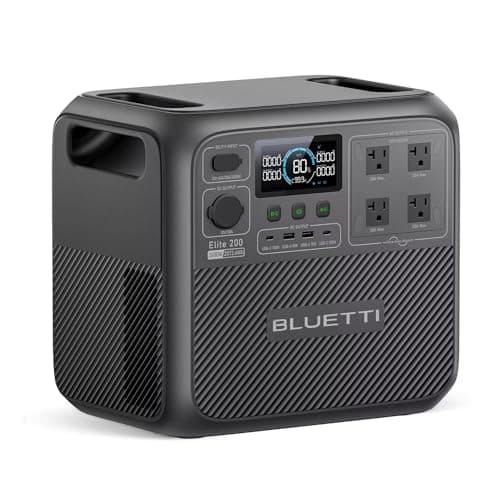
BLUETTI Elite 200 V2

2,073Wh of LiFePO4 with 2,600W output and a published ten-year design life.

Equipment that must work in year five
2
No photo

LiFePO4 at a smaller size

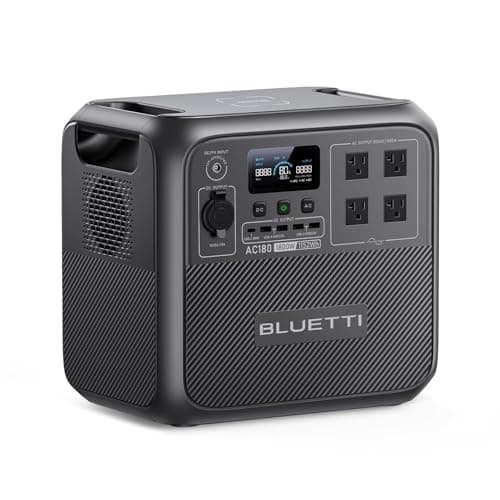
BLUETTI AC180

A kilowatt-hour-class LiFePO4 station with fast recharge and pure sine output.

A fridge and essentials
3
No photo

The mainstream LiFePO4 pick

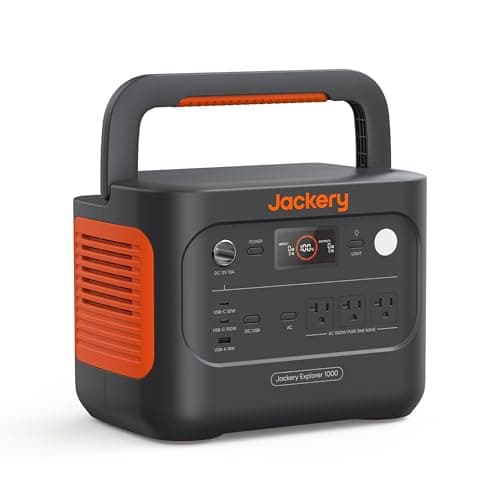
Jackery Explorer 1000 v2

A kilowatt-hour of LiFePO4 in the size and weight most people actually want.

A first serious battery

Prices come from the retailer at page-build time and change constantly. Where no live price is available the button reads “Check price” rather than showing a number we cannot stand behind.

What the two names mean

Both are lithium-ion batteries. The distinction is the cathode material, and the industry shorthand is misleading.

  • LiFePO4 — lithium iron phosphate. Sometimes written LFP.
  • "Lithium-ion" in this category almost always means NMC — lithium nickel manganese cobalt oxide — the chemistry in laptops, phones and most electric vehicles.

So the real comparison is LFP versus NMC, and it is a genuine trade rather than one being better at everything.

The comparison

LiFePO4 (LFP)Lithium-ion (NMC)
Cycle lifeRated in thousands — 3,000+ cycles is commonTypically several hundred to around a thousand
Energy densityLower — heavier and larger per watt-hourHigher — lighter for the same capacity
Thermal behaviorMore stable at elevated temperatureLess tolerant of heat
Calendar lifeLong — ten-year design lives are now publishedShorter
Cold-weather chargingBlocked below a threshold by the BMSAlso blocked below a threshold
Cost per watt-hourCompetitive and fallingWas cheaper; advantage has largely gone

Cycle-life figures are the ranges manufacturers publish for their own products — EcoFlow and BLUETTI both quote 3,000+ cycles to 80% capacity on their LiFePO4 units. We have not cycle-tested any battery, which requires a test program we do not run.

Why cycle life is the wrong headline

Every comparison leads with cycle count, and for backup power it is nearly irrelevant.

A cycle is a full discharge and recharge. If you use your battery in four outages a year plus a couple of test runs, that is perhaps six cycles annually. Even a 500-cycle battery would last eighty years on that schedule.

What actually kills a backup battery is calendar degradation — the slow capacity loss that happens simply from existing, faster when stored hot and at high state of charge. LiFePO4 is better at this, and that, not cycle count, is the real reason to prefer it for equipment that sits waiting.

Cycle life does matter if you are cycling daily — off-grid living, an RV used constantly, solar self-consumption. For a box in a closet that runs four times a year, it is a number to note and move past.

The cold-weather question

Charging a cold lithium cell plates lithium metal on the anode and causes permanent damage, so battery management systems block charging below a threshold. This applies to both chemistries.

Discharging in the cold is usually fine with reduced capacity, but charging may simply refuse until the pack warms. Some units have internal heaters; most do not.

The practical consequence for winter backup is straightforward: store the unit indoors rather than in an unheated garage, which is where people naturally put it. The winter kit covers the rest of the season's differences.

Weight, which is the real cost of LFP

LiFePO4 is less energy-dense, so a 2kWh LFP station is heavier and larger than a 2kWh NMC one would be. At this size that is 50 lb and up either way, so it rarely changes a decision — but for a genuinely portable unit you carry, it is the reason NMC still exists in some products.

If your use is camping and every pound matters, the camping scenario is where that trade is worth thinking about. For home backup, the unit sits still and weight is close to irrelevant.

What to do with an older NMC station

Nothing dramatic. An NMC power station is not unsafe and does not need replacing on chemistry grounds alone. Two habits extend it:

  • Do not store it at 100% for months. High state of charge accelerates calendar aging. Many manufacturers suggest storing part-charged.
  • Keep it cool. Heat is the main accelerant, which makes a hot garage the worst place for it.

Replace it when its real capacity no longer covers what you need, not because of what is printed on the cells. How long stations last covers degradation in more detail.

The short version

For backup power, buy LiFePO4. The market already did — nearly every station worth recommending uses it — and the reason is that calendar life and thermal stability matter more than density for equipment that spends its life waiting.

The only case for NMC is when carried weight is your binding constraint, and even there the gap has narrowed enough that it is rarely the deciding factor.

The picks in full

01Best long-life LiFePO4

BLUETTI Elite 200 V2

2,073Wh of LiFePO4 with 2,600W output and a published ten-year design life.

A ten-year design life is the specification that matters for backup equipment, because a backup battery spends almost all of its life charged and idle rather than cycling.

2,600W of continuous output also means it starts what a house actually needs — a fridge and a freezer surging together is where smaller inverters trip.

Skip it ifweight is your first constraint. LiFePO4 is heavier per watt-hour than the chemistry it replaced.

Published specifications for the BLUETTI Elite 200 V2
SpecificationPublished figure
Usable capacity2,073.6 Wh
Cell chemistryAutomotive-grade LiFePO4 (LFP)
AC output2,600 W continuous / 3,900 W power lifting
Cycle life6,000+ cycles
Fast charge0–80% in 50 min via dual AC/DC input

Source: BLUETTI — Elite 200 V2 product specifications. These are the manufacturer's published figures, not ours — we have not tested this unit.

02LiFePO4 at a smaller size

BLUETTI AC180

A kilowatt-hour-class LiFePO4 station with fast recharge and pure sine output.

The chemistry argument does not change with size. At a kilowatt-hour you are still buying something that will sit charged for months at a time between uses.

Skip it ifyou need to run two compressors at once. That is a 2kWh-tier problem.

Published specifications for the BLUETTI AC180
SpecificationPublished figure
Usable capacity1,152 Wh (32 V, 36 Ah)
Cell chemistryLiFePO4 (LFP)
AC output1,800 W continuous / 2,700 W surge, 4 outlets
Cycle life3,500+ cycles to 80% capacity
Weight35.3 lb
Fast charge0–80% in 45 min
Max solar input500 W
Warranty5 years on registration

Source: BLUETTI — AC180 product specifications. These are the manufacturer's published figures, not ours — we have not tested this unit.

03The mainstream LiFePO4 pick

Jackery Explorer 1000 v2

A kilowatt-hour of LiFePO4 in the size and weight most people actually want.

Worth noting how completely the market moved: a few years ago the mainstream kilowatt-hour station was NMC lithium-ion, and now finding one that is not LiFePO4 takes effort.

That shift was not marketing. It followed from cycle life and thermal behavior mattering more, in this application, than the energy density NMC is better at.

Skip it ifyou need expansion beyond its own ceiling.

Published specifications for the Jackery Explorer 1000 v2
SpecificationPublished figure
Usable capacity1,070 Wh
Cell chemistryLiFePO4 (LFP)
AC output1,500 W continuous / 3,000 W surge
Weight24 lb
Cycle life4,000 cycles to 70% capacity
Max solar input400 W
Wall recharge~1.7 h, or ~1 h in emergency mode
Warranty3 years, extendable to 5 on registration

Source: Jackery — Explorer 1000 v2 product specifications. These are the manufacturer's published figures, not ours — we have not tested this unit.

How these were chosen

We did not test these. Nobody at Watt & Warden has plugged one in. What we did instead: read the manufacturer's published specifications, compile them into a table where the figures line up, and compute the numbers manufacturers leave out — runtime against a real appliance load, and what an hour of running actually costs.

Anything that could not be sourced was left out rather than estimated, and every pick names the buyer who should skip it. The full method is here, including where it is weaker than a publisher with a test bench.

Questions people actually ask

Is LiFePO4 better than lithium-ion?

For backup power, yes -- longer calendar life, better thermal stability and cycle counts in the thousands rather than the hundreds. NMC lithium-ion is more energy dense, so it is lighter for the same capacity, which only matters if you are carrying the battery rather than storing it.

How many cycles does a LiFePO4 power station last?

Manufacturers commonly publish 3,000 or more cycles to 80% of original capacity. For backup use that number is nearly meaningless -- four outages and two test runs a year is about six cycles annually, so calendar degradation reaches the battery long before cycle count does.

Can I charge a power station in freezing weather?

Usually not, and that is deliberate. Charging a cold lithium cell plates lithium metal on the anode and causes permanent damage, so battery management systems block it below a threshold. Discharging in the cold is generally fine with reduced capacity. Store the unit indoors rather than in an unheated garage.

Should I replace my older lithium-ion power station?

Not on chemistry grounds alone -- an NMC station is not unsafe. Replace it when its real remaining capacity no longer covers what you need. Meanwhile, avoid storing it at full charge for months and keep it out of a hot garage, since heat and high state of charge are what age it.

Why is LiFePO4 heavier?

Lower energy density -- it stores less energy per unit of weight and volume than NMC. At the two-kilowatt-hour tier both are 50 lb and up, so it rarely changes a home-backup decision. It is the reason NMC still appears in products where carried weight is the binding constraint.

Sources

Every figure on this page comes from a published source. We have not tested this equipment, so the specifications are the manufacturer's and the statistics are the dataset's — the arithmetic on top of them is ours, and it is shown in full so you can check it. How we work this out.