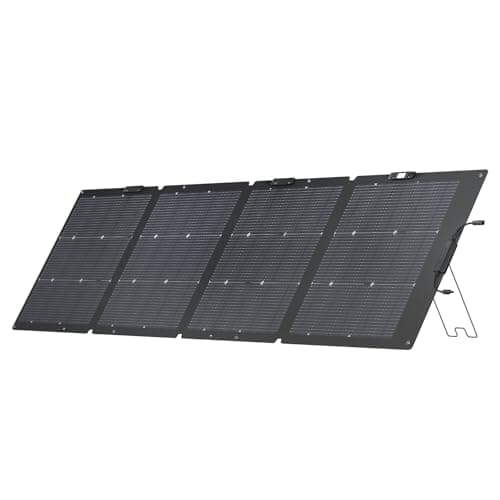
Rated watts are the least useful number on the box
Panels are rated under standard test conditions — a defined irradiance, a defined cell temperature, a defined air mass — and those conditions do not occur in your yard.
In practice a panel returns meaningfully less than its rating, and the gap comes from things you can partly control:
- Angle. The single biggest lever. A panel square to the sun outperforms the same panel flat on the ground by a wide margin, which is why an adjustable stand matters more than a spec sheet line.
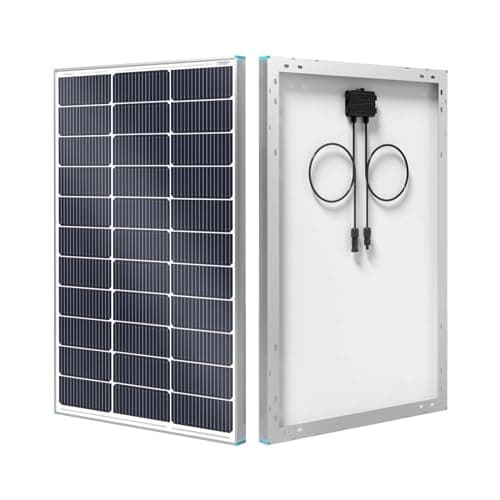
- Temperature. Output falls as cells heat. Renogy publishes −0.29% per °C for its panel; on a hot roof that is a real deduction from the rating.
- Partial shade. A single shaded cell can drag down a whole string. A branch shadow costs far more than its area suggests.
- Conversion losses. The charge controller inside the station takes its cut between panel and cells.
- Day length and latitude. The same panel in Arizona and in Washington are not the same panel.
Plan on real-world output well below the rating and you will not be disappointed. Cloudy-day performance covers the worse case in detail.
Buy for the connector first
This is where money gets wasted. A panel that does not physically connect to your station is worth nothing, and adapters are not always available.
| Connector | Where you see it | Notes |
|---|
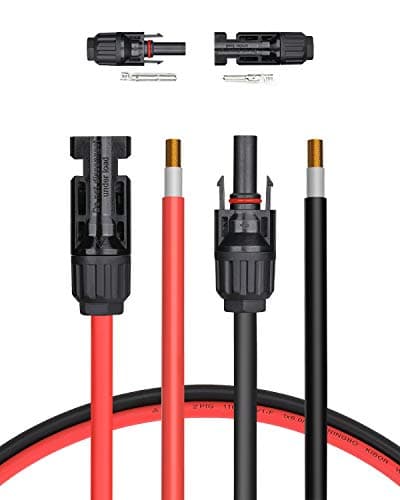
| MC4 | The industry standard; most third-party panels | Most stations accept it directly or via a supplied adapter |
|---|
| XT60 | Common station input | MC4-to-XT60 adapters are widely available |
|---|
| Anderson | RV and 12V equipment | Adapters exist; check polarity carefully |
|---|
| Proprietary | Some brand-matched panels | May only work with that manufacturer's stations |
|---|
Connector fitment is a compatibility question, not a performance one, and it is the most common reason a panel purchase fails. The connector guide covers series versus parallel wiring and the voltage limits that go with it.
Match the panel to the station, not to a wish
Every power station has a maximum solar input, in both watts and volts. Exceeding the wattage limit wastes money — the station simply will not take more. Exceeding the voltage limit can damage it.
- Find your station's maximum solar input in watts. Buying 400W of panel for a station that accepts 200W buys you nothing.
- Find its input voltage range. Panels wired in series add voltage. Two 200W panels in series can exceed the ceiling on smaller units.
- Then size for what you need. A rough rule: a panel rated at roughly a third of your battery's capacity in watt-hours will refill it across a good day.
The panel-count arithmetic works this through properly.
Folding or rigid?
The question is really whether the panel gets deployed or not.
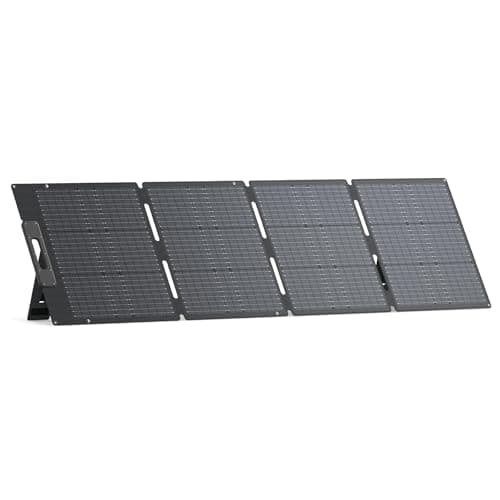
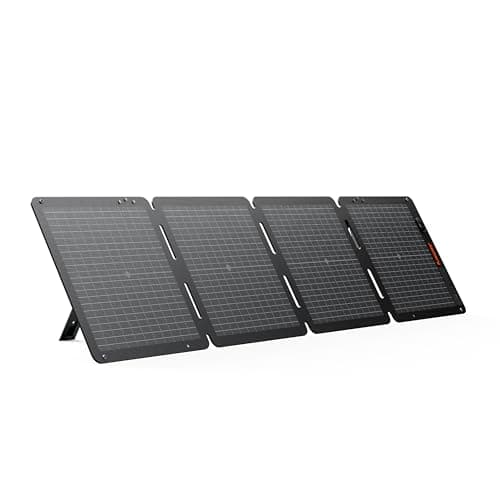
Folding panels pack away, travel, and can be aimed at the sun and re-aimed through the day. They cost more per watt and they only produce when somebody sets them out.
Rigid panels are cheaper per watt, survive permanent outdoor mounting, and produce every day with no human involvement. Mounted on a shed or a cabin roof, a fixed 100W panel will generate far more across a year than a folding 200W panel that gets used four times.
For camping and for occasional outage use, folding. For a cabin, an RV, or a shed where a battery lives permanently, rigid.
What a panel does not do
Portable panels recharge a battery. They do not power a house, and no number of folding panels adds up to whole-home solar — that is a roof-mounted, permitted, installer-fitted project with different equipment entirely.
The realistic role is this: a battery is a bucket with a fixed size, and a panel turns it into a daily allowance. That is the difference between three days of backup and indefinite backup, and it is the reason to buy one. Whether the whole category is worth it takes the argument further.