Watts or watt-hours? Both, and they answer different questions
Watts is the biggest thing you can run at one instant. For camping this is almost never the constraint, because almost nothing you bring is large.
Watt-hours is how much you can run across the trip. This is nearly always the constraint, and it is what the arithmetic below works out.
The exceptions — the items that make watts the constraint — are an electric kettle, a coffee maker, a microwave in an RV and an air conditioner. If none of those are on your list, size for watt-hours and ignore the inverter rating.
The daily arithmetic
Build your own total from this. Most people are surprised how low it lands.
| Item | Per day | Notes |
|---|
| Two phones | About 30 Wh | Roughly 15 Wh per full charge |
|---|
| Headlamps and a lantern | Under 20 Wh | Most run on their own cells for days |
|---|
| Tablet or e-reader | 10-40 Wh | An e-reader is negligible |
|---|
| Camera batteries, two | 30-50 Wh | More for video |
|---|
| Laptop | 50-200 Wh | Depends entirely on hours of use |
|---|
| Starlink or a mobile hotspot | 250-1,000 Wh | The quiet giant — check yours before assuming |
|---|
| CPAP, no humidifier | 250-350 Wh per night | The humidifier can double it |
|---|
| 12V compressor fridge | 250-600 Wh | Strongly dependent on ambient temperature |
|---|
| String lights, LED | 20-50 Wh | Four hours an evening |
|---|
| Electric kettle, one boil | About 100 Wh | But needs 1,500 W of inverter to do it |
|---|
Device figures come from typical battery capacities; CPAP, fridge and connectivity ranges are the bands used across this site. Your fridge figure depends heavily on how hot it is.
Three worked trips
| Trip | Daily total | Three nights needs |
|---|
| Tent, two people, phones and lights | About 70 Wh | About 210 Wh — a 292Wh battery, no panel |
|---|
| Car camping with a laptop and camera | About 200 Wh | About 600 Wh — 572Wh plus a panel, or 1,000Wh |
|---|
| Van with a 12V fridge and a CPAP | About 800 Wh | About 2,400 Wh — 1,000Wh plus 200W of panel |
|---|
The third row is the useful lesson. Once a fridge and a CPAP are both on the list, the battery alone stops being the answer and a panel becomes part of the plan rather than an accessory.
Add the losses, then round up
Two adjustments turn a total into a purchase.
Take about 15% off the battery's rating. Inverter conversion is not free, so a 500Wh battery delivers roughly 425Wh of AC. DC output through the car socket or USB is more efficient, which is one reason 12V fridges are worth the fuss.
Then add a margin. Trips run long, weather turns, and somebody always brings something you did not plan for. Twenty percent is reasonable.
Where solar actually helps
The honest thresholds, using the 400-500Wh per 100W of panel figure this site uses for a good summer day.
- One or two nights: no panel. The battery covers it and the panel is dead weight.
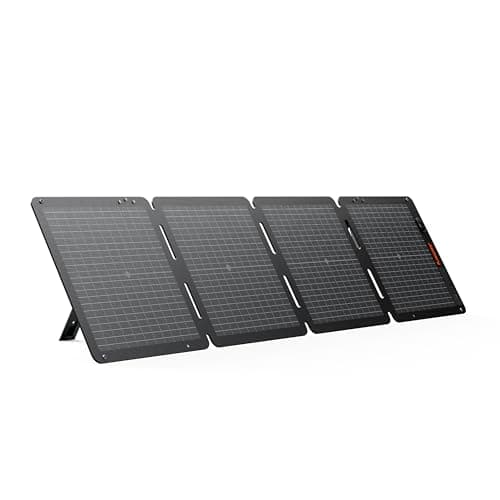
- Three to five nights: 100W of panel turns a 500Wh battery into something that lasts indefinitely for a modest load.
- A week or more with a fridge: 200W minimum, and expect to move the panel through the day.
- Under trees: assume a fraction of those figures. Shade is the constraint solar handles worst.
What to leave at home
The cheapest watt-hour is the one you do not use, and camping is the easiest place to apply that.
Anything with a heating element — kettle, coffee maker, toaster, hair dryer — is both a huge instantaneous draw and a meaningful chunk of a camping battery. A propane stove boils water for a fraction of the fuss; the cooking page covers the options.
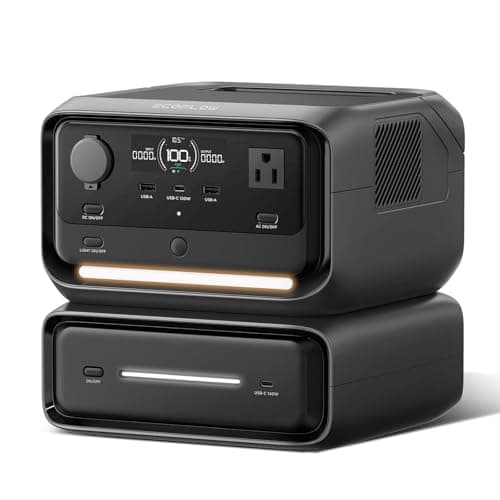
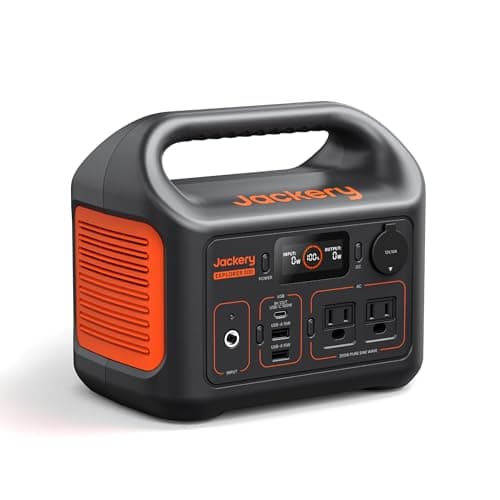
The camping power station roundup covers the units, and the camping and RV scenario page works through the RV case where air conditioning changes everything.
The short version
- Most tent trips are under 100 Wh a day. 292Wh covers a long weekend.
- A fridge or a CPAP roughly doubles it. Those two items set the size.
- Take 15% off for inverter losses, then add 20% margin.
- Past three nights, buy a panel rather than a bigger battery.