The three connectors you will meet
| Connector | Where it appears | Characteristics |
|---|
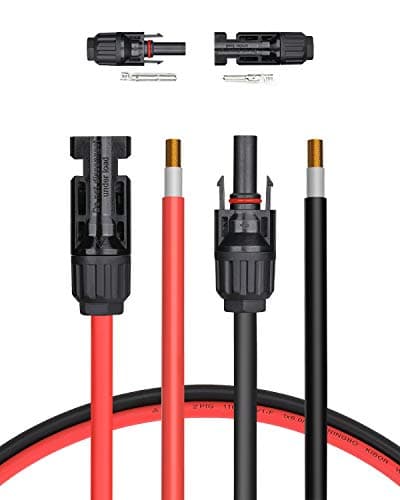
| MC4 | The de facto standard on panels; most third-party and rigid panels terminate in it | Locking, touch-safe, weather-sealed; needs a release tool to separate |
|---|
| XT60 | Common input socket on power stations | Compact, keyed, not weather-sealed; MC4-to-XT60 adapters are widely available |
|---|
| Anderson | RV, marine and 12V equipment | Genderless, high current capability, color-coded by voltage; easy to wire the wrong way round |
|---|
| Proprietary | Some brand-matched folding panels | Often only fits that manufacturer's stations; check for an adapter before buying |
|---|
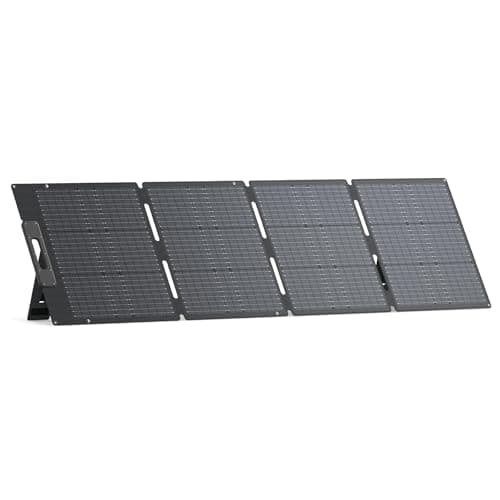
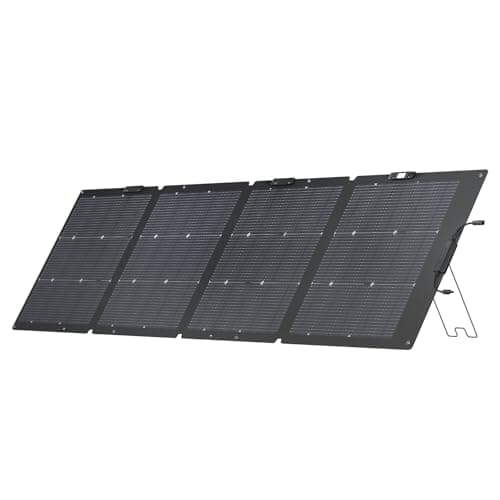
MC4 is a connector standard rather than a performance one — its presence tells you a panel will physically connect to most equipment, nothing about how well the panel works. The BLUETTI 200W panel and the BougeRV cable above both terminate in MC4; the EcoFlow and Jackery folding panels ship with their own leads.
The practical rule is short: buy MC4 where you have the choice, and adapt to your station's input rather than locking yourself to one brand's ecosystem.
Series or parallel — what actually changes
Two panels can be connected two ways, and the difference is not cosmetic.
- Series — positive of one to negative of the next. Voltages add; current stays the same. Two 20V panels become one 40V source.
- Parallel — positives together, negatives together. Currents add; voltage stays the same. Two 5A panels become one 10A source at the same voltage.
Both arrangements deliver the same total watts in ideal conditions. What differs is which of your station's two input limits you run into, and how the array behaves in shade.
| Behavior | Series | Parallel |
|---|
| Voltage | Adds | Unchanged |
|---|
| Current | Unchanged | Adds |
|---|
| Long cable runs | Better — higher voltage means lower loss | Worse — higher current means more loss |
|---|
| Partial shade | Worse — one shaded panel drags the string | Better — each panel is more independent |
|---|
| Risk to watch | Exceeding the input voltage ceiling | Exceeding the input current ceiling |
|---|
Which arrangement suits you depends entirely on your station's published maximum solar input voltage and current. Those two figures are in the manual and they are the numbers that decide this.
For most portable setups with a long cable and dappled shade, parallel is the safer default — it keeps voltage low and lets a shaded panel fail gracefully rather than dragging its neighbor down.
The cold-morning problem
This is the part that catches people out, and it is the reason a series string that worked all summer can damage something in February.
A panel's open-circuit voltage rises as it gets colder. Panels produce their highest voltage on a cold, bright morning with nothing drawing current from them — exactly the moment you plug them in.
This is not a fringe effect. The National Electrical Code addresses it directly: Article 690.7 requires that maximum system voltage be determined at the lowest expected temperature at the site, using the module's temperature coefficients or a correction table, precisely because a string sized at 25°C can exceed equipment ratings when it is genuinely cold.
For portable equipment the practical version is simpler:
- Leave headroom under your station's voltage ceiling. If two panels in series sit just under the limit at room temperature, they will not on a cold morning.
- Prefer parallel if you are near the limit. Parallel connections do not raise voltage at all.
- Read the panel's Voc, not its rated watts. Voltage is what damages a charge controller; watts are not.
Cable gauge and length
Every foot of cable costs a little voltage, and thinner cable costs more. Over the distances portable setups use, the loss is small but real — and it is entirely avoidable.
- Use 10 AWG for runs of 20 feet or more. That is what the extension above is.
- Buy one cable of the right length rather than joining two shorter ones. Every junction is a resistance and a failure point.
- Do not add length you do not need. The purpose of an extension is to put the panel in sun and the battery in shade, not to use the whole reel.
- Series wiring tolerates long runs better, because loss scales with current and series keeps current low.
Four safety points
- Never separate a connector under load. A DC arc does not self-extinguish the way an AC one does. Cover the panel, or disconnect at the station first.
- Panels are live whenever there is light. There is no off switch. A panel face-down or covered is the only way to make it safe to work on.
- Match connectors properly. Forcing dissimilar connectors together produces a joint that looks fine and heats up under load. Use a proper adapter.
- Check polarity on Anderson connectors. They are genderless, which makes them convenient and also makes reversed polarity easy.
Before you buy anything
Three numbers from your station's manual settle every question here:
- Maximum solar input in watts. Buying more panel than this gains nothing.
- Maximum solar input voltage. The limit that decides whether you can wire in series at all.
- Maximum solar input current. The limit that decides how many panels you can put in parallel.
With those three in hand, choosing the panel is straightforward, and working out how many you need is arithmetic.