Skip to content
Watt Warden

Home Standby

How Much Does a Whole House Generator Cost?

Nobody can quote you a number from a web page, and anyone who does is guessing. What this page can do is tell you what the quote is made of, so you can read one properly.

By Sawyer V.Updated Published How we work this out
An electrical supply cabinet installed beside a building.

Watt & Warden earns a commission on qualifying purchases made through links on this page, at no extra cost to you. It never changes a ranking, and our picks include products we tell you to skip. Full disclosure.

Why this page has no dollar figures

Standby generator cost varies by a factor of several across the United States, driven by things no web page knows about your house.

A quote depends on your local labor rates, your permit authority, the distance from the pad to the panel, whether a gas line already reaches the spot, the size and condition of your electrical service, your local code requirements, and current equipment availability.

Any site quoting you a single number is either describing one installation in one market or making it up. What is useful — and what follows — is knowing what the quote is made of, so you can compare two of them and see which line items are doing the work.

What a standby quote actually contains

Line itemShare of the totalWhat moves it
The generator itselfOften under halfKilowatt rating, air-cooled versus liquid-cooled, brand
Automatic transfer switchSignificantWhole-panel versus essential-circuits, amperage
Electrical labor and wiringSignificantDistance from pad to panel, whether the run is buried
Gas or propane connectionVariable, sometimes largeWhether a line reaches the pad; meter upgrade if not
The padSmallComposite versus poured concrete
Permits and inspectionSmall but mandatoryYour jurisdiction
Service panel upgradeOccasionally the largest surpriseAn old or undersized panel

Two things follow from that table. The machine is frequently the smaller half of the project, and the surprises are on the infrastructure side — a gas line that has to be extended, a meter that has to be upsized, or a panel that needs replacing before anything else can happen.

The three questions that move the number most

1. How far is the pad from the panel and the gas line? Conduit, trenching and pipe are priced by the foot. Siting the unit twenty feet from both rather than sixty changes the quote materially, and it is one of the few variables you control.

2. Whole panel or essential circuits? A whole-house automatic transfer switch backing everything is meaningfully more than an essential-circuits switch covering ten. It also drives the generator size up, which compounds — the sizing page covers that exercise.

3. Natural gas or propane? If a gas line already reaches near the pad, that is the cheap answer. Propane means a tank, a pad for it, a regulator and a delivery relationship — the fuel comparison covers the trade, and the tank sizing page covers how big it needs to be.

The costs that continue

A standby generator is not a one-time purchase, and this is the part most quotes present quietly.

  • Annual service. Oil, filters, plugs and an inspection, typically yearly or on an hour count — the maintenance page sets out what it involves.
  • The exercise cycle. The unit runs itself weekly or biweekly for ten to twenty minutes, burning fuel every time. Over a year that is a real gas bill line for a machine that has produced no useful power.
  • The starting battery. Three to five years, usually excluded from warranty as a consumable.
  • Fuel during an actual outage. On natural gas this is metered like anything else. On propane it is a delivery, at whatever the market rate is that week.
  • Service plans. Optional, and worth reading carefully — the warranty page covers what they typically do and do not include.

Reading two quotes against each other

The useful questions to ask every installer, so the comparison is like for like.

  • What kilowatt rating, and sized how? A dealer should be able to show the load calculation rather than a rule of thumb.
  • Whole panel or how many circuits? Two quotes for different switch types are not comparable.
  • Is the gas connection included, and does it assume an existing line? This is the commonest place a quote grows later.
  • Is a panel upgrade included or excluded? Get it in writing either way.
  • Who pulls the permit, and is the fee in the number?
  • What is the warranty, in hours and years, and what is excluded?
  • What does year-one and year-two service cost?

Where the money actually goes furthest

Being blunt, because this page exists to help people spend well rather than spend more.

For a household with a few short outages a year, a 7,500W portable plus a manual transfer switch covers the same circuits for a fraction of the total, and the ongoing cost is a few hours of maintenance a year.

Standby earns its price in three situations: outages that last days rather than hours, a house that is regularly empty or occupied by someone who cannot operate a generator, and a property where a well pump means an outage removes water. The worth-it page works through that decision properly.

The short version

  • The machine is often under half the project. Installation is the rest.
  • Pad-to-panel distance and the gas connection move the number most.
  • Budget the ongoing costs — service, exercise fuel and a battery every few years.
  • Get quotes that specify the same switch type or they are not comparable.

Quick picks

#ProductBest forPrice
1
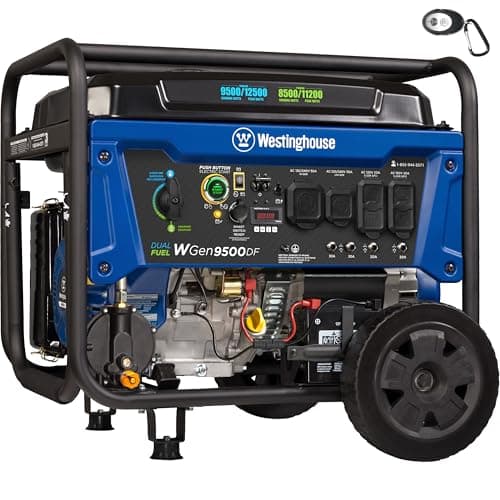
Westinghouse WGen9500DF

The alternative that costs a fraction

Westinghouse WGen9500DF

9,500 running watts of dual fuel with both 240V outlets and remote start.

Most households, honestly
$999.00 · Check price on Amazon

#ad how this is funded · price as of October 21, 2026

2
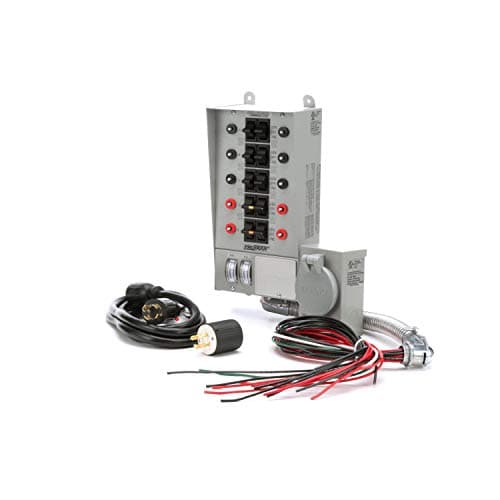
Reliance Controls 31410CRK Pro/Tran

The line item both routes share

Reliance Controls 31410CRK Pro/Tran

A 10-circuit manual transfer switch rated 30A / 7,500W with two watt meters.

Reaching hardwired circuits, either way
$475.20 · Check price on Amazon

#ad how this is funded · price as of October 21, 2026

3
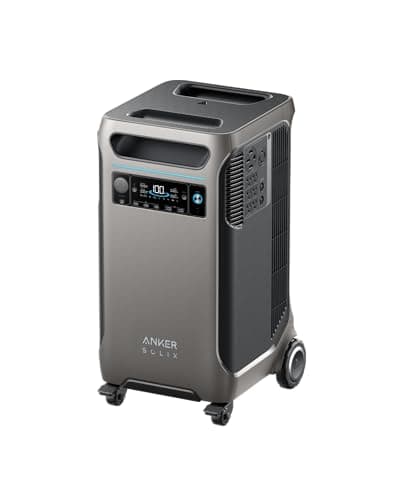
Anker SOLIX F3800

The battery route

Anker SOLIX F3800

3,840Wh of LiFePO4 with 6,000W continuous and true 120/240V split-phase.

Short outages, silently, with no fuel contract
$1,759.99 · Check price on Amazon

#ad how this is funded · price as of October 21, 2026

4
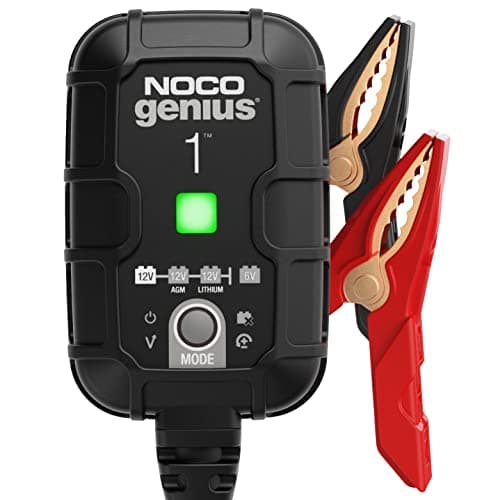
NOCO GENIUS1 battery charger and maintainer

The cheapest ongoing cost

NOCO GENIUS1 battery charger and maintainer

A 1A maintainer with desulfation, rated down to -4 degF.

The battery that stops standby units starting
$29.95 · Check price on Amazon

#ad how this is funded · price as of October 21, 2026 · $39.95 25% off

Prices come from the retailer at page-build time and change constantly. Where no live price is available the button reads “Check price” rather than showing a number we cannot stand behind.

The picks in full

01 — The alternative that costs a fraction

Westinghouse WGen9500DF

9,500 running watts of dual fuel with both 240V outlets and remote start.

This is the comparison that belongs at the top of a cost page. A large portable plus a transfer switch delivers most of the practical capability of a standby installation for a small fraction of the total.

What you give up is automatic operation — somebody has to walk outside, start it and throw the switch.

The honest catch: that difference matters enormously if the house is ever empty during an outage, or if the person at home cannot safely operate it.

Skip it ifnobody will be home to start it, or outages last a week.

Westinghouse WGen9500DF
$999.00 · Check price on Amazon

#ad how this is funded · price as of October 21, 2026

Published specifications for the Westinghouse WGen9500DF
SpecificationPublished figure
Output (gasoline)9,500 running W / 12,500 peak W
FuelGasoline or propane (dual fuel)
Engine457cc 4-stroke OHV, cast iron sleeve
Tank6.6 gal (25 L)
Run timeup to 12 h on a full tank
Transfer-switch outlet120/240 V L14-30R, 30 A
RV outlet120/240 V 14-50R, 50 A
StartingPush-button electric with remote key fob
Warranty3-year limited

Source: Westinghouse — WGen9500DF product specifications. These are the manufacturer's published figures, not ours — we have not tested this unit.

02 — The line item both routes share

Reliance Controls 31410CRK Pro/Tran

A 10-circuit manual transfer switch rated 30A / 7,500W with two watt meters.

A transfer switch and an inlet are required whichever route you take. On the portable route you buy them separately; on the standby route an automatic switch is part of the package.

Understanding that helps you read a standby quote, because the switch and its wiring are a meaningful share of it.

The honest catch: this still needs an electrician and a permit — the installation cost page covers that side.

Skip it ifyou are buying standby, where an automatic switch is included.

Reliance Controls 31410CRK Pro/Tran
$475.20 · Check price on Amazon

#ad how this is funded · price as of October 21, 2026

Published specifications for the Reliance Controls 31410CRK Pro/Tran
SpecificationPublished figure
Circuits10 — six 15 A and four 20 A single-pole breakers
Rating30 A, up to 7,500 W
MeteringTwo watt meters for balancing the load
SwitchingBreak-before-make double-throw, Line / Off / Gen
BackfeedMechanically prevented — the grid cannot be energized
InstallationLicensed electrician; a permit is usually required

Source: Reliance Controls — Pro/Tran 31410CRK product page. These are the manufacturer's published figures, not ours — we have not tested this unit.

03 — The battery route

Anker SOLIX F3800

3,840Wh of LiFePO4 with 6,000W continuous and true 120/240V split-phase.

The third option people rarely price. Split-phase output reaches hardwired circuits like a generator does, with no fuel, no annual service and no noise.

It costs more per kilowatt-hour delivered and far less to own, which is the trade — the Powerwall versus generator page works it through.

The honest catch: it runs out, and a standby generator on a gas line does not.

Skip it ifoutages last days. A battery is a fixed store of energy.

Anker SOLIX F3800
$1,759.99 · Check price on Amazon

#ad how this is funded · price as of October 21, 2026

Published specifications for the Anker SOLIX F3800
SpecificationPublished figure
Capacity3,840 Wh
Cell chemistryLiFePO4
AC output6,000 W continuous, 9,000 W surge
Voltage120V / 240V split-phase
Cycle life3,000+ cycles to 80% capacity
Recharge1,800 W AC, up to 2,400 W solar
ExpansionUp to six expansion batteries, 26.9 kWh total
Warranty5 years
Current Amazon listingRenewed. Anker's new first-party F3800 listing is currently unavailable and the model has been succeeded by the F3800 Plus; the unit itself is unchanged

Source: Anker SOLIX — F3800 product specifications. These are the manufacturer's published figures, not ours — we have not tested this unit.

04 — The cheapest ongoing cost

NOCO GENIUS1 battery charger and maintainer

A 1A maintainer with desulfation, rated down to -4 degF.

The single commonest reason a standby generator fails to start is a flat starting battery, and batteries are usually excluded from warranties as consumables.

A maintainer is a trivial purchase against a call-out fee and a missed outage.

The honest catch: it needs an outlet near the generator pad, which not every installation provides.

Skip it ifyour service plan explicitly covers battery replacement.

NOCO GENIUS1 battery charger and maintainer
$29.95 · Check price on Amazon

#ad how this is funded · price as of October 21, 2026 · $39.95 25% off

Published specifications for the NOCO GENIUS1 battery charger and maintainer
SpecificationPublished figure
Output1 A DC at 6 V or 12 V
Capacity rangeUp to 30 Ah, maintains larger batteries
ChemistriesFlooded, gel, AGM, SLA, maintenance-free and LiFePO4
RepairDetects sulfation and acid stratification, desulfation mode
RecoveryCharges from 1 V, or from 0 V in Force Mode
CompensationThermal sensor adjusts charging for ambient temperature
Operating range-4°F to 104°F
Size3.5 x 2.3 x 1.3 in

Source: NOCO — GENIUS1 product page. These are the manufacturer's published figures, not ours — we have not tested this unit.

How these were chosen

We did not test these. Nobody at Watt & Warden has plugged one in. What we did instead: read the manufacturer's published specifications, compile them into a table where the figures line up, and compute the numbers manufacturers leave out — runtime against a real appliance load, and what an hour of running actually costs.

Anything that could not be sourced was left out rather than estimated, and every pick names the buyer who should skip it. The full method is here, including where it is weaker than a publisher with a test bench.

Questions people actually ask

How much does a whole house generator cost?

It varies by a factor of several across the United States, driven by local labor rates, permit requirements, how far the pad is from the panel and the gas line, and the condition of your electrical service. What is consistent is the structure: the generator itself is frequently under half the project, with the transfer switch, electrical labor and fuel connection making up the rest.

What makes a standby generator quote go up?

Three things dominate. Distance from the pad to the panel and the gas line, because conduit, trenching and pipe are priced by the foot. Whether the transfer switch covers the whole panel or a set of essential circuits. And whether a gas line already reaches the spot -- extending one, or upsizing a meter, is the commonest large surprise.

What are the ongoing costs of a standby generator?

Annual service including oil, filters and plugs; the weekly or biweekly exercise cycle, which burns fuel year-round for a machine producing no useful power; a starting battery every three to five years, usually excluded from warranty as a consumable; and fuel during actual outages.

Is a portable generator cheaper than a whole house generator?

Substantially, and it covers the same circuits. A large portable plus a manual transfer switch delivers most of the practical capability for a fraction of the total, with far lower ongoing cost. What you give up is automatic operation -- somebody has to go outside, start it and throw the switch.

What should I ask an installer before signing?

What kilowatt rating and how was it sized; whole panel or how many circuits; whether the gas connection is included and whether it assumes an existing line; whether a panel upgrade is included or excluded; who pulls the permit and whether the fee is in the number; the warranty in hours and years with exclusions; and what year-one and year-two service cost.

Sources

Every figure on this page comes from a published source. We have not tested this equipment, so the specifications are the manufacturer's and the statistics are the dataset's — the arithmetic on top of them is ours, and it is shown in full so you can check it. How we work this out.