Skip to content
Watt Warden

Home Standby

Natural Gas vs Propane Standby Generator

Generac rates the same 24kW Guardian at 24kW on propane and 21kW on natural gas. One fuel gives you more power; the other gives you a supply that never runs out.

By Sawyer V.Updated Published How we work this out
A natural gas meter on the side of a house.

Watt & Warden earns a commission on qualifying purchases made through links on this page, at no extra cost to you. It never changes a ranking, and our picks include products we tell you to skip. Full disclosure.

Quick picks

#ProductBest forPrice
1
No photo

The same trade, at portable scale

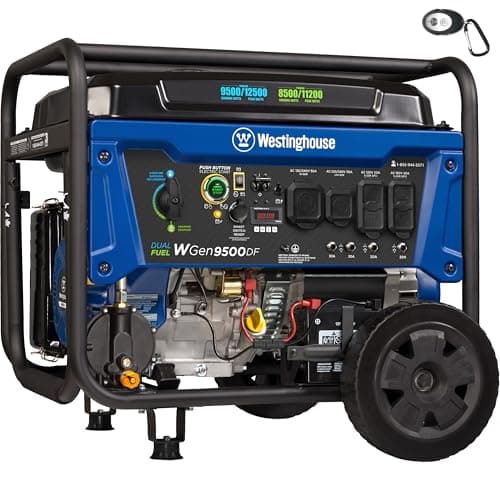
Westinghouse WGen9500DF

9,500 running watts on gasoline, with propane capability and electric start.

Seeing the fuel penalty before you commit to it
2
No photo

The portable route to the same circuits

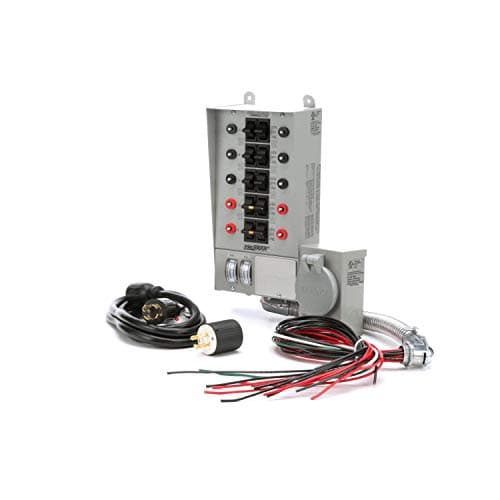
Reliance Controls 31410CRK Pro/Tran

A 10-circuit manual transfer switch rated 30A / 7,500W with mechanical backfeed prevention.

Feeding the furnace, well pump and fridge
3
No photo

For the failure neither fuel covers

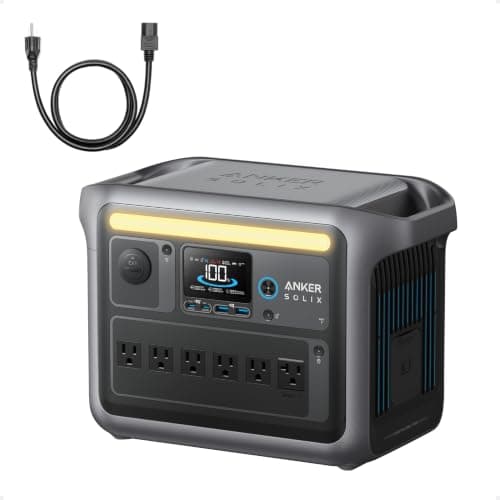
Anker SOLIX C1000

1,056Wh of LiFePO4 with 1,800W output — enough for a fridge and the essentials.

A gas supply interruption
4
No photo

Required with either fuel

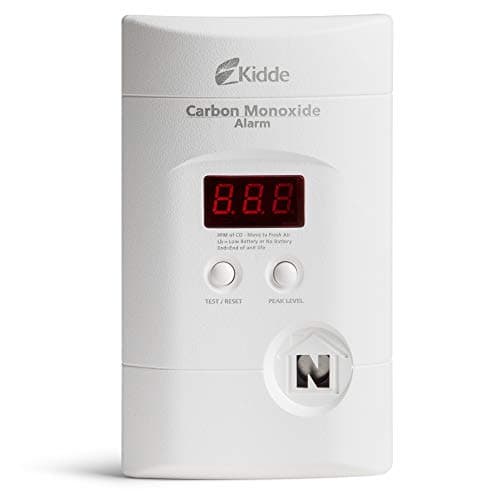
Kidde Nighthawk KN-COPP-3 CO alarm

A plug-in CO alarm with battery backup and a digital ppm display.

Every level of the house

Prices come from the retailer at page-build time and change constantly. Where no live price is available the button reads “Check price” rather than showing a number we cannot stand behind.

The output penalty, with a real number

This is the clearest data point in the whole comparison, and it comes straight from a manufacturer's own catalog.

Generac rates the Guardian 24kW at 24 kW on liquid propane and 21 kW on natural gas — the same engine, the same unit, a 3 kW difference. That is a 12.5% reduction for choosing natural gas.

The reason is energy density. Propane carries more energy per unit volume than natural gas, so an engine drawing the same volume of fuel makes less power on gas.

Practically, this means you size against the fuel you will actually use. A unit marketed as 24kW is a 21kW machine if you connect it to the gas main, and if your calculation needed 22kW you have just under-bought.

The comparison

Natural gasPropane
Output from the same unitLower — 21 kW on the Guardian 24kWHigher — 24 kW
SupplyUnlimited, from the mainFinite — whatever is in the tank
On-site storageNone neededA tank, sited and permitted
Refilling during an outageNot applicableA delivery truck that may not come
Fuel goes staleNoNo
Cold-weather behaviorUnaffectedVaporization slows in severe cold
Available everywhereNo — needs a main at the propertyYes
Vulnerable toMain interruption after earthquakes or breaksRunning the tank dry

The 21/24 kW figures are Generac's published dual ratings for the Guardian 24kW. Everything else is the general behavior of the two fuels rather than one manufacturer's claim. Fuel prices vary far too much by region and season for a running-cost comparison to be useful here.

Natural gas: the case for

It never runs out. That is the whole argument and it is a strong one. A gas-fed standby unit can run for a week without anyone doing anything, which is precisely the scenario people buy standby generators for.

No tank to site, no permit for the tank, no delivery to schedule, nothing to monitor. The weekly exercise cycle draws from the main and appears as a small line on the gas bill rather than as a slowly emptying tank.

And in an extended outage, "unlimited" is worth more than 12.5% of output, because the thing that actually ends most standby runs is fuel rather than capacity.

Natural gas: the case against

  • The output penalty is real and you have to size around it. Compare units on their natural-gas rating.
  • It requires a main. Rural properties frequently have no gas service, which settles the question.
  • Supply pressure and pipe sizing matter. A standby unit is a large gas appliance, and the existing pipe run to the house may need upsizing. This is a real installation cost that often surprises people.
  • The main can be interrupted. Rare, but correlated with exactly the disasters you are preparing for.

Propane: the case for

  • More output from the same unit — 24 kW rather than 21.
  • Available anywhere. No main required, which makes it the default for rural properties.
  • You own the fuel. A full tank before the season is genuine independence from any utility.
  • It does not degrade. Unlike gasoline, propane stored for years is still propane.
  • It may already be there. If you heat, cook or dry with propane, the tank and the supplier relationship exist already.

Propane: the case against

  • The tank is finite. This is the whole trade. Consumption at load is substantial and a multi-day outage will make a real dent.
  • Refilling during a widespread outage is uncertain. Delivery trucks are also affected by the storm, and everyone calls at once.
  • The weekly exercise cycle draws it down steadily, which owners are sometimes surprised by. Factor it into your refill schedule.
  • Cold slows vaporization. A larger tank performs better than a small one in severe cold, which matters because winter is when you need it.
  • Siting and permits. The tank has setback requirements and takes up yard space.

How to actually choose

For most people this is decided by circumstance rather than preference:

  • You have a gas main at the property. Choose natural gas, and size against the natural-gas rating. Unlimited runtime beats 12.5% of output for the outages standby generators exist for.
  • You have no main. Propane, and size the tank for the longest outage you consider plausible rather than the average one.
  • You already have a propane tank for heating. Propane, almost certainly — the infrastructure and the supplier are already there.
  • You are in earthquake country with a main. Worth talking to your installer about whether propane, or a battery fallback, better suits a region where gas supply and power fail together.

Sizing follows the fuel, not the other way round

The sequence that avoids the common mistake:

  1. Decide the fuel from the list above — it is usually determined by your property.
  2. Work out what you actually need to run.
  3. Compare units on their rating for your fuel, not on the headline number.
  4. Add margin, then talk to an installer about gas pipe sizing or tank siting before committing.

Sizing a standby unit works through the load calculation, and the installation guide covers what the fuel choice does to the job itself.

The picks in full

01The same trade, at portable scale

Westinghouse WGen9500DF

9,500 running watts on gasoline, with propane capability and electric start.

Worth naming because the output penalty this page is about shows up identically on portables. Westinghouse publishes 5,300W on gasoline and 4,800W on propane for its WGen5300DF — the same phenomenon, documented at a price you can test it at.

If you are undecided about a standby unit, a large dual-fuel portable plus a transfer switch covers the same critical circuits for a fraction of the installed cost, at the price of starting it yourself.

Skip it ifyou have already decided on a permanently installed unit. This is a different purchase.

Published specifications for the Westinghouse WGen9500DF
SpecificationPublished figure
Output (gasoline)9,500 running W / 12,500 peak W
FuelGasoline or propane (dual fuel)
Engine457cc 4-stroke OHV, cast iron sleeve
Tank6.6 gal (25 L)
Run timeup to 12 h on a full tank
Transfer-switch outlet120/240 V L14-30R, 30 A
RV outlet120/240 V 14-50R, 50 A
StartingPush-button electric with remote key fob
Warranty3-year limited

Source: Westinghouse — WGen9500DF product specifications. These are the manufacturer's published figures, not ours — we have not tested this unit.

02The portable route to the same circuits

Reliance Controls 31410CRK Pro/Tran

A 10-circuit manual transfer switch rated 30A / 7,500W with mechanical backfeed prevention.

A standby generator includes an automatic transfer switch as part of the installation. This is the manual equivalent for a portable, and it reaches the same hardwired loads.

The comparison is worth making honestly: a portable plus this switch costs a fraction of an installed standby unit and covers the same circuits — you just have to go outside and start it.

Skip it ifyou are installing a standby unit. That comes with its own automatic transfer switch.

Published specifications for the Reliance Controls 31410CRK Pro/Tran
SpecificationPublished figure
Circuits10 — six 15 A and four 20 A single-pole breakers
Rating30 A, up to 7,500 W
MeteringTwo watt meters for balancing the load
SwitchingBreak-before-make double-throw, Line / Off / Gen
BackfeedMechanically prevented — the grid cannot be energized
InstallationLicensed electrician; a permit is usually required

Source: Reliance Controls — Pro/Tran 31410CRK product page. These are the manufacturer's published figures, not ours — we have not tested this unit.

03For the failure neither fuel covers

Anker SOLIX C1000

1,056Wh of LiFePO4 with 1,800W output — enough for a fridge and the essentials.

A natural-gas standby unit depends entirely on the gas main. That is usually more reliable than the electrical grid, but the events that interrupt it — earthquakes, major storms, main breaks — are exactly the events that take the power out.

A modest battery is cheap insurance against the one scenario a gas-fed standby system is architecturally unable to handle.

Skip it ifyou have a propane tank and keep it full. That is already the fallback.

Published specifications for the Anker SOLIX C1000
SpecificationPublished figure
Usable capacity1,056 Wh
Cell chemistryLiFePO4 (LFP)
AC output1,800 W continuous / 2,400 W SurgePad
Cycle life3,000 cycles
Wall recharge80% in 43 min, full in 58 min
Max solar input600 W (full solar recharge ~1.8 h)
Ports11 total, including 6 AC on panel-equipped bundles

Source: Anker — SOLIX C1000 product specifications. These are the manufacturer's published figures, not ours — we have not tested this unit.

04Required with either fuel

Kidde Nighthawk KN-COPP-3 CO alarm

A plug-in CO alarm with battery backup and a digital ppm display.

A permanently installed unit sits at a code-specified distance and is far safer than a portable. It still burns fuel, still produces exhaust, and still runs unattended for hours while everyone sleeps.

Check where the exhaust points relative to windows, vents and any HVAC outdoor air intake, after installation and after any landscaping change.

Skip it ifyours are current and tested. Check the printed expiration date.

Published specifications for the Kidde Nighthawk KN-COPP-3 CO alarm
SpecificationPublished figure
SensorElectrochemical
Power120 V AC plug-in with 9 V battery backup
DisplayDigital, 30–999 ppm, refreshed every 15 s
Alarm85 dB
MemoryPeak-level memory of the last detection or test
Warranty10-year limited; UL certified

Source: Kidde — Nighthawk KN-COPP-3 product page. These are the manufacturer's published figures, not ours — we have not tested this unit.

How these were chosen

We did not test these. Nobody at Watt & Warden has plugged one in. What we did instead: read the manufacturer's published specifications, compile them into a table where the figures line up, and compute the numbers manufacturers leave out — runtime against a real appliance load, and what an hour of running actually costs.

Anything that could not be sourced was left out rather than estimated, and every pick names the buyer who should skip it. The full method is here, including where it is weaker than a publisher with a test bench.

Questions people actually ask

Does a standby generator produce less power on natural gas?

Yes, and it is a published difference. Generac rates the Guardian 24kW at 24kW on liquid propane and 21kW on natural gas -- the same engine, a 12.5% reduction, caused by propane's higher energy density per unit volume. Size against the rating for the fuel you will actually use.

Which is better for a standby generator, natural gas or propane?

Natural gas if you have a main, because unlimited runtime beats 12.5% of output for the multi-day outages standby units exist for. Propane if you do not, or if you already have a tank for heating. For most households the property decides it rather than preference.

How long will a propane tank run a standby generator?

It depends on tank size and load, and a multi-day outage makes a real dent. Two things owners underestimate: the weekly exercise cycle draws the tank down steadily between outages, and delivery trucks are affected by the same storm you are -- so size the tank for the longest outage you consider plausible.

Can a standby generator run on both natural gas and propane?

Most gaseous standby units can be configured for either, which is why manufacturers publish two ratings for the same model. The conversion is done at installation rather than switched day to day, so treat it as a decision made once with your installer rather than a dual-fuel feature.

What happens if the gas main is interrupted?

A natural-gas standby unit stops, and the events that interrupt mains -- earthquakes, major storms, main breaks -- correlate with the outages you bought it for. It is rare, but it is the one failure the system cannot cover itself. A modest battery or a small portable is the cheap answer.

Sources

Every figure on this page comes from a published source. We have not tested this equipment, so the specifications are the manufacturer's and the statistics are the dataset's — the arithmetic on top of them is ours, and it is shown in full so you can check it. How we work this out.