Start with the number that decides it
Not the price. The question is how many hours a year you are actually without power, and most people have never looked it up.
The national average is around eleven hours a year, but that average is almost useless because of its shape: roughly two hours from ordinary faults, and nearly nine from major events. A typical year is several brief interruptions plus, occasionally, one long one.
Your own number is what matters, and your utility publishes reliability data. The outage duration page covers how to find it. Someone with six hours a year is having a completely different conversation from someone with sixty.
The four situations where standby wins
These are specific, and if none of them describe your house the answer is probably no.
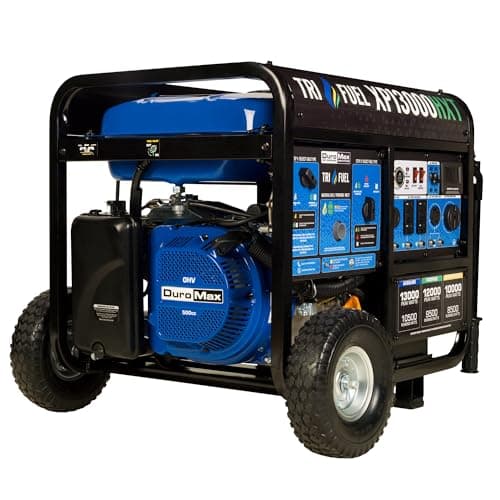
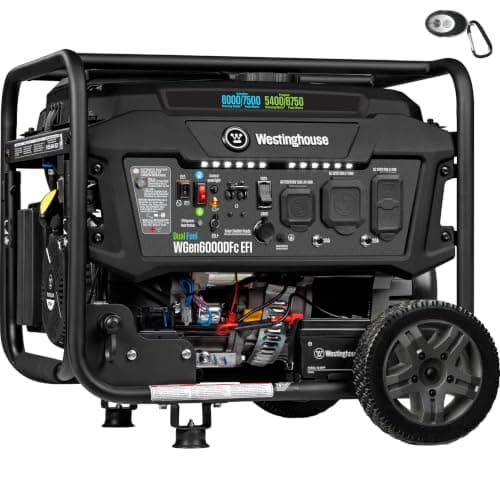
1. Outages that last days, not hours. Ice storms, hurricane aftermath, rural distribution lines restored last. A portable run in blocks handles this, but for a week it means somebody managing fuel and start cycles daily.
2. The house is regularly empty. A second home, a rental property, or a household that travels. A portable generator does nothing at all when nobody is there, and the failures that happen in an empty house — frozen pipes, a flooded basement, a freezer full of food — are the expensive ones.
3. Somebody cannot operate a generator. An older resident, a household where the person who would start it travels for work, or anyone for whom walking outside in an ice storm to pull a cord is not realistic.
4. Medical equipment. Oxygen concentrators, dialysis, powered medical beds. The automation stops being convenience and becomes the point — the medical devices page covers the layered approach that case needs.
What you are actually paying for
It is worth naming precisely, because the marketing blurs it.
| Capability | Portable + transfer switch | Standby |
|---|
| Reaches hardwired circuits | Yes | Yes |
|---|
| Runs indefinitely on fuel | Yes, with cans | Yes, on a gas line |
|---|
| Starts with nobody home | No | Yes |
|---|
| Switches over automatically | No | Yes, in 10-30 seconds |
|---|
| Needs fuel fetched | Yes, and during the week it is hardest | No, on natural gas |
|---|
| Annual service | An hour, twice a year, by you | A paid visit |
|---|
| Burns fuel when not needed | No | Yes — weekly exercise cycle |
|---|
| Can be stolen | Yes, routinely after storms | No |
|---|
Two rows carry almost all the value: it starts without you, and it switches over automatically. Everything else is close enough to be a detail.
The resale argument, handled honestly
Standby generators are often sold on the claim that they add value to a home or pay for themselves at sale.
The honest position is that this is market-specific and not something any national figure describes. In an area with frequent, well-known outages a buyer may value it substantially. In an area with reliable power it is an appliance that needs servicing.
Treat any specific percentage-of-cost-recovered claim from a salesperson with the skepticism you would apply to any other unsourced number, and ask your own realtor what it does in your market. That is a question with a real local answer.
The middle options nobody prices
The choice is presented as portable-or-standby, and there are two arrangements in between that suit a lot of households better.
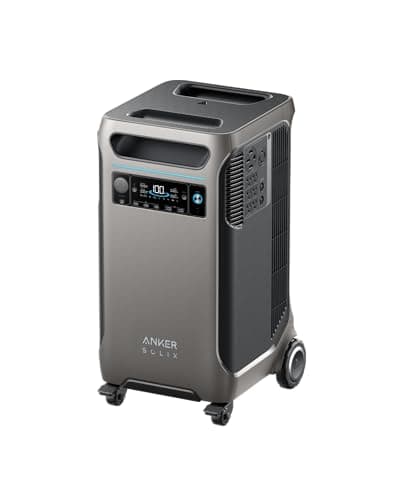
A battery on the critical circuits, plus a portable for the long one. The battery handles the several short outages a year silently and automatically. The portable comes out twice a decade for the multi-day event. Together they cost less than sizing either one to do both.
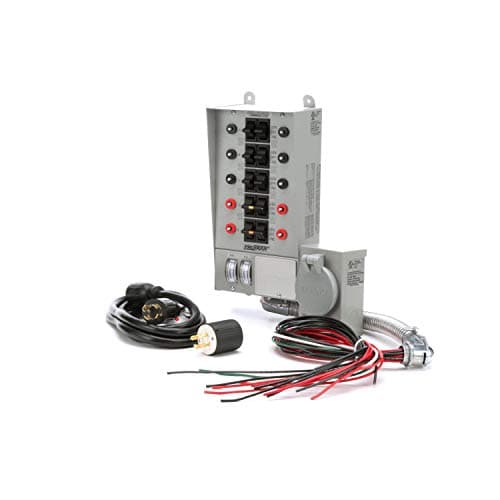
A portable with remote start and an interlock kit. Cheaper than a transfer switch, and remote start removes most of the friction from block running. The interlock comparison covers whether that is legal on your panel.
A five-minute test
Answer these about your own house. Two or more yeses and standby starts making sense.
- Do your outages regularly last more than twelve hours?
- Is the house empty for stretches during outage season?
- Would the person at home be unable to start and manage a portable?
- Does anyone in the house depend on powered medical equipment?
- Does an outage remove your water, because you are on a well?
- Is the load list genuinely whole-house — central air, electric heat — rather than a critical-circuits list?
Zero or one yes, and the portable route almost certainly serves you better. The cost page covers what a standby quote is actually made of if you decide to get one.
The short version
- Look up your own outage hours first. The national average tells you nothing.
- You are buying automation, not capability. A portable plus a switch reaches the same circuits.
- Four situations flip it: multi-day outages, an empty house, an operator who cannot, or medical equipment.
- Price the middle options too. A battery plus a portable often beats both.