Skip to content
Watt Warden

Power Stations

EcoFlow DELTA 2 Max Review: The Fast, Growable One

Most batteries are bought once and kept as bought. This one is designed to be bought twice, and the second purchase is where the arithmetic gets interesting.

By Sawyer V.Updated Published How we work this out
EcoFlow DELTA 2 Max

Watt & Warden earns a commission on qualifying purchases made through links on this page, at no extra cost to you. It never changes a ranking, and our picks include products we tell you to skip. Full disclosure.

Quick picks

#ProductBest forPrice
1
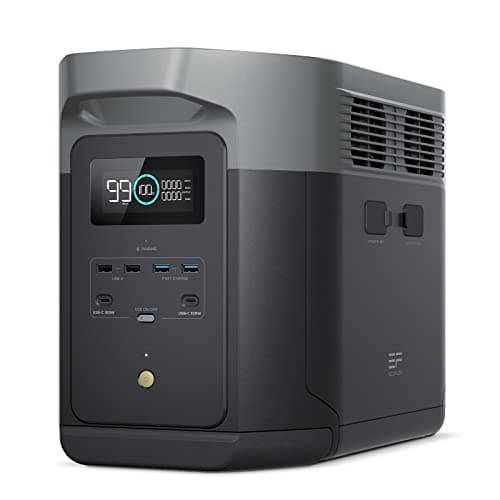
EcoFlow DELTA 2 Max

The unit under review

EcoFlow DELTA 2 Max

2,048Wh expandable to 6,144Wh, 2,400W continuous, 0-80% in 43 minutes, 1,000W of solar.

Flickering outages and daylight charging
$1,049.00 · Check price on Amazon

#ad how this is funded · price as of October 20, 2026 · $1,399.00 25% off

2
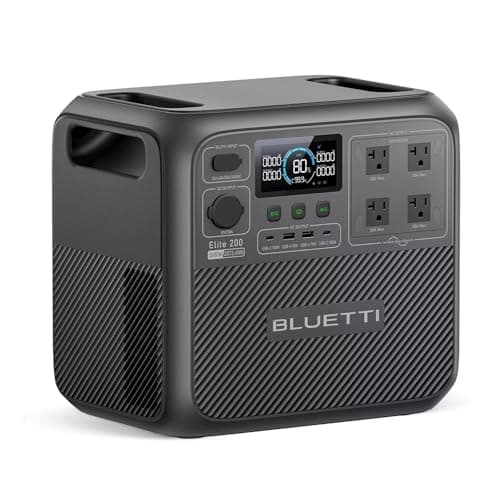
BLUETTI Elite 200 V2

The longer-lived rival

BLUETTI Elite 200 V2

2,073.6Wh, 2,600W continuous, 3,900W power lifting and 6,000+ cycles.

Daily cycling
$1,399.00 · Check price on Amazon

#ad how this is funded · price as of October 20, 2026

3
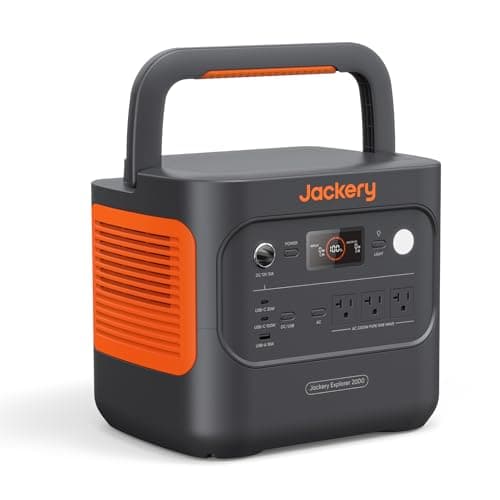
Jackery Explorer 2000 v2

The quiet one

Jackery Explorer 2000 v2

2,042Wh, 2,200W, a 20ms UPS switchover and charging under 30dB.

Apartments and bedrooms
$899.00 · Check price on Amazon

#ad how this is funded · price as of October 20, 2026 · $999.00 10% off

4
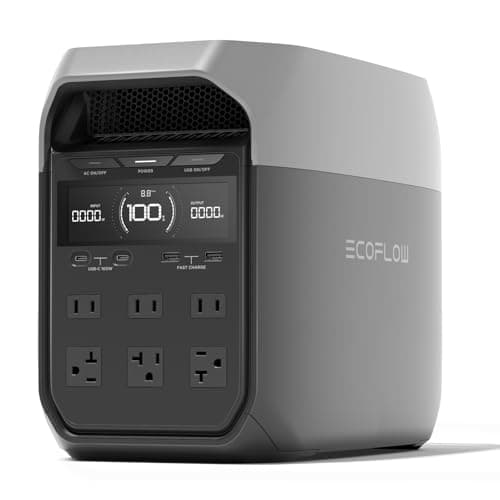
EcoFlow DELTA 3

The same idea, smaller

EcoFlow DELTA 3

1,024Wh expandable to 5kWh, 1,800W continuous, 3,600W surge, X-Boost to 2,200W.

Shorter lists and lower budgets
$629.00 · Check price on Amazon

#ad how this is funded · price as of October 20, 2026 · $699.00 10% off

5
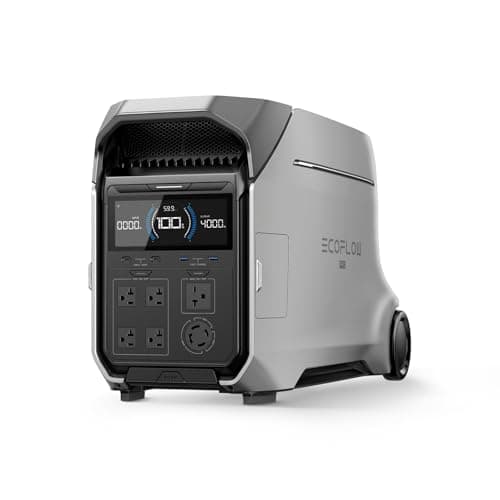
EcoFlow DELTA Pro 3

The step that changes the category

EcoFlow DELTA Pro 3

4,096Wh, 4,000W at 120V and 240V, 2,600W of solar, expandable to 48kWh.

240V and panel-level backup
$2,799.00 · Check price on Amazon

#ad how this is funded · price as of October 20, 2026 · $3,699.00 24% off

Prices come from the retailer at page-build time and change constantly. Where no live price is available the button reads “Check price” rather than showing a number we cannot stand behind.

How this review was done

No bench, no measured runtimes, no borrowed review unit. We have tested none of this equipment and say so plainly. Every figure below is EcoFlow's published specification or a competitor's, and every calculation shows its working.

Speed is the specification

The DELTA 2 Max holds 2,048Wh of LiFePO4, delivers 2,400W continuous, publishes 0-80% in 43 minutes, accepts up to 1,000W of solar, carries 15 outlets, runs as quiet as 30dB and is rated at 3,000+ cycles to 80%.

Of those, two matter more than the rest.

Forty-three minutes to 80%. A storm outage is a series of windows, not one long night. The battery that refills fastest in a forty-minute window is the battery that is still working at 3am.

A 1,000W solar ceiling. That is the difference between solar as a trickle and solar as a refill. Four 250W panels put a meaningful dent in 2,048Wh in a few hours of good sun, where a 400W ceiling cannot. The panel-count page works the arithmetic through.

The expansion question, answered honestly

EcoFlow sells this unit on its ability to grow to 6,144Wh with extra batteries. That is true and it is worth understanding before you buy it as a reason.

OptionWhat you getWhat you do not
Add an expansion batteryUp to 6,144Wh under one inverter, one screen, one plugNo extra output — still 2,400W, and one failure point
Buy a second complete unitTwo inverters, two sets of outlets, two places to beNo single large pool of energy; two things to charge

Capacities are EcoFlow's published figures. The comparison itself is ours, and pricing is deliberately left out — check the live price on both before you decide, because the answer swings on it.

The rule of thumb that survives contact with reality: expand when you need longer, buy a second unit when you need more at once or in two places. Expansion adds hours. It does not add watts.

What it runs

At 85% inverter efficiency, 2,048Wh gives about 1,741Wh usable.

LoadAverage drawRuntime
Refrigerator150 WAbout 11.5 hours
Refrigerator and internet190 WAbout 9 hours
Gas furnace blower, cycling200 WAbout 8.5 hours
1,000W microwave, cooking1,500 WAbout 70 minutes of actual cooking

Runtime is 2,048Wh x 0.85 divided by average draw. Nobody cooks for 70 minutes straight — that row exists to show how cheap cooking is in energy and how expensive it is in output.

Where it gives ground

Cycle life. 3,000+ cycles to 80% is normal for the class and half what BLUETTI publishes for the Elite 200 V2. If you cycle daily, that is the single most expensive specification on the page.

Output. 2,400W sits between the Jackery's 2,200W and the BLUETTI's 2,600W. It is enough for any single household appliance and tight for two large ones together.

No 240V. Like everything else in the class. A well pump or a range needs a split-phase unit, not a bigger 120V one.

Who should buy it

  • Storm-outage households. The 43-minute refill is the most useful specification in a flickering grid.
  • Solar-first buyers. 1,000W of input is the class leader by a distance.
  • People who expect to need more later. The expansion path is real, provided you want hours rather than watts.

Who should skip it

  • Daily cyclers — buy the 6,000-cycle BLUETTI.
  • Bedroom users — the Jackery publishes a sub-30dB charging mode; fast charging is not silent.
  • Anyone with a 240V load. Wrong category entirely.

The short version

  • 2,048Wh, 2,400W, 15 outlets. A well-balanced 2kWh unit.
  • 43 minutes to 80% and 1,000W of solar are the two reasons to choose it.
  • About 11.5 hours of refrigeration at 85% efficiency.
  • Expansion adds hours, not watts — and costs about what a second unit costs.
The picks in full

01 — The unit under review

EcoFlow DELTA 2 Max

2,048Wh expandable to 6,144Wh, 2,400W continuous, 0-80% in 43 minutes, 1,000W of solar.

Forty-three minutes to 80% is the fastest published refill in the 2kWh class, and 1,000W of solar input is 2.5x what a Jackery of the same size accepts.

Fifteen outlets sounds like a trivia figure until a household is running off one box and every socket is taken.

The honest catch: expansion is marketing until you price it. An extra battery costs about what a second complete unit costs, and the second unit would give you a second inverter too.

Skip it ifyou want the longest cell life. 3,000+ cycles is half what the BLUETTI publishes.

EcoFlow DELTA 2 Max
$1,049.00 · Check price on Amazon

#ad how this is funded · price as of October 20, 2026 · $1,399.00 25% off

Published specifications for the EcoFlow DELTA 2 Max
SpecificationPublished figure
Capacity2,048 Wh, expandable to 6,144 Wh
Output2,400 W continuous
ChemistryLiFePO4, 3,000+ cycles to 80%
AC recharge0–80% in 43 minutes
Solar inputup to 1,000 W
Outlets15 total
Noiseas low as 30 dB

Source: EcoFlow — DELTA 2 Max published specifications. These are the manufacturer's published figures, not ours — we have not tested this unit.

02 — The longer-lived rival

BLUETTI Elite 200 V2

2,073.6Wh, 2,600W continuous, 3,900W power lifting and 6,000+ cycles.

More output and double the published cycle rating, for effectively identical energy.

For an RV lived in or a cabin, that rating is the whole argument — covered in its own review.

The honest catch: 50 minutes to 80% and no published figure here for solar input as generous as EcoFlow's 1,000W.

Skip it ifyou only cycle it a few times a year — you will never spend that life.

BLUETTI Elite 200 V2
$1,399.00 · Check price on Amazon

#ad how this is funded · price as of October 20, 2026

Published specifications for the BLUETTI Elite 200 V2
SpecificationPublished figure
Usable capacity2,073.6 Wh
Cell chemistryAutomotive-grade LiFePO4 (LFP)
AC output2,600 W continuous / 3,900 W power lifting
Cycle life6,000+ cycles
Fast charge0–80% in 50 min via dual AC/DC input

Source: BLUETTI — Elite 200 V2 product specifications. These are the manufacturer's published figures, not ours — we have not tested this unit.

03 — The quiet one

Jackery Explorer 2000 v2

2,042Wh, 2,200W, a 20ms UPS switchover and charging under 30dB.

The only unit here with a published charging noise figure, and the lightest of the 2kWh group at 39.5 lb.

If the battery lives in a bedroom, a library-quiet charge mode beats twenty minutes of refill speed.

The honest catch: the smallest inverter of the three at 2,200W.

Skip it ifyour grid flickers. 66 minutes to 80% is the slowest of the three.

Jackery Explorer 2000 v2
$899.00 · Check price on Amazon

#ad how this is funded · price as of October 20, 2026 · $999.00 10% off

Published specifications for the Jackery Explorer 2000 v2
SpecificationPublished figure
Usable capacity2,042 Wh
Cell chemistryLiFePO4 (LFP)
AC output2,200 W continuous
UPS switchover20 ms
Weight39.5 lb
Charge time0–80% in 66 min; full in 102 min (emergency mode)
Charging noiseunder 30 dB in silent charging mode

Source: Jackery — Explorer 2000 v2 product specifications. These are the manufacturer's published figures, not ours — we have not tested this unit.

04 — The same idea, smaller

EcoFlow DELTA 3

1,024Wh expandable to 5kWh, 1,800W continuous, 3,600W surge, X-Boost to 2,200W.

Half the capacity with the same expandable philosophy and a five-year warranty. For an afternoon outage it is the sensible size.

27.6 lb also makes it portable in a way the Max is not.

The honest catch: about six hours of refrigeration against about eleven for the Max.

Skip it ifthe refrigerator must survive the night.

EcoFlow DELTA 3
$629.00 · Check price on Amazon

#ad how this is funded · price as of October 20, 2026 · $699.00 10% off

Published specifications for the EcoFlow DELTA 3
SpecificationPublished figure
Usable capacity1,024 Wh, expandable to 5 kWh
Cell chemistryLiFePO4 (LFP)
AC output1,800 W continuous / 3,600 W surge
X-Boost output2,200 W for resistive loads
Cycle life4,000 cycles to 80%+
AC rechargeFull in 56 minutes at 1,500 W input
Max solar input500 W
Weight27.6 lb (12.5 kg)
Outlets13 total
Warranty5 years

Source: EcoFlow — DELTA 3 product specifications. These are the manufacturer's published figures, not ours — we have not tested this unit.

05 — The step that changes the category

EcoFlow DELTA Pro 3

4,096Wh, 4,000W at 120V and 240V, 2,600W of solar, expandable to 48kWh.

The DELTA 2 Max cannot make 240V and neither can any of its rivals. If a well pump, a range or a dryer is on the list, this is the tier that answers it.

Expansion to 48kWh puts it in conversation with home batteries rather than portables.

The honest catch: weight, price and complexity all step up together. Most households do not need any of it.

Skip it ifyour loads are all 120V. You would be paying for a capability you never use.

EcoFlow DELTA Pro 3
$2,799.00 · Check price on Amazon

#ad how this is funded · price as of October 20, 2026 · $3,699.00 24% off

Published specifications for the EcoFlow DELTA Pro 3
SpecificationPublished figure
Capacity4,096 Wh
Cell chemistryLiFePO4 (LFP)
AC output4,000 W, 120V / 240V
Cycle life4,000+ cycles to 80% capacity
Wall recharge0-80% in about 1 hour
Max solar input2,600 W
Expansion4 kWh to 48 kWh

Source: EcoFlow — DELTA Pro 3 product listing. These are the manufacturer's published figures, not ours — we have not tested this unit.

How these were chosen

We did not test these. Nobody at Watt & Warden has plugged one in. What we did instead: read the manufacturer's published specifications, compile them into a table where the figures line up, and compute the numbers manufacturers leave out — runtime against a real appliance load, and what an hour of running actually costs.

Anything that could not be sourced was left out rather than estimated, and every pick names the buyer who should skip it. The full method is here, including where it is weaker than a publisher with a test bench.

Questions people actually ask

Did you test the EcoFlow DELTA 2 Max?

No. This site has no test bench and says so on every page. The review is built from EcoFlow's published specifications, the published specifications of competing units, and arithmetic shown in full.

How fast does the DELTA 2 Max charge?

EcoFlow publishes 0 to 80% in 43 minutes from a wall outlet, which is the fastest published figure in the 2,000Wh class we cover. It also accepts up to 1,000W of solar input, which is the highest solar ceiling in that class.

Is the expansion battery worth it?

It depends on what you are short of. An expansion battery takes the system to 6,144Wh but leaves output at 2,400W, so it buys hours rather than watts. If you need to run more things at once, or power in two places, a second complete unit buys a second inverter as well -- and often costs about the same.

Can it run a refrigerator and a furnace blower together?

On output, yes: a refrigerator at 150W and a blower at 200W average is well inside 2,400W, though both draw much more briefly at startup. On energy, expect roughly five hours of the pair from a full charge at 85% inverter efficiency.

DELTA 2 Max or BLUETTI Elite 200 V2?

Same energy within 1.5%. EcoFlow wins on refill speed (43 minutes to 80% against 50) and solar input; BLUETTI wins on continuous output (2,600W against 2,400W) and published cycle life (6,000+ against 3,000+). Flickering outages favor EcoFlow, daily cycling favors BLUETTI.

Sources

Every figure on this page comes from a published source. We have not tested this equipment, so the specifications are the manufacturer's and the statistics are the dataset's — the arithmetic on top of them is ours, and it is shown in full so you can check it. How we work this out.