Skip to content
Watt Warden

Power Stations

Expansion Battery vs a Second Power Station

Both cost about the same. One of them adds hours and the other adds capability, and picking the wrong one is how people end up with 4kWh they cannot use properly.

By Sawyer V.Updated Published How we work this out
A stack of storage boxes in a warehouse.

Watt & Warden earns a commission on qualifying purchases made through links on this page, at no extra cost to you. It never changes a ranking, and our picks include products we tell you to skip. Full disclosure.

Quick picks

#ProductBest forPrice
1
EcoFlow DELTA 3

The expandable starting point

EcoFlow DELTA 3

1,024Wh expandable to 5kWh, 1,800W continuous with 3,600W surge.

Buying capacity in stages
$629.00 · Check price on Amazon

#ad how this is funded · price as of October 21, 2026 · $699.00 10% off

2
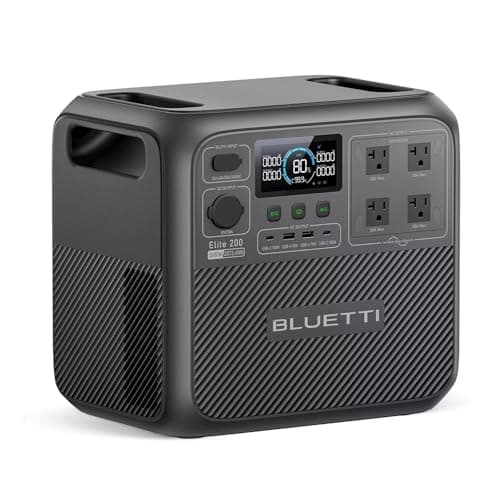
BLUETTI Elite 200 V2

Buying the capacity outright

BLUETTI Elite 200 V2

2,073.6Wh and 2,600W continuous with a 6,000+ cycle rating.

Knowing your number in advance
$1,399.00 · Check price on Amazon

#ad how this is funded · price as of October 21, 2026

3
Jackery Explorer 1000 v2

The second-unit argument

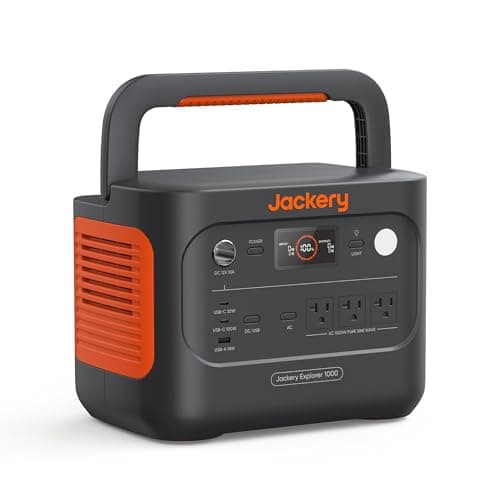
Jackery Explorer 1000 v2

1,070Wh at 24 lb with a 1,500W inverter — a complete second machine.

Power in two places at once
$499.00 · Check price on Amazon

#ad how this is funded · price as of October 21, 2026 · $559.00 11% off

4
Anker SOLIX F3800

When neither is enough

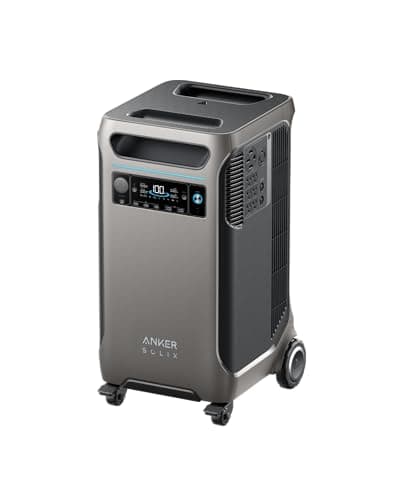
Anker SOLIX F3800

3,840Wh with 6,000W of 120/240V split-phase output, expandable to 26.9kWh.

240V and panel-level backup
$1,759.99 · Check price on Amazon

#ad how this is funded · price as of October 21, 2026

Prices come from the retailer at page-build time and change constantly. Where no live price is available the button reads “Check price” rather than showing a number we cannot stand behind.

What each one actually adds

Expansion batterySecond power station
EnergyMore, in one poolMore, in two separate pools
Output (watts)Unchanged — same inverterDoubled, across two machines
OutletsUsually none addedA second full set
Two rooms at onceNoYes
If one part failsOften the whole system stopsThe other unit keeps working
ChargingOne thing to plug inTwo things to plug in
ResaleTied to the host unitSells on its own

Behavior is general to the two approaches; specific expansion ceilings and compatibility vary by manufacturer and model. Prices move constantly, so compare both live before deciding.

The rule that survives contact with reality

Expand when you need longer. Buy a second unit when you need more at once, or in two places.

Run your own numbers rather than guessing which problem you have. If the refrigerator ran fine but the battery was empty by morning, you need hours — expansion. If the inverter cut out when the microwave started, or you found yourself trailing an extension cord upstairs, you need watts and outlets — a second unit. The outage duration page turns your own history into a capacity figure.

The price trap

Expansion batteries are frequently priced close to a complete second unit, which makes the comparison unintuitive: the cheaper-sounding upgrade often costs the same as the more capable one.

Before you buy either, price three things: the expansion battery, a second copy of your existing unit, and a single larger unit that holds the total you want. In a surprising number of cases the third option is cheapest per watt-hour and simplest to live with.

Three situations, three answers

  • Refrigerator through a long outage. One pool of energy under one inverter is ideal — expand, or buy larger outright.
  • A CPAP in the bedroom and the router downstairs. Two units. One battery cannot be in two rooms.
  • A well pump or a 240V circuit. Neither. That is a split-phase machine and a transfer switch — the home backup roundup covers the tiers.

Compatibility, briefly

Expansion batteries are model-specific. A battery sold for one manufacturer's line will not work with another's, and within a brand the pairing is usually restricted to particular models. Check the manufacturer's compatibility list before buying, especially if your host unit is a generation or two old — the expandable stations page covers which units accept what.

The short version

  • Expansion adds hours. A second unit adds watts, outlets and places.
  • Output never increases with an expansion battery. That surprises people.
  • Price all three options — expansion, second unit, and one larger unit.
  • Two units are their own backup; an expanded system is one failure point.

The picks in full

01 — The expandable starting point

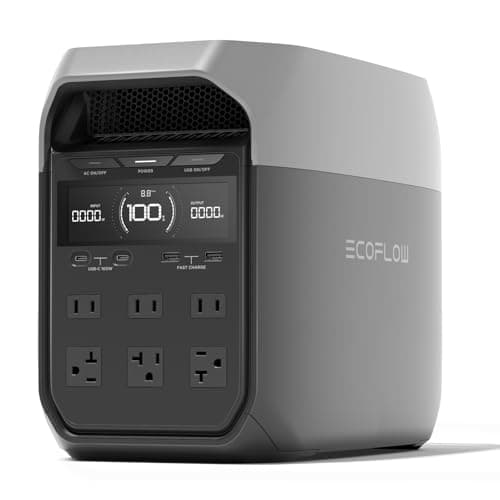
EcoFlow DELTA 3

1,024Wh expandable to 5kWh, 1,800W continuous with 3,600W surge.

The honest use of an expandable unit is cash flow: start at 1kWh, discover what a real outage demands, and add capacity only if the evidence says so.

Note what does not change when you add a battery — output stays at 1,800W however much energy sits behind it.

The honest catch: an expansion battery is close to the price of a whole second unit, which would bring its own inverter.

Skip it ifyou already know you need 2kWh. Buying it outright costs less.
EcoFlow DELTA 3
$629.00 · Check price on Amazon

#ad how this is funded · price as of October 21, 2026 · $699.00 10% off

Published specifications for the EcoFlow DELTA 3
SpecificationPublished figure
Usable capacity1,024 Wh, expandable to 5 kWh
Cell chemistryLiFePO4 (LFP)
AC output1,800 W continuous / 3,600 W surge
X-Boost output2,200 W for resistive loads
Cycle life4,000 cycles to 80%+
AC rechargeFull in 56 minutes at 1,500 W input
Max solar input500 W
Weight27.6 lb (12.5 kg)
Outlets13 total
Warranty5 years

Source: EcoFlow — DELTA 3 product specifications. These are the manufacturer's published figures, not ours — we have not tested this unit.

02 — Buying the capacity outright

BLUETTI Elite 200 V2

2,073.6Wh and 2,600W continuous with a 6,000+ cycle rating.

Twice the energy of a 1kWh unit and 800W more inverter, usually for less than a base unit plus an expansion battery.

If your load list is settled, buying the capacity in one purchase is almost always the cheaper path.

The honest catch: no expansion path at all. What you buy is what you have.

Skip it ifyou genuinely cannot spend it in one go.

BLUETTI Elite 200 V2
$1,399.00 · Check price on Amazon

#ad how this is funded · price as of October 21, 2026

Published specifications for the BLUETTI Elite 200 V2
SpecificationPublished figure
Usable capacity2,073.6 Wh
Cell chemistryAutomotive-grade LiFePO4 (LFP)
AC output2,600 W continuous / 3,900 W power lifting
Cycle life6,000+ cycles
Fast charge0–80% in 50 min via dual AC/DC input

Source: BLUETTI — Elite 200 V2 product specifications. These are the manufacturer's published figures, not ours — we have not tested this unit.

03 — The second-unit argument

Jackery Explorer 1000 v2

1,070Wh at 24 lb with a 1,500W inverter — a complete second machine.

A second station brings a second inverter, a second set of outlets and the ability to put power in the kitchen and the bedroom at the same time.

It is also its own backup: if one fails, the other still runs half your list.

The honest catch: two units mean two things to charge, two things to store and no single large reserve.

Skip it ifyou need one large pool of energy rather than two small ones.

Jackery Explorer 1000 v2
$499.00 · Check price on Amazon

#ad how this is funded · price as of October 21, 2026 · $559.00 11% off

Published specifications for the Jackery Explorer 1000 v2
SpecificationPublished figure
Usable capacity1,070 Wh
Cell chemistryLiFePO4 (LFP)
AC output1,500 W continuous / 3,000 W surge
Weight24 lb
Cycle life4,000 cycles to 70% capacity
Max solar input400 W
Wall recharge~1.7 h, or ~1 h in emergency mode
Warranty3 years, extendable to 5 on registration

Source: Jackery — Explorer 1000 v2 product specifications. These are the manufacturer's published figures, not ours — we have not tested this unit.

04 — When neither is enough

Anker SOLIX F3800

3,840Wh with 6,000W of 120/240V split-phase output, expandable to 26.9kWh.

Households that keep adding capacity to a 1kWh unit are often trying to solve a problem that needs a different class of machine — one with 240V output and a transfer switch.

Expansion here adds hours to something that already has the watts — the full review covers who needs it.

The honest catch: weight, price and complexity all step up together.

Skip it ifyour loads are all 120V appliances on a worktop.

Anker SOLIX F3800
$1,759.99 · Check price on Amazon

#ad how this is funded · price as of October 21, 2026

Published specifications for the Anker SOLIX F3800
SpecificationPublished figure
Capacity3,840 Wh
Cell chemistryLiFePO4
AC output6,000 W continuous, 9,000 W surge
Voltage120V / 240V split-phase
Cycle life3,000+ cycles to 80% capacity
Recharge1,800 W AC, up to 2,400 W solar
ExpansionUp to six expansion batteries, 26.9 kWh total
Warranty5 years
Current Amazon listingRenewed. Anker's new first-party F3800 listing is currently unavailable and the model has been succeeded by the F3800 Plus; the unit itself is unchanged

Source: Anker SOLIX — F3800 product specifications. These are the manufacturer's published figures, not ours — we have not tested this unit.

How these were chosen

We did not test these. Nobody at Watt & Warden has plugged one in. What we did instead: read the manufacturer's published specifications, compile them into a table where the figures line up, and compute the numbers manufacturers leave out — runtime against a real appliance load, and what an hour of running actually costs.

Anything that could not be sourced was left out rather than estimated, and every pick names the buyer who should skip it. The full method is here, including where it is weaker than a publisher with a test bench.

Questions people actually ask

Does an expansion battery increase output?

No. It adds stored energy behind the same inverter, so the continuous and surge ratings stay exactly where they were. If your problem is that the inverter cuts out when a large appliance starts, an expansion battery will not fix it -- you need a bigger inverter or a second unit.

Is an expansion battery cheaper than a second power station?

Often they cost about the same, which is the trap. Price the expansion battery, a second complete unit and a single larger station that holds the total you want. The larger single unit is frequently the cheapest per watt-hour and the simplest to live with.

When is a second power station the better buy?

When you need power in two places at once, when you want more output rather than more hours, or when redundancy matters. A second unit brings its own inverter and outlets, and if one machine fails the other still runs part of your list.

Can I use any expansion battery with any power station?

No. Expansion batteries are specific to a manufacturer and usually to particular models within that range. Check the maker's compatibility list before buying, especially if your host unit is an older generation -- a battery from the same brand is not automatically compatible.

What if I need 240V rather than more capacity?

Then neither option helps. No quantity of 120V batteries produces 120/240V split-phase power. That requires a split-phase unit such as Anker's F3800 or EcoFlow's DELTA Pro 3, connected through a transfer switch.

Sources

Every figure on this page comes from a published source. We have not tested this equipment, so the specifications are the manufacturer's and the statistics are the dataset's — the arithmetic on top of them is ours, and it is shown in full so you can check it. How we work this out.