Skip to content
Watt Warden

Power Stations

The Best Power Stations Under $1,000 (2026)

This is the price bracket where backup power becomes real: enough surge to start a refrigerator, enough capacity to carry it through a night.

By Sawyer V.Updated Published How we work this out
A portable power station standing on a kitchen counter.

Watt & Warden earns a commission on qualifying purchases made through links on this page, at no extra cost to you. It never changes a ranking, and our picks include products we tell you to skip. Full disclosure.

Quick picks

#ProductBest forPrice
1
No photo

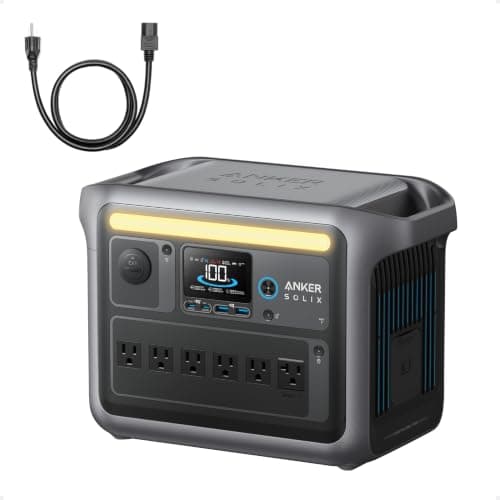
Best overall in the bracket

Anker SOLIX C1000

1,056Wh of LiFePO4 with 1,800W output and a fast recharge — the balanced pick.

A fridge plus the essentials
2
No photo

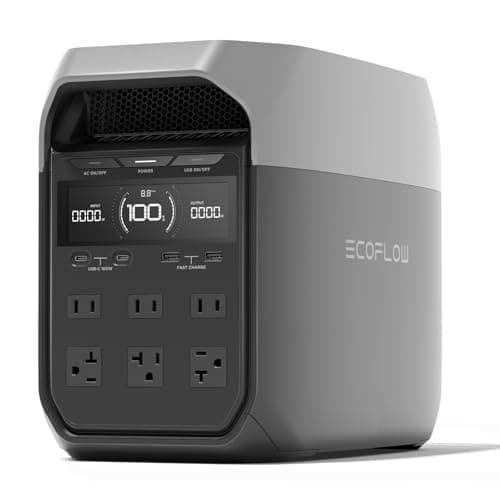
Best if you want to grow later

EcoFlow DELTA 2

1,024Wh and 1,800W, with 500W of solar input and expansion to 3kWh.

Starting small, expanding to 3kWh
3
No photo

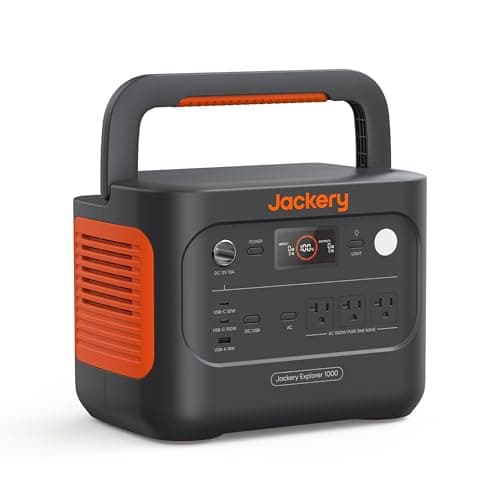
Best for a first serious battery

Jackery Explorer 1000 v2

A kilowatt-hour of LiFePO4 in the size and weight most people actually want.

Straightforward home backup
4
No photo

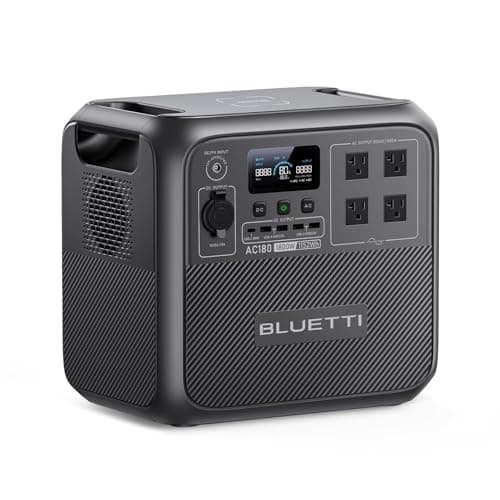
Best fast recharge

BLUETTI AC180

A kilowatt-hour-class LiFePO4 unit built around getting refilled quickly.

Outages where power returns intermittently

Prices come from the retailer at page-build time and change constantly. Where no live price is available the button reads “Check price” rather than showing a number we cannot stand behind.

What changes at this price

Below this bracket you are buying a device charger with a socket on it. At a kilowatt-hour with an 1,800W inverter, three things become possible that were not:

  • Motors start. A refrigerator or freezer compressor draws several times its running wattage for a fraction of a second. Champion publishes 500-1,000 starting watts for a freezer; a 300W station simply trips.
  • The capacity outlasts the evening. A fridge at this site's 150W planning average is most of a day rather than a couple of hours.
  • Solar becomes worth attaching. A 200W panel meaningfully refills a 1kWh battery in a day. It barely dents a 3kWh one and it overwhelms a 300Wh one.

That combination is why this is the bracket most households should actually be shopping in, rather than the 300Wh tier they start in or the 2kWh tier they read about.

What a kilowatt-hour covers

LoadDrawRoughly, from 1,000Wh
Refrigerator~150 W averageMost of a day
Router, modem, phones~20-50 WA day and a half or more
CPAP, humidifier off30-60 WTwo to three nights
Laptop and lighting~100 WMost of a working day
Gas furnace blower (½ HP)300-800 W1 to 3 hours
Electric space heater750-1,500 WUnder an hour — do not

CPAP, furnace fan and space heater figures are Champion Power Equipment's published ranges. The 150W average fridge draw and 85% inverter efficiency are this site's stated planning assumptions, listed on the methodology page. Runtimes are calculated from those inputs rather than measured.

The two specifications that actually differ

At this tier the products have converged. All four picks are LiFePO4, pure sine, roughly 1,800W and roughly a kilowatt-hour. What still varies:

Maximum solar input. The range across the bracket is wide — some units take 200W, some 500W. If you intend to use solar at all, this is the number that decides whether a multi-day outage is survivable, because it caps your daily allowance no matter how much panel you own. The solar arithmetic works it through.

Expansion. Some units take a second battery pack, some do not. Buying an expandable unit costs a little more now and saves buying twice if your needs grow.

Everything else — screen design, app quality, the exact arrangement of outlets — is preference rather than capability.

Do not buy on capacity alone

The failure mode in this bracket is buying the largest watt-hour figure available for the money and getting a unit with a 1,000W inverter.

Capacity tells you how long something runs. Continuous and surge output tell you whether it runs at all. A 1,500Wh battery with a 1,000W inverter will not start a freezer; a 1,000Wh battery with an 1,800W inverter will start it and run it most of the day.

Read the output rating first, then the capacity. Starting watts versus running watts explains why the gap is so large.

When to spend less, and when to spend more

Spend less if your outages are measured in hours and the only things that matter are phones, a router and some lights. A 300Wh unit or even a good power bank genuinely covers that, and the sub-$500 comparison is the right page.

Spend more if you need a fridge and a chest freezer running simultaneously, or a furnace blower overnight in winter. Two compressors surging together is what defeats an 1,800W inverter, and the 2kWh tier exists for exactly that.

Stay here — which is most people — if you want one appliance plus the essentials covered for a day, silently, indoors, with no fuel to store and nothing to maintain.

What this tier still cannot do

Anything that makes heat or cold with electricity directly. Space heaters, hair dryers, kettles, toasters, electric ovens, air conditioning and electric water heating are all out of reach — not because the inverter cannot start them, but because they would empty a kilowatt-hour in well under an hour.

And a multi-day outage still needs a recharge path. A battery on its own is a bucket; solar or a generator is what refills it.
The picks in full

01Best overall in the bracket

Anker SOLIX C1000

1,056Wh of LiFePO4 with 1,800W output and a fast recharge — the balanced pick.

1,800W of continuous output clears the 500-1,000W starting surge Champion publishes for a refrigerator or a freezer with room to spare, which is the specification that decides whether a battery is useful at all rather than merely large.

Using this site's stated 150W average fridge draw and 85% inverter efficiency, 1,056Wh runs a refrigerator for the better part of a day, or a fridge plus lights and devices for a long evening.

LiFePO4 is what makes it a sensible ten-year purchase rather than a three-year one — the calendar life matters far more than cycle count for something that sits charged between outages.

Skip it ifyou need to start two compressors at once. That is a 2kWh-tier problem.

Published specifications for the Anker SOLIX C1000
SpecificationPublished figure
Usable capacity1,056 Wh
Cell chemistryLiFePO4 (LFP)
AC output1,800 W continuous / 2,400 W SurgePad
Cycle life3,000 cycles
Wall recharge80% in 43 min, full in 58 min
Max solar input600 W (full solar recharge ~1.8 h)
Ports11 total, including 6 AC on panel-equipped bundles

Source: Anker — SOLIX C1000 product specifications. These are the manufacturer's published figures, not ours — we have not tested this unit.

02Best if you want to grow later

EcoFlow DELTA 2

1,024Wh and 1,800W, with 500W of solar input and expansion to 3kWh.

The 500W solar input is the specification that separates this from the rest of the bracket. It is what turns a fixed bucket into a daily allowance, and it is the difference between a one-day battery and an indefinite one.

Expansion to 3kWh means a first purchase in this bracket does not become the wrong purchase if your outages turn out to be longer than you assumed. How expansion works covers what it costs and what it does not solve.

Skip it ifyou are certain one kilowatt-hour is enough. You would be paying for a port you never use.

Published specifications for the EcoFlow DELTA 2
SpecificationPublished figure
Usable capacity1,024 Wh (expandable to 3 kWh)
Cell chemistryLiFePO4 (LFP)
AC output1,800 W continuous / 2,700 W surge
X-Boost output2,200 W for resistive loads
Weight27 lb
Cycle life3,000+ cycles
Max solar input500 W
Warranty5 years

Source: EcoFlow — DELTA 2 product specifications. These are the manufacturer's published figures, not ours — we have not tested this unit.

03Best for a first serious battery

Jackery Explorer 1000 v2

A kilowatt-hour of LiFePO4 in the size and weight most people actually want.

The mainstream pick, and there is nothing wrong with being the mainstream pick. App monitoring, a straightforward interface and a weight that one person moves without planning it.

Worth naming what all three of these share: LiFePO4 chemistry, pure sine output and around 1,800W of inverter. At this tier the products have converged, and the differences that remain are solar input, expansion and recharge speed.

Skip it ifexpansion is important to you. Check its ceiling against the EcoFlow above.

Published specifications for the Jackery Explorer 1000 v2
SpecificationPublished figure
Usable capacity1,070 Wh
Cell chemistryLiFePO4 (LFP)
AC output1,500 W continuous / 3,000 W surge
Weight24 lb
Cycle life4,000 cycles to 70% capacity
Max solar input400 W
Wall recharge~1.7 h, or ~1 h in emergency mode
Warranty3 years, extendable to 5 on registration

Source: Jackery — Explorer 1000 v2 product specifications. These are the manufacturer's published figures, not ours — we have not tested this unit.

04Best fast recharge

BLUETTI AC180

A kilowatt-hour-class LiFePO4 unit built around getting refilled quickly.

Recharge speed is the most undervalued specification in the category. Real outages flicker — power returns for twenty minutes, then goes again — and a battery that takes those windows fully is worth more than one with slightly more capacity that does not.

Skip it ifyou have solar and no grid to refill from. Then input watts matter more than AC speed.

Published specifications for the BLUETTI AC180
SpecificationPublished figure
Usable capacity1,152 Wh (32 V, 36 Ah)
Cell chemistryLiFePO4 (LFP)
AC output1,800 W continuous / 2,700 W surge, 4 outlets
Cycle life3,500+ cycles to 80% capacity
Weight35.3 lb
Fast charge0–80% in 45 min
Max solar input500 W
Warranty5 years on registration

Source: BLUETTI — AC180 product specifications. These are the manufacturer's published figures, not ours — we have not tested this unit.

How these were chosen

We did not test these. Nobody at Watt & Warden has plugged one in. What we did instead: read the manufacturer's published specifications, compile them into a table where the figures line up, and compute the numbers manufacturers leave out — runtime against a real appliance load, and what an hour of running actually costs.

Anything that could not be sourced was left out rather than estimated, and every pick names the buyer who should skip it. The full method is here, including where it is weaker than a publisher with a test bench.

Questions people actually ask

What can a 1000Wh power station run?

A refrigerator for most of a day at this site's 150W planning average, a router and phones for a day and a half, a CPAP for two to three nights with the humidifier off, or a gas furnace blower for one to three hours. Not electric heating, cooking or air conditioning.

Is a $1,000 power station enough for a power outage?

For an outage measured in hours to a day, comfortably. For multiple days it needs a recharge path -- solar input or a generator -- because capacity alone runs out at any battery size. The tier is right for one appliance plus the essentials, not for a whole house.

What should I look at first when comparing power stations?

Continuous and surge output, before capacity. A 1,500Wh unit with a 1,000W inverter will not start a freezer; a 1,000Wh unit with an 1,800W inverter will start it and run it most of the day. Capacity decides how long; output decides whether it works at all.

Should I buy an expandable power station?

If you are unsure how much you need, yes -- it costs a little more now and saves buying twice. Expansion is one of only two specifications that genuinely differ across this bracket, the other being maximum solar input, since the products have otherwise converged on LiFePO4 and roughly 1,800W.

How much solar do I need for a 1000Wh power station?

Around 300W of panel refills it across a good day, using the rule of a panel rated at roughly a third of the battery's watt-hours. Check the station's own maximum solar input first -- some in this bracket accept 200W and some 500W, and the ceiling caps you regardless of how much panel you own.

Sources

Every figure on this page comes from a published source. We have not tested this equipment, so the specifications are the manufacturer's and the statistics are the dataset's — the arithmetic on top of them is ours, and it is shown in full so you can check it. How we work this out.