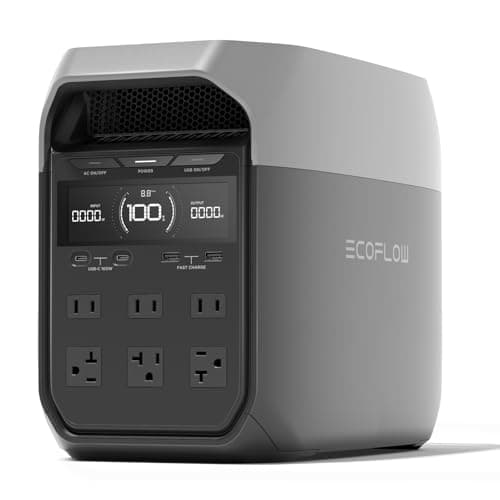
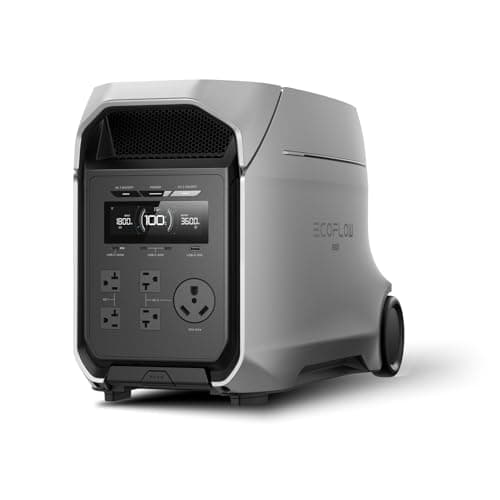
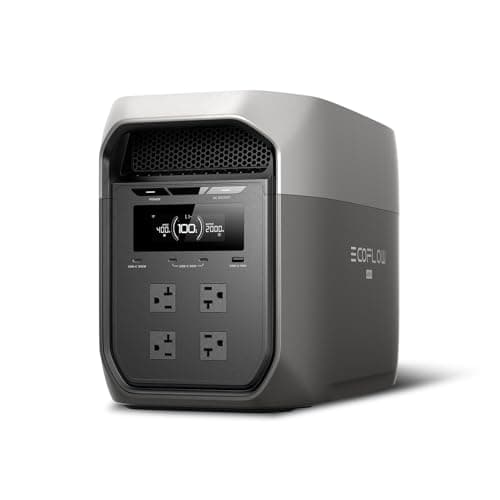
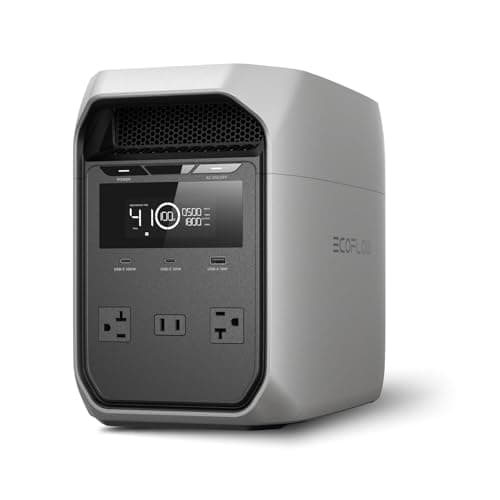
The verdict, in one paragraph
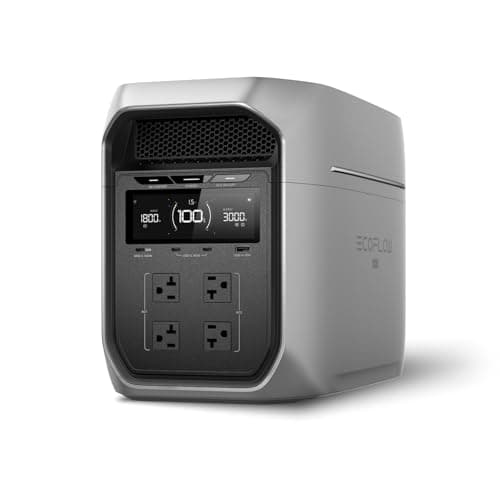
Buy the DELTA 3 Max Plus if this is home backup: 2,048Wh and 3,000W with 6,000W of surge is the model where the Plus suffix buys the most, and 3,000W is the threshold that clears a microwave and a heater. Buy the DELTA 3 Max if your heaviest load is under 2,400W and you want the energy for less. At the kilowatt-hour tier the plain DELTA 3 is the buy unless you own more than 500W of panels — 1,000W of solar input is the only thing the DELTA 3 Plus adds. The Ultra Plus is the top of EcoFlow's 120V range at 3,072Wh; split-phase starts above it at the DELTA Pro 3. Nothing in this series outputs 240V.
Every model, from EcoFlow's own specifications
| Model | Capacity | AC rated / surge | X-Boost | Solar in | Warranty |
|---|
| DELTA 3 Classic | 1,024 Wh | 1,800 W / 3,600 W | Not published | Not published | 3 + 2 on registration |
|---|
| DELTA 3 | 1,024 Wh, to 5 kWh | 1,800 W / 3,600 W | 2,400 W | 500 W, one port | Not listed separately |
|---|
| DELTA 3 Plus | 1,024 Wh, to 5 kWh | 1,800 W / 3,600 W | 2,400 W | 1,000 W, two ports | 5 years |
|---|
| DELTA 3 Max | 2,048 Wh, to 10 kWh | 2,400 W / 4,800 W | 3,400 W | Not published | 3 + 2 on registration |
|---|
| DELTA 3 Max Plus | 2,048 Wh, to 10 kWh | 3,000 W / 6,000 W | 3,800 W | Not published | 3 + 2 on registration |
|---|
| DELTA 3 Ultra / Ultra Plus | 3,072 Wh, 3-11 kWh | 3,600 W / 7,200 W | Not published | Not published | 3 + 2 on registration |
|---|
Every figure is EcoFlow's, from the pages cited under Sources. Where a row says "not published" that is what we found on EcoFlow's own pages — it is not an omission on our part. Current prices sit inside the buy buttons above, with their refresh date.
What "Plus" means, which is not one thing
This is the single most confusing part of the range, because the suffix changes meaning as you climb:
- At the 1kWh tier, Plus means solar. Identical capacity, output, surge, cycle life and UPS speed. The difference is 1,000W of solar input across two ports instead of 500W on one, plus 140W USB-C instead of 100W, and support EcoFlow describes for NAS and HID equipment.
- At the 2kWh tier, Plus means power. 3,000W instead of 2,400W, 6,000W of surge instead of 4,800W, X-Boost to 3,800W instead of 3,400W, and a 43-minute charge instead of 68.
- At the 3kWh tier, Plus is not clearly documented. EcoFlow's series page publishes the same 3,072Wh, 3,600W rated and 7,200W surge and the same 3-11kWh scalable range for both the Ultra and the Ultra Plus. If there is a difference it is not in the figures we could find.
So "should I get the Plus?" has three different answers depending on which tier you are shopping, which is exactly why the question keeps getting asked.
X-Boost is not surge, and EcoFlow says so
Three wattage figures appear in these tables and they are not interchangeable:
- Rated output is what the inverter sustains.
- Surge is brief extra wattage at full voltage — what starts a motor.
- X-Boost is, in EcoFlow's published description, intelligent voltage control that marginally reduces voltage so a higher-rated appliance runs on a smaller inverter. EcoFlow is explicit that it is for resistive appliances — kettles, hair dryers, ovens — and notes it is unavailable while the station is charging.
That matters for buying decisions. X-Boost to 3,800W does not mean a DELTA 3 Max Plus starts a 3,800W motor. For that, read the surge column. Starting watts versus running watts covers why motors behave differently from heaters.
How this generation differs from the DELTA 2
If you are choosing between a discounted DELTA 2 and a current DELTA 3, the comparison is not straightforward:
- Warranty favors the DELTA 2. EcoFlow's warranty page lists the DELTA 2 and DELTA 2 Max at a flat five years, while most of the DELTA 3 range is three years plus two on app registration.
- Charge speed favors the DELTA 3. 0-100% in 56 minutes on the 1kWh models, and 43 minutes to 80% on the Max Plus.
- Cycle life is comparable. EcoFlow publishes 4,000 cycles to 80% or better across the DELTA 3 line, which is normal for current LFP.
The DELTA 2 Max review covers the older unit in detail, and LiFePO4 versus lithium-ion explains why these cycle numbers are so much larger than the ones this category used to publish.
Where this series stops
Nothing in the DELTA 3 range outputs 240V. EcoFlow's split-phase capability starts at the DELTA Pro 3, which publishes 4,000W as 120/240V with an L14-30 and a 6-20R live in 240V mode, and climbs to the DELTA Pro Ultra at 7,200W.
If there is a well pump, a 240V mini-split or a transfer switch with an L14-30 inlet in your plan, the DELTA 3 series is the wrong shelf — which home batteries do native split-phase is the shortlist.
Who should buy which
- Home backup, critical loads, one or two nights: DELTA 3 Max Plus. The 3,000W ceiling and the 43-minute refill both earn their keep.
- Home backup on a budget, nothing over 2,400W: DELTA 3 Max.
- Camping or van use with panels: DELTA 3 Plus, for the second solar port and the five-year warranty.
- Camping with no panels, or a desk: DELTA 3 Classic or the plain DELTA 3.
- Three kilowatt-hours and a long keep-list: DELTA 3 Ultra Plus, with eyes open that it is 120V only.
- Anything 240V: move up to the DELTA Pro 3 or across to the Anker SOLIX F3800.
The short version
Six models, three capacities and a suffix that means solar at one tier, power at another and nothing documented at the third. The Max Plus is the home-backup pick, the Plus is the camping pick, the Max is the value pick, and none of them does 240V. Read the surge column rather than the X-Boost one if a motor is involved, and check EcoFlow's warranty page before assuming every model in a line carries the same term, because they do not.