Skip to content
Watt Warden

Power Stations

The Best 500Wh Power Stations (2026)

The 500 watt-hour band is where a battery stops being a phone charger and starts being useful - and where the gap between what the box implies and what it delivers is widest.

By Sawyer V.Updated Published How we work this out
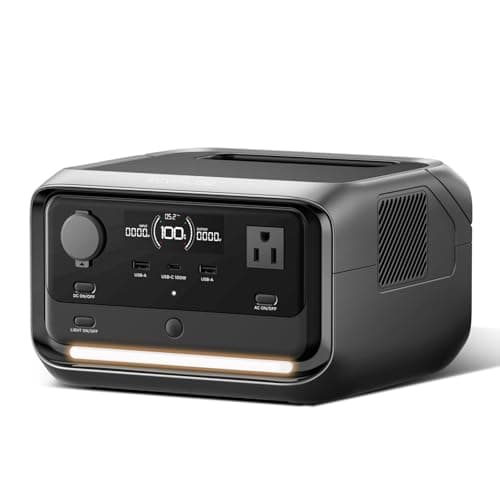
EcoFlow RIVER 3 Max

Watt & Warden earns a commission on qualifying purchases made through links on this page, at no extra cost to you. It never changes a ranking, and our picks include products we tell you to skip. Full disclosure.

Quick picks

#ProductBest forPrice
1
EcoFlow RIVER 3 Max

Best overall

EcoFlow RIVER 3 Max

572Wh of LiFePO4 with 990W of output.

The band done properly — capacity, output and recharge
$318.99 · Check price on Amazon

#ad how this is funded · price as of October 20, 2026 · $399.00 20% off

2
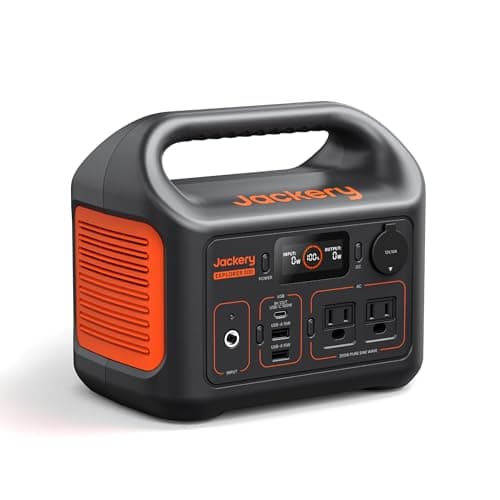
Jackery Explorer 300

Best for weight

Jackery Explorer 300

292Wh, light enough to carry in one hand.

Something you carry without thinking
$259.00 · Check price on Amazon

#ad how this is funded · price as of October 20, 2026 · $289.00 10% off

3
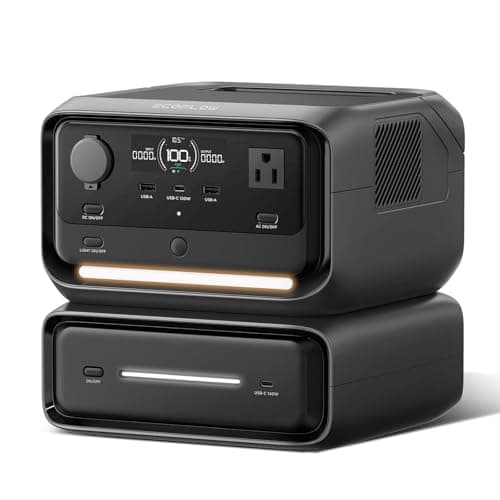
EcoFlow RIVER 3 Plus

Best inverter headroom

EcoFlow RIVER 3 Plus

286Wh with 600W continuous and sub-10ms UPS-grade switchover.

Something with a motor, occasionally
$299.00 · Check price on Amazon

#ad how this is funded · price as of October 20, 2026

4
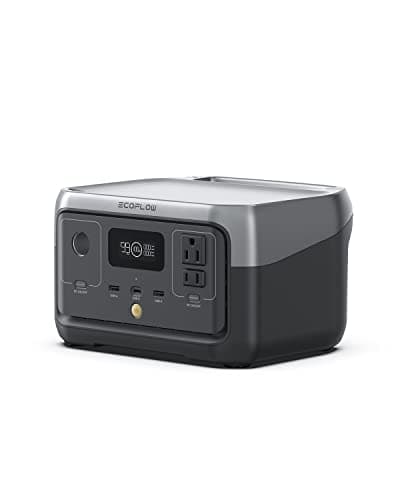
EcoFlow RIVER 2

Best value

EcoFlow RIVER 2

256Wh of LiFePO4 at the light, cheap end of the class.

A first battery you will not worry about
$198.99 · Check price on Amazon

#ad how this is funded · price as of October 20, 2026 · $249.00 20% off

Prices come from the retailer at page-build time and change constantly. Where no live price is available the button reads “Check price” rather than showing a number we cannot stand behind.

What 500Wh genuinely covers

The band is worth understanding precisely, because it is the one where buyers most often expect appliance performance from a device battery.

LoadDrawHours from 512 Wh
Router and modem20 WAbout 21 hours
CPAP, no humidifier30-40 WTwo nights
Laptop and a phone60 WAbout 7 hours of continuous charging
Box fan50 WAbout 8.7 hours
Refrigerator150 W cycling averageAbout 2.9 hours
Coffee maker1,000 WWill not run — exceeds the inverter
Space heater1,500 WWill not run at all

Hours are 512 Wh x 0.85 / draw, using the inverter efficiency figure documented on the methodology page.

The top four rows are what this band is for and it does them well. The refrigerator row is the one that misleads: three hours is technically true and useless as a backup plan, and most units in this band cannot start the compressor anyway.

The inverter matters more than the cells here

In larger bands capacity is the constraint. At 500Wh the inverter usually is.

Units in this class publish continuous outputs anywhere from 300W to 600W, and that range is the difference between running a fan and running nothing with a motor in it. Two batteries with identical watt-hours can behave completely differently.

Look for two numbers: continuous output, and surge or boost. Boost modes are real but they usually work by reducing voltage, which suits a heating element and is wrong for anything with electronics — the starting watts page covers the underlying problem.

Chemistry is not optional at this size

The 500Wh band is where the cheapest products still ship older lithium-ion chemistry, and the difference is large enough to change the purchase.

LiFePO4Older lithium-ion
Published cycles3,000-6,000500-800
Heat toleranceBetterWorse
Weight for the same capacityHeavierLighter
PriceHigherLower

For a battery that will sit in a closet and be used a few times a year, calendar aging matters more than cycles — but LiFePO4 wins on that too, and the chemistry page explains why the endpoint of a cycle rating matters as much as the number.

Recharge speed is an outage feature

Wall recharge times in this band run from about one hour to six, and the difference only becomes obvious during a real outage.

Restoration is usually intermittent before it is permanent — power returns for twenty minutes, drops again, returns for an hour. A unit that refills completely in one of those windows is effectively a much larger battery than one that recovers a fifth of its capacity.

Solar input in this class is modest — typically 110W to 220W — which translates to a genuine but slow refill. The panel arithmetic page covers what a panel actually returns across a day, which is less than the rating suggests.

Is this the right band for you?

Three honest tests.

If your list is devices, lighting and the network — yes, and the smaller end of the band is probably enough.

If a CPAP is on the list — yes, and buy the full 572Wh rather than 292Wh, because that is the difference between one night and two.

If a refrigerator is on the list — no. Go to the 1,000Wh band, where the main roundup covers the units that actually do that job.

The short version

  • 500Wh is a devices-and-network battery. Not an appliance one.
  • Check the inverter, not just the watt-hours. 300W and 600W behave very differently.
  • LiFePO4 or walk away. The cycle gap is four to eight times.
  • Fast wall recharge is worth real money during a restoration.
The picks in full

01 — Best overall

EcoFlow RIVER 3 Max

572Wh of LiFePO4 with 990W of output.

This is the unit the band is named after, and it is strong on the three specifications that matter: real LiFePO4 cells rated past 3,000 cycles, a genuine 990W of output output, and a full recharge in an hour.

The recharge speed is the underrated one. During an outage, power often returns in short windows before it stays on, and a battery that refills completely in one of them behaves very differently from one that takes six hours.

Nine ports including four AC and a USB-C means it covers a household of devices without a power strip.

The honest catch: 990W of output will not start a refrigerator compressor reliably even with boost, and a compact case is heavier than the smaller units below.

Skip it ifa refrigerator is on your list. 572Wh is about three hours of one.

EcoFlow RIVER 3 Max
$318.99 · Check price on Amazon

#ad how this is funded · price as of October 20, 2026 · $399.00 20% off

Published specifications for the EcoFlow RIVER 3 Max
SpecificationPublished figure
Usable capacity572 Wh
AC output990 W
ClassCompact station for electronics, lights and a CPAP

Source: EcoFlow — RIVER 3 Max listing. These are the manufacturer's published figures, not ours — we have not tested this unit.

02 — Best for weight

Jackery Explorer 300

292Wh, light enough to carry in one hand.

Included because the honest question in this band is often whether you need it at all. 292Wh covers phones, laptops, lights, a router and a CPAP without humidifier — which is most of what people actually miss.

Weight decides whether a battery gets used, and this is at the point where it stops being a decision.

The honest catch: the gap between 292Wh and 572Wh is one CPAP night versus two. If that matters, pay for it.

Skip it ifyou want the full 500Wh. This is a little over half of it.

Jackery Explorer 300
$259.00 · Check price on Amazon

#ad how this is funded · price as of October 20, 2026 · $289.00 10% off

Published specifications for the Jackery Explorer 300
SpecificationPublished figure
Usable capacity292 Wh
AC output300 W
ClassSmall station for electronics, lights and a CPAP

Source: Jackery — Explorer 300 product page. These are the manufacturer's published figures, not ours — we have not tested this unit.

03 — Best inverter headroom

EcoFlow RIVER 3 Plus

286Wh with 600W continuous and sub-10ms UPS-grade switchover.

600W continuous from 286Wh is an unusual ratio and a useful one: it runs things a larger-capacity, smaller-inverter unit refuses, like a 12V fridge compressor or a small pump.

The sub-10ms passthrough makes it a genuine UPS for a router and modem for the rest of the year, which is more use than most batteries see — the UPS comparison covers where that line sits.

The honest catch: 286Wh at 600W is under half an hour. The headroom is for surges, not for sustained draw.

Skip it ifyou want capacity. This band-mate trades watt-hours for watts.

EcoFlow RIVER 3 Plus
$299.00 · Check price on Amazon

#ad how this is funded · price as of October 20, 2026

Published specifications for the EcoFlow RIVER 3 Plus
SpecificationPublished figure
Usable capacity286 Wh (expandable to 858 Wh)
Cell chemistryLiFePO4 (LFP)
AC output600 W continuous / 1,200 W with X-Boost
UPS switchoverunder 10 ms
Operating noiseunder 30 dB
AC recharge1 hour

Source: EcoFlow — RIVER 3 Plus product specifications. These are the manufacturer's published figures, not ours — we have not tested this unit.

04 — Best value

EcoFlow RIVER 2

256Wh of LiFePO4 at the light, cheap end of the class.

LiFePO4 at this price is the meaningful part. The cheap alternatives at similar capacity often use older chemistries with a fraction of the cycle life, and the spec sheet rarely says so loudly.

For a household that wants phones, lights and the router covered and nothing more, this is the honest answer and the rest of the band is over-buying.

The honest catch: the inverter is modest. Check any AC appliance against it before assuming.

Skip it ifyou have an appliance on the list. This is a device battery.

EcoFlow RIVER 2
$198.99 · Check price on Amazon

#ad how this is funded · price as of October 20, 2026 · $249.00 20% off

Published specifications for the EcoFlow RIVER 2
SpecificationPublished figure
Capacity256 Wh; the Amazon listing states 243 Wh rated
Output300 W continuous, 600 W X-Boost
ChemistryLiFePO4, 3,000+ cycles to 80%
AC recharge0–100% in about 1 hour
Weight7.7 lb
Solar inputup to 110 W
Warranty5 years
Amazon listing name"RIVER 2 240" — the same unit, listed on its rated capacity

Source: EcoFlow — RIVER 2 published specifications (256Wh, 300W, X-Boost 600W, 7.7 lbs, 3000+ cycles, 5 years). These are the manufacturer's published figures, not ours — we have not tested this unit.

How these were chosen

We did not test these. Nobody at Watt & Warden has plugged one in. What we did instead: read the manufacturer's published specifications, compile them into a table where the figures line up, and compute the numbers manufacturers leave out — runtime against a real appliance load, and what an hour of running actually costs.

Anything that could not be sourced was left out rather than estimated, and every pick names the buyer who should skip it. The full method is here, including where it is weaker than a publisher with a test bench.

Questions people actually ask

What can a 500Wh power station run?

A router and modem for about 21 hours, a CPAP without humidifier for two nights, a laptop and phone for around seven hours of charging, or a box fan for nearly nine. What it will not do is run a refrigerator usefully -- about three hours, and most units in this band cannot start the compressor anyway.

Is 500Wh enough for a power outage?

For a short one where the goal is staying online and charged, comfortably. For anything involving a refrigerator or a freezer, no -- that is the 1,000Wh band. Work from your own list rather than the price: the honest test is whether any appliance with a motor is on it.

Will a 500Wh power station run a fridge?

Technically for about three hours, and in practice often not at all, because 500W of continuous inverter output will not reliably absorb a compressor's starting surge. If a refrigerator matters, the 1,000Wh class with 1,800W of inverter and real surge headroom is the honest starting point.

What should I look for in a 500Wh power station?

Three things in order: LiFePO4 cells rather than older lithium-ion, continuous inverter output -- units in this band range from 300W to 600W and that gap decides what runs -- and wall recharge speed, because outage restoration is usually intermittent before it is permanent.

How long does a 500Wh power station take to charge?

From the wall, anywhere between one and six hours depending on the model. From solar it is much slower: these units typically accept 110W to 220W of panel, and a 100W panel realistically returns 400-500Wh across a good summer day rather than its rated figure.

Sources

Every figure on this page comes from a published source. We have not tested this equipment, so the specifications are the manufacturer's and the statistics are the dataset's — the arithmetic on top of them is ours, and it is shown in full so you can check it. How we work this out.