Skip to content
Watt Warden

Power Stations

The Best Power Stations Under $300 (2026)

This is the band where honesty matters most, because it is the band where listings promise a refrigerator and deliver a phone charger.

By Sawyer V.Updated Published How we work this out
Jackery Explorer 300

Watt & Warden earns a commission on qualifying purchases made through links on this page, at no extra cost to you. It never changes a ranking, and our picks include products we tell you to skip. Full disclosure.

Quick picks

#ProductBest forPrice
1
Jackery Explorer 300

Best in the band

Jackery Explorer 300

292Wh and a 300W inverter, light enough to carry in one hand.

Phones, a router, lights and a CPAP
$259.00 · Check price on Amazon

#ad how this is funded · price as of October 20, 2026 · $289.00 10% off

2
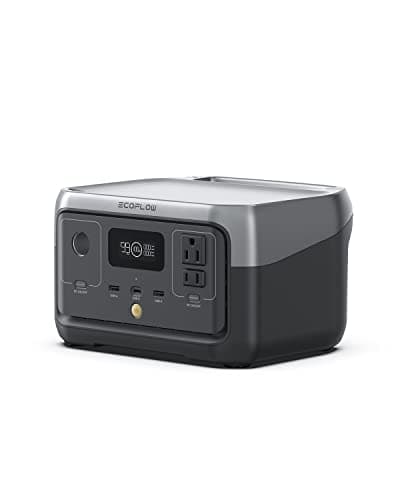
EcoFlow RIVER 2

Best for fast refilling

EcoFlow RIVER 2

256Wh at 7.7 lb that refills in about an hour.

Short outages that come and go
$198.99 · Check price on Amazon

#ad how this is funded · price as of October 20, 2026 · $249.00 20% off

3
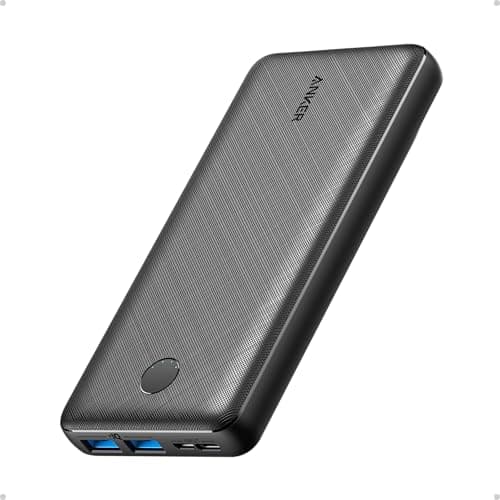
Anker 325 Power Bank (PowerCore Essential 20K)

The cheapest thing that helps

Anker 325 Power Bank (PowerCore Essential 20K)

20,000 mAh with the cable built in.

Phones only, for a fraction of the price
4
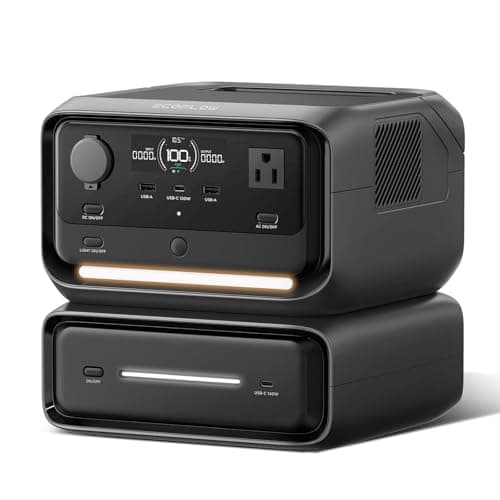
EcoFlow RIVER 3 Max

Worth stretching for

EcoFlow RIVER 3 Max

572Wh with 990W of output — roughly twice the energy of the units above.

Doubling the capacity for a modest step up
$318.99 · Check price on Amazon

#ad how this is funded · price as of October 20, 2026 · $399.00 20% off

Prices come from the retailer at page-build time and change constantly. Where no live price is available the button reads “Check price” rather than showing a number we cannot stand behind.

What this money actually buys

Somewhere between 250 and 300 watt-hours, and an inverter rated around 300W. Those two numbers define the band completely, and they describe a communications-and-lighting battery.

LoadDrawOn a 290Wh unit
Phone chargesAbout 15 Wh eachA dozen or more
Router and modem25 WAbout 10 hours
CPAP, humidifier off40 WAbout 6 hours — one night
Two LED lamps20 WAbout 12 hours
Laptop50 WAbout 5 hours
Refrigerator150 W running, 600-1,200 W to startWill not start it

Runtimes are 290Wh x 0.85 for inverter losses, divided by the draw. Refrigerator figures come from the appliance wattage chart.

The refrigerator question, answered once

No unit in this band will run a refrigerator, and the reason is not capacity — it is the inverter. A compressor demands 600 to 1,200W for a fraction of a second when it starts, and a 300W inverter refuses instantly.

If the fridge is the reason you are shopping, the honest entry point is roughly four times this budget — the refrigerator roundup covers that tier. Buying in this band and hoping is how people end up owning two batteries.

What to look for under $300

  • LiFePO4 cells if you can get them. Thousands of cycles instead of hundreds — the chemistry page explains the difference.
  • Pure sine wave output, stated. At this price some units are vague about it, and a CPAP deserves better.
  • Fast recharging. A small battery that refills in an hour is far more useful in a flickering outage than one that takes four.
  • A USB-C PD port at 60W or more, so it charges a laptop without the AC inverter running at all — which is meaningfully more efficient.
  • Weight. Under 10 lb means it gets carried, and a battery that gets used is worth more than one that does not.

Two honest alternatives to spending it here

A power bank and a lantern. If the real requirement is phones and light, that combination costs a fraction of any station and fits in a drawer — the power bank roundup covers it.

Saving up one more step. The jump from 290Wh to 500Wh or 1kWh is the single biggest capability change in the portable market, and it is what turns a device battery into an appliance battery — the under-$500 roundup is the next rung.

The short version

  • Expect 250-300Wh and a 300W inverter. That is the band.
  • It covers phones, internet, lights and a CPAP for a night.
  • It will not start a refrigerator. Not any of them.
  • Prioritize LiFePO4, pure sine and fast charging over headline watt-hours.

The picks in full

01 — Best in the band

Jackery Explorer 300

292Wh and a 300W inverter, light enough to carry in one hand.

Just under 300 watt-hours is the useful floor for a household battery: enough for two phones, a router, a couple of lamps and a CPAP without a humidifier through a normal overnight outage.

Jackery's panel range plugs straight in, which keeps a small kit coherent if you add solar later.

The honest catch: 300W of continuous output is the binding constraint. Nothing with a motor or a heating element runs on this.

Skip it ifthe refrigerator is why you are shopping. A 300W inverter cannot start one.
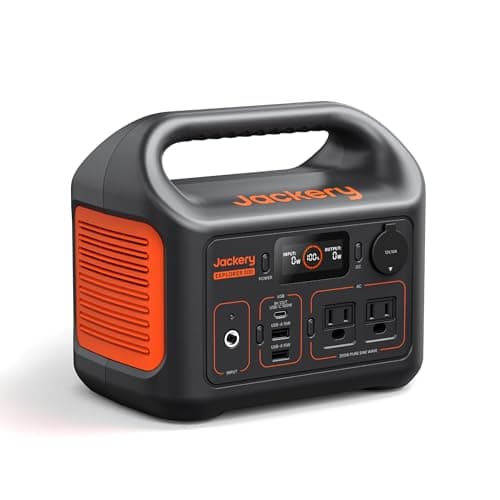
Jackery Explorer 300
$259.00 · Check price on Amazon

#ad how this is funded · price as of October 20, 2026 · $289.00 10% off

Published specifications for the Jackery Explorer 300
SpecificationPublished figure
Usable capacity292 Wh
AC output300 W
ClassSmall station for electronics, lights and a CPAP

Source: Jackery — Explorer 300 product page. These are the manufacturer's published figures, not ours — we have not tested this unit.

02 — Best for fast refilling

EcoFlow RIVER 2

256Wh at 7.7 lb that refills in about an hour.

Refilling in about an hour is what makes a small battery useful in a flickering outage: every time the grid returns briefly, the unit gets most of the way back.

At 7.7 lb it is the lightest thing here by a clear margin.

The honest catch: 256Wh is genuinely small. Treat it as a communications battery, not a household one.

Skip it ifyou need more than a night of lights and devices.

EcoFlow RIVER 2
$198.99 · Check price on Amazon

#ad how this is funded · price as of October 20, 2026 · $249.00 20% off

Published specifications for the EcoFlow RIVER 2
SpecificationPublished figure
Capacity256 Wh; the Amazon listing states 243 Wh rated
Output300 W continuous, 600 W X-Boost
ChemistryLiFePO4, 3,000+ cycles to 80%
AC recharge0–100% in about 1 hour
Weight7.7 lb
Solar inputup to 110 W
Warranty5 years
Amazon listing name"RIVER 2 240" — the same unit, listed on its rated capacity

Source: EcoFlow — RIVER 2 published specifications (256Wh, 300W, X-Boost 600W, 7.7 lbs, 3000+ cycles, 5 years). These are the manufacturer's published figures, not ours — we have not tested this unit.

03 — The cheapest thing that helps

Anker 325 Power Bank (PowerCore Essential 20K)

20,000 mAh with the cable built in.

Worth naming because a great many people shopping this band would be better served by a power bank and a good flashlight.

It charges phones several times over, weighs almost nothing and lives in a drawer without maintenance.

The honest catch: USB only. No AC outlet means no router, no lamp and no CPAP.

Skip it ifyou need an AC outlet. This has none.

Published specifications for the Anker 325 Power Bank (PowerCore Essential 20K)
SpecificationPublished figure
Capacity20,000 mAh
Output15 W
Ports2x USB-A, two-way USB-C, 1x Micro USB
Phone charges3.6 for an iPhone 15, 2.9 for a Galaxy S23 Ultra
Rechargeabout 10.5 hours from a 10 W charger
SafetyPowerIQ, VoltageBoost, NTC temperature monitoring
Warranty18 months

Source: Anker — 325 Power Bank (PowerCore Essential 20K) product page. These are the manufacturer's published figures, not ours — we have not tested this unit.

04 — Worth stretching for

EcoFlow RIVER 3 Max

572Wh with 990W of output — roughly twice the energy of the units above.

Named honestly: this sits above the band. It is here because the step from roughly 290Wh to 572Wh changes what the battery can do more than any other upgrade at this end of the market.

990W of output also opens up small appliances that 300W units refuse.

The honest catch: it costs more than this page's ceiling. If the budget is the constraint, it is not the answer.

Skip it ifthe budget is genuinely fixed. Then take the Explorer 300 and spend nothing more.

EcoFlow RIVER 3 Max
$318.99 · Check price on Amazon

#ad how this is funded · price as of October 20, 2026 · $399.00 20% off

Published specifications for the EcoFlow RIVER 3 Max
SpecificationPublished figure
Usable capacity572 Wh
AC output990 W
ClassCompact station for electronics, lights and a CPAP

Source: EcoFlow — RIVER 3 Max listing. These are the manufacturer's published figures, not ours — we have not tested this unit.

How these were chosen

We did not test these. Nobody at Watt & Warden has plugged one in. What we did instead: read the manufacturer's published specifications, compile them into a table where the figures line up, and compute the numbers manufacturers leave out — runtime against a real appliance load, and what an hour of running actually costs.

Anything that could not be sourced was left out rather than estimated, and every pick names the buyer who should skip it. The full method is here, including where it is weaker than a publisher with a test bench.

Questions people actually ask

What can a power station under $300 actually run?

Phones, a router and modem, LED lights, a laptop and a CPAP without its humidifier. At roughly 290Wh that is about ten hours of internet, six hours of CPAP, or a dozen phone charges. It will not run anything with a motor or a heating element.

Can a $300 power station run a refrigerator?

No. The limit is the inverter rather than the battery: a compressor demands 600 to 1,200W for an instant when it starts, and units in this band are rated around 300W continuous. The refrigerator tier starts at roughly four times this budget.

Is a power bank a better buy than a cheap power station?

If the honest requirement is phones and a flashlight, yes -- a 20,000 mAh bank costs a fraction as much, weighs almost nothing and needs no maintenance. A power station earns its place the moment you need an AC outlet for a router, a lamp or a CPAP.

What should I prioritize at this price?

LiFePO4 cells for cycle life, a stated pure sine wave output for medical devices, fast recharging so the unit refills during brief grid returns, and a 60W or higher USB-C port so laptops charge without running the AC inverter. Raw watt-hours matter less than these four.

How long will 290Wh run a CPAP?

About six hours with the humidifier off, planning at 85% inverter efficiency and a 40W draw -- one full night for most people. Running the heated humidifier can double or triple that draw, which is why the machines in this band are recommended with it switched off.

Sources

Every figure on this page comes from a published source. We have not tested this equipment, so the specifications are the manufacturer's and the statistics are the dataset's — the arithmetic on top of them is ours, and it is shown in full so you can check it. How we work this out.