Skip to content
Watt Warden

Solar

The Best Solar Generators Under $1,000 (2026)

A solar generator is a battery and a panel sold together. Under a thousand dollars the temptation is to buy all battery and a token panel, which produces a very expensive flashlight.

By Sawyer V.Updated Published How we work this out
EcoFlow RIVER 3 Max

Watt & Warden earns a commission on qualifying purchases made through links on this page, at no extra cost to you. It never changes a ranking, and our picks include products we tell you to skip. Full disclosure.

Quick picks

#ProductBest forPrice
1
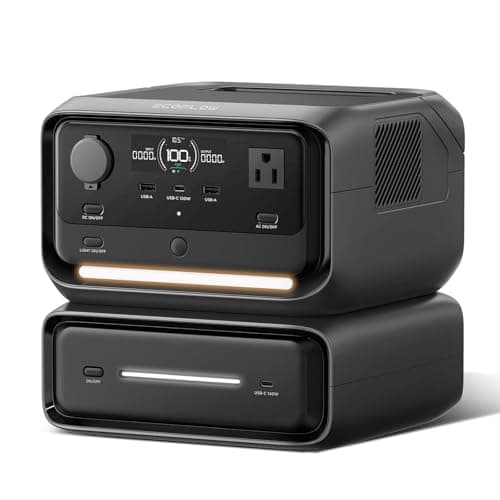
EcoFlow RIVER 3 Max

Best battery to build around

EcoFlow RIVER 3 Max

572Wh of LiFePO4, 500W output, 220W solar input and a one-hour wall recharge.

572Wh with enough solar input to matter
$318.99 · Check price on Amazon

#ad how this is funded · price as of October 20, 2026 · $399.00 20% off

2
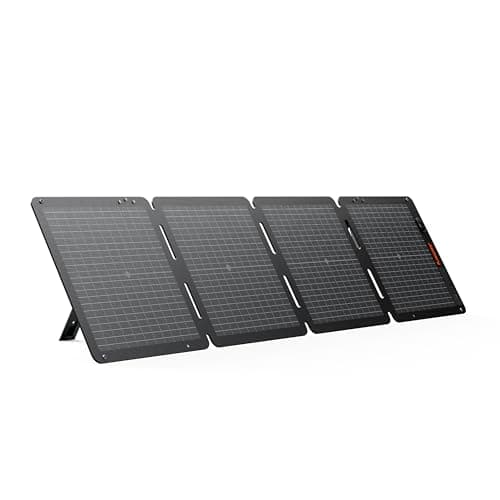
Jackery SolarSaga 100W Air

Best folding panel

Jackery SolarSaga 100W Air

100W of folding panel that stows against a seat back.

Packing flat and going outside when the sun does
$249.00 · Check price on Amazon

#ad how this is funded · price as of October 20, 2026 · $299.00 17% off

3
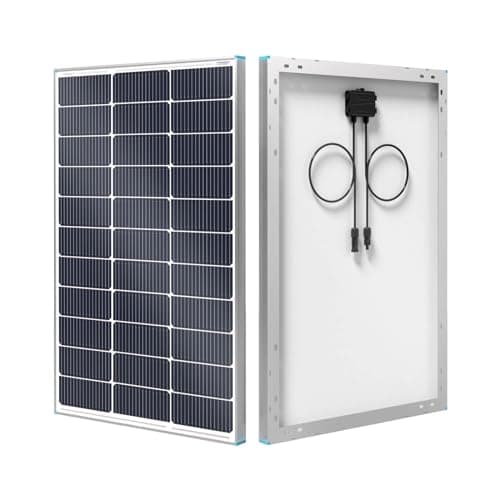
Renogy 100W N-Type Monocrystalline Solar Panel

Best value panel

Renogy 100W N-Type Monocrystalline Solar Panel

100W of rigid monocrystalline — the cheapest honest watt in the category.

A panel that lives on a shed, a cabin or a balcony rail
$89.99 · Check price on Amazon

#ad how this is funded · price as of October 20, 2026 · $99.99 10% off

4
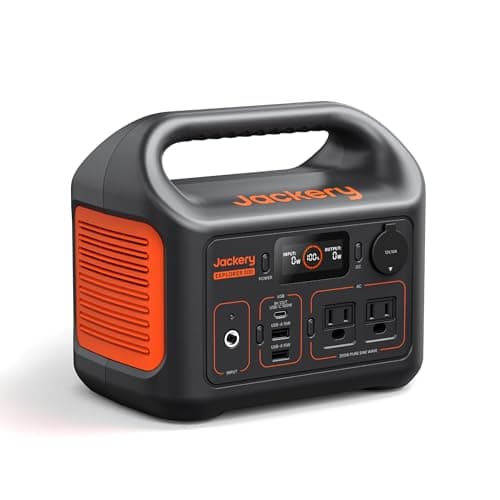
Jackery Explorer 300

Best if the budget goes to panels

Jackery Explorer 300

292Wh in a case light enough to carry in one hand.

Spending less on the battery and more on generation
$259.00 · Check price on Amazon

#ad how this is funded · price as of October 20, 2026 · $289.00 10% off

5
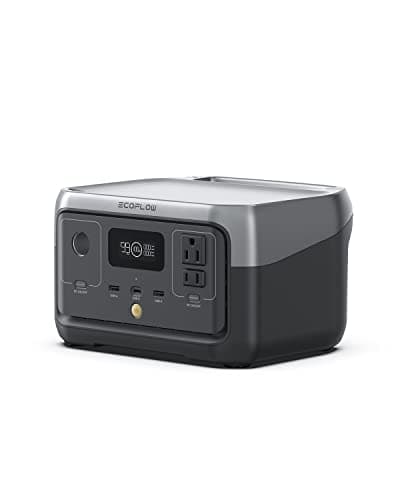
EcoFlow RIVER 2

Best entry point

EcoFlow RIVER 2

256Wh of LiFePO4 at the cheap end of the class.

A first solar setup with money left for a panel
$198.99 · Check price on Amazon

#ad how this is funded · price as of October 20, 2026 · $249.00 20% off

Prices come from the retailer at page-build time and change constantly. Where no live price is available the button reads “Check price” rather than showing a number we cannot stand behind.

What a solar generator actually is

The term is marketing rather than a product category. A "solar generator" is a portable power station plus one or more solar panels, usually sold as a bundle.

Nothing about the battery is special. The same unit sold without a panel is the same unit. What the bundle buys you is a matched connector and a single purchase decision, and sometimes a discount.

That matters at this budget, because it means you can and often should buy the two halves separately and choose each on its merits.

How to split a thousand dollars

The common mistake is buying the largest battery the budget allows and adding a token 60W or 100W panel. That produces a large store of energy you cannot refill.

SplitBehaves likeGood for
All battery, one small panelA big store with a trickle refillA single long outage, then nothing
Mid battery, 200W of panelA daily budget you can actually live onMulti-day outages, camping, off-grid weekends
Small battery, 300W of panelA generation-led systemSunny climates and daytime loads

The middle row is right for most people. Roughly half the budget on a 400-550Wh LiFePO4 battery and half on 200W of panel produces a system that genuinely refills day to day.

The number that governs everything

A 100W panel does not produce 100 watt-hours per hour of daylight. Across a good summer day it returns something like 400 to 500 watt-hours, once you account for sun angle, temperature, cloud and controller losses.

ArrayGood summer dayOvercast or winter
100 W400-500 WhOften under 150 Wh
200 W800-1,000 WhOften under 300 Wh
300 W1,200-1,500 WhOften under 450 Wh

Figures use the 400-500Wh per 100W per good summer day convention used across this site. Winter and overcast figures vary enormously with latitude and weather — the cloudy day page covers how far output falls.

Read the middle row against the battery you are considering. 200W of panel refills a 572Wh pack roughly twice over on a good day and not at all on a bad one, which is the honest shape of solar at this budget.

Check the input limit before buying panels

Every power station publishes a maximum solar input in watts and a voltage range, and exceeding either does nothing useful — the controller simply clips.

The units in this band typically accept 110W to 220W. Buying 400W of panel for a 110W input wastes most of it, and that is a genuinely common and expensive mistake.

Check the maximum input watts, the maximum voltage, and whether panels should be wired in series or parallel to stay inside both. The connector guide covers the wiring side.

Folding or rigid?

This is the decision that most affects value at this budget.

Folding panels cost considerably more per watt and are the right choice if the panel travels — camping, a balcony you bring it in from, a battery you carry.

Rigid panels are the cheapest honest watts available. If the panel has a permanent home on a shed, a fence or a flat roof, you get substantially more generation for the same money.

A lot of the best value at this budget is a mid-size battery plus two rigid panels semi-permanently mounted, rather than a bundle. The portable panel page covers the folding side properly.

What this budget will not do

Being clear saves disappointment.

  • It will not run a refrigerator through a long outage. That needs the 1,000Wh band and more panel — the home backup page covers those combinations.
  • It will not run anything that makes heat. A kettle, a heater, a hair dryer — all of them exceed the inverter, and none of them are within a day's generation anyway.
  • It will not reach a hardwired circuit. No 240V, no transfer switch, no furnace or well pump.
  • It will not produce much in winter. Output in December at northern latitudes can be a quarter of the July figure.

What it will do, reliably: keep phones, laptops, lighting, a router and a CPAP running indefinitely as long as the sun comes out every few days. For a lot of households that is the whole requirement.

The short version

  • Split the budget roughly evenly. The panel is the half that gets skimped.
  • 200W of panel is the threshold where a small battery becomes a daily budget.
  • Check the input limit first. Panels beyond it are wasted money.
  • Rigid panels if they have a home, folding if they travel.
The picks in full

01 — Best battery to build around

EcoFlow RIVER 3 Max

572Wh of LiFePO4, 500W output, 220W solar input and a one-hour wall recharge.

220W of solar input is what makes this a solar generator rather than a battery with a panel socket. It means a real two-panel array can refill the pack in a good afternoon.

LiFePO4 rated past 3,000 cycles matters at this budget specifically, because the cheaper alternatives in the band often use older chemistry with a fraction of the life and do not say so loudly.

The one-hour wall recharge is the underrated feature — during a real outage, power returns in windows before it stays on.

The honest catch: 572Wh is a devices-and-network battery. It will not carry a fridge, and no panel changes that.

Skip it ifa refrigerator is the point. That needs the 1,000Wh band.

EcoFlow RIVER 3 Max
$318.99 · Check price on Amazon

#ad how this is funded · price as of October 20, 2026 · $399.00 20% off

Published specifications for the EcoFlow RIVER 3 Max
SpecificationPublished figure
Usable capacity572 Wh
AC output990 W
ClassCompact station for electronics, lights and a CPAP

Source: EcoFlow — RIVER 3 Max listing. These are the manufacturer's published figures, not ours — we have not tested this unit.

02 — Best folding panel

Jackery SolarSaga 100W Air

100W of folding panel that stows against a seat back.

Folding panels are what make this category portable, and they are the right format for a battery you carry.

Be realistic about output: 100W of panel returns something like 400 to 500Wh across a good summer day, not 100W times the daylight hours. The panel arithmetic page explains why, and it is the single most useful thing to understand before buying at this budget.

The honest catch: one panel is a slow refill. Two is the number that makes a 572Wh battery behave like a renewable source rather than a store.

Skip it ifthe panel will live in one place. A rigid panel is cheaper per watt.

Jackery SolarSaga 100W Air
$249.00 · Check price on Amazon

#ad how this is funded · price as of October 20, 2026 · $299.00 17% off

Published specifications for the Jackery SolarSaga 100W Air
SpecificationPublished figure
Rated output100 W
Cell typeBifacial monocrystalline
CompatibilityJackery Explorer stations

Source: Jackery — SolarSaga 100W Air listing. These are the manufacturer's published figures, not ours — we have not tested this unit.

03 — Best value panel

Renogy 100W N-Type Monocrystalline Solar Panel

100W of rigid monocrystalline — the cheapest honest watt in the category.

A rigid panel costs substantially less per watt than a folding one, and if the panel has a permanent home that trade is free money.

Two of these on a south-facing fence or shed roof produce more, more reliably, than a single folding panel somebody has to remember to put out.

The honest catch: it needs mounting, and it needs a cable run — the connector guide covers what fits what.

Skip it ifyou need to carry it. Rigid panels are not portable in any useful sense.

Renogy 100W N-Type Monocrystalline Solar Panel
$89.99 · Check price on Amazon

#ad how this is funded · price as of October 20, 2026 · $99.99 10% off

Published specifications for the Renogy 100W N-Type Monocrystalline Solar Panel
SpecificationPublished figure
Rated output100 W
Cell typeN-type monocrystalline, 16BB
Conversion efficiencyUp to 25%
Ingress ratingIP67
DesignSmaller and lighter than the previous generation, per the listing
Nominal system voltageNot stated in the listing we checked

Source: Renogy — 100W N-type 16BB solar panel retail listing. These are the manufacturer's published figures, not ours — we have not tested this unit.

04 — Best if the budget goes to panels

Jackery Explorer 300

292Wh in a case light enough to carry in one hand.

The deliberately contrarian pick. A smaller battery with two panels behind it often outperforms a larger battery with one, because the constraint at this budget is daily generation rather than storage.

292Wh refills from 200W of panel in a good half-day, which means it behaves like a renewable source rather than something you ration.

The honest catch: a small battery with no sun is a small battery. In a week of overcast weather the larger pack wins.

Skip it ifyou need two CPAP nights. Then the larger battery is the right call.

Jackery Explorer 300
$259.00 · Check price on Amazon

#ad how this is funded · price as of October 20, 2026 · $289.00 10% off

Published specifications for the Jackery Explorer 300
SpecificationPublished figure
Usable capacity292 Wh
AC output300 W
ClassSmall station for electronics, lights and a CPAP

Source: Jackery — Explorer 300 product page. These are the manufacturer's published figures, not ours — we have not tested this unit.

05 — Best entry point

EcoFlow RIVER 2

256Wh of LiFePO4 at the cheap end of the class.

LiFePO4 at this price is the meaningful part, and it leaves the majority of a thousand-dollar budget for panels — which is the right way round.

The honest catch: the inverter is modest. Check any AC appliance against it before assuming it will run.

Skip it ifyou have an appliance on the list.

EcoFlow RIVER 2
$198.99 · Check price on Amazon

#ad how this is funded · price as of October 20, 2026 · $249.00 20% off

Published specifications for the EcoFlow RIVER 2
SpecificationPublished figure
Capacity256 Wh; the Amazon listing states 243 Wh rated
Output300 W continuous, 600 W X-Boost
ChemistryLiFePO4, 3,000+ cycles to 80%
AC recharge0–100% in about 1 hour
Weight7.7 lb
Solar inputup to 110 W
Warranty5 years
Amazon listing name"RIVER 2 240" — the same unit, listed on its rated capacity

Source: EcoFlow — RIVER 2 published specifications (256Wh, 300W, X-Boost 600W, 7.7 lbs, 3000+ cycles, 5 years). These are the manufacturer's published figures, not ours — we have not tested this unit.

How these were chosen

We did not test these. Nobody at Watt & Warden has plugged one in. What we did instead: read the manufacturer's published specifications, compile them into a table where the figures line up, and compute the numbers manufacturers leave out — runtime against a real appliance load, and what an hour of running actually costs.

Anything that could not be sourced was left out rather than estimated, and every pick names the buyer who should skip it. The full method is here, including where it is weaker than a publisher with a test bench.

Questions people actually ask

What is the best solar generator under $1,000?

For most people, a 400 to 550Wh LiFePO4 battery paired with about 200W of panel, bought as two decisions rather than one bundle. That combination genuinely refills day to day, where the common alternative -- the largest battery the budget allows plus a token 100W panel -- is a big store of energy you cannot replenish.

How much solar do I need for a power station under $1,000?

Around 200W is the threshold where the system stops being a store and starts being a daily budget. A 100W panel returns roughly 400 to 500Wh across a good summer day, so 200W refills a 572Wh pack about twice over on a good day. Check your battery's maximum solar input first -- most in this band accept 110W to 220W.

Can a solar generator under $1,000 run a refrigerator?

Not usefully. Batteries at this budget are 250 to 550Wh, which is about three hours of a refrigerator at best, and most cannot reliably start the compressor. A fridge needs the 1,000Wh band with 1,800W of inverter, which sits above this budget once you add meaningful panel.

Should I buy a solar generator bundle or separate parts?

Often separate, at this budget. A bundle buys you a matched connector and one decision, but bundles frequently pair a decent battery with an undersized panel. Buying the battery on chemistry, inverter and input limit, and the panel on cost per watt, usually produces a better system for the same money.

Are folding or rigid solar panels better value?

Rigid, substantially, if the panel has a permanent home on a shed, fence or flat roof. Folding panels cost considerably more per watt and earn it only when the panel travels. A mid-size battery plus two rigid panels semi-permanently mounted is often the best value available under a thousand dollars.

Sources

Every figure on this page comes from a published source. We have not tested this equipment, so the specifications are the manufacturer's and the statistics are the dataset's — the arithmetic on top of them is ours, and it is shown in full so you can check it. How we work this out.