One burner, then the whole appliance
Champion's published wattage chart puts a single electric range burner at 1,200 to 2,400 watts. That figure alone already exceeds what most portable power stations can deliver continuously.
The whole range is a different animal. An electric range is wired to a 240V circuit protected at 40 or 50 amps, which is a theoretical ceiling of 9,600 to 12,000 watts. In practice everything is never on at once, but an oven element plus two burners will comfortably clear 6,000W.
| What is running | Typical draw | Can a battery do it? |
|---|
| One small burner, low | ~1,200 W | A large 120V station can, briefly |
|---|
| One large burner, high | ~2,400 W | Only the largest units, and not for long |
|---|
| Oven preheating | ~3,000-5,000 W | No |
|---|
| Oven and two burners | 6,000 W and up | No. Generator territory |
|---|
| Circuit rating (40-50 A at 240 V) | 9,600-12,000 W ceiling | No |
|---|
The single-burner figure is Champion's published number. The oven and combined figures are derived from the circuit rating and normal element sizes, and your appliance's own nameplate is the number that counts — here is where to find it.
The 240V problem, which is separate from the watts
Even if a battery could supply 5,000W, most cannot supply it at 240 volts, and an electric range will not run on 120V at any wattage. The voltage is not a detail you can work around with a bigger number.
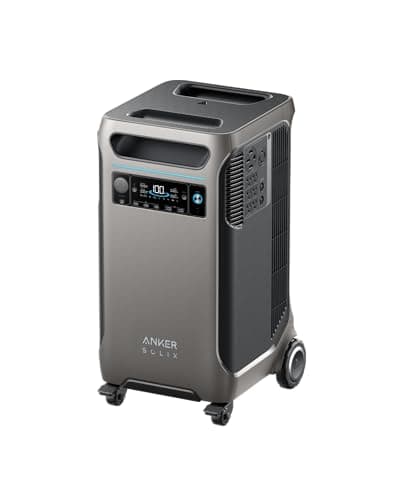
Almost every portable power station on the market is a 120V machine. Split-phase 120/240V portables exist — they are rare, large and expensive — and that is the entire reason they command a premium.
There is a second wiring problem. A range is usually hardwired or on a dedicated 14-50 receptacle behind the appliance, so even with a 240V source you need a transfer switch or an interlock to feed that circuit legally. The connection guide covers the options, none of which involve plugging anything into the range outlet.
The energy cost, which surprises people twice
Cooking is short, so the energy is smaller than the wattage implies — and it is still a lot for a battery.
| Task | Energy | Share of a 2,000Wh battery |
|---|
| Boil a pan of water, 10 min at 2,000 W | ~333 Wh | About a fifth |
|---|
| Simmer for 30 min at 800 W | ~400 Wh | About a quarter |
|---|
| One burner on high for an hour | ~2,400 Wh | More than all of it |
|---|
| Bake for an hour, cycling | ~2,000-3,000 Wh | All of it, and then some |
|---|
Energy is watts x hours. Ovens cycle their elements to hold temperature, so the average is well below the peak draw — but the total is still the largest cooking load in the house.
Compare that with a microwave, which does a plate of food for about 75Wh, and the conclusion writes itself: a microwave is the efficient way to cook on stored power, and the range is the expensive one.
What to do instead
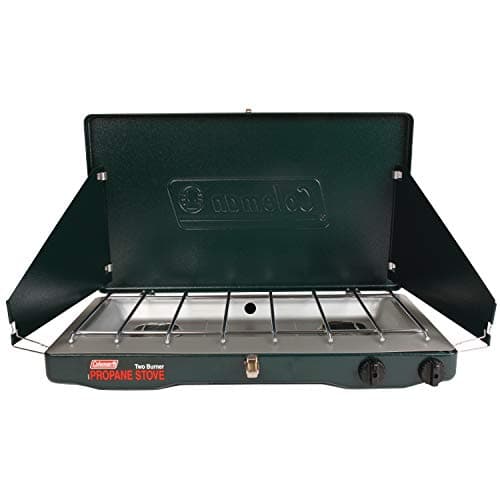
- Buy a propane camp stove. It costs a fraction of any electrical solution, it works outdoors in any weather, and it removes cooking from the backup plan entirely.
- Use the microwave for reheating. An 1,800W inverter runs one, and a plate of food costs almost nothing in energy.
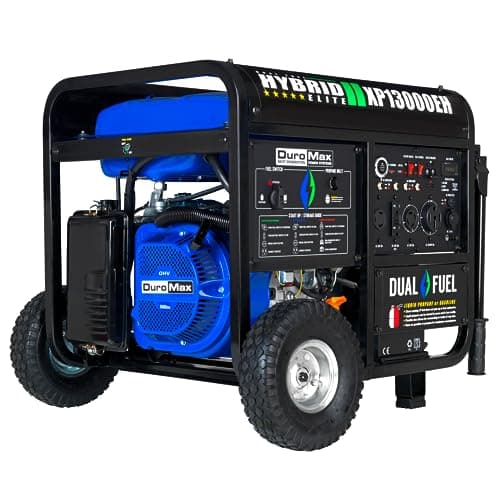
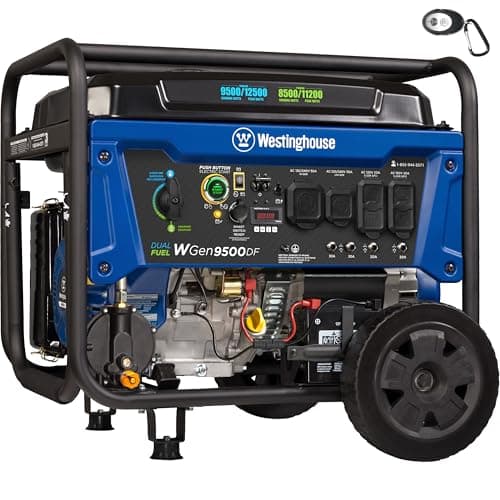
- If the range must be backed up, do it with a generator and a transfer switch. That means 9,500W or more, 240V, and an electrician.
- Consider what you actually cook in an outage. Most outage cooking is heating water and reheating food, neither of which needs a range.
Induction cooktops are no cheaper
A portable induction cooktop is more efficient at putting heat into a pan than a coil element, but the draw is comparable: a single portable unit is typically 1,200 to 1,800W, which is the same inverter problem in a smaller box. The efficiency gain shows up as shorter run times rather than lower wattage.
The short version
- One burner: 1,200 to 2,400W. A whole range: a 240V, 40 to 50A circuit.
- Voltage, not wattage, is the blocker. A 120V power station cannot run a range at any capacity.
- An hour of one burner is more than a 2kWh battery holds.
- Buy a propane camp stove and spend the electrical budget on the refrigerator, the furnace and the well pump.