The verdict, in one paragraph
A heat pump does not have one wattage. It modulates with outdoor temperature and load, so published figures describe circuits rather than consumption. The compressor side is manageable: using Champion's published central-unit figures as the closest proxy, a 2-ton unit runs at 2,000 to 2,500W and starts at 3,500 to 4,500W; a 3-ton runs at 3,000 to 3,500W and starts at 5,000 to 6,000W. The number that actually breaks backup plans is the auxiliary electric strip heat, which Goodman publishes at a real 9.6kW for a 10kW-size kit, 14.4kW for a 15-size and 19.2kW for a 20-size at 240V. That is more than any battery on this site can produce and more than most home generators. The workable plan is to power the compressor and air handler and lock out auxiliary heat.
Why there is no single number
Three things make a heat pump different from the appliances on the rest of this hub:
- It modulates. A modern inverter-driven system varies compressor speed continuously, so its draw at 45°F outdoors is a fraction of its draw at 15°F. A refrigerator cycles on and off; a heat pump slides up and down.
- Efficiency is the whole point, and it varies. As DOE material puts it, a unit with a coefficient of performance of 3 delivers three units of energy for every one consumed — but COP falls as it gets colder, which is exactly when you need more heat.
- There are two heat sources in one system. The compressor, and the electric resistance heat behind it. They have wildly different electrical appetites and the thermostat decides which is running.
MCA is not consumption, and this trips everyone
The number on a heat pump nameplate is usually MCA — minimum circuit ampacity — with an MOCP, the maximum overcurrent protection. Published examples from Mitsubishi Electric outdoor units:
| Unit | Supply | MCA | Breaker / MOCP |
|---|
| MXZ-3C30NAHZ2 | 208/230V, 1-phase, 60 Hz | 30.5 A | 40 A recommended |
|---|
| MXZ-SM48NAM2 (branch box separate) | 208/230V, 1-phase | 36 A | 64 A MOCP |
|---|
| MXZ-SM48NAM2 (branch box from outdoor unit) | 208/230V, 1-phase | 42.0 A | 70 A MOCP |
|---|
Figures from Mitsubishi Electric submittal sheets, cited under Sources. MCA is a circuit-sizing value calculated for wire and breaker selection, not a measurement of what the unit draws. Multiplying MCA by voltage overstates real consumption, often substantially.
So if someone tells you their heat pump "uses 7,000 watts" because the nameplate says 30.5 A at 230V, they have read a circuit specification as a power figure. The running draw is lower and varies.
The closest published figures we have
No manufacturer we checked publishes running and starting watts for a heat pump the way generator wattage charts do for other appliances — Champion's chart, which this site uses across the sizing hub, has no heat pump entry at all. The nearest honest proxy is the central air conditioner row, because a heat pump in heating mode is running the same compressor, just with the refrigerant cycle reversed:
| Compressor size | Running watts | Starting watts |
|---|
| 2 ton (24,000 Btu/hr) | 2,000-2,500 W | 3,500-4,500 W |
|---|
| 3 ton (36,000 Btu/hr) | 3,000-3,500 W | 5,000-6,000 W |
|---|
| 4 ton | 4,000-5,000 W | 6,500-8,000 W |
|---|
| Air handler blower (1/2 HP equivalent) | 300-800 W | 800-1,600 W |
|---|
Central air conditioner and furnace fan rows are Champion's published wattage-chart figures, used here as the closest available proxy for a heat pump compressor and air handler. They are not heat-pump-specific published figures, because we could not find any — and a modulating inverter-driven unit will often draw well under these at part load.
The number that actually decides it: auxiliary heat
This is the finding. When a heat pump cannot keep up — deep cold, a large thermostat setback, or a defrost cycle — the system energizes electric resistance strip heat. Goodman publishes field-installed heater kits from 3kW to 25kW, sized to the outdoor unit:
- A 2-ton outdoor unit limits the kit to 10kW.
- A 3-ton unit allows up to 15kW.
- A 3.5-ton unit allows up to 20kW.
And the actual capacity at residential voltage is published on the HKTS-series kits: 9.6kW for the 10-size, 14.4kW for the 15-size and 19.2kW for the 20-size at 240V.
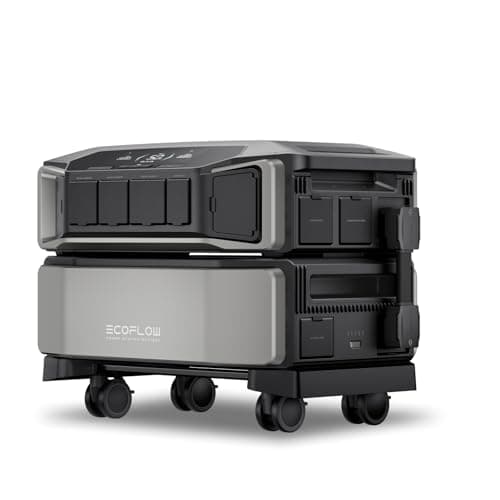
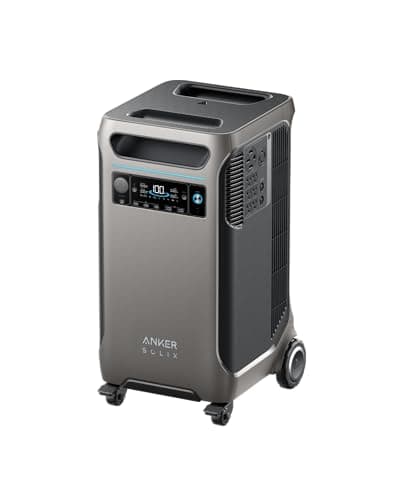
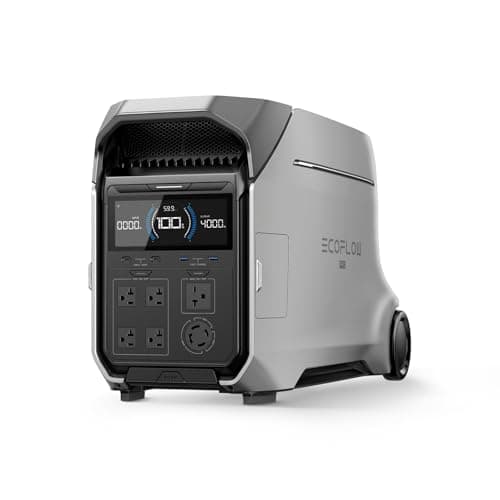
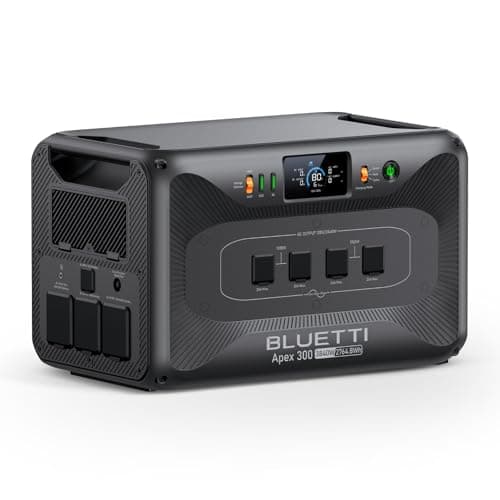
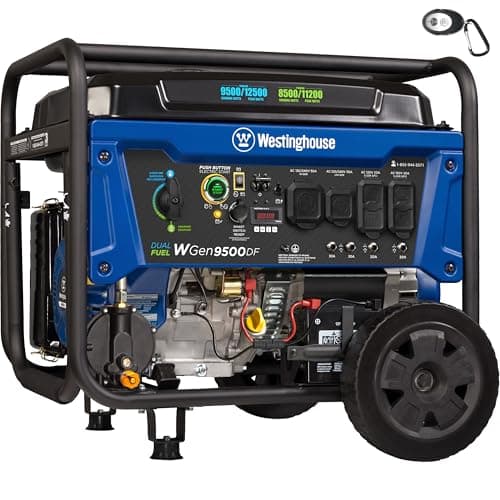
Put that beside the backup equipment on this site. The largest battery here produces 7,200W. A large home generator produces 9,500W. A 14.4kW strip-heat stage exceeds both, and a 19.2kW stage exceeds them by a wide margin. Strip heat is not something you back up; it is something you lock out.
Why a heat pump house is harder to back up than a gas one
On a gas furnace, the burner makes the heat and electricity only turns the blower — this site's working figure is about 800W running. A 2kWh battery covers a winter night. The furnace page has that arithmetic.
On a heat pump there is no fuel. Every joule of heat comes through the meter, and two further problems follow:
- The air handler is usually on the 240V circuit shared with the strip heat, not on a 120V cord like a gas furnace blower. You cannot simply plug it into a power station.
- Defrost energizes auxiliary heat. Periodically the system reverses to clear frost from the outdoor coil and runs strip heat to stop blowing cold air indoors. That can happen in weather that is not even especially cold.
This is why a heat pump household often ends up at backup power for a home with electric heat, which treats the problem as one of shedding rather than supplying.
The practical plan
- Read your own nameplate on the outdoor unit and the air handler. Note the MCA and MOCP on each, and the strip-heat kW if one is listed — that last figure is the one that decides everything. Reading a nameplate covers what the numbers mean.
- Lock out auxiliary heat. Most thermostats can disable the strip stages, and many installers will set an outdoor lockout. This is the single decision that makes backup possible.
- Size the source on the compressor start, not the running figure. Use the 2-, 3- or 4-ton starting band above as the target.
- Confirm the source produces 240V. A heat pump is a 240V load, so a 120V-only battery of any capacity cannot run one — the split-phase shortlist is the page on that.
- Have a fallback that is not the heat pump. If the cold is deep enough to need strip heat, plan to protect the house rather than heat it — keeping pipes from freezing is the page for that night.
A soft starter is worth pricing before a bigger generator if the compressor start is what pushes you up a tier — soft starter versus a bigger machine runs that comparison.
The short version
A heat pump has no fixed wattage because it modulates, and the MCA on the nameplate is a circuit-sizing figure rather than a consumption one. Using the closest published proxy, the compressor runs at 2,000 to 3,500W depending on tonnage and starts at 3,500 to 6,000W — all within reach of a 6,000W-plus split-phase battery or a 9,500W generator. The auxiliary strip heat behind it is published at 9.6 to 19.2kW at 240V and is beyond every piece of backup power on this site, so the plan is always: power the compressor and the air handler, lock out the strip heat, and have a way to protect the pipes for the nights when that is not enough.