Skip to content
Watt Warden

Home Standby

LiFePO4 Home Battery Backup: What Can Legally Go Indoors

UL publishes a marking for batteries suitable for residential dwelling units, and also says it has not yet found a lithium-ion system that qualifies for it. That single fact reorganizes this entire question.

By Sawyer V.Updated Published How we work this out
A clean, well-lit empty parking garage interior with structural columns.

Watt & Warden earns a commission on qualifying purchases made through links on this page, at no extra cost to you. It never changes a ranking, and our picks include products we tell you to skip. Full disclosure.

Quick picks

#ProductBest forPrice
1
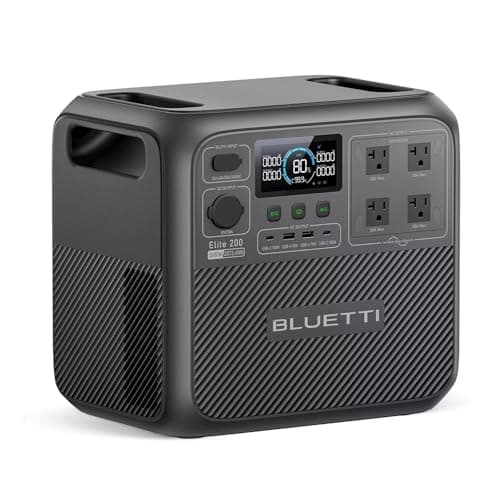
BLUETTI Elite 200 V2

The indoor answer, because it is not an installation

BLUETTI Elite 200 V2

2,073.6Wh of automotive-grade LFP on 6,000+ cycle cells, plugged in rather than wired in - which is why the siting rules above do not reach it.

Backup power in a room you actually live in
$1,399.00 · Check price on Amazon

#ad how this is funded · price as of October 20, 2026

2
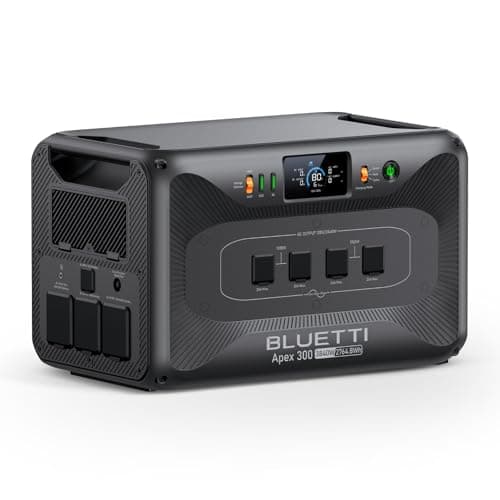
BLUETTI Apex 300

Most capacity that is still plug-in

BLUETTI Apex 300

2,764.8Wh of LFP rated 6,000 cycles with simultaneous 120V/240V - under the 20kWh per-unit residential ceiling with room to spare.

Whole-circuit backup without a wall-mounted ESS
$1,498.98 · Check price on Amazon

#ad how this is funded · price as of October 20, 2026 · $1,699.00 12% off

3
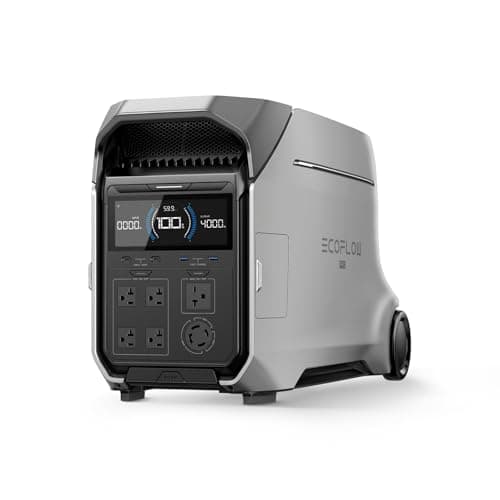
EcoFlow DELTA Pro 3

The one that publishes a UL 9540 listing

EcoFlow DELTA Pro 3

4,096Wh of LFP rated 4,000 cycles, with UL 9540 certification published and an IP65-rated battery pack.

A buyer who wants a verifiable third-party listing
$2,799.00 · Check price on Amazon

#ad how this is funded · price as of October 20, 2026 · $3,699.00 24% off

4
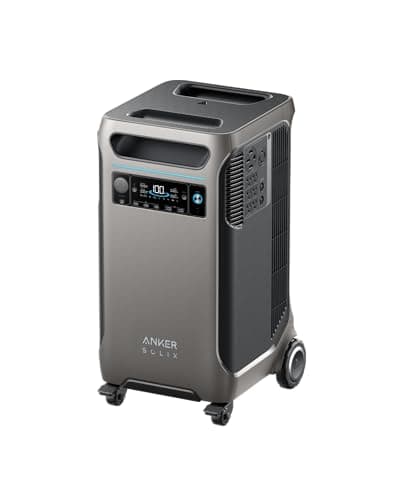
Anker SOLIX F3800

Garage-sited whole-home, without touching living space

Anker SOLIX F3800

3,840Wh of LFP at 6,000W and 120V/240V - sized and sited for the garage tier, where the aggregate allowance is highest.

A house that wants panel-level backup in the garage
$1,759.99 · Check price on Amazon

#ad how this is funded · price as of October 20, 2026

5
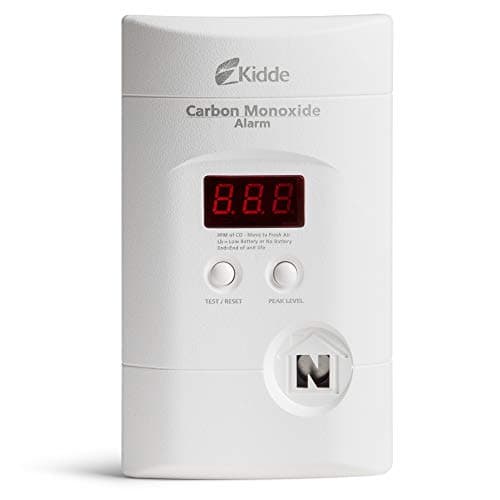
Kidde Nighthawk KN-COPP-3 CO alarm

The detector the chemistry does not remove the need for

Kidde Nighthawk KN-COPP-3 CO alarm

A plug-in CO alarm with battery backup - because the reason to prefer a battery indoors is that it has no exhaust, and the alternative does.

Any house where backup power involves combustion at any point
$44.99 · Check price on Amazon

#ad how this is funded · price as of October 20, 2026

Prices come from the retailer at page-build time and change constantly. Where no live price is available the button reads “Check price” rather than showing a number we cannot stand behind.

The verdict, in one paragraph

If you mean a hardwired whole-home battery, the honest answer is that it does not go in living space. UL publishes a marking — "Suitable for Use in Residential Dwelling Units Where Permitted" — for systems meeting the UL 9540A cell-level requirements, and UL also states that it has not yet found any lithium-ion ESS that meets those cell-level requirements. Proposed instructions limit indoor residential systems to garages, sheds, enclosed utility closets, basements and storage or utility spaces, with habitable spaces prohibited. If you mean a portable LFP power station, it is a different product class — certified to UL 2743 rather than UL 9540 — and it is routinely used indoors, which is why the practical answer for most households is a plug-in unit rather than a wall-mounted one.

Two product classes, two sets of rules

Almost every confused answer to this question comes from collapsing two different things into one:

Stationary residential ESSPortable power station
Listing standardANSI/CAN/UL 9540UL 2743
Capacity ceiling in the standard20 kWh per individual unitUL 2743 limits aggregate lithium-ion to 20 kWh
How it connectsHardwired, permit, inspectionPlugged in
Location rules apply?Yes - aggregate limits by room typeNot as a portable unit; NFPA 855 scope covers portable ESS installed in a stationary situation
Typical examplesTesla Powerwall 3, wall-mounted home ESSBLUETTI Elite series, EcoFlow DELTA, Anker SOLIX F-series

From UL's published code-authority guidance, cited under Sources. UL notes separately that combining independently certified products in the field does not create a certified (Listed) system — relevant to anyone assembling a battery, an inverter and a transfer switch from different makers.

Where a hardwired battery may go, and how much

The residential figures published in UL's code-authority guidance, which track IRC Section R328 and NFPA 855 Chapter 15:

LocationAggregate limit
Attached or detached garage80 kWh
Detached accessory structure80 kWh
Exterior wall80 kWh
Outdoors, on the ground80 kWh
Enclosed utility closet, basement, storage or utility space40 kWh
Sleeping room, or a closet opening into oneProhibited
Habitable or living spaceProhibited, except where cells pass the UL 9540A cell-level test

Individual units are capped at 20 kWh, and units must be separated by at least 3 feet unless a UL 9540A test report documents a smaller distance. Larger ratings are also possible where a UL 9540A report supports them. Local adoption varies — confirm with your authority having jurisdiction before relying on any of it.

One more published requirement that catches people in unfinished basements and garages: UL states that unfinished wood-framed walls and ceilings must be covered with no less than 5/8-inch Type X gypsum wallboard. That is a real line item in an installation quote, not a formality.

Why LiFePO4 is the chemistry people ask for

The question almost always arrives as "LiFePO4 for indoor safety," and the instinct is sound even though the codes do not make the distinction:

  • Thermal stability. LFP is markedly more stable than the nickel-based chemistries the category used to ship, which is the whole reason it took over.
  • Cycle life. BLUETTI publishes 6,000+ cycles on current LFP models and 6,000 to 80% on the Apex 300; EcoFlow publishes 4,000 to 80% on the DELTA Pro 3. Those numbers simply did not exist on NMC units.
  • Behavior at full charge. LFP tolerates sitting near full far better, which is exactly how a backup battery lives.

But note what the codes do and do not say: the kWh limits, the location rules and the separation distances do not vary by chemistry. They are written for lithium- ion energy storage as a class. Buying LFP is a good engineering decision and it does not unlock a location that would otherwise be prohibited. LiFePO4 versus lithium-ion covers the chemistry comparison in full.

What this means for a real household

  • You want backup in a bedroom, office or living room: a portable LFP station. It is the only option that is both legal and sensible, and it is what the overwhelming majority of people actually buy.
  • You want whole-home coverage: plan on the garage, an exterior wall, or outdoors. That is where the 80 kWh tier sits and where installers put these systems.
  • Your only candidate space is an interior utility closet: the aggregate ceiling halves to 40 kWh, and the 5/8-inch Type X gypsum requirement is likely to apply.
  • You are assembling components yourself: read UL's line again — combining independently certified products in the field does not create a certified system. All-in-one systems versus components covers what that costs you.
  • You are in a townhouse or an HOA: the siting options narrow considerably — battery backup for an HOA townhouse works through it.

The short version

A hardwired whole-home battery goes in the garage, on an exterior wall, in a basement or utility space, or outdoors — not in living space, and not in or beside a bedroom. LiFePO4 is the right chemistry and it does not change any of those rules, because the codes are written for lithium-ion as a class. UL's own statement that no lithium-ion ESS has yet met the cell-level test for dwelling units is the clearest line anyone has published on this. For backup inside the rooms you actually occupy, the answer is a portable LFP station, which is a different product class under a different standard — and check your local authority before relying on any figure here.

The picks in full

01 — The indoor answer, because it is not an installation

BLUETTI Elite 200 V2

2,073.6Wh of automotive-grade LFP on 6,000+ cycle cells, plugged in rather than wired in - which is why the siting rules above do not reach it.

This is the practical resolution to the whole question. A portable station is not a stationary residential battery energy storage system, so the location limits that govern a wall-mounted ESS do not apply to a unit you set on the floor and plug in.

LFP chemistry is the reason people ask about indoor use at all. It runs cooler and is substantially more thermally stable than the NMC cells this category used to ship, which is why effectively every current unit on this site uses it.

The honest catch: "different product class" is not "no rules." NFPA 855's scope covers mobile and portable energy storage installed in a stationary situation, so a unit permanently wired into a dwelling stops being portable in the eyes of the code.

Skip it ifyou want whole-home coverage. A plug-in unit backs up what is plugged into it.

BLUETTI Elite 200 V2
$1,399.00 · Check price on Amazon

#ad how this is funded · price as of October 20, 2026

Published specifications for the BLUETTI Elite 200 V2
SpecificationPublished figure
Usable capacity2,073.6 Wh
Cell chemistryAutomotive-grade LiFePO4 (LFP)
AC output2,600 W continuous / 3,900 W power lifting
Cycle life6,000+ cycles
Fast charge0–80% in 50 min via dual AC/DC input

Source: BLUETTI — Elite 200 V2 product specifications. These are the manufacturer's published figures, not ours — we have not tested this unit.

02 — Most capacity that is still plug-in

BLUETTI Apex 300

2,764.8Wh of LFP rated 6,000 cycles with simultaneous 120V/240V - under the 20kWh per-unit residential ceiling with room to spare.

Under three kilowatt-hours sits comfortably below the 20kWh individual-unit limit the residential codes apply, and well below the 40kWh aggregate figure for interior non-habitable spaces.

What makes it unusual is that it reaches 240V circuits without being a wall-mounted system — so a well pump can be backed up without triggering the siting rules that govern a hardwired ESS.

The honest catch: BLUETTI does not publish a UL 9540 or UL 2743 listing in a place we could find. If a listing number is part of your decision, ask before you buy rather than assuming.

Skip it ifyou want it hardwired into a panel. That turns it into an installation with siting rules attached.

BLUETTI Apex 300
$1,498.98 · Check price on Amazon

#ad how this is funded · price as of October 20, 2026 · $1,699.00 12% off

Published specifications for the BLUETTI Apex 300
SpecificationPublished figure
Capacity2,764.8 Wh
Cell chemistryLiFePO4 (LFP)
AC output3,840 W continuous pure sine / 7,680 W lifting
Voltage120V and 240V simultaneous output
Max solar input2,400 W (2 x 1,200 W, 12-60 V, 20 A each)
ExpansionB300K at 2,764.8 Wh each, or B500K at 5,120 Wh each
Cycle life6,000 cycles to 80% capacity
Weight83.78 lb (38 kg)
Warranty5 years

Source: BLUETTI — Apex 300 RV power system guide (published specifications). These are the manufacturer's published figures, not ours — we have not tested this unit.

03 — The one that publishes a UL 9540 listing

EcoFlow DELTA Pro 3

4,096Wh of LFP rated 4,000 cycles, with UL 9540 certification published and an IP65-rated battery pack.

EcoFlow publishes UL 9540 certification for the DELTA Pro 3, which is the listing standard the residential codes require for a stationary ESS. Most portable units publish nothing comparable.

It also publishes an IP65-rated battery pack, which EcoFlow describes as resisting impacts, water, dust and fire — relevant to garage and basement siting where a plug-in unit legitimately lives.

The honest catch: 4,096Wh is still well under the 20kWh unit limit, so the listing is not doing code work here. It is evidence of third-party testing, which is a different and still useful thing.

Skip it ifyou expected a listing to mean living-space approval. It does not - UL 9540 is the ESS listing standard, not a living-room permit.

EcoFlow DELTA Pro 3
$2,799.00 · Check price on Amazon

#ad how this is funded · price as of October 20, 2026 · $3,699.00 24% off

Published specifications for the EcoFlow DELTA Pro 3
SpecificationPublished figure
Capacity4,096 Wh
Cell chemistryLiFePO4 (LFP)
AC output4,000 W, 120V / 240V
Cycle life4,000+ cycles to 80% capacity
Wall recharge0-80% in about 1 hour
Max solar input2,600 W
Expansion4 kWh to 48 kWh

Source: EcoFlow — DELTA Pro 3 product listing. These are the manufacturer's published figures, not ours — we have not tested this unit.

04 — Garage-sited whole-home, without touching living space

Anker SOLIX F3800

3,840Wh of LFP at 6,000W and 120V/240V - sized and sited for the garage tier, where the aggregate allowance is highest.

Garages, detached accessory structures, exterior walls and outdoor ground locations carry the highest published aggregate allowance for residential energy storage. An attached garage is where most whole-home batteries legitimately live.

At 3,840Wh per unit with up to six expansion batteries to 26.88kWh, a single-unit system stays under the per-unit limit while the stack stays well inside the garage tier.

The honest catch: cold. A garage in January is frequently below the charging floor for LFP, and the chemistry that makes these units safe indoors is the same one that refuses a charge near freezing — the cold-weather roundup covers it.

Skip it ifyour only space is an interior utility closet with other equipment in it. The aggregate ceiling there is half the garage figure.

Anker SOLIX F3800
$1,759.99 · Check price on Amazon

#ad how this is funded · price as of October 20, 2026

Published specifications for the Anker SOLIX F3800
SpecificationPublished figure
Capacity3,840 Wh
Cell chemistryLiFePO4
AC output6,000 W continuous, 9,000 W surge
Voltage120V / 240V split-phase
Cycle life3,000+ cycles to 80% capacity
Recharge1,800 W AC, up to 2,400 W solar
ExpansionUp to six expansion batteries, 26.9 kWh total
Warranty5 years
Current Amazon listingRenewed. Anker's new first-party F3800 listing is currently unavailable and the model has been succeeded by the F3800 Plus; the unit itself is unchanged

Source: Anker SOLIX — F3800 product specifications. These are the manufacturer's published figures, not ours — we have not tested this unit.

05 — The detector the chemistry does not remove the need for

Kidde Nighthawk KN-COPP-3 CO alarm

A plug-in CO alarm with battery backup - because the reason to prefer a battery indoors is that it has no exhaust, and the alternative does.

Half the appeal of an indoor battery is negative: it produces no carbon monoxide, so it can run in a sealed house overnight in a way no engine can. That is a genuine safety argument for LFP indoors.

It only holds if the plan has no engine in it. The moment a generator is the backup for the backup, the house needs working CO detection on every level.

The honest catch: a detector is detection, not prevention. Generator carbon monoxide safety covers siting and the distances that keep exhaust out of a house.

Skip it ifnothing in your plan burns anything, ever. Even then, check the date on the one you already own.

Kidde Nighthawk KN-COPP-3 CO alarm
$44.99 · Check price on Amazon

#ad how this is funded · price as of October 20, 2026

Published specifications for the Kidde Nighthawk KN-COPP-3 CO alarm
SpecificationPublished figure
SensorElectrochemical
Power120 V AC plug-in with 9 V battery backup
DisplayDigital, 30–999 ppm, refreshed every 15 s
Alarm85 dB
MemoryPeak-level memory of the last detection or test
Warranty10-year limited; UL certified

Source: Kidde — Nighthawk KN-COPP-3 product page. These are the manufacturer's published figures, not ours — we have not tested this unit.

How these were chosen

We did not test these. Nobody at Watt & Warden has plugged one in. What we did instead: read the manufacturer's published specifications, compile them into a table where the figures line up, and compute the numbers manufacturers leave out — runtime against a real appliance load, and what an hour of running actually costs.

Anything that could not be sourced was left out rather than estimated, and every pick names the buyer who should skip it. The full method is here, including where it is weaker than a publisher with a test bench.

Questions people actually ask

Can a LiFePO4 home battery be installed indoors?

A hardwired system can go in a garage, basement, enclosed utility closet, storage or utility space, on an exterior wall, or outdoors - but not in habitable or living space, and not in a sleeping room or a closet that opens into one. UL publishes a marking for systems meeting the UL 9540A cell-level test that would permit dwelling-unit use, and states it has not yet found any lithium-ion ESS that meets those requirements.

Does LiFePO4 chemistry change where a battery is allowed to go?

No. The published kWh limits, location rules and 3-foot separation requirements are written for lithium-ion energy storage as a class and do not vary by chemistry. LFP is a better engineering choice for thermal stability and cycle life, but it does not unlock a location that would otherwise be prohibited.

How many kWh of battery can I install in my garage?

Published residential guidance allows 80 kWh aggregate in an attached or detached garage, a detached accessory structure, on an exterior wall, or outdoors on the ground. Enclosed utility closets, basements and storage or utility spaces are limited to 40 kWh. Individual units are capped at 20 kWh each, with at least 3 feet between units unless a UL 9540A test report supports less.

Do the residential ESS limits apply to a portable power station?

Not to a unit you plug in and move. UL states that portable power packs certified to UL 2743 do not meet the standard for a stationary residential battery energy storage system, which is ANSI/CAN/UL 9540. However, NFPA 855's scope covers mobile and portable ESS installed in a stationary situation, so permanently wiring one in changes how it is treated.

What is UL 9540 and does my battery need it?

UL 9540 is the listing standard for energy storage systems. IRC Section R328 and NFPA 855 Chapter 15 require a residential ESS of 1 kWh or more to be listed to it and installed per the manufacturer's instructions. Among portable units, EcoFlow publishing UL 9540 certification on the DELTA Pro 3 is the exception - most portable stations publish nothing comparable.

Can I build my own system from a battery, inverter and transfer switch?

You can assemble the hardware, but UL is explicit that combining independently certified products in the field does not create a certified, Listed system. That matters for inspection, for insurance and for anything that depends on the installation being listed, which is a strong argument for buying a manufacturer's own matched kit.

Do I need drywall around a battery in an unfinished garage?

Likely yes. UL's published guidance states that unfinished wood-framed walls and ceilings must be covered with no less than 5/8-inch Type X gypsum wallboard. In an unfinished garage or basement that is a real line item in the installation quote rather than a formality. Confirm the requirement with your local authority having jurisdiction.

Sources