Skip to content
Watt Warden

Outage Prep

Backup Power for a Furnace

The furnace is already carrying the heavy work - it burns gas or oil to make the heat. All the electricity does is move the air and light the flame, which is a load a modest generator covers easily.

By Sawyer V.Updated Published How we work this out
An aged pressure valve and gauges on a heating system.

Watt & Warden earns a commission on qualifying purchases made through links on this page, at no extra cost to you. It never changes a ranking, and our picks include products we tell you to skip. Full disclosure.

What a furnace actually needs electricity for

This is the insight that makes winter backup affordable. A gas or oil furnace does not use electricity to make heat — it burns fuel for that. Electricity runs four much smaller things.

  • The blower motor, which moves warm air through the ducts. This is nearly all of the load.
  • The control board and thermostat, which are a few watts.
  • The igniter, briefly, at the start of each cycle.
  • The draft inducer fan, which clears the flue before ignition.

So the question "can I run my furnace on a generator" is really "can I run a blower motor", and the answer is almost always yes.

The numbers

SystemRunning wattsNotes
Gas furnace, blower and controlsUp to about 1,600 WECM blowers draw considerably less than older PSC ones
Oil furnaceSimilar, plus a fuel pumpThe burner motor adds a little
Boiler with circulator pumpsOften only 100-300 WThe cheapest heat to back up in the whole category
Heat pumpThousands of wattsThis is not a blower load — it is a compressor
Electric resistance furnace10,000 W and upNo portable machine runs this

Blower figures are the ranges used across this site; see the furnace power page for the detail and how to find your own. The plate inside the furnace door gives the authoritative figure for your unit.

The bottom two rows are the important caveat. If your heat is electric — a heat pump or a resistance furnace — none of the good news on this page applies, and you are in a very different and much more expensive conversation.

How long a battery runs a blower

A furnace blower cycles rather than running continuously. On a cold night a well-insulated house might call for heat something like fifteen minutes in every hour; a poorly insulated one in severe cold, considerably more.

DutyAverage draw at 800 W blowerHours from 2,048 Wh
15 min in 60200 WAbout 8.7 hours
25 min in 60333 WAbout 5.2 hours
40 min in 60533 WAbout 3.3 hours

Calculated as 2,048 Wh x 0.85 / average draw. Blower draw and duty cycle vary widely — an 800W ECM blower is used here as a mid-range example.

The pattern: a 2,000Wh battery covers most of a night in moderate cold and a few hours in severe cold. That is genuinely useful, and it is silent and indoors.

Getting power to it

A furnace is hardwired, so there are three routes and they differ a lot in cost.

1. A transfer switch. The full answer: reaches the furnace and everything else hardwired, permanently installed, safe by construction. The transfer switch page covers sizing.

2. An interlock kit. Cheaper, uses your existing panel, and legal where the panel manufacturer lists a kit for it — the comparison page covers the trade.

3. A cord-and-plug conversion at the furnace. An electrician fits a receptacle and a short cord so the furnace can be unplugged from house power and plugged into an extension cord from a generator or battery. Much cheaper, furnace-only, and subject to local code.

What you must never do is backfeed the panel through a dryer outlet with a double-ended cord. It is illegal everywhere in the United States and it is the specific hazard that kills lineworkers.

Run it in blocks

Houses hold heat. Running the furnace for an hour to bring the house up several degrees and then letting it coast is far more efficient than holding a constant temperature, and it cuts generator fuel use dramatically.

Close off rooms you are not using, keep the thermostat lower than normal, and accept a cooler house. The staying warm page covers the non-electrical half of the same problem.

The short version

  • A gas furnace needs power for the blower, not the heat. Up to about 1,600W.
  • A boiler is cheaper still — often 100 to 300W of circulator pumps.
  • Heat pumps and electric furnaces are a different problem and no portable machine solves them.
  • It is hardwired, so budget for a transfer switch, interlock, or a cord-and-plug conversion.

Quick picks

#ProductBest forPrice
1
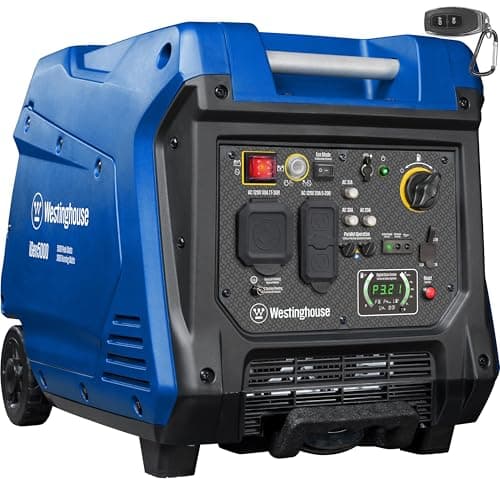
Westinghouse iGen4500

Best overall

Westinghouse iGen4500

3,700 running watts of inverter-clean output with remote electric start.

A furnace blower plus the fridge and the network
$849.00 · Check price on Amazon

#ad how this is funded · price as of October 21, 2026

2
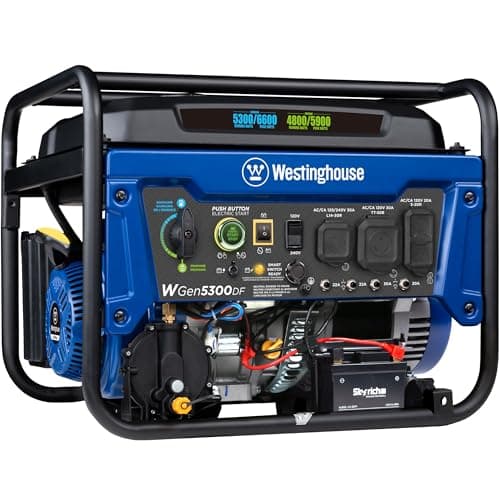
Westinghouse WGen5300DF

Best for the whole critical list

Westinghouse WGen5300DF

5,300 running watts of dual fuel, with the 240V outlet a transfer switch needs.

Furnace, sump pump, fridge, freezer, lights
$649.00 · Check price on Amazon

#ad how this is funded · price as of October 21, 2026

3
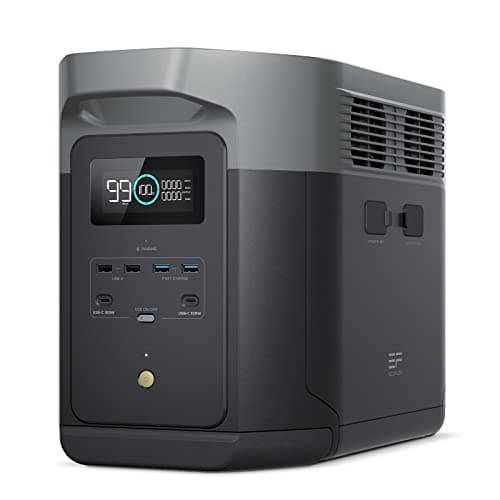
EcoFlow DELTA 2 Max

The silent option

EcoFlow DELTA 2 Max

2,048Wh and 2,400W — a blower cycling through a night, silently.

A furnace blower overnight without an engine
$1,049.00 · Check price on Amazon

#ad how this is funded · price as of October 21, 2026 · $1,399.00 25% off

4
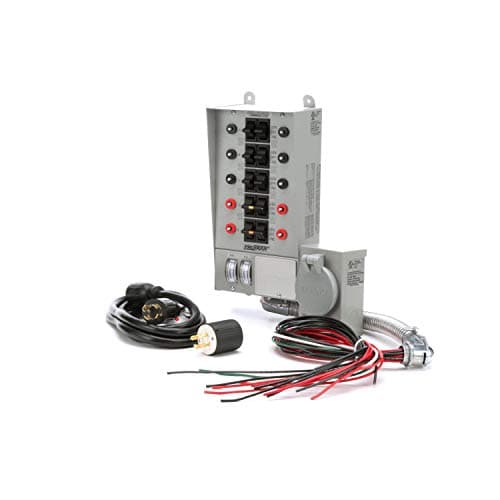
Reliance Controls 31410CRK Pro/Tran

The connection you cannot skip

Reliance Controls 31410CRK Pro/Tran

A 10-circuit manual transfer switch rated 30A / 7,500W.

Reaching a hardwired furnace circuit
$475.20 · Check price on Amazon

#ad how this is funded · price as of October 21, 2026

Prices come from the retailer at page-build time and change constantly. Where no live price is available the button reads “Check price” rather than showing a number we cannot stand behind.

The picks in full

01 — Best overall

Westinghouse iGen4500

3,700 running watts of inverter-clean output with remote electric start.

3,700 running watts is comfortable margin over a furnace blower at up to 1,600W, with room for a refrigerator, a freezer and lighting alongside it.

Inverter output matters more for a furnace than people expect. Modern furnaces have electronic control boards and variable-speed ECM blowers, and both prefer a clean waveform to a conventional machine's rough one.

Remote start earns its keep in winter specifically, because you run the heat in blocks rather than continuously.

The honest catch: it is 120V only. A furnace is usually a 120V circuit, so that is fine here — but it cannot feed a 240V transfer switch for anything else.

Skip it ifyour heat is electric. Nothing in this class touches resistance heating.

Westinghouse iGen4500
$849.00 · Check price on Amazon

#ad how this is funded · price as of October 21, 2026

Published specifications for the Westinghouse iGen4500
SpecificationPublished figure
Output (gasoline)3,700 running W / 4,500 peak W
TypeInverter (pure sine wave)
StartingRemote electric start with auto choke
RV outlet120 V TT-30R, 30 A
ParallelCapable with a second unit

Source: Westinghouse — iGen4500 product specifications. These are the manufacturer's published figures, not ours — we have not tested this unit.

02 — Best for the whole critical list

Westinghouse WGen5300DF

5,300 running watts of dual fuel, with the 240V outlet a transfer switch needs.

In practice winter outages take the sump pump and the well pump at the same time as the heat, and those are the loads that push you into this class.

Dual fuel also matters in a cold snap. Gasoline stations lose power too; propane in a cylinder in the garage does not.

The honest catch: it is a conventional machine and it is loud. A furnace-only job does not need this much noise.

Skip it ifthe furnace really is all you need. This is more machine than that.

Westinghouse WGen5300DF
$649.00 · Check price on Amazon

#ad how this is funded · price as of October 21, 2026

Published specifications for the Westinghouse WGen5300DF
SpecificationPublished figure
Output (gasoline)5,300 running W / 6,600 peak W
Output (propane)4,800 running W / 5,900 peak W
Engine274cc 4-stroke OHV
Tank4.7 gal (18 L)
Run timeup to 14.5 h on a full tank
Transfer-switch outlet120/240 V L14-30R, 30 A
RV outlet120 V TT-30R, 30 A
StartingPush-button electric with remote key fob

Source: Westinghouse — WGen5300DF product specifications. These are the manufacturer's published figures, not ours — we have not tested this unit.

03 — The silent option

EcoFlow DELTA 2 Max

2,048Wh and 2,400W — a blower cycling through a night, silently.

A furnace blower does not run continuously. It cycles with the thermostat, which is what makes a battery viable — the arithmetic is below and it is better than people expect.

A battery also sits indoors, makes no noise and cannot be stolen off the driveway, all of which matter at 3am in February.

The honest catch: connecting a battery to a hardwired furnace still needs a transfer switch, or an electrician to fit a plug-and-socket at the furnace.

Skip it ifyour blower is a high-draw PSC unit running long cycles.

EcoFlow DELTA 2 Max
$1,049.00 · Check price on Amazon

#ad how this is funded · price as of October 21, 2026 · $1,399.00 25% off

Published specifications for the EcoFlow DELTA 2 Max
SpecificationPublished figure
Capacity2,048 Wh, expandable to 6,144 Wh
Output2,400 W continuous
ChemistryLiFePO4, 3,000+ cycles to 80%
AC recharge0–80% in 43 minutes
Solar inputup to 1,000 W
Outlets15 total
Noiseas low as 30 dB

Source: EcoFlow — DELTA 2 Max published specifications. These are the manufacturer's published figures, not ours — we have not tested this unit.

04 — The connection you cannot skip

Reliance Controls 31410CRK Pro/Tran

A 10-circuit manual transfer switch rated 30A / 7,500W.

A furnace is wired to a dedicated circuit with no plug on it. There are exactly two legal ways to get generator power to it: a transfer switch, or an interlock kit.

The cheaper third option some electricians offer is fitting a cord-and-plug to the furnace so it can be unplugged from the wall and plugged into an extension cord. That is legitimate where local code allows it and much cheaper.

The honest catch: both routes need an electrician and, in most jurisdictions, a permit.

Skip it ifyour electrician has fitted a furnace cord-and-plug instead.

Reliance Controls 31410CRK Pro/Tran
$475.20 · Check price on Amazon

#ad how this is funded · price as of October 21, 2026

Published specifications for the Reliance Controls 31410CRK Pro/Tran
SpecificationPublished figure
Circuits10 — six 15 A and four 20 A single-pole breakers
Rating30 A, up to 7,500 W
MeteringTwo watt meters for balancing the load
SwitchingBreak-before-make double-throw, Line / Off / Gen
BackfeedMechanically prevented — the grid cannot be energized
InstallationLicensed electrician; a permit is usually required

Source: Reliance Controls — Pro/Tran 31410CRK product page. These are the manufacturer's published figures, not ours — we have not tested this unit.

How these were chosen

We did not test these. Nobody at Watt & Warden has plugged one in. What we did instead: read the manufacturer's published specifications, compile them into a table where the figures line up, and compute the numbers manufacturers leave out — runtime against a real appliance load, and what an hour of running actually costs.

Anything that could not be sourced was left out rather than estimated, and every pick names the buyer who should skip it. The full method is here, including where it is weaker than a publisher with a test bench.

Questions people actually ask

Can a generator run my furnace?

If it is a gas or oil furnace, almost certainly. The furnace burns its own fuel for heat and only needs electricity for the blower, controls, igniter and draft inducer -- up to about 1,600W in total. Anything from the 2,000W class upward covers that, and a 3,700W machine runs it alongside a refrigerator and lighting.

How many watts does a furnace blower use?

Up to about 1,600W for a gas furnace including controls, though modern variable-speed ECM blowers draw considerably less than older PSC motors. A boiler with circulator pumps is often only 100 to 300W, which makes it the cheapest heating system in the house to back up.

Will a power station run a furnace?

Yes, and better than people expect, because a blower cycles rather than running continuously. A 2,048Wh battery covers roughly 8.7 hours at a light 15-minutes-per-hour duty, or about 3.3 hours in severe cold when the furnace runs 40 minutes an hour. It is silent and lives indoors, which matters at 3am.

How do I connect a generator to a hardwired furnace?

Three legal routes: a transfer switch, an interlock kit, or having an electrician fit a cord-and-plug at the furnace so it can be unplugged from house power and run from an extension cord. The last is much cheaper and furnace-only. Backfeeding the panel through a dryer outlet is illegal everywhere in the United States.

What if I have a heat pump or electric furnace?

Then none of the good news applies. A heat pump is a compressor drawing thousands of watts and an electric resistance furnace draws 10,000W and up -- neither runs on a portable generator or any portable battery. The realistic answers are a standby generator sized by a dealer, or heating one room with propane and not attempting the whole house.

Sources

Every figure on this page comes from a published source. We have not tested this equipment, so the specifications are the manufacturer's and the statistics are the dataset's — the arithmetic on top of them is ours, and it is shown in full so you can check it. How we work this out.