The fact that surprises everyone
A standard grid-tied rooftop solar system produces nothing during a power outage. The panels are fine, the sun is shining, and the house is dark.
This is deliberate. A grid-tied inverter is required to disconnect when it loses the grid — a function called anti-islanding — because a system that kept exporting would energize lines that utility crews believe are dead. It is the same hazard that makes backfeeding a generator through a dryer outlet illegal.
The consequence is that a large number of homeowners with solar discover during their first real outage that they have no backup at all. It is the single most common disappointment in residential solar, and it is worth checking which category your system falls into before you need to know.
The three architectures
| System | During an outage | Everyday value |
|---|
| Grid-tied, no battery | Nothing. The inverter disconnects | High — offsets your bill all year |
|---|
| Grid-tied with battery backup | Backs up selected circuits, recharges daily from the sun | High, plus arbitrage |
|---|
| Off-grid array with a charge controller | Works — it never involved the utility | Low. It is a backup system, not a bill reducer |
|---|
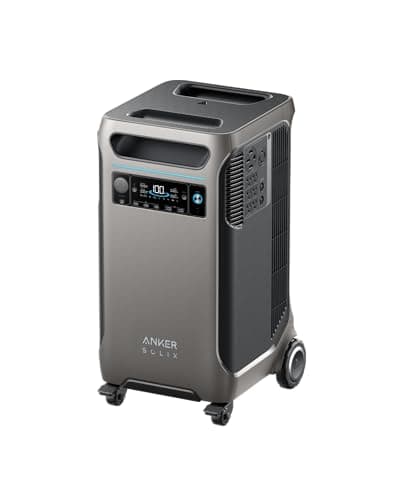
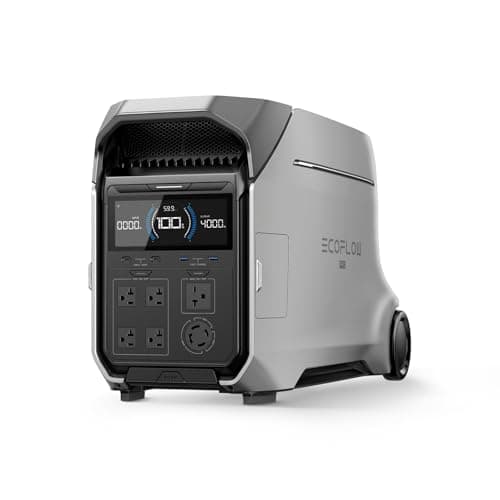
| Portable solar generator | Works, independent of everything | None between outages |
|---|
Some grid-tied inverters also offer a limited daytime backup outlet — typically a single 120V socket delivering a modest amount while the sun is up, with no battery. If your system has one, it is worth locating before an outage rather than during one. Check your inverter model.
Rooftop with battery, versus a portable
For a household that wants backup and already has or wants solar, this is the real comparison.
| Rooftop plus home battery | Portable solar generator |
|---|
| Daily generation | Kilowatt-hours, all year | Whatever a portable array makes |
|---|
| Automatic | Yes — instant changeover, nobody home needed | No, unless it has a UPS mode on chosen loads |
|---|
| Reduces your bill | Yes | No |
|---|
| Installation | A quoted project with permits and interconnection | Unbox it |
|---|
| Moves with you | No | Yes — house, RV, campsite, next house |
|---|
| Works while renting | Generally not | Yes |
|---|
| Winter output | A fraction of summer, but still substantial | A fraction of a fraction |
|---|
The honest summary: rooftop with a battery is a far better system and a far larger project. A portable is a far smaller purchase that does one job and then sits in a closet. They are not really competing — most people should own a portable, and some people should also have solar.
The winter problem, which decides more than people expect
Solar output in December at northern latitudes can be a quarter of the July figure or less, because of short days, a low sun angle and weather.
That matters here specifically because the long outages — ice storms, winter wind events, snow-loaded lines — happen in exactly the months when an array produces least. Snow on panels produces nothing at all until it slides or is cleared.
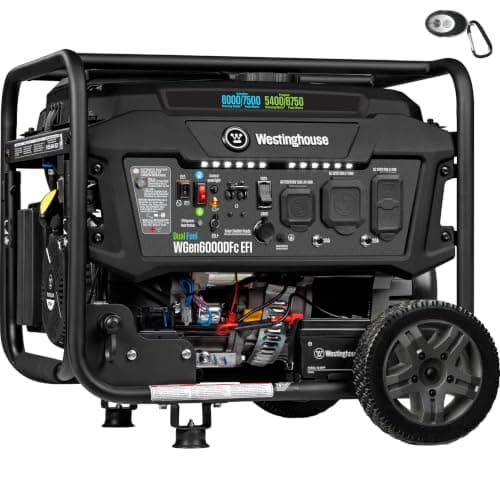
So a solar-plus-battery system that comfortably ignores a summer outage may be rationing hard in a February one. That is the strongest argument for keeping a generator alongside solar rather than instead of it — the panel lifespan page and the angle page cover the seasonal physics.
If you already have grid-tied solar
Three routes, in ascending order of cost.
1. Buy a portable. Independent of the roof entirely, available this week, moves with you. This is the answer for most households who discovered the problem during an outage.
2. Find out whether your inverter has a backup outlet. Some do, and it costs nothing to know. It is daytime-only and modest, but it will charge phones and run a fridge in bursts.
3. Retrofit a battery. The complete fix, and a quoted project involving a new inverter or an AC-coupled battery, a backup subpanel, permits and utility interconnection. Worth pricing against the Powerwall versus generator comparison, because a generator often does the multi-day job for far less.
What a portable will not do
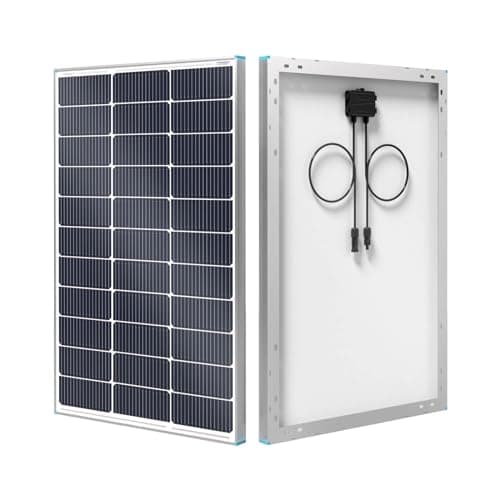
- Power the house from the roof. A portable's solar input is measured in hundreds or low thousands of watts; a rooftop array is measured in kilowatts. They are different scales.
- Reduce your electricity bill. It sits idle between outages.
- Connect to your existing rooftop array. Grid-tied panels run at voltages and through equipment a portable cannot accept. Do not attempt this.
- Run air conditioning or electric heat for any useful period, regardless of what the array behind it produces.
The short version
- Grid-tied solar shuts down in an outage. By design, for lineworker safety.
- Check which architecture you have before you need to know.
- A portable is independent of the roof and available immediately.
- Winter is when solar is weakest and outages are longest. Plan for that, not for July.