Skip to content
Watt Warden

Solar

How Long Do Solar Panels Last?

A solar panel does not fail at the end of its life - it produces slightly less every year, indefinitely. Which means the real question is what ends it early.

By Sawyer V.Updated Published How we work this out
Aged solar farm panels in a field.

Watt & Warden earns a commission on qualifying purchases made through links on this page, at no extra cost to you. It never changes a ranking, and our picks include products we tell you to skip. Full disclosure.

Panels fade rather than fail

This is the fact that makes the question different from "how long does a generator last."

A solar panel has no moving parts, no fluids and nothing that wears out mechanically. What happens instead is slow, predictable degradation: the cells produce fractionally less each year, indefinitely.

So there is no failure point to plan for. A panel at year twenty-five is still producing — just less than it did — and it will still be producing at year thirty-five. The industry convention of a twenty-five-year horizon is a warranty convention, not a service life.

What a performance warranty actually promises

Panels usually come with two separate warranties, and they cover different things.

WarrantyWhat it covers
Performance or power outputThat output will not fall below a stated percentage of the original rating by a stated year
Product or workmanshipDefects in materials and construction — delamination, frame failure, junction box faults

The two run for different lengths, and the performance one is usually the longer. Read both on the specific panel you are buying — figures vary by manufacturer and we deliberately do not publish generalised percentages here, because a number that is right for one product is wrong for another.

The useful reading: a performance warranty is a statement about how slowly the manufacturer expects the panel to fade, and comparing them across products tells you something about expected longevity that the marketing does not.

Four things that look like degradation and are not

Before concluding a panel has aged, check these — all four are far more common than genuine degradation and three of them are free to fix.

1. Temperature. Panels lose output as cells heat, and Renogy publishes −0.29% per °C. A hot roof in August genuinely produces less than the same panel in April, and that is physics rather than wear.

2. Angle. The largest lever you control, and a stand that has collapsed or a mount that has shifted changes it silently. Angle and orientation.

3. Season. December output is far below June output at every latitude, and it is easy to mistake the seasonal cycle for a trend if you only started paying attention in the fall.

4. The charge controller throttling. If the battery is nearly full, the controller reduces input. The panel is fine; the system does not need what it can make.

A fifth, less common: shade that has crept in. A tree grows, an antenna gets added, a neighbor builds. Cells wired in series mean a small shadow costs disproportionately.

What actually ends a panel's life

FailureAffectsPrevention
Surface damageFolding panels especiallyAlways use the case; shake grit out before folding
Cracked cellsAll typesNever stand on it, never drop it, never fold over debris
DelaminationLaminate and flexible panelsLargely a manufacturing matter — this is what a product warranty is for
Water in the junction boxAll typesCap unused connectors, check seals annually
Cable entry failureAll typesNever carry a panel by its lead; secure roof cable runs
Mounting failureFixed installationsCheck hardware annually; a panel loose in wind is a hazard, not a repair
UV degradation of the front surfaceFlexible panelsNothing prevents it entirely — it is the construction

Every row except the last two is a handling or maintenance failure rather than an aging one, and none of them appears on a warranty card. Panels rarely reach the end of their degradation curve — they get broken, soaked, or unbolted long before.

Folding panels are a different question

Worth separating, because the fixed-panel answer does not apply.

A framed panel bolted to a roof lives a quiet life: it sits still, sheds rain, and degrades slowly. A folding panel is carried, packed, set on gravel, folded while gritty, left in a car, and rained on unexpectedly.

So the practical life of a folding panel is decided by how it is handled, not by cell chemistry. The things that extend it:

  • Use the case, every time. The case is the protection, and a panel leaned against a garage wall gets knocked over.
  • Dry it before folding. Damp panels folded into a bag for a month is how fabric hinges and stitching fail.
  • Shake the grit out. A single stone folded into the face scratches the surface permanently.
  • Carry by the handle, not the cable.
  • Cap or mate the connectors in storage so water does not sit in an open MC4 end.

The care page covers cleaning, which matters more on a polymer surface than on glass — scratches there are permanent.

What to check, twice a year

Ten minutes, alongside topping up the battery and exercising the generator:

  1. Look at the surface in daylight for cracks, clouding or delamination.
  2. Check the cable where it enters the panel. First thing to fail, and it fails from being pulled.
  3. Inspect the connectors for corrosion and grit.
  4. Check mounting hardware on a fixed array — tightness and corrosion.
  5. Set it in the sun and confirm the output into your station. This is the only real test, and it is the one that would actually detect degradation.

What to expect, practically

For a rigid framed panel, mounted properly and left alone: expect it to outlast the battery it charges, the charge controller, and probably the roof it is on. Degradation is slow enough that it will not be the reason you replace it.

For a folding panel handled reasonably: expect a good many seasons, and expect the end to come from a scratch, a crack or a cable rather than from fading.

For a flexible panel bonded to a roof: expect meaningfully less than a rigid one, plan for replacement, and engineer an air gap if you possibly can — heat is what shortens it.

In all three cases the useful conclusion is the same: buy for construction and handle it well, rather than shopping on degradation percentages. The number that ends most panels is not on the datasheet.

Quick picks

#ProductBest forPrice
1
No photo

Built for a long life

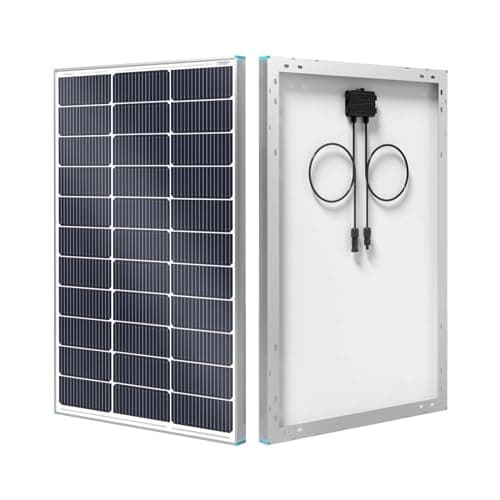
Renogy 100W 12V Monocrystalline Solar Panel

Rigid 100W 12V with a corrosion-resistant aluminum frame, IP67, and −0.29%/°C.

A permanent mount you install once
2
No photo

Most durable folding construction

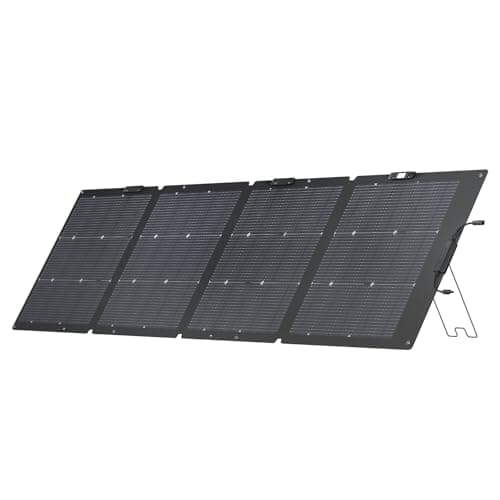
EcoFlow 220W Bifacial Solar Panel

220W bifacial on one-piece tempered glass, IP68, 20.9 lb.

A portable panel that gets handled
3
No photo

The shortest-lived construction

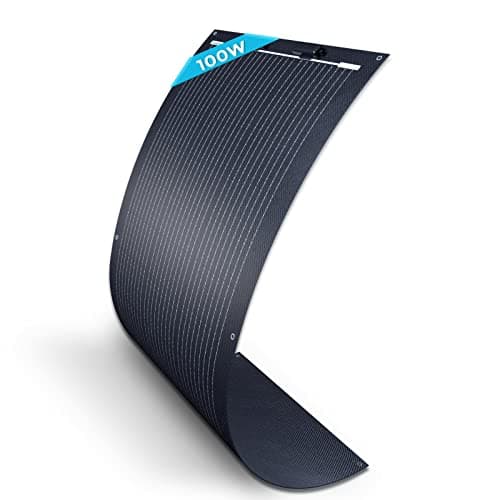
Renogy 100W flexible solar panel

100W at about 4 lb and 0.1 in thick, bending to 240 degrees, IP67 junction box.

Curved surfaces, where nothing else fits

Prices come from the retailer at page-build time and change constantly. Where no live price is available the button reads “Check price” rather than showing a number we cannot stand behind.

The picks in full

01Built for a long life

Renogy 100W 12V Monocrystalline Solar Panel

Rigid 100W 12V with a corrosion-resistant aluminum frame, IP67, and −0.29%/°C.

Glass front, aluminum frame, corrosion-resistant hardware and IP67 sealing — the construction that allows a panel to sit outdoors for decades rather than seasons.

The temperature coefficient is worth noting on a longevity page for a different reason: it tells you how much of an apparent decline is just a hot day rather than actual degradation.

Skip it ifyou need something portable that folds away.

Published specifications for the Renogy 100W 12V Monocrystalline Solar Panel
SpecificationPublished figure
Rated output100 W, 12 V
Cell typeN-type monocrystalline, 16BB
Conversion efficiencyUp to 25%
Ingress ratingIP67
Temperature coefficient-0.29% per °C
FrameCorrosion-resistant aluminum, pre-drilled

Source: Renogy — 100W 12V monocrystalline panel published specifications. These are the manufacturer's published figures, not ours — we have not tested this unit.

02Most durable folding construction

EcoFlow 220W Bifacial Solar Panel

220W bifacial on one-piece tempered glass, IP68, 20.9 lb.

One-piece tempered glass rather than a fabric-backed laminate is the durability specification here. Folding panels almost always die of surface damage rather than cell degradation, and glass resists the grit and abrasion that packing produces.

IP68 also means an accidental night outdoors is not a problem.

Skip it ifyou need the lightest thing to carry.

Published specifications for the EcoFlow 220W Bifacial Solar Panel
SpecificationPublished figure
Rated output220 W front, 155 W rear (bifacial)
Cell typeN-type monocrystalline
Conversion efficiencyUp to 25%
Ingress ratingIP68
Weight20.9 lb (9.5 kg)
ConstructionOne-piece tempered glass
StandCarry case doubles as an adjustable kickstand

Source: EcoFlow — 220W Bifacial Solar Panel published specifications. These are the manufacturer's published figures, not ours — we have not tested this unit.

03The shortest-lived construction

Renogy 100W flexible solar panel

100W at about 4 lb and 0.1 in thick, bending to 240 degrees, IP67 junction box.

Named honestly. A polymer front degrades under UV where glass does not, flexing creates micro-cracks in brittle cells, and flush mounting traps heat.

It is the right choice where a rigid panel physically cannot go, and a shorter-lived one everywhere else — the comparison sets out the trade.

Skip it ifyou have a flat surface. Rigid outlasts it substantially.

Published specifications for the Renogy 100W flexible solar panel
SpecificationPublished figure
Rated output100 W, 12 V
FlexBends up to 240 degrees
Thickness0.1 in
Weightabout 4 lb — roughly a quarter of a rigid 100W panel
CellsHalf-cut PERC monocrystalline
Ingress ratingIP67 junction box and connectors
Load rating5,400 Pa snow, 2,400 Pa wind

Source: Renogy — 100W flexible solar panel listing. These are the manufacturer's published figures, not ours — we have not tested this unit.

How these were chosen

We did not test these. Nobody at Watt & Warden has plugged one in. What we did instead: read the manufacturer's published specifications, compile them into a table where the figures line up, and compute the numbers manufacturers leave out — runtime against a real appliance load, and what an hour of running actually costs.

Anything that could not be sourced was left out rather than estimated, and every pick names the buyer who should skip it. The full method is here, including where it is weaker than a publisher with a test bench.

Questions people actually ask

How long do solar panels last?

They fade rather than fail. A panel has no moving parts and nothing that wears out mechanically -- the cells simply produce fractionally less each year, indefinitely. The industry's twenty-five-year horizon is a warranty convention rather than a service life; a panel at year thirty is still producing.

What does a solar panel performance warranty cover?

That output will not fall below a stated percentage of the original rating by a stated year. It is separate from the product or workmanship warranty, which covers defects like delamination, frame failure and junction box faults. The two run for different lengths -- read both on the specific panel.

Why is my solar panel producing less than it used to?

Check the ordinary explanations first. Cell temperature -- Renogy publishes -0.29% per degree C -- plus angle, especially a collapsed stand, the season, and whether your charge controller is throttling because the battery is nearly full. Shade that has crept in is the fifth. Degradation is rarely the answer.

What actually ends a solar panel's life?

Handling, not aging. Surface scratches from packing against grit, cracked cells from standing on or dropping it, water in the junction box, cable entry failure from carrying by the lead, and mounting failure on fixed arrays. Panels rarely reach the end of their degradation curve.

Do flexible solar panels last as long as rigid ones?

No. A polymer front degrades under UV where glass does not, flexing creates micro-cracks in brittle cells, and flush mounting traps heat. Expect meaningfully less than a rigid panel, plan for replacement, and engineer an air gap underneath if you possibly can.

Sources

Every figure on this page comes from a published source. We have not tested this equipment, so the specifications are the manufacturer's and the statistics are the dataset's — the arithmetic on top of them is ours, and it is shown in full so you can check it. How we work this out.