The question, framed properly
“Is solar worth it” is really two questions, and separating them makes the answer obvious.
Is the battery worth it? That is a different page, and it turns on your outage history.
Is adding a panel to that battery worth it? That is this page, and it turns on one thing: whether your outages outlast the battery.
The case against
Take it seriously, because for a large share of households it is correct.
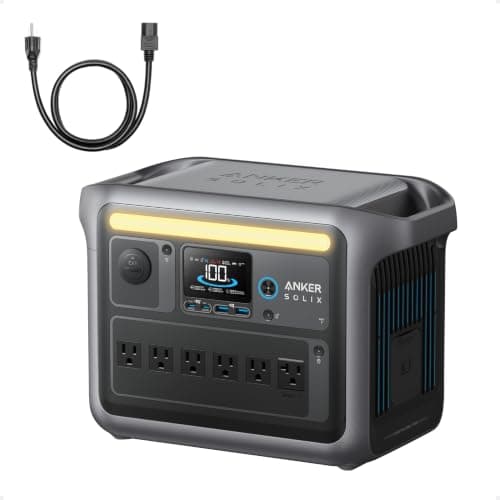
Most outages never empty the battery. The EIA's Electric Power Annual for 2024 puts non-major-event interruptions at about two hours a year per U.S. customer. A 1,000Wh station running a fridge lasts about six. In that scenario the panel contributes nothing, because there was nothing to refill.
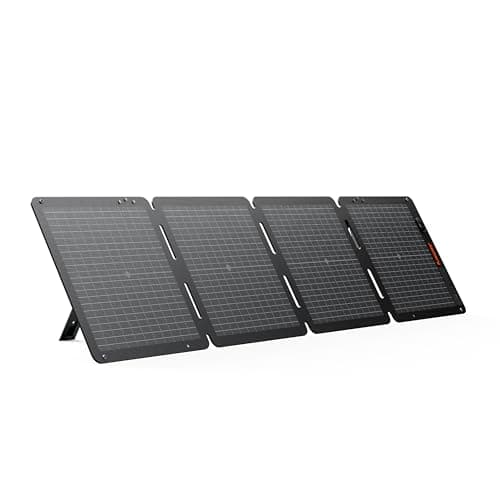
Panels are slow. A 100W panel realistically delivers 400–500Wh across a good summer day — about half a 1,000Wh station. Refilling a battery in a day takes 200–300W of panel, which is a meaningful purchase in its own right.
Weather is against you exactly when you need it. Winter storms cause the longest outages and bring short days, low sun angles, heavy cloud and snow on the panels. Solar is weakest precisely when the outage is longest — worked through here.
Cheaper recharge paths exist. A car charges a station at 100–120W and you already own it. A small generator refills one in an hour. If there is power anywhere within driving distance, a modern station refills in under an hour.
It is more stuff. Panels need storing, carrying, setting out, repositioning and bringing in. Equipment that requires effort is equipment that does not get used.
The case for
It removes the battery's only real weakness. Everything else about a battery is better than a generator: silent, indoor-safe, no fuel, no maintenance, starts every time. Its single defect is that it runs out. A panel is the only thing that fixes that without an engine.
It is the only recharge path that works in a regional disaster. This is the argument that actually carries weight. In a genuine multi-day regional outage — the hurricane scenario that caused 80% of national outage hours in 2024 — there is no grid, gas station pumps have no power, and there may be nowhere within driving distance that has power. The car needs fuel. The generator needs fuel. The panel does not.
It costs nothing to run, forever. No fuel to buy, store, rotate or fetch. Over a five-day outage that is both a real cost saving and, more importantly, a logistics problem you do not have.
It is silent and produces nothing. No noise, no exhaust, no carbon monoxide, no twenty-foot clearance rule, no decision at 2am about whether the garage counts as outside.
It works outside emergencies. Camping, van life, a remote cabin, a yard with no outlet. A panel that earns its keep on holiday is a panel that is charged and functional when a storm arrives.
The arithmetic that decides it
| Your outage length | Does the battery empty? | Is a panel worth it? |
|---|
| 2–6 hours | No | No. Buy capacity instead, or nothing. |
|---|
| Overnight, 8–14 hours | Nearly, on a 1kWh unit | Marginal. A larger battery is usually better value. |
|---|
| 1–2 days | Yes | Yes, if you buy 200W+ of panel. |
|---|
| 3–5 days | Yes, on day one | Yes. This is what solar is for. |
|---|
| 5+ days, winter | Yes | Yes, but as a supplement — a generator is the primary answer. |
|---|
Battery-emptying assumes a 1,000Wh station against a 150W average critical load with 15% inverter losses, giving about 5.7 hours. Outage length bands come from your own utility's data, not from a national average — how to find yours.
The purchase order that makes sense
- Find your outage history. Fifteen minutes with your utility's reliability report. Everything else follows from it.
- Buy the battery first, sized to that history. The battery is what does the work; the panel only refills it.
- Live through one real outage. Note how far the battery actually got, and what you wished you had.
- Then buy panels if the battery emptied. If it did not, you have your answer and you saved the money.
That sequence is dull and it is right. It also produces a much better decision than any comparison table, because it substitutes evidence from your own house for an estimate from ours.
What we would tell a friend
If you live where hurricanes or ice storms cause multi-day regional outages: buy the panels. The scenario where every other recharge path fails is a real scenario for you, and that is exactly what solar is for.
If you live somewhere that averages under two hours of interruption a year — Arizona, the Dakotas and Massachusetts all did in 2024 — do not. Buy a modest battery, keep it charged, and spend the panel money on something you will use.
And if you are somewhere in between: buy the battery, wait for an outage, and decide with evidence. The comparison against a generator is the other half of that decision.