“Solar generator” is a marketing term
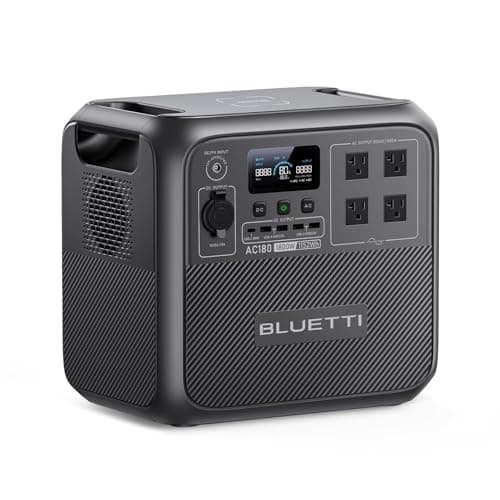
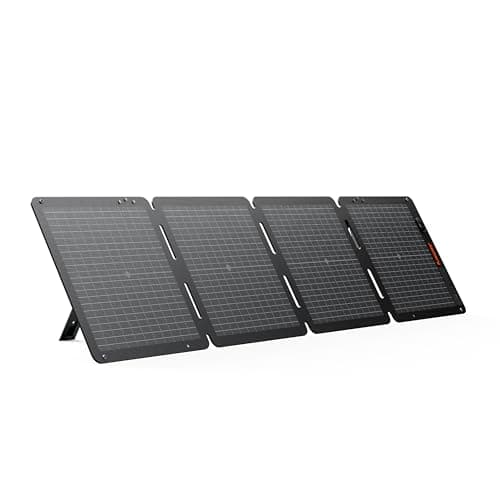
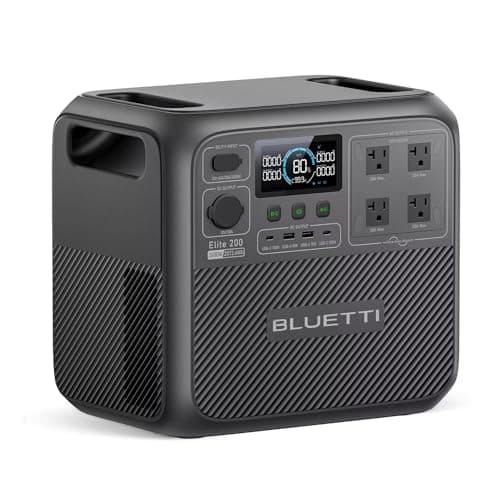
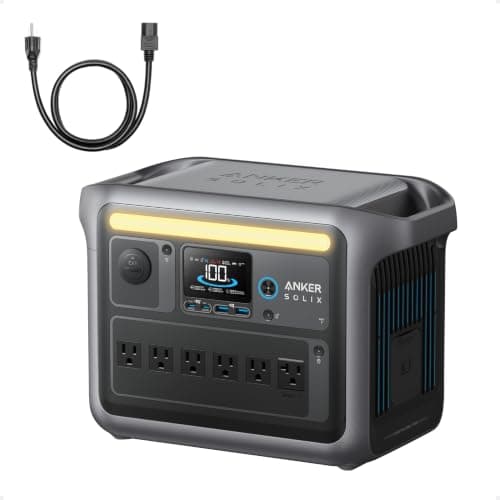
There is no such device. What is sold is a portable power station — battery plus inverter — bundled with folding photovoltaic panels. Nothing is generated; the panel recharges the battery and the battery does all the work.
That matters for how you buy. The battery specification decides whether your fridge runs. The panel specification decides only how fast you can refill it, and it is worth paying for exactly in proportion to how long your outages last.
So evaluate the two halves separately, and start with the battery — every pick above is covered in more depth in the home backup roundup.
What a panel actually produces
Not its rating. A 100W panel is rated under standard test conditions — 1,000W per square meter of irradiance at 25°C cell temperature — which is a laboratory condition rather than a backyard in August.
Real output is lower for several compounding reasons: panel temperature above 25°C reduces output, the angle to the sun is rarely optimal unless someone repositions the panel through the day, and the charge controller takes its share.
The number that matters is daily harvest, not peak wattage. A working planning figure: a 100W panel, well placed, delivers roughly 400–500Wh across a good summer day. That is about half a 1,000Wh station. Two panels roughly refill one.
We are giving that as a band rather than a figure deliberately. It varies with latitude, season, weather and placement, and any site publishing a single confident number for it is not accounting for those.
Sizing the panel to the battery
| Panel array | Realistic summer day | Refills a 1,000Wh unit in | Suits |
|---|
| 100 W | 400–500 Wh | About 2 days | Slowing the decline, not reversing it |
|---|
| 200 W | 800–1,000 Wh | About 1 day | Daily top-up of a 1kWh unit |
|---|
| 400 W | 1,600–2,000 Wh | Half a day | Genuine multi-day autonomy on a 1kWh unit |
|---|
| 600 W | 2,400–3,000 Wh | Under half a day | Refilling a 2kWh unit daily |
|---|
Harvest figures are working estimates at roughly 50–80% of rated panel output across daylight hours in good summer conditions, which is the realistic band once temperature, angle and controller losses are accounted for. Winter, cloud and northern latitudes reduce all of these substantially — how much, and why. These are not measurements; we have not tested any panel.
When solar is worth the money
Match the purchase to the outage
Capacity is not a preference. It falls out of two numbers: how long your power is usually off, and what you refuse to lose while it is.
| Your outage lasts | What has to keep running | Realistic product class |
|---|
| Under 8 hours | Fridge, router, lights — battery never empties | Battery alone. The panel does nothing you needed.
See power stations |
|---|
| 8–24 hours | Same, sustained overnight | Larger battery, or a battery plus 200W of panel
See the home-backup picks |
|---|
| 2–4 days | Fridge plus essentials, no grid to recharge from | 2,000Wh battery plus 400W+ of panel
Is it worth it? |
|---|
| 5+ days | Sustained, possibly in winter | A generator, with solar as a supplement
Solar vs gas generator |
|---|
The honest summary: solar earns its cost only when the outage outlasts the battery. For the two-hour outage that most households actually get, a panel is a $200–300 accessory that contributes nothing, because the battery was never going to empty.
Where solar wins that nothing else does
There is one scenario where a panel is not merely useful but irreplaceable: a regional disaster where there is no grid, no working gas station, and nowhere within driving distance with power.
In that situation every other recharge path fails. The car needs fuel. The generator needs fuel. There is nowhere to plug in. The panel keeps working, quietly, for as long as the sun comes up.
Whether you buy for that scenario is a judgment about where you live. The EIA's 2024 data makes the case for some households and not others: hurricanes Beryl, Helene and Milton caused 80% of national outage hours that year, and South Carolina customers averaged nearly 53 hours while Arizona customers averaged under two.
Compatibility, before you buy across brands
A panel is not universally compatible with a station. Three things have to line up:
- Voltage. The panel's output voltage must fall inside the station's charge controller input range. Too low and it will not charge; too high and it can damage the controller.
- Current. Must not exceed the input maximum.
- Connector. Usually MC4 or a proprietary plug. Adapters exist and are fine, provided the first two are satisfied.
Manufacturers publish an accepted input range for exactly this reason. Check it before buying a panel from a different brand — the bundled combinations exist partly to remove this question.
The cheaper alternatives to a panel
If your goal is simply to refill a battery mid-outage, solar is not the only route and often not the cheapest:
- The car. Almost every station accepts 12V charging at 100–120W. Slow, and you already own the car.
- A small generator. Two hours of generator refills the battery, which then runs the house silently overnight. Better fuel economy than running the generator all night, and quieter.
- Somewhere with power. Outages are frequently localized. An office or a café refills a modern station in about an hour.
All four routes compared.