Why this page has no dollar figures
Prices in this category move constantly — new generations arrive, older models get discounted heavily, and seasonal promotions swing the same unit by a large margin within a month.
A number written here would be wrong within weeks and misleading for far longer. What does not change is the structure: what you are paying for, which specifications carry a premium, and where the money is commonly wasted. That is what follows.
For current prices, follow any buy link on this site — every product page goes straight to the live listing.
The number that makes units comparable
Cost per watt-hour. Divide the price by the capacity. That single figure cuts through marketing better than anything else and almost nobody publishes it.
The shape it reveals is consistent across the category.
| Band | Relative cost per watt-hour | Why |
|---|
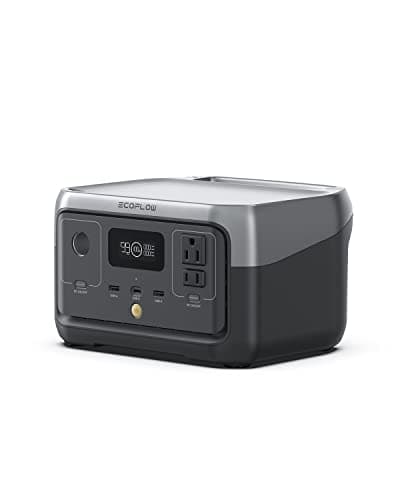
| Under 300 Wh | Highest | Fixed electronics cost spread over little capacity |
|---|
| 500-1,200 Wh | Lowest | The volume band — electronics amortized, no 240V premium |
|---|
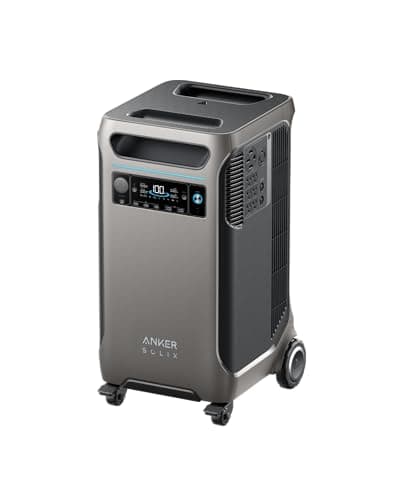
| 2,000-3,000 Wh | Low, rising | More cells, bigger inverter, wheels and handles |
|---|
| 3,800 Wh and up with 240V | Highest again | Split-phase inverter, expansion hardware, certifications |
|---|
| Expansion batteries | Higher than the base unit per Wh | You are buying optionality, not value |
|---|
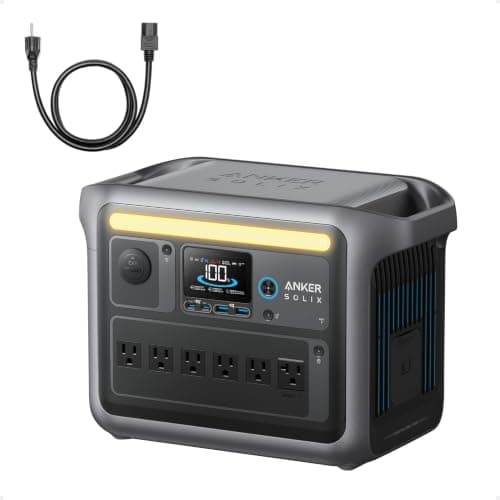
The practical consequence: if your load genuinely fits in the kilowatt-hour band, that is where your money goes furthest. The 1000Wh roundup covers that band, and the sizing page works out whether you fit it.
The four things you are actually paying for
1. Cell chemistry. LiFePO4 costs more than older lithium-ion and publishes 3,000 to 6,000 cycles against 500 to 800. Per cycle it is dramatically cheaper, which is why it now dominates — the chemistry page covers reading those numbers properly.
2. Inverter output. A 1,800W inverter costs meaningfully more than a 600W one at the same capacity, and it is what determines whether a refrigerator starts at all.
3. Recharge speed. Fast AC charging requires more expensive power electronics. It is genuinely valuable during an outage, where power returns in short windows before it stays on.
4. 120/240V split-phase. The single largest price step in the category, and it buys exactly one thing: the ability to feed a transfer switch and reach hardwired circuits.
Where the money gets wasted
- Buying 240V capability with nothing hardwired to use it on. The most expensive mistake available here.
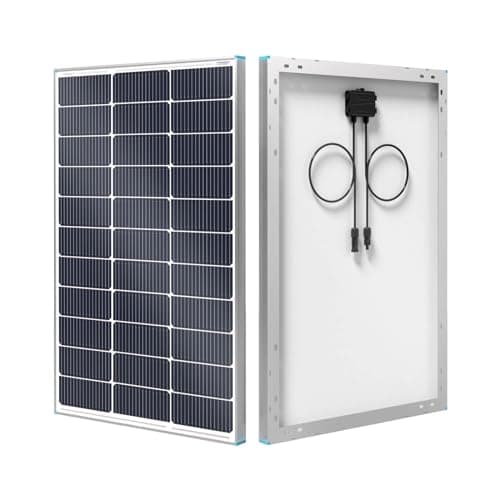
- Bundles with an undersized panel. A large battery with a token 60W or 100W panel is a big store you cannot refill — the under-$1,000 page covers splitting the budget properly.
- Folding panels that never move. If it lives on a shed roof, rigid costs substantially less per watt.
- Expansion batteries bought at the outset. They cost more per watt-hour than simply buying a bigger unit. Buy them later, if you find you need them.
- Capacity for an outage you do not have. Look up your own utility's outage hours before sizing — the duration page covers how.
The comparison that actually matters
Against a generator, for the same money, the trade is consistent.
| Solar generator | Fuel generator |
|---|
| Cost per watt of output | Far higher | Far lower |
|---|
| Cost per hour of running | Nothing, with solar | Fuel, continuously |
|---|
| Maintenance | None | Oil, filters, fuel management, exercise runs |
|---|
| Duration | Fixed, unless the sun refills it | As long as fuel arrives |
|---|
| Usable indoors | Yes | Never |
|---|
A generator is cheaper to buy per watt and costs money every hour it runs. A battery is expensive to buy and free to run. Which is better value depends entirely on how many hours you expect to run it, which is a question about your outages rather than about the products — the direct comparison works it through.
Buying well
- Buy the two halves separately. Bundles frequently pair a decent battery with a weak panel. Choose the battery on chemistry, inverter and input limit, and the panel on cost per watt.
- Buy out of season. Demand spikes with storm warnings, and so does price and availability.
- Check the previous generation. A superseded model is often heavily discounted and functionally identical for backup use.
- Read the warranty in years and cycles. Five years and 4,000 cycles is a very different product from two years and 800.
The short version
- Compare cost per watt-hour, not sticker price.
- The 500-1,200Wh band is where it bottoms out.
- 240V split-phase is the big price step. Only buy it if something is hardwired.
- Buy battery and panel separately. Bundles skimp on the panel.