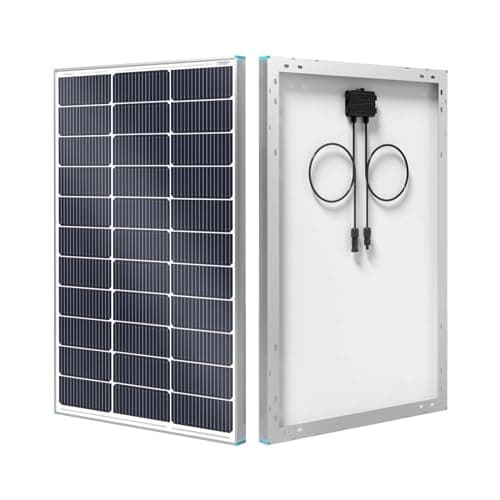
Roof panels versus folding panels
These are different products for different behaviors, and the difference is not really technical.
A folding panel produces more per watt, because you can aim it at the sun and move it out of shade. A roof panel produces every day without anyone doing anything, in the rain, while you are driving, and while you are asleep.
Over a season the roof panel almost always wins, for the same reason a battery you leave in the garage is worth less than a smaller one you carry. Consistency beats peak output.
The portable panel page covers the folding side, and plenty of people sensibly end up with both.
How much roof do you actually have?
This is the constraint that decides the array, and it is smaller than the roof looks. An RV roof is full of things you cannot cover: the air conditioner, vent fans, skylights, the antenna, and the shadows all of them cast.
| Vehicle | Realistic array | Good summer day |
|---|
| Camper van | 100-200 W | Roughly 400-1,000 Wh |
|---|
| Travel trailer | 200-400 W | Roughly 800-2,000 Wh |
|---|
| Fifth wheel or Class A | 400-800 W | Roughly 1,600-4,000 Wh |
|---|
Daily harvest uses the 400-500Wh per 100W of panel figure this site uses for a good summer day. Winter, cloud and a poor angle all reduce it substantially.
Note what that means. Even a well-covered trailer roof produces a couple of kilowatt-hours on a good day, which is a fridge and devices — not air conditioning, and not a kettle.
Shading is worse on a roof than anywhere else
RV roofs are cluttered, and panels wired in series suffer badly from partial shade — one shaded panel drags the string down rather than simply contributing less.
Two practical consequences. Lay panels out to avoid the air conditioner's shadow through the day rather than just fitting them in. And prefer parallel wiring for a cluttered roof, which limits the damage a single shaded panel does.
The angle and orientation page covers the underlying physics, most of which you cannot exploit on a vehicle because the roof is flat and the vehicle points wherever it parked.
The controller is not optional
A panel wired straight to a battery will overcharge and destroy it. The charge controller between them is what makes the system a system.
For an RV array, MPPT is usually worth the premium over PWM: it harvests meaningfully more from a fixed, poorly angled panel, which is exactly the situation a vehicle roof creates. The controller comparison works the difference through, and the controller roundup covers the specific units.
Sealing is the part that goes wrong
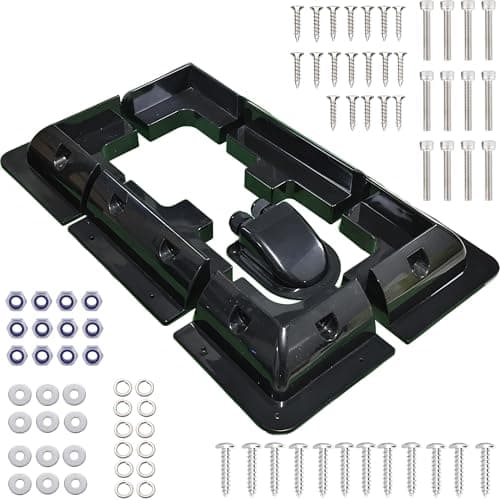
Nothing about RV solar fails as often or as expensively as the roof penetrations. Water finding its way into a laminated roof is a repair measured in thousands.
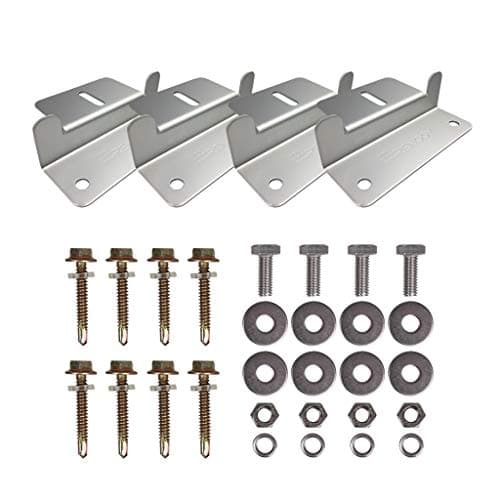
Three rules: use the sealant the roof material calls for rather than a generic one, seal the fastener and the bracket base rather than smearing over the top, and inspect the penetrations twice a year for the life of the vehicle.
The mounting guide covers the process in full, including the drill-free alternatives.
The short version
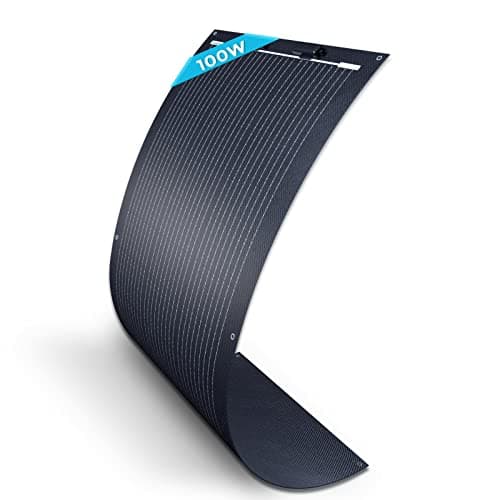
- Rigid unless the roof is curved or you cannot drill. It lasts longer and runs cooler.
- Build from 100W panels. They fit around roof obstructions in a way one big panel does not.
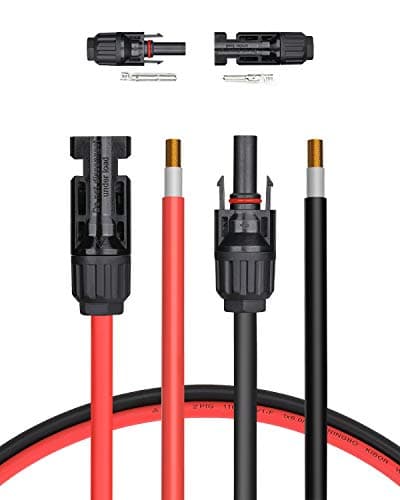
- Budget the mounts, cable and gland. They are where the job succeeds or leaks.
- Expect 400-500Wh per 100W on a good summer day, and plan around that rather than the rating.